
Did We Not Do Enough?


In the past two weeks, I have been thinking about the late Kim Beazley, Snr. I knew the great man slightly when I was a priest at Christ Church Claremont, and he was a parishioner. I greeted him after church each Sunday. I visited him at his home in Cottesloe, and on one memorable occasion, he took my colleague John Warner and me to a long lunch at Parliament House, combined with a history of the characters in the Labor Party before the split. He was a lively raconteur.  

I have also been thinking of the Headmasters Conference and their actions beginning in the 1930s.

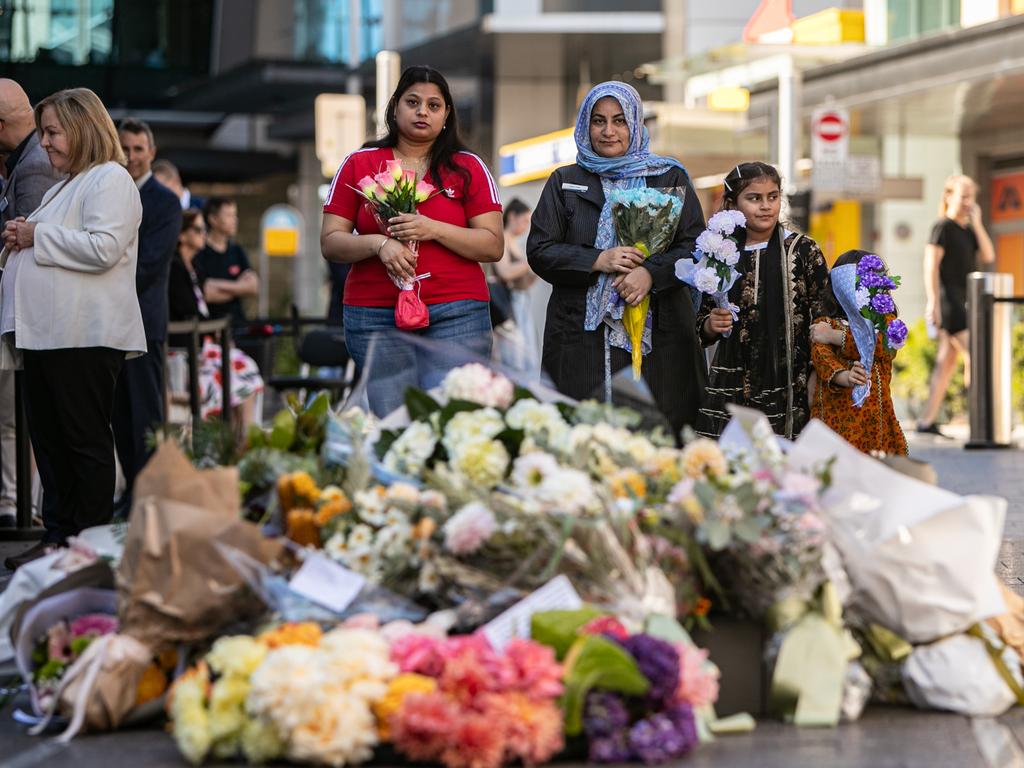
I have been thinking that the massacre at Bondi Beach last week could have been prevented if their vision had been grasped back then.

In 1938, the Headmasters Conference consisting of the Heads of all the Independent boys’ schools in Australia, together with those of some Catholic Schools, were disturbed by the rise of antisemitism in Europe. The Conference proposed that an association to promote the high-quality teaching of religion in Australian schools should be created.

The war intervened, and nothing came of the proposal until 1974, when the HMC and the Association of the Heads of Girls Schools Australia (AHIGSA) formed the Australian Association for Religious Education. I joined AARE in 1975 and over the next 30 years I served at State and National levels, so I know this Association well. And there have been other similar associations.
The question haunts me; did we not do enough? Did we fail to raise the quality of the teaching of religion? Maybe we could have stemmed the tide of antisemitism, Islamophobia and all the other hatreds of different religious groups.

Teaching in schools about religion may have had more effect if the educational community had listened to Kim Beazley, as Australia’s Minister for Education in 1973-75. Mr Beazley proposed a National Curriculum consisting of nine learning areas. He included Religion as a learning area alongside English, Maths and Science. He meant, of course, not the doctrinaire teaching of Christianity – although he was a Christian – but the proper teaching of the religions in our society.

Other prominent educators, like Professor Brian Hill, Foundation Professor of Education at Murdoch University, who was one passionate advocate, pushed for the inclusion of religion in the general curriculum.

It is true that the learning area of Humanities and Social Sciences (HASS) mandate some attention to religion in society. And the Arts cannot avoid the heritage of Christians and others who have made wonderful music, literature, paintings, and sculpture to express their faith. Some educators told us that we should be content just to have religion included within other learning areas.

Teachers resist the teaching of religions believing that they are not sufficiently informed about the subject. To me, that is a sad excuse. We can all be better informed. That’s why the Principals of Independent Schools set up the AARE with its biennial Conference model of in-service preparation for their teachers. Teacher educators could easily devise similar in-service for teachers in State Schools.

Imagine if as much effort had been poured into the teaching of Religion as has been poured into English and Maths. Imagine if the students graduating from our High Schools, both public and private, had a sympathetic understanding of Islam, and Judaism, and Christianity, of Hinduism, and Buddhism, and Bahai, of Taoism and Shinto, and Confucianism, of paganism, and Wicca, as well as Indigenous culture as a special and focused Australian spirituality.

Imagine if those students had met Australian adherents of those religions, individual Jews or Buddhists or Christians and recognised them, as they would, as fellow Australians, fellow human beings.  Imagine how that would percolate through society and act as a damper on religious hatred. (Not to mention how much richer their own lives would be.)

Maybe that would have been enough to stop this hatred of religions, especially the hatred of the Jews.

It is possible that I’m overstating the case. No amount of high-quality education would likely have stopped the shooters at Bondi on 14 December 2025. They were too filled with hatred.

But great educators like Kim Beazley Snr, Sir James Darling (Geelong Grammar’s renowned Headmaster from 1930-1961), Peter Moyes (Headmaster of Christ Church Grammar in Claremont from 1952-1982, and my mentor in AARE) and Brian Hill, must all be wondering whether it would have been any different if Australia had listened to them.

Courtesy Anglican Diocese of Edmonton, Canada

n   

He taught Religious Education as Senior Chaplain to Christ Church Grammar School  (1978-1984). He also followed Professor Brian Hill from 1998-2004 as the teacher of the unit ‘Religious Education in Schools’ to students at Murdoch University preparing to be teachers.

Education in Christian Character and the Dean


First published in the Anglican Messenger, March 2016.

Nearly every week from 1938 to 1972, an elegant lady clutching a music case caught a tram from Perth College. The tram trundled down Beaufort Street to the ABC then situated in the Stirling Institute buildings in the Supreme Court gardens. Dorothea Angus, Head of Music at Perth College made over 250 broadcasts for the ABC performing solo, as well as with contralto Phyllis Everett and violinist Vaughan Hanly. She played concerti with the WA Symphony Orchestra, for example under Henry Krips, Mozart’s A major piano concerto (K488).

Her night-time performances followed a long day of teaching from 7.30 a.m. to 4.00 p.m. and a practice hour until 5 p.m.

She preferred to perform Australian composers like Miriam Hyde. As a star student in Adelaide’s Elder Conservatorium she had made a compact with Hyde and other fellow-students to exchange new compositions. With advance access to Sydney-based composer Dulcie Holland’s piano music, Dorothea encouraged her students to learn Australian music for their exams.

But much more than that, Dorothea instilled in the girls at Perth College a love of music. With the WA Symphony Orchestra established properly in the 1950s, Miss Angus began a Friday night tradition of bussing girls to concerts. I was with the boarders in 1975 as they went wild for WASO’s rendition of Sibelius’ ‘Finlandia’!

Dorothea opened up a bigger world up for her students. In the classroom she talked about music around Australia, and she introduced a world expressed in beauty and art. Her own person, always elegant and fashionable, impressed the girls. The stylish Miss Angus was a fascinating contrast to the Sisters dressed always in habit, veil and wimple.

Dorothea was not a straightforward Christian. In her previous appointment in Adelaide at St Peter’s Cathedral her talents as a world-class organist appear to have been eclipsed by the internal politics of male chauvinism. When I met Dorothea towards the end of her life, I found her always willing to engage in a robust and sceptical discussion about Christian faith. She was deeply interested in it but unable to admit to a commitment to it.

At Perth College, Sister Rosalie, the Principal, often crept into Dorothea’s practice room to enjoy her playing. I can imagine her friendship with Sister Rosalie included similar discussions.

‘Gus’ or ‘Fungi’, as Miss Angus was called, is still remembered with affection by former Perth College students nearly 40 years after her death. A half-dozen still meet annually to salute her memory.

Dorothea championed Australian music to the public. As an artist, she felt a responsibility to share generously her gift with the school and the church. When I met Dorothea she was playing hymns for services in Balga Parish despite a paralysis in her left arm. Her disability frustrated her. She could easily have excused herself, but would not.

To Perth College she brought not just music skills, but education in character. Through her own forceful personality, she modelled character. She opened a wider world to the girls in her care. She chewed into Christian faith, examining it, discerning the truth for herself. Agnostic she may have been, but her respect for Christianity was imprinted on those she met.

I am more optimistic than the Dean, who argued in the December Messenger that church schools were failing in their central task of Christian formation (he and I have been chaplains to the same two church schools!) I believe that our church schools have been deeply enriched by teachers of integrity and longevity – like Miss Angus – who have imbued Christian character in their students.

*****

An article focusing more on Dorothea Angus’ musical achievements appeared in the December 2015/January 2016 issue of Limelight magazine.

Education, Education, Education!


First published on the Starts at Sixty website, June 12, 2015

Kids join Islamic State (ISIS) because they are hungry for a passion. In the grey world created for them by their adults, they want something exciting to believe in, some dramatic good they can achieve, something great they can create, a cause to give their whole life to. Of course they do. They are adolescents.

ISIS online

And they are also ignorant.

Teenagers these days know so many things, and they can google what they don’t know, but we have failed them dismally in teaching them about religion and about the religions expressed in cultures around the world. For various reasons, we have been afraid to have any religion taught in schools, and yet this is the very learning area that would prevent the radicalisation of young people.

I mean, of course, religion taught well, and taught by competent teachers. This is so urgent as to be the fourth ‘R’ of the 21st Century: young people need to know about religion alongside reading, writing and ‘rithmetic.

They need to know why billions have embraced religion and found that religion provides wisdom, comfort and direction for their lives. They need to know what motivated Mother Theresa of Calcutta, and what produced the luscious religious art of the Renaissance. In a word, they need to know something of the passion, commitment and engagement in life that religion brings to many people.

They also need to know why millions reject religion. Religion is not just passion. It’s not just a response of the heart. It requires thought and discernment as well. Agnostics have reasons for questioning, and atheists have reasons for believing that religions have got it wrong, and students need to grapple with those reasons and see if they too are convinced.

It’s our fault that our young people don’t know about religion, don’t know its complexities, don’t know how rule of law, democracy, and science all came about through the work of devout Jews, Christians and Muslims, and how the modern world could not have come into existence without religion.

Eid – a time of joy and peace for families after the fasting of Ramadan

They have not been introduced to the proposition that morality, morality like reverence for life, arises from the pages of the scriptures of the great religions.

It’s our fault as a community. Rectifying that error will not be easy. When he was Minister for Education forty years ago, Kim Beazley Senior proposed a National Curriculum with nine Learning Areas, one of which was Religion. He foresaw that Religion needs firstly to be taken seriously as a curriculum area.

Countries such as Denmark that seem to be doing better in embracing minorities, including Muslims, are currently strengthening their ‘identity-carrying subjects’ such as history and Christian studies. Australia will get a similar result through serious teaching about all religions.

Politicians, principals and academics should publicly champion the teaching of Religion Studies as a national priority.

The Year 11 and 12 courses that now exist like ‘Religion and Life’ in WA need boosting into greater visibility in order to create a bigger demand.

We need to identify competent teachers to mentor other teachers who, though highly trained in other areas, feel inadequate to teach religion. There are such master teachers, particularly in church schools and in professional associations like the Australian Association for Religious Education.

Universities should review teacher training programs to make sure that they prepare teachers thoroughly to teach Religion. Sadly, the Universities I know have dropped successful courses because administrators have been indifferent. That should change!

The aim should be to make the teaching and learning of Religion as engaging and fascinating as religion – and the debates about it – are.

Schools need to make sure that there is sensible space in the time-table for Religion. Students cannot take seriously a subject that is allowed only 45 minutes a week. Imagine if Science or Maths had only one period in a week! ISIS has had runaway success in meeting its educational aims. As a community we can do better than ISIS.

In other words, our community needs a plan to end the ignorance by creating and nurturing a new, a ninth, Learning Area. Every student who sees through the extremism of ISIS because she learns that Islam is something different altogether is a treasure saved for Australia.

Ted Witham is Immediate Past President of the Australian Association for Religious Education and a retired Religious Educator.