
Weed – Or Who Do You Think You’re Kidding?


I stood earnestly at the front of my Infants class. 34 pairs of eyes were intent on me and the story book of Jack and the Beanstalk I was reading. I was five. Most of my classmates were six years old, and they sat in pairs on the heavy wooden and iron desks on the wooden floor. The tiny bench seats folded down from the desk behind: they were the sort of desks that tempted little boys to pin to their desk the pigtails of the girl in front, or plunge them into the inkwell.

My job was to prevent this kind of naughty trick.

‘Fee-fi-fo-fum,’ I rumbled my voice. I was the mighty giant. ‘I smell the blood of an Eng-lish-man!’ I could feel the shiver of fear in every girl and boy in the room.

There was a measure of desperation in my performance as I squeaked out Jack’s voice and made Jack’s Mum sound angry but still loving. It was imperative I held the class’s attention. Miss Lang had left the room suddenly just as I had started the story. She had whispered in my ear, ‘I’ve got to go to a teachers’ meeting,’ she said, ‘Keep reading stories until I get back.’

There was no teacher nearby. The Infants’ class was in an old wooden room from its days as a one-teacher school, with a verandah outside and pegs to hang our leather school satchels. 50 yards separated it from the main redbrick school building, so there was no near adult to call on. It was on my shoulders, I told myself, to keep the whole class absorbed in my storytelling and so prevent any outbreak of mischief.

I reached the climax. Jack scrambles down the magic beanstalk to escape the giant, and sees the giant catching up fast. Jack grabs his mother’s axe and cuts down the beanstalk. The giant falls from a great height and dies an oversize death befitting him.

I was already thinking ahead. I need another book. I reached out to Miss Lang’s table and quickly found her copy of Hansel and Gretel. The general feeling of anticipation which I could sense behind me would last but a few seconds. I must get the book, and I must start reading.

I bless my mother who taught me to read with expression and drama. I came to school already reading, although the family story is that I came home from my first day at school complaining that Miss Lang hadn’t taught us to read on day one.

The responsibility Miss Lang placed on me to read in her absence wasn’t fair, of course, but I guess now that she found it impossible to delay the headmaster’s summons to attend the staff meeting. Authorities were like that in 1954. His intransigeance also wasn’t fair.

But I was confident that I could keep the eyes of the children on the picture book and their ears on my dramatic voice. I knew that most of the class had not yet learned to read, and I also knew that my rival Jenny Bessen was, like me, an advanced reader and a competent teller of the tales in Miss Lang’s books.

I continued leading the children into the forest with Hansel and Gretel. There was pressure in my bladder. I knew I should hand the book over to Jenny Bessen and run to the smelly toilets on the far side of the school playground. But Miss Lang had asked me to read. I was sure she would return, and I could then excuse myself.

I ploughed on. Hansel and Gretel were trapped in the gingerbread house by the wicked witch. They were clever enough to work out a sweet way to escape while the witch was away. But the smarting itchy feeling below my tummy grew stronger. Hansel started to eat the gingerbread. I was more determined not to let Jenny read.

My bladder suddenly gave way. I was standing in a puddle on the wooden floor. But the story had to go on. Would Hansel and Gretel escape? I reached the end of the story, my sandals and feet soaked in pee.

The door opened. Miss Lang saw my predicament and reached for the book. I burst into tears. Miss Lang gathered me up and lifted me onto a dry part of the floor. I watched her, unable to move, with a mixture of relief, embarrassment and victory, as the teacher found an old rag and cleaned my feet and the urine-soaked floor.

I looked at Jenny Bessen, and I was a little ashamed to see the disapproval in her eyes. But I hung onto the sense of accomplishment that I had succeeded in holding the class’s attention until the teacher’s return. It was just a pity that I hadn’t held back from piddling in front of the class.

******************

Copies of my memoirs sKerricKs are still available from me: $22.50 + $15 postage in Australia. Email TedWitham1@gmail.com

Mount Accordion


I was just six years old, still young enough to be cute, yet old enough to grind down my father by simply insisting. ‘I want to climb Mount Pix with you and Jim and Len.’  The aforementioned were my oldest brothers, Jim the grand old age of 17, with a Brylcreemed slick of brown hair, and blond Len 14.

I had nagged my way into the big grey Pontiac. My father’s intention, I now think, looking back, was to park the car at the foot of the western-most peak in the Stirling Ranges, and leave me there while he and the big boys climbed their way to the top.

But I was having none of that.

From our farmhouse 30 kilometres north, Mount Pix appears a heart-stopping shade of blue. It is longer than it is high, and I have always thought its silhouette was like the cupid’s bow drawn in red on a lady’s lip.

Close up, you can still imagine the shape of the bow, but the blue has changed to the sage green of knee-high vegetation with the stolid grey of the granite sub-stratum.

Dad and the boys were each standing at a car door, leaning in to retrieve wet-weather gear, thermoses of tea, and other equipment suited for a hike in the hills. They set off along the kilometre walk to the base of the mountain.

My sandals were not suitable for the grass underfoot and leaves and stalks scratched viciously at my thighs. As I struggled to keep up, I realised quickly that the team was not about to accommodate my laggard progress. Their intent was to lose me in the early stages of the hike.

The mountain loomed before us. As the climb became steeper, the going was a bit easier. It was mainly rock at my feet and the fauna grew sparser. At 30 kilograms, I discovered my advantage over my heavier siblings. I scampered up behind them.

As I climbed, I discovered a new vantage of the mountain. It was unfolding like a vast paper toy: Mount Pix had more than one peak!

‘Stay there and we’ll collect you on the way back,’ Dad called over his shoulder. They disappeared over the first peak. I followed. For a moment, the way ahead deterred me. Beyond this first peak, the ground fell rapidly away. There was a deep valley and beyond that, an even higher peak. Was this the top of Mount Pix?

I stumbled down towards the valley, my family small sticks on the upward climb opposite. Soon, they disappeared over the top. There was another peak beyond this one.

The point and bumps of the Cupid’s bow were unfolding to be three of several peaks.

I was in fact getting tired. I remembered that Dad always fabricated a suitable hiking stick by snapping a branch off a jam tree. I looked around for a tree.

I made my stick and tested it. I was now alone in this enormous valley. Should I turn back? No, this mountain is not going to beat me. I pressed on upward with my stick working well.

The blue sky rose from the peaks either side of me. A pair of wedge-tailed eagles circled above. A willy-wagtail suddenly chatted nearby, making me jump. Something slithered in the undergrowth. My experience suggested that a bobtail or similar small lizard had produced this noise; my imagination conjured up a large snake.

I looked towards the peak, searching for the reassuring figures of my family. But they had gone over the peak. I stumbled up the hill. I thought, if I run fast enough, I will find them.

Puffing hard, I reached the next peak. From this peak, like the first, the ground fell away steeply at about 45 degrees before rising to an even higher peak. A vast empty vista of the mountain’s inside. My heart beat even faster. I wanted my Dad, but he had vanished. Can I catch up?

Then I wondered how many preparatory peaks there were before the final peak. I hadn’t thought that a mountain might go on opening up like Dad’s accordion.

If I go on, I might miss them on their return trek.

If I turn back into these huge mountain folds, I might get lost altogether. Tears ran down my face.

I will go back, I decided.  I’ll pick out my outward path exactly and follow it religiously. I had to circumnavigate the slithering noise, but then I would concentrate on retracing my exact steps.

As I pushed on up the steep slope, the sky went black.  I wondered if it was going to get dark, nighttime dark, but the cloud covering the mountain burst into torrents of cold rain.  My t-shirt and shorts were suddenly drenched. My sandals slipped on the slick granite. My stick slipped out of my hand.

I had a picture of my body rolling down the slope, bumping and breaking bones as it went.

Suddenly, strong hands lifted me and there I was, safe up on Dad’s shoulders.

Two hours later, I was drying in front of the kitchen fire, naked. My pyjamas were in the oven, warming. Behind me, my parents’ comforting voices, an edge to my mother’s.

‘But, Roy, you couldn’t just leave him floundering while you went on. You were thoughtless. He’s only six.’

Then Dad’s calm laconic reply, ‘But he’ll learn from it, Joan. Probably remember it all his life. ‘

####

copies of my memoirs SKerricKs are still available from me: $22.50 + $15 postage in Australia. Email TedWitham1@gmail.com

Sonic boom


Decibels

They must have complained directly to the Headmaster, even though the Chapel was in my day-to-day care. It seems the anonymous complainants were offended by the ‘pounding’ and ‘shrieks’ of the rock group practising in the holy space. 

I don’t remember if I gave the Music Department permission for this apparent desecration or whether it was a joint decision with the Headmaster. He did have a habit of micro-managing, and sometimes that was a helpful quality. It meant that on occasions, he accidentally took responsibility for my boo boos.

The orchestra had been playing in the Chapel for some years before, and no-one had objected to their percussion or high-pitched instruments. The first I knew about the complaint was at Assembly one Friday, the whole Senior School gathered – and all were as surprised as I was.

The hymn had been sung, the lesson had been read by the Prefect, and I had delivered my five-minute sermon, and handed the lectern to the Headmaster. Peter Moyes, in his black academic gown could look quite stern, but as we passed each other, I thought I detected a twinkle in his eye and a twitch of a smile.

Mr Moyes congratulated victorious sports teams, reminded the boys to pick up rubbish, and congratulated one of the French teachers for an award he had won. All routine.

Then he relaxed into a narrative. He did like hiding good news until the end.

‘The rock orchestra,’ he started, ‘has offended someone. I can’t tell you who it is, but they said that the band was playing too loud. The chaplain and I had both agreed they could practise in this space. My chapel, our chapel, is a great place to practise. It’s away from classrooms, it has a wonderful view of the river, which I’m sure helps our musicians make excellent music.

‘So I hired a sound engineer and asked him to investigate this problem. This engineer had a sound-meter, and he came for a couple of days over three weeks. He measured the sound that was being put out by our groups.

‘I learned from this engineer that the rock group peaked at about 87 decibels. That’s like a lawnmower hammering away. That’s loud. If you listened to 87 decibels for too long or from too close, you might cause damage to your ears.’

The Headmaster paused. I could see the boys calculating what the rock group’s fate would be if it was so damaging.

Then he continued, ‘He measured the orchestra as well. Classical music, much more civilised,’ he enthused. I knew he was a lover of orchestral music. ‘He reported to me that the orchestra peaked at 95. For volume, more like a night club than a chapel,’ he said.

Is he going to ban all musical groups from the Chapel? I formed the question in my mind. I wasn’t sure – but if there was evidence, he might…

‘And last of all, he measured the chaplain speaking and singing. Father Ted peaked at 105 decibels. I’ll tell the complainant.’ He smiled his enigmatic smile at the boys and sat down.

####

copies of my memoirs Skerricks are still available from me: $22.50 + $15 postage in Australia. Email TedWitham1@gmail.com
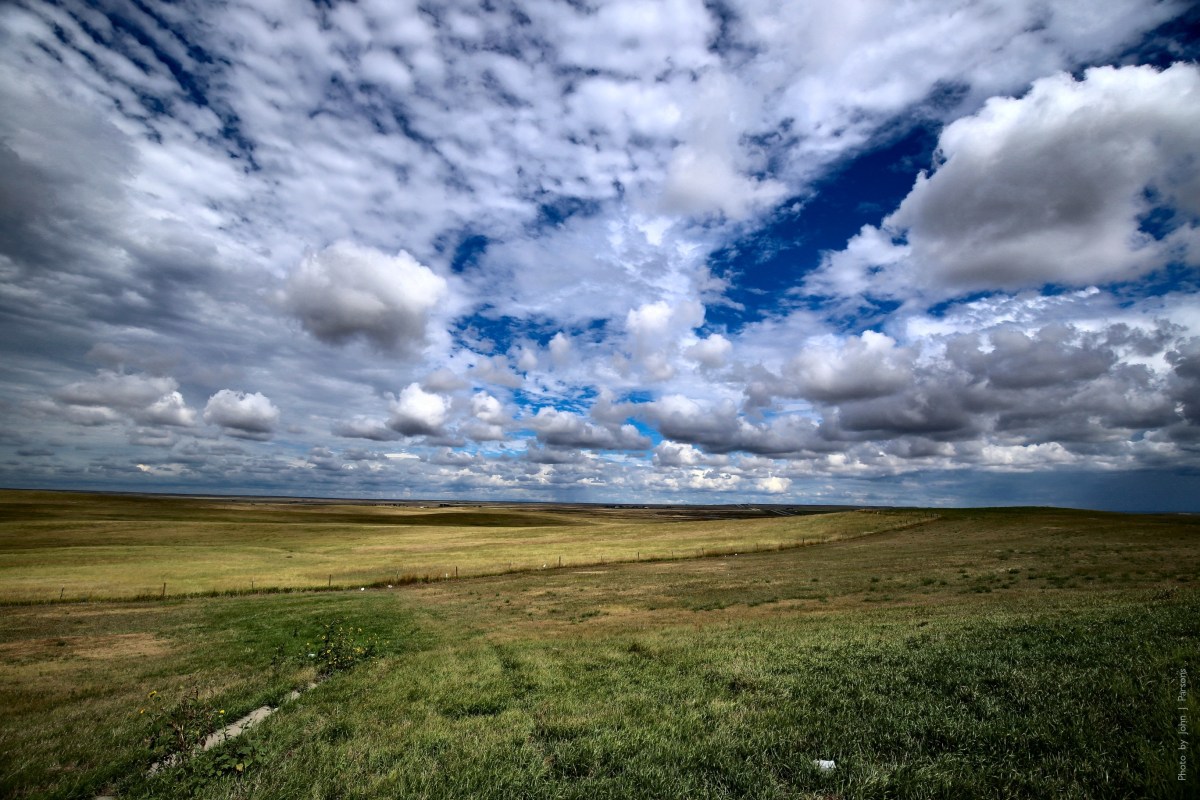
Dislocated: A country dance


Dislocated

There was a two-roomed school in Moorine Rock, and an old weatherboard hall. There are a few other buildings, including a newly restored hotel, but there is nothing big about Moorine Rock. It’s not a town, just a tiny string of buildings along the Great Eastern Highway 400 km from Perth on the way to Southern Cross.

I was there to collect a ute. Each month for 18 months or so in the mid-1990s, I took the Prospector train to Southern Cross to lead worship in two or three centres and mentor the two farmers who were studying in the parish-based TEAM program.

The parish would organise a car for me. In an average Southern Cross weekend, I would drive several hundreds of kilometres along lonely roads, huge flat paddocks of wheat or canola my only company, in order to take services in Southern Cross and tiny settlements like Bodallin and Mount Walker, each with a half-dozen worshippers.

And on this night, a parishioner had brought me to Moorine Rock to collect my transport. It was convenient because there was a party in the hall, and I could meet some new people who weren’t churchgoers. In theory, a good idea. I thought I would be up for the social challenge, but it didn’t turn out that way.

I was nearly punched.

A line-dancing troupe from Perth had visited the school that afternoon. It stayed on to provide the music for the evening. The Principal chatted with me. Her 12 pupils were lined up on the dance floor to show their parents the moves they had learned that day.

I knew no one. I looked around the hall. There were a couple of dozen mothers chatting in twos and threes. A few of the men lounged against doorframes their fists grasping cold cans of beer. Other men were outside, all in earnest conversations. I overheard ‘wool prices’, ‘canola harvest’, ‘sheep sales’. I thought I was at home in a farming community. I thought this was like the little town where I grew up. But I knew that breaking into tightly knit conversations as a stranger was always hard. I thought I was up to the social challenge.

The music started up again after a break. The Principal called for everyone to get on the floor and join the line dancing. Two or three of the women joined in. They’d done this before. A young man from the Sons of Gwalia mine, an outsider, merrily drunk and hyperactive, took himself to the floor energetically. Not one of the farmers made a move towards the dance floor.

The Principal dragged me onto the floor. Elbows linked, we jigged in our line. The dancing was quite fun, but I noticed that the young miner and I were the only males on the floor.  It seemed men didn’t dance.

I scooted back and forth for 15 minutes or so until the Principal released me. I thought I would join a conversation outside in the black night around the barbecues. I stood outside two of the groups waiting for the opportunity to jump into the conversation, either verbally, or physically. I wasn’t there it seemed.

I thought of Tambellup. It was many years since I had seen such strict apartheid: women inside, men outside.

I wandered back inside and tried to join the women’s talk. One group was more inviting and allowed me to move into their circle. But I could find nothing to contribute to their talk of babies and home duties and being a woman on these vast farms. It was on that night I learned that many women in their forties with growing families and solid farm responsibilities were not allowed access to money. Their fathers-in-law insisted that he had sole control of the bank accounts. The women were welcome to shop, but every little item had to go on the farm account – and then be accounted for.

Moorine Rock was in no danger of being liberated, it seemed.

Pretty soon, I gave up trying to socialise. I grabbed a can of Sprite and leaned against a wall: an involuntary wallflower. One of the farmers’ wives took pity and asked me who I was and what I did. The usual small talk. Very soon, we were into her rare trips to Perth. I told her about my travels. She had cruised in Europe and around Greenland. Suddenly there was a man between us, his face red.

‘Let me have my woman back.’ He said it quietly, but I could hear the menace in his voice.

‘Sorry about my husband,’ she said as he led her away.

I assumed that he was drunk and that this was a one-off situation. I still thought I could handle the social challenge.

I repeated the very same mistake five minutes later. This time the angry husband was about to hit me, but his wife restrained him.

I decided it was time to leave. I didn’t fit in. I couldn’t meet the social challenge. I headed for the front door of the hall and out into the night. I had to find the ute. I had to be able to locate the ignition. If I couldn’t succeed in those two challenges, I would have the humiliation of having to go and ask one of the men for help.

I quickly picked out the only ute. I slid into the dark cab, felt for the key slot, started the motor and flicked the headlights on. Three challenges in the pitch dark, really: one, find the ute, two, put the key into the ignition slot, and three, find the headlight switch. Three challenges met. Much easier than the social challenge.

I followed the dirt track from the hall to the highway and piloted the rattly ute to my accommodation in Southern Cross.

I was glad to be alone.

On Monday, back in Perth, I visited my physio. The boot-scooting had put my back out . Dislocated – badly.

ooooooooooooo

Photo credit: jjparsonsphotography