Icebergs and Hate


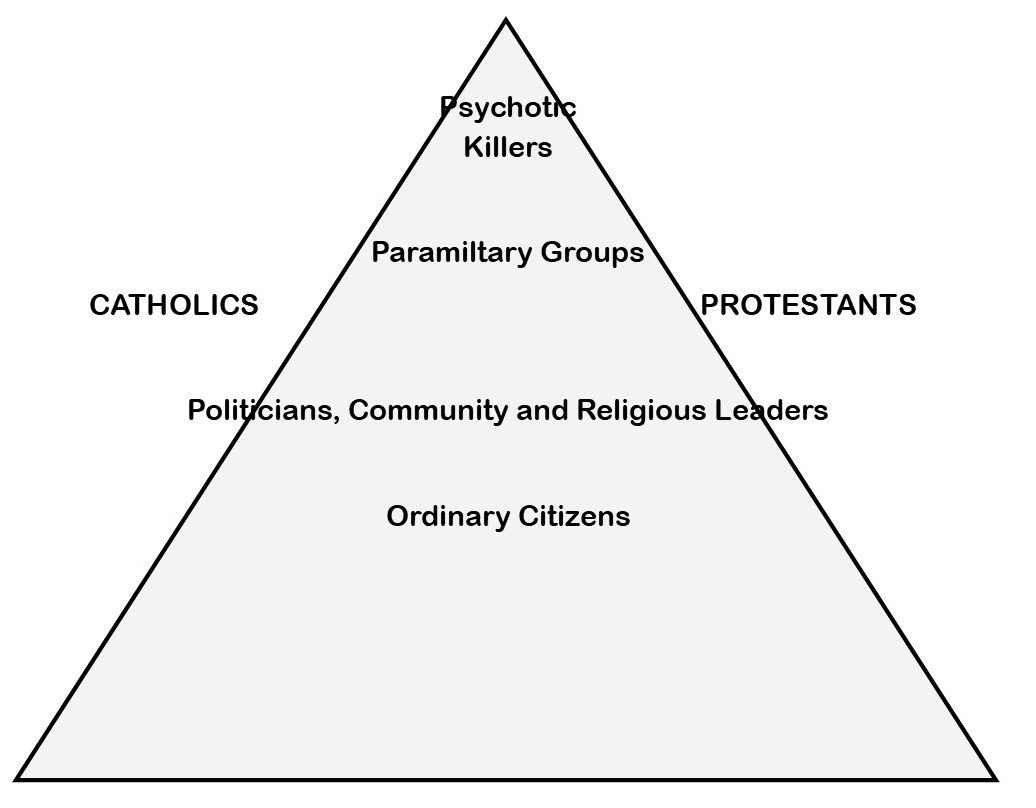
The tips of icebergs are notoriously dangerous: the old saying posits that nine-tenths of the iceberg is under the water. This larger invisible ice stabilises the whole ice structure. Ignoring them is a dangerous choice.

In the past few days politicians have been bandying about the phrase ‘Islamic terror hatred’. They state that preventing such hatred may prevent further shootings. The Government are proclaiming victory. Their new law will make Australian Jews safer.

That may be true – as far as it goes. There is a great deal going on ‘under’ the tip of the iceberg: the psychotic killers who use Islamic language to justify their criminal actions are only the visible iceberg. Laws condemning such statements should have some effect. Reducing the number of guns in the community may also reduce opportunities for killers to act.

These psychotic killers are buoyed by hate groups. Neo-Nazis spout hatred of Jews. I note that they are not Islamic terrorists, but nasty just the same. ISIS may not be an identifiable group in Australia, but its hate speech empowered the killers at Bondi. These militant groups may not be killers, but they give permission to the few who are.

But drill down further into the iceberg, into the Australian community. Politicians, community leaders and religious leaders, myself included, have not been strong enough, persistent enough and clear enough in our condemnation of these hate groups.

As a Christian priest, my clear task is to promote the truth that every person, regardless of race, religion, ethnic background, is made in God’s image, beloved by God, and therefore worthy of respect. God loves each person and weeps over every instance of discrimination and hatred. God doesn’t tolerate it.

Other faith and community leaders may express these values differently. Even these differences are wonderful and to be welcomed.  

Our lack of leadership gives permission to the hate groups. We need to own the fact that our condemnation of them has not been strong enough.

And of course, leaders can be strong in promoting community harmony only if the community itself encourages us leaders to speak out against hate and for respect.

As we drill down even further, into the general community, we should examine ourselves: are we harbouring discrimination in our hearts? Are we tainted by not accepting difference ourselves? These are uncomfortable questions, and lead to other questions even more discomforting: do we call out casual racism when we hear it? Do we show acceptance to those of different skin colour or strange religions (strange to us)?
My assessment is that we participate in a society that fails to live up to its values of acceptance and compassion. I cringe when I recognise the sting of the discriminatory attitudes I grew up and I catch myself flinching from different skin colour or distinct dress.

We are a racist mob. And for as long as we don’t challenge it, we let our leaders off the hook. They, in turn, avoid difficult conversation. They fail to condemn. They, in turn, give power to the rhetoric of the hate groups, who, in their turn, give cover to those who would use their rhetoric to kill.

One law won’t stop ‘Islamic terror hatred’ or anti-Muslim diatribes. There’s a rottenness running through our whole society. Of course, not every individual is a racist, but too often I find myself willing, by inaction, to participate in it.

As well as laws against hate speech, we need education for harmony. That is a huge task to get on with, but it is a possible remedy to the danger of the iceberg. The choice to do nothing through every part of the community is the choice to run into more horror like that on the beach at Bondi.

Pyramid courtesy Northern Ireland Mediation

Racism is not a new problem, but all the more reason to tackle it.

Did We Not Do Enough?


In the past two weeks, I have been thinking about the late Kim Beazley, Snr. I knew the great man slightly when I was a priest at Christ Church Claremont, and he was a parishioner. I greeted him after church each Sunday. I visited him at his home in Cottesloe, and on one memorable occasion, he took my colleague John Warner and me to a long lunch at Parliament House, combined with a history of the characters in the Labor Party before the split. He was a lively raconteur.  

I have also been thinking of the Headmasters Conference and their actions beginning in the 1930s.

I have been thinking that the massacre at Bondi Beach last week could have been prevented if their vision had been grasped back then.

In 1938, the Headmasters Conference consisting of the Heads of all the Independent boys’ schools in Australia, together with those of some Catholic Schools, were disturbed by the rise of antisemitism in Europe. The Conference proposed that an association to promote the high-quality teaching of religion in Australian schools should be created.

The war intervened, and nothing came of the proposal until 1974, when the HMC and the Association of the Heads of Girls Schools Australia (AHIGSA) formed the Australian Association for Religious Education. I joined AARE in 1975 and over the next 30 years I served at State and National levels, so I know this Association well. And there have been other similar associations.

The question haunts me; did we not do enough? Did we fail to raise the quality of the teaching of religion? Maybe we could have stemmed the tide of antisemitism, Islamophobia and all the other hatreds of different religious groups.

Teaching in schools about religion may have had more effect if the educational community had listened to Kim Beazley, as Australia’s Minister for Education in 1973-75. Mr Beazley proposed a National Curriculum consisting of nine learning areas. He included Religion as a learning area alongside English, Maths and Science. He meant, of course, not the doctrinaire teaching of Christianity – although he was a Christian – but the proper teaching of the religions in our society.

Other prominent educators, like Professor Brian Hill, Foundation Professor of Education at Murdoch University, who was one passionate advocate, pushed for the inclusion of religion in the general curriculum.

It is true that the learning area of Humanities and Social Sciences (HASS) mandate some attention to religion in society. And the Arts cannot avoid the heritage of Christians and others who have made wonderful music, literature, paintings, and sculpture to express their faith. Some educators told us that we should be content just to have religion included within other learning areas.

Teachers resist the teaching of religions believing that they are not sufficiently informed about the subject. To me, that is a sad excuse. We can all be better informed. That’s why the Principals of Independent Schools set up the AARE with its biennial Conference model of in-service preparation for their teachers. Teacher educators could easily devise similar in-service for teachers in State Schools.

Imagine if as much effort had been poured into the teaching of Religion as has been poured into English and Maths. Imagine if the students graduating from our High Schools, both public and private, had a sympathetic understanding of Islam, and Judaism, and Christianity, of Hinduism, and Buddhism, and Bahai, of Taoism and Shinto, and Confucianism, of paganism, and Wicca, as well as Indigenous culture as a special and focused Australian spirituality.

Imagine if those students had met Australian adherents of those religions, individual Jews or Buddhists or Christians and recognised them, as they would, as fellow Australians, fellow human beings.  Imagine how that would percolate through society and act as a damper on religious hatred. (Not to mention how much richer their own lives would be.)

Maybe that would have been enough to stop this hatred of religions, especially the hatred of the Jews.

It is possible that I’m overstating the case. No amount of high-quality education would likely have stopped the shooters at Bondi on 14 December 2025. They were too filled with hatred.

But great educators like Kim Beazley Snr, Sir James Darling (Geelong Grammar’s renowned Headmaster from 1930-1961), Peter Moyes (Headmaster of Christ Church Grammar in Claremont from 1952-1982, and my mentor in AARE) and Brian Hill, must all be wondering whether it would have been any different if Australia had listened to them.

Courtesy Anglican Diocese of Edmonton, Canada

n   

He taught Religious Education as Senior Chaplain to Christ Church Grammar School  (1978-1984). He also followed Professor Brian Hill from 1998-2004 as the teacher of the unit ‘Religious Education in Schools’ to students at Murdoch University preparing to be teachers.