
The Voice: Justice, Race and Responsiveness
The current life conditions for the First Nations of Australia are poor compared to the rest of us. They die younger than the rest of us; they are imprisoned in greater numbers than the rest of us; they fail to thrive in schools. This inequality has been brought about by chronic injustice, first through frontier conflict throughout the 19th Century and then through White Australia and other discriminatory policies in the 20th Century. As Prime Minister Keating said,
We took the traditional lands and smashed the traditional way of life. We brought the diseases and the alcohol. We committed the murders. We took the children from their mothers. We practised discrimination and exclusion. It was our ignorance and our prejudice. And our failure to imagine that these things could be done to us”.
Recognising First Nations in the Constitution is an appropriate way of recognising this injustice and will go some way to make a more equal platform for all Australians.
Far more than this, the mention of the First Nations in the Constitution will be a source of our national pride. Theirs is a rich, complex and dazzling culture that is at least 60,000 years old. The song lines, the rock art, the fish traps, even bread-making, are Australian inventions.
Secondly, the Voice isn’t about race. As a Christian, I do not accept the concept of separate races. There is one race, the human race, Adam’s race. And if the idea of race does creep into the Old Testament before Christ, it is quite clear from Saint Paul that ‘in Christ Jesus, there is … neither Jew nor Greek.’ We Christians are blind to race… or should be!
Our post-colonial world usually defines race against whiteness. Being a European is seen as the norm; if you differ in any way, you are cast as less. This is a nasty concept. Blacks, Asians, Africans, Inuit, may have different histories, they may even have different physical features, but we are all one race.
So recognising the Voice in the Constitution is not racist. It will acknowledge a different history. They are the First Peoples. They were here before European colonisation. But we are one race.
First Nations history has accounts of megafauna, of changes in landforms and seascapes, with the record of deep time in kinship structures, even crafts learned over aeons like making boomerangs or weaving dillybags. How wonderful it will be to be able to say, This is our history.
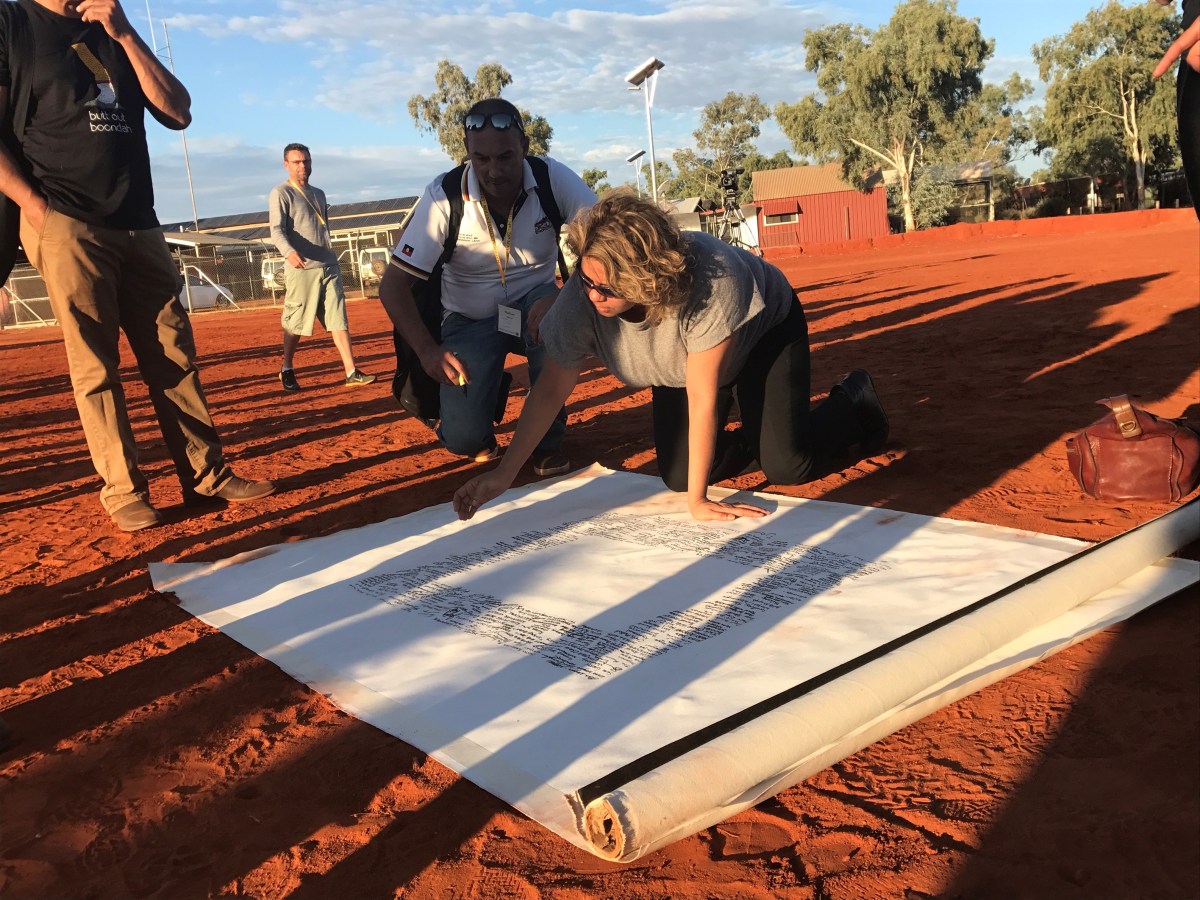
The invitation from the Uluru Statement from the Heart is to add their 60,00-year history to the history of the settlers, to make the Dreaming as important for us Australians as Aristotle or Confucius. The Uluru Statement is not asking whitefellas to give up anything; it is an offer to bestow on all Australians another stream of thought and culture.
As Christians, we take seriously that the referendum arises from an invitation. We are people who value relationship. We prioritise love. We proclaim that God is love. Invitations come, not from a place of anger, or from a desire to dominate, but from the hope to connect.
As those ‘coming from all points of the southern sky’ have reached out to the whole Australian community, I, for one, want to respond with hope and love, and say Yes to this gracious invitation.
I look forward with excitement to the new future it will bring for all Australians.
 Mind Journeys