
Slavery, Saint Francis and us


If you prefer to listen to Ted preaching this homily, click below (12 minutes):

The Holy Gospel of our Lord Jesus Christ according to Saint Luke.

Glory to you, Lord Jesus Christ.

[Luke 17:5-10]

The apostles said to the Lord, “Increase our faith!” The Lord replied, “If you had faith the size of a mustard seed, you could say to this mulberry tree, ‘Be uprooted and planted in the sea,’ and it would obey you.

7[Jesus said], “Who among you would say to your slave who has just come in from ploughing or tending sheep in the field, ‘Come here at once and take your place at the table’? Would you not rather say to him, ‘Prepare supper for me; put on your apron and serve me while I eat and drink; later you may eat and drink’? Do you thank the slave for doing what was commanded? 10 So you also, when you have done all that you were ordered to do, say, ‘We are worthless slaves; we have done only what we ought to have done!’”

For the Gospel of the Lord,

Praise to you, Lord Jesus Christ.

In the Name of the Living God, Father, Son and Holy Spirit.

The whole point of having a slave is that person can do whatever you want whenever you want.

When we were in Mauritius Rae and I used to worry about our hosts’ driver who was called Anil. Our hosts owned a sugar plantation and invited us to dinner a couple of times during our seven-week stay on the island.

They would send a message ‘Anil will pick you at 5:30.’ Anil arrived promptly at 5:30. Anil drove us back to the plantation. We had dinner, not with Anil, of course. Just with Pierre and Doris. Pierre showed us over their sugar refinery, a 24-hour operation. We talked. At 11:30 in the evening, it was time to go home.

Pierre yelled across the backyard, ‘Anil! Anil!’ Anil stumbled out of his hut, shook off his sleep and drove us home. It was an hour’s drive, and then, of course, Anil had to drive an hour back again.

Anil wasn’t a slave, but Rae and I worried that he was treated like one.

The people of Jesus’ time had slaves. The Jews had always had slaves, going back to the time of Abraham. At least, the more affluent Jews had slaves. And the whole Roman Empire depended on the labour of slaves. Apparently one third of the population was enslaved. People 2,000 years ago didn’t have the same moral objection to slaves that we have now.

And the whole point of having a slave is that person can do whatever you want whenever you want.

In this morning’s Gospel reading, Jesus invited the people of his day to try a radical thought experiment: imagine you are the owner of a slave who has been ‘working all day in the field, ploughing or tending sheep.’ (Luke 17:7) When evening comes, you allow the slave to take as much time as he wants to wash and change into clean clothes. Then the slave reclines on the best dining couch in the house. Then you, the owner, the master, serve the slave his dinner, and the slave can eat the meal quickly, or can spend four or five hours at the table chatting to friends and drinking wine. You are on call until the slave tells you he has finished his meal.

Then Jesus stops the thought experiment. No: you treat the slave as a worthless slave whose job is to serve you and not the other way around. If it doesn’t suit the slave or the slave is too tired makes no difference.

This thought experiment comes from Jesus, who as Saint Mark and Saint Matthew tell us, ‘…came not to be served but to serve and to give his life a ransom for many.’ (Mark 10:45, Matthew 20:28). Not to be served, but to be a slave.

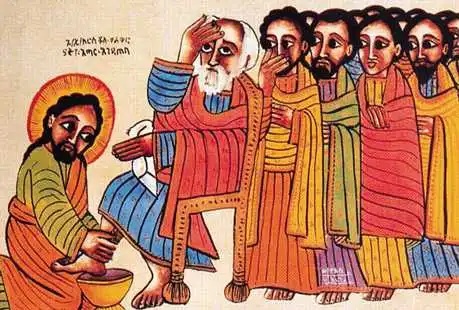
In other words, this thought experiment is not as fanciful as it sounds. Jesus himself swaps the role of Lord for that of a slave for example, when he washed the disciples’ feet (John 13:5), and really upsetting Simon Peter. ‘You will never wash my feet!’ wails Peter (John 13:8).

It’s not possible, we think. Even if you don’t own a slave, the point of having slaves is to do anything their masters want at any time. Jesus upends this idea. A slave is a human being created in the image of God, and simply because of that should be, at least, respected. But more than just respecting slaves, Jesus challenges us to serve others as if we were slaves ourselves. And especially, we should serve those who are treated as slaves.

Yesterday was the feast of Saint Francis of Assisi, a saint who means a great deal to me. Francis was the son of a cloth merchant, Pietro di Bernadone, who was growing richer and richer. Francis was privileged by having the benefit of this extreme wealth, and when he was a teenager, he made the most of the lavish lifestyle. He threw wild parties with his friends, providing the wine and food for the feasts. He gained the nickname ‘The King of The Revels’.
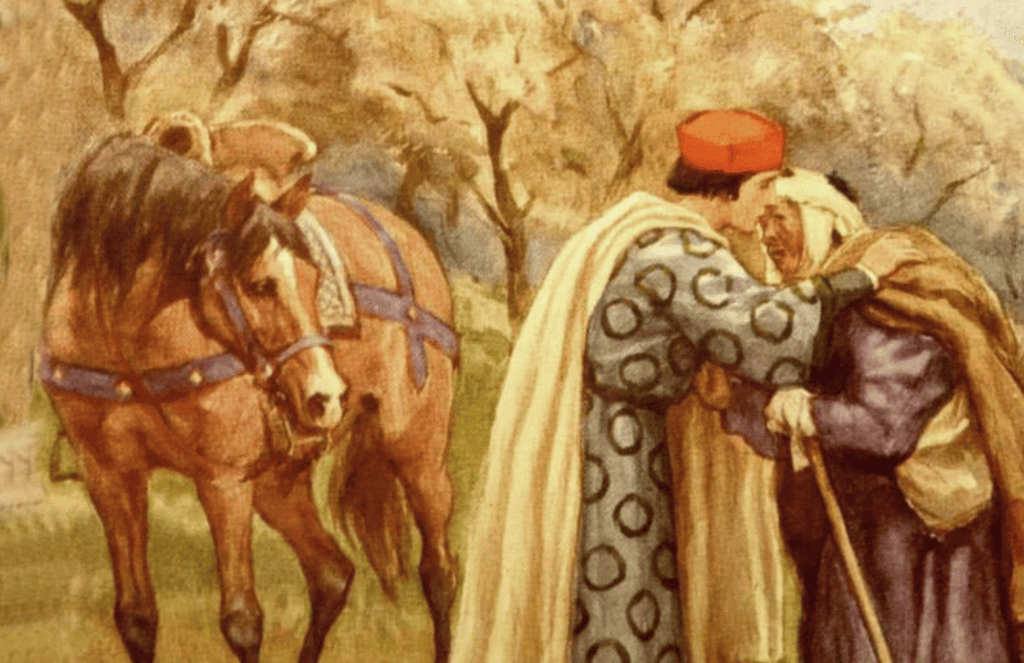
But he grew uncomfortable with this privilege. He was riding outside Assisi one day – and owning a horse was something like owning a Morgan Super 3 sports-car today or maybe a Rolls Royce Sweptail with a million-dollar price tag. As he rode, he saw a leper. Until then, Francis had been revolted by lepers. They were disgusting, repulsive. But on this day, Francis was moved to dismount and approach the leper and embrace him. Something changed in Francis from that moment. ‘That which was bitter had become sweet,’ he wrote later. (The Testament, 1, FAED I, 124.)

One of the first ministries Saint Francis undertook was caring for lepers; becoming their slave, their servant, looking with love on their distorted features and running sores, feeding them, keeping them safe from brigands and dressing their wounds.

Francis knew that this was how Jesus challenges us to be a slave to others. It’s a confronting idea. And we should be confronted. It goes against the way things are. It turns the world upside down.

I find it interesting that even though Francis is known for poverty, in the early years, many of his followers were queens and princesses: the Blessed Isabelle of France, Saint Louis’ sister, was a princess, and Saint Elizabeth was the wife of the future king of Hungary. Saint Clare too was from a noble family. These royals and aristocrats responded to the challenge to become a slave for others, serving the poorest, putting their lives at the service of the neediest.

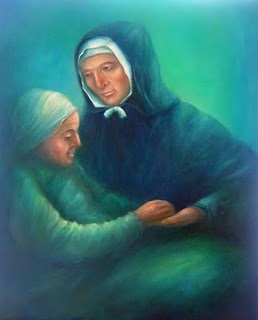
I am impressed by Saint Jeanne Jugan in France just after the French revolution. She was inspired by Saint Francis to look after homeless women, eventually setting up a network of refuges throughout the east of France and becoming the Little Sisters of the Poor, who are in 2025 still serving the elderly poor. They have a house in Glendalough just north of Perth city. She too, and her sisters, respond to the challenge to be a slave to others.

And we are followers of Jesus too. The same challenge applies to us – as individuals, as the people of Saint Brendan’s. We don’t have to be the founder of a religious order, or even join one, to take up this challenge of Jesus. But if royals and aristocrats can become slaves, so can you and I.

Is there some situation where God is calling you to be a slave? Is there a person whose needs you can try to meet, but whom you avoid because you know it will be difficult? Is someone you know being held captive, ensnared in some way by someone? Is there a way to be a slave to them, to serve them in their needs? Being a slave is not about knowing you can succeed. It’s about putting aside our needs to achieve, to make a mark. Being a slave’s only about obeying the master. ‘When you have done all that you were ordered to do, say, ‘We are worthless slaves; we have done only what we ought to have done!’” (Luke 17:10)

And our ultimate Master is Jesus, and Jesus chooses to serve when others are certain it’s beneath Him.

As a parish community, we rightly hold up our ministry to the Homeless as one example where we put energy and care into serving others whatever their needs. But just because we are serving one needy group does not mean there are not others in the Warnbro/Rockingham community calling out for our service as a parish.

Today we bless our pets. The same challenge applies to animals as it does to human beings. We sometimes think of our pets as slaves. We keep them locked them up in our house or yard. We have them on a leash when we take them outside. We expect them to do emotional work for us, loving us when we come home from being away. But I am sure that we bless our cats and dogs because we know the challenge to be a slave to them too. Take note of that Lottie, and Caesar.

So this story in the Gospel about a slave coming in from a day’s work in the field is not a hypothetical. It’s a challenge. It confronts us to find ways in which serving others turns the world on its head and creates a kinder, more loving world in partnership with the One who came to serve.

Where is God calling you to be a slave today?
The mystery of love


Now love is primarily a sharing: letting oneself be hurt by someone else’s distress, putting oneself at their side, living with, suffering with, begging with. She naturalises herself as one of the poor: this is where love works. And this process of sharing liberates the power of love to change the world; by her astonishingly fruitful activity, she contributes to changing the world. This is the very mystery of Mercy.

  • Paul Milcent on Saint Jeanne Jugan, founder and first Sister of the Little Sisters of the Poor.

St Jeanne Jugan

Two Women and the Whole Armour of God


ST GEORGE’S ANGLICAN CHURCH, DUNSBOROUGH

SERMON 23 AUGUST, 2015

I’d like to introduce you to two women I’ve been spending a lot of time with lately. Two women who wore the whole armour of God in very different ways.

They are the Australian musician Dorothea Angus and the founder of the Little Sisters of the Poor, Frenchwoman Jeanne Jugan.

I am researching both women and writing feature articles on each, hopefully to get them published in suitable magazines.

Dorothea was British-born but came to Adelaide with her parents when she was six just after World War I. She got a scholarship to study piano at the Elder Conservatorium, probably enrolling in 1928 alongside Miriam Hyde, who turned out to be a famous composer.

The classmates made a pact to swap their new compositions with each other every year; and they kept to this pact for decades. Dorothea made more than 250 broadcasts and recordings on the ABC, and many of them were pieces by Miriam Hyde.

Dorothea’s piano teacher, Brewster Jones, died, and her scholarship ended. Her new teacher was the noted organist John Horner. Under his tutelage, Dorothea fell in love with the organ, and in 1938 was giving recitals in Adelaide and Sydney and enthusiastically received as ‘Australia’s top organist’. But getting a job was harder.

St Peter’s Cathedral in Adelaide, it seems somewhat reluctantly, eventually appointed Dorothea in 1936 as ‘Assistant to the Precentor.’

Now the organist at St Peter’s was J.M. Dunn who had been Cathedral organist since 1891 – a run of 45 years! The year Dorothea was appointed to the staff Mr Dunn died. His assistant Canon Horace Percy Finnis became the new organist. But this priest was also the Precentor and Bishop’s Vicar. It’s not hard to imagine the talented Dorothea, frequently, but anonymously, being called to the organ keyboard, or to lead choir practice, and for Canon Finnis to take all the credit.

Dorothea Angus 2_webIn any case, Dorothea’s mentor, John Horner, was on a visit to Perth, and heard that Perth College was looking for someone to play the organ for Chapel and to teach all the music in the school, and he persuaded the Principal, Sister Rosalie and Archbishop LeFanu that Dorothea was the right person for the job.

Dorothea arrived in 1938 and found the music at Perth College to be chaotic and was desperate to go back to Adelaide. Two things stopped her: the coming war, and a growing friendship with Sister Rosalie. This was a friendship of opposites: Dorothea was always stylishly and fashionably turned out, Sister Rosalie was an old-fashioned Anglican nun always in habit with veil and wimple.

Sister would often slip into the Studio late in the afternoon while Dorothea practised and sit quietly in a corner. The two women had big personalities and big ambitions. From my interactions with Dorothea, I imagine they talked about faith in an energetic and purposeful way. Dorothea was always a little prickly; always ready to take down an opponent in argument.

Later on in life, she was sick in hospital, and I visited her. As soon as she caught sight of my collar across the ward, she yelled, ‘I don’t want a stupid priest. I’m not dead.’ I enjoyed the banter. But it was sad that such a talented woman had put up such a defensive shell around her, an armour that was not really the armour of God, but armour that came from being so hurt by the church that she dared not let it happen again.

Jeanne Jugan also experienced being silenced by the church. Jeanne was born in 1801 in a small fishing village in Brittany. She nearly married in her twenties, but told her mother, ‘There is some work that God has for me to do that has not yet been revealed.’

In her forties, she was sharing a house with two other woman in the beginnings of a prayer community. One day Jeanne found an elderly blind woman and brought her back home. She carried her up the steep spiral stairs to their apartment and gave the old woman her bed. Jeanne slept in the attic. She had discovered the work she was called to do: in community care for the elderly who would otherwise be on their own.

To support this ministry, Jeanne took a basket and began walking and begging money for her elderly people. People responded to Jeanne’s request by giving generously. The work grew. In only three or four years, they had opened several houses around Brittany. Women were being attracted to be part of this ministry.

The three founding women were working out a Rule of Life for their little community. A shiny new parish priest Auguste le Pailleur arrived in their village. He became spiritual director to the other two women. When the Rule of Life, which was partly a Constitution, was put into action, there was an election for Superior. Jeanne Jugan was elected without question. She was in everyone’s mind the one who had started this work.

Father le Pailleur used his authority as parish priest and deposed her, and put Marie, one of the other women, in her place. He then had himself declared as sole Founder of the Order.

The Sisters acquired a large property for their motherhouse where they could train the large number of young women coming to join. The property was called La Tour. Le Pailleur decreed that Jeanne would no longer go about begging for the order, but would live at La Tour-St Joseph among the postulants and novices, with no rank or recognition. Jeanne stayed there until her death 27 years later.

When they had completed their Chapel, the Bishop came and they had a large celebration. After the Mass, the Bishop sat with all the Sisters around him in a large circle. He spoke. Then Father Le Pailleur spoke. He talked about their beginnings. He mentioned all the founding Sisters by name, one by one, all except Jeanne. It was as if she wasn’t there, and had never been there.

Only once in that 27 years was there any official recognition of her presence. The Sisters had been given the chance to earn rent from one of their properties. A rich benefactor had warned them that they really needed to make up their mind about this because their identity depended on it. The Sisters were divided. Some argued that the rents were God’s way of making sure they were provided for. Others believed that if they came to rely on rents they would forget that they were dependent every day on God.

Someone remembered Jeanne Jugan in the novice house. They called her to the meeting, even though she wasn’t formally part of the council; she hadn’t even formally been professed as a full member of her own Order. They gave Jeanne the casting vote, and her signature appears on that one document. Significantly Father le Pailleur’s signature is not on that document.

Then Jeanne returned to the novice house. Those who remembered Jeanne afterwards remember an old tall peasant women with piercing blue eyes. They remember how joyful she was. They remembered how she joined in their work and their recreation. They remembered the advice she gave them about being ‘little’: if they were going to be of real help to the old people in their care, they had to be genuinely little with the little people, not be ladies condescending to do good.

In her forced retirement, being pushed away into the ranks of the least important members of the Order, Jeanne discovered how to put on the whole armour of God. She refused to be bitter, as most of us would be tempted to. Instead, she went into that silence, that withdrawal, to find God, to find joy. Then, with a twinkle in her eye, she discovered she was actually in a position to pass on her values to every new member of the Order as they came through the Novice house.

She died on St Joseph’s Day 1879, which was also Father le Pailleur’s feast day, so there was no announcement of her death. The next day, Father le Pailleur sent out a circular letter to all the houses of the Little Sisters of the Poor, thanking them for their good wishes and congratulations on his feast day. There was no mention of the death of the Founder of the Order.

The story does end well. The villain of the piece, Auguste le Pailleur, was eventually removed from his position as Superior and sent to a convent in Rome for the rest of his days. One wonders whether he found the same joy in his forced confinement as Jeanne had in hers.

Jeanne was recognised by 1902 as the Founder and first Sister of the Order. She was beatified by Pope John Paul II in 1982 and Pope Benedict made her a Saint in 2009.

You and I are unlikely to be beatified and canonised. We are the wrong denomination, for a start. But Jeanne Jugan reminds us to use the whole armour of God not as a defence against the world, but as a way of turning the world’s attacks into new opportunities for being close to God.