
Prepared for IPLRadio.org.au
Audio (10 minutes)
I’ve got three words to save the world.
The world is in a bad way, and sometimes it’s hard to look at it.
I see a child in Gaza, his eyes filled with horror and a question: ‘How could someone do this to us?’ So, it’s not surprising that people are turning away from the horror of the news. The Reuters Institute at Oxford University showed that fewer young people are looking at the news online; down from 89% to 76% in 2024. That’s a huge drop. The proportion of older people, those over 55, are also turning off, but at not such a fast rate, 73 to 68% in 2024.
2024 was the first time ever I’ve turned away from the news because it’s too hard to bear.
My father instilled in me the habit of news. At 7 p.m. every evening in our farmhouse everything stopped. ‘Shhh!’ my mum would say, ‘It’s time for Dad’s news.’
Reflecting on those years – the 1950s – I take a guess at why Dad insisted on listening to the news every day. On our farm our family could go days and weeks without seeing anybody; a stranger’s car was quite an event. Yet Dad wanted to know how the war in Korea was going; what the price of wool was in Albany and Fremantle; what international role Australia was playing when Labor politician Bert Evatt was President of the United Nations; and, most important of course, the cricket!
Dad reminded himself and us, every day at 7 p.m., that we were part of a much bigger world.
It’s been my habit since childhood to stop at 7 p.m. and listen to the ABC news. These days I can see the news as well as hear them read. My TV takes me straight to the Oval Office, or straight to the front in the battle for Ukraine, so the news has possibly more impact than 60 years ago.
And the news is bad. Once upon a time, an Opposition advanced opposing policies to sharpen the Government’s ideas. It was more a contest of ideas than attacking those on the other side. There is little civility now as they demean their opponents and not their policies.
The United States have become the Divided States, and the President, whether you approve of his policies or not, is a convicted criminal, a proven misogynist, a loudmouth and a bully.
Israel is carpet-bombing Gaza. It’s still happening.
Put a pin just about anywhere in the world, and the news is bad.
So I have three words to save the world.
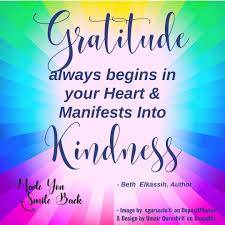
- Gratitude,
- Awe, and
- Kindness.
So many good things are buried under the rubbish of our contemporary life together. Most of us are loved. Most of us have food for today and the confidence that we will have food tomorrow. I live in a new house. I have more clothes than I need. I have a new car with all the latest tech. It’s a van actually, with a hoist for my wheelchair, and both the hoist and the chair are gifts from the Government, my fellow citizens caring for me.
Things work. Trains run, roads are smooth, ships bring all kinds of goods to us. We can visit friends in London or Sydney, and the trip will be safe and the aeroplane seats comfortable; well, not that comfortable.
And gratitude Is a spiritual discipline well worth cultivating. To be thankful, we need to look beneath the world’s garbage and find the good that has been provided for us. We can resolve to be thankful regularly, daily, more often.
I say a short grace before meals. ‘Bless, O Lord, this food to our use, and ourselves to your service. Help us remember those who are hungry and homeless.’ The very word, ‘grace’ means ‘thank you’; gratias in Latin, grazie in Italian. It also means ‘grace’: giving thanks is an act of grace, giving thanks embellishes, it gives style to our way of living.
Gratitude is not just a once-off thank you. It is saying thank you regularly.
Gratitude changes the world. It re-affirms our worth, both the person thanked and the person thanking.
I’m in awe of the beauty in the world. Awe is my second word to save the world.
I have stood in awe of the tingle trees and the karri forest of our southwest. They are awesome.
When we lived in Warnbro, my wife and I often made a point of driving five minutes to Warnbro Beach and watching the sun set over the Indian Ocean, in awe of the change of day to night, in awe of the golds and reds and purples and greys. In awe.
I have been stunned by the astonishing beauty of the impressionist paintings in a museum in France.
With 2,000 other music-lovers, I have stood in the Perth Concert Hall clapping the West Australian Symphony Orchestra after it played extraordinary and beautiful music.
The craft of popular artists like Taylor Swifts and TV dramas also lift morale and bring us to awe.
There is so much beauty in the world, created by our God and created by humans, which brings us to awe. That awe can lift our spirits and change the world. Awe and wonder increase the beauty in the world as they prompt us to see the beauty in other people, other scenery, other art.
Awe changes the world.
Kindness, too, will change the world.
I call them angels. I was driving my van in the Busselton Coles carpark and I turned too sharply over a high kerb, and hooked a rear wheel. I couldn’t move forwards or backwards. While I stood there scratching my head, six burly guys in hi-vis shirts and big boots came walking towards me. These tradies surrounded the car. One said, ‘One …, two …, three …, LIFT,’ and the van was free. The tradies waited while I drove off. They were making sure that I didn’t repeat my bad driving. I watched them in my rear-vision mirrors as they walked off in different directions. These kind tradies did not even know each other! They all just banded together in an act of kindness.
I remember this 10 years later. Whether we are the beneficiary, as I was, or one of the angels, or one of those watching in the carpark, when we see kindness like that, the world changes. We all feel more confident that we live in a community where people help each other out.
We see reports of people rescuing their neighbours from their flooded houses: kindness changing the world. We see people taking next door’s bin to the verge when the owner of the bin can’t manage: kindness changing the world. We see it in the smile of the teenager helping someone lift their shopping into their car: kindness changing the world.
Gratitude; awe; kindness. These three words have power. I used to worry that people might find them too touchy-feely, and of little value. But I know now that kindness, gratitude and awe are far more powerful than the demonic hatred, violence and ugliness that dominates the seven o’clock news. We still need to watch the news; we still need to know where the world is at. But when it seems that evildoing will never end, we remind ourselves that hatred, brutality and greed will come to an end as they are overcome by the more powerful forces of love. Gratitude, awe and kindness will save the world.


 Mind Journeys