The man-child Herod, 22 months into his reign, Points a chubby finger, Says, ‘He is a bad person’, and has him put to death. His hands are clean, washed and washed again in a gilded porcelain basin, His hands are clean; his mind washes in blood.
The man-child, 22 months into his reign, Is full of fear.
The boy-child, 22 months into his reign, Smiles, Says, Mama, and Baba, toddles in his swaddling clothes, his world overflows with love, His hands are in the dirt, close by the people of earth, His hands cultivate a garden of love; his mind washes in love.
The boy-child delights in his world.
The man-child, 22 months into his reign, Prophesies that a boy-child will take his throne away, Pouts his fleshy lip, points, Says, ‘All boys under two are bad persons,’ And has them put to death.
The monstrosity…
Howling in the streets. Mothers wail. Countries grieve. Squares fill with flowers. Torrents of tears through channels of love.
Wise men avoid the border guards. They do not show their visas. They run. Smugglers: love is their contraband.
Wise men show whose reign is true.
The man-child, 24 months into his reign, Fears. Still fears. Herod’s own kidneys turn on him. Gangrene eats his private parts. He dies in pain.
The boy-child on the cross. Hands and feet pierced. Head bloodied. A halo of red. His breathing stops. He exults, ‘It is finished.’ He is returning to his Baba.
Noel Jeff’s two chapbooks reviewed by Ted Witham tssf
Noel Jeffs SSF, Ode to Warrigal Creek Massacre, 2025, A4 card folded. ISBN 9780646826042.
Noel Jeffs, a Brother in the Society of Saint Francis comes from a farming family as I do. Settler folk like us cannot deny that our comparative wealth and social position derive from the dispossession of Aboriginal people.
The name Warrigal Creek in Victoria, like Pinjarra in WA, and doubtless similar names in other States, resonates because of the massacre perpetrated there. The name produces a complex amalgam of emotions, which Brother Noel explores in this poem.
Hope for reconciliation of country seems to be blown away by the ‘hot anger of a tied-up dog’ (line 3); shame for these murderous acts follows, and ‘now in pain I knead this atrophy’. (line 11). This line describes the violence with which the recollection of Warrigal Creek is turned over in the poet’s mind, like pushing, smoothing, pulling, pounding, tearing and restoring flour and water when making bread. The word ‘knead’ is a homonym for ‘kneed’, and I take from this that the poet’s rumination brings him to a silent place of kneeling in penitence.
The last and biggest emotion is ‘grieving’, grieving that the ‘litter of bones’ (18) may let the poet’s shame be revealed.
But hope seeps through the crammed lines of the poem. The insistence that this is ‘my country’ is used here to recognise the shared pain of remembering. It is ‘country’ as named by its original inhabitants, but it becomes ‘my country’ when truth is revealed.
The poem is printed on one A4 card folded. The front depicts four rainbow serpents entwined in a circle. The heads of the snakes form a cross with the word ‘sacred’ inscribed four times on the circumference. Printing in black and white has made the symbol rather harsh. References to the full story of the Warrigal Creek massacre are on the front and back covers.
The card would make a suitable emblem of remembrance for participants in a day of truth-telling, especially about the Warrigal Creek massacre. I commend Brother Noel for this brave contribution to the national and necessary task of truth-telling, This poem on its card is ‘a plaque to heroically // scold’ (13-14)
The Angelus and Mudbricks
Noel Jeffs SSF, Roads to Stroud: Grasping at Tears, Precipices, Sydney, Darkstar Digital 2024, 19 pages
Brother Noel’s chapbook consists in two poems of just under 140 lines each, describing the journey taken by the poet from the city into the bush of the Hunter Valley in NSW.
The Stroud of the title of Brother Noel’s poems needs some explanation as Stroud figures large in the imaginations of Australian Anglican Franciscans.
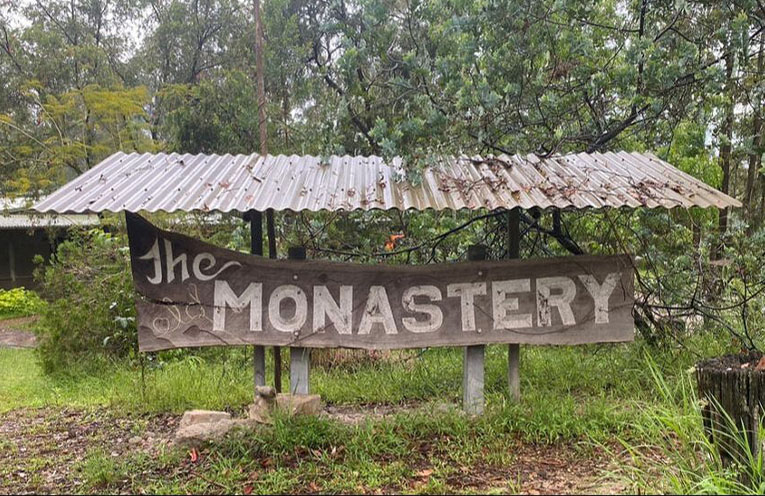
Nearly 50 years ago, three Anglican Franciscan nuns from the Community of Saint Clare in England arrived in Stroud in NSW with a vision to build a house for the Community. A small block of land just outside the town of Stroud was sold to the Sisters. Under the leadership of Sister Angela, an Australian, the Sisters, with volunteers helping, made mudbricks and constructed them into a unique building – a monastery with almost no straight lines but a lot of character.
A Chapel and Hermitage for the Brothers, initially for the priest-brothers to provide chaplaincy to the Sisters, was constructed 100 metres away from the monastery.
Since then, all three branches of the Franciscan family have made deep connections with this small section of attractive bush. Some of Noel’s fellow-Brothers make their home here, and Third Order members have enjoyed the rich hospitality of the place. Sadly, the Sisters returned to England in 2000, but memories of them are strong, especially in the old monastery, now a retreat house imbued with prayer.
In Brother Noel’s second poem under review, Precipices, ‘mudbricks and mudbricks’ (p.14) and the Angelus bell of the Chapel (p.16) take us straight to the property at Stroud. (It may also be intentional that the grey cover and simple typeface mimic the covers of the Sisters’ booklets of poetry and spirituality back in the 70s – a fitting homage!)
Noel Jeffs’ writing is thick with classical, Biblical and Franciscan allusions giving the whole experience of the poet’s visits to Stroud a nuanced exploration of ‘this parade of // fervour to want to come back year, // after year’.
The poet’s experience of leaving the city ‘awash with railway yards // tracks to sentience and homely inner-city birds’ (page 3) and arriving at Stroud where he finds it ‘ensconced in // its wilderness of wildness, made a // garden estate.’ (15)
The natural world and the human world are as entwined in the city as in they are in the country.
When the first Europeans arrived in NSW in 1788, some described the ‘natural’ parklands, the result of many thousands of years of land care by the Indigenous inhabitants, as a garden estate, so there’s a double irony in Jeffs’ description. Stroud, with its beautiful curated gum trees and mown grass, is a ‘garden estate’ hewn from wilderness.
The ‘loss’ of wilderness (or the Indigenous parkland?) is claimed with ‘a black fella warrior stood here // beckoning on, welcoming us in // in a vision.’ (15), the word ‘vision’ doing double duty here for physical vision and insight.
Jeff’s language is oblique. Words slip from meaning to meaning. As the poet is travelling north, watching the illusion of staying still in the train and seeing the bush moving, he asks, ‘What do I want to say about // the cantering bushland which // surrounds and is enveloped // by a tunnel of true darkness // which shapes my life in all its // passages?’ (12) The bush is cantering by as a horse canters, but it is also ‘canted’, (‘written slant’ as Emily Dickinson would say), so that it describes both the scenery and the poet’s inner feelings.
I relish the musicality of Brother Noel’s verse. He is a master of assonance which ranges from pure rhyme to distant echoes of sound. Savour the repeated ‘s’ , ‘p’, ‘ps’, and ‘l’ sounds in these three lines:
‘The circumference is here, and no longer
lying lips, give me a platypus and make
them safe.’ (13)
Simple in intention, the poems describe a journey home. But where is home, and what does it mean? The city ‘in which I am free // and lucky to be alive’ (1), or Stroud, where ‘I have gone to heaven, and am // coming down on the other side // of the earth’ (14)?
The archetypal ‘snakes [which] make love on poles’ (3) are a striking and original image, but they are surely meant to evoke the Caduceus, the staff of Mercury, the messenger of the gods, and widely used as a symbol of medicine. In ‘Grasping at Tears’, the poet is going to Stroud, and with him the messenger of the gods, a diplomat, the bringer of medicine, peace and healing. But the Caduceus also speaks truth with deception. The poet is an unreliable messenger, and his message is a rich potpourri of ambiguous imagery, alluring music and insights almost made explicit.
The poems are introduced by two fine photos taken by Brother Noel, the first shows the gravel road into Stroud, and the second a butcherbird enjoying her reflection in the outdoor shaving mirror at the Hermitage.
The poet may be ‘Grasping for Tears’, but it is unclear whether the tears are tears of sadness or tears of delight – probably both. I find the two poems ultimately hopeful, as the poet claims that:
‘Home is a handsome place
an exotic space for silence
A limbering tree-house (5)
***
Ode to Warrigal Creek Massacre and Roads to Stroud are available direct from the author, Noel Jeffs SSF, at noeljeffs@hotmail.com.
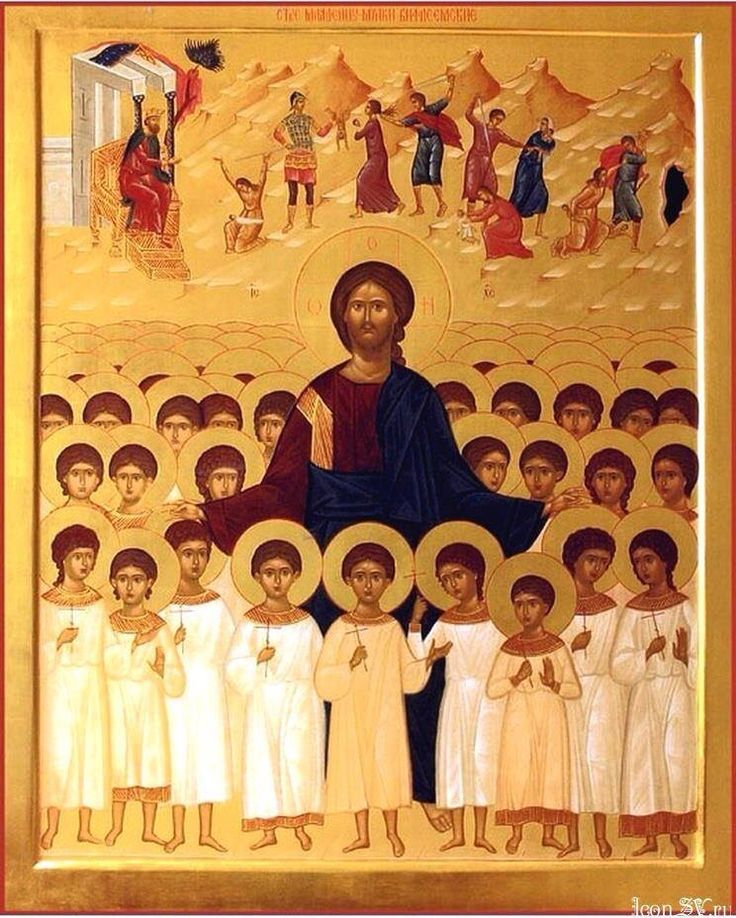
The Gospel of our Lord Jesus Christ according to Saint Matthew (Chapter 2 beginning at the 13th verse):
Glory to you, Lord Jesus Christ.
Now after they had left, an angel of the Lord appeared to Joseph in a dream and said, ‘Get up, take the child and his mother, and flee to Egypt, and remain there until I tell you; for Herod is about to search for the child, to destroy him.’ 14Then Joseph got up, took the child and his mother by night, and went to Egypt, 15and remained there until the death of Herod. This was to fulfil what had been spoken by the Lord through the prophet, ‘Out of Egypt I have called my son.’
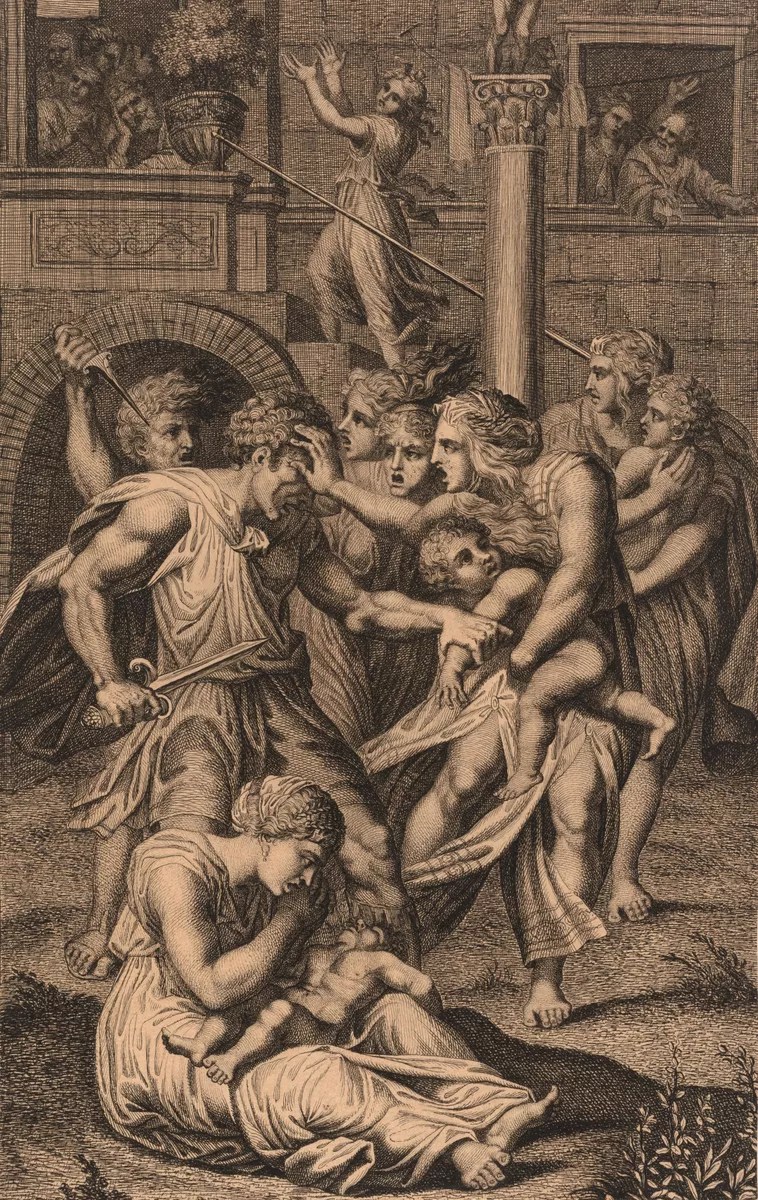
16 When Herod saw that he had been tricked by the wise men,* he was infuriated, and he sent and killed all the children in and around Bethlehem who were two years old or under, according to the time that he had learned from the wise men. 17Then was fulfilled what had been spoken through the prophet Jeremiah: 18 ‘A voice was heard in Ramah,
wailing and loud lamentation,
Rachel weeping for her children;
she refused to be consoled, because they are no more.’
[NRSV]
The Gospel of our Lord: Praise to you, Lord Jesus Christ.
In the name of God the Creator, who was born a human being, and lives among us as Spirit. Amen.
“When Herod saw that he had been tricked by the wise men, he became enraged. He sent men to kill all the children in Bethlehem and throughout the surrounding region from the age of two and under.” (Matthew 2:16)
The shock of a psychopath in power. In the 20th Century, Stalin behaved something like Herod. The sad thing is that we remember the psychopath and not the names of his victims. Dmitri Volkogonov writes,
“Stalin personally signed 357 proscription lists in 1937 and 1938 that condemned to execution some 40,000 people, and about 90% of these are confirmed to have been shot. At the time, while reviewing one such list, Stalin reportedly muttered to no one in particular: “Who’s going to remember all this riff-raff in ten or twenty years’ time? No one. Who remembers the names now of the boyars Ivan the Terrible got rid of? No one.” “
King Herod would resonate with that sentiment.
Mao Tse Tung reportedly killed 45 million people in four years. The records are carefully catalogued in the Public Security Bureau, and researchers can read about the violence Mao ordered and permitted, including deliberately starving the elderly to death because they couldn’t work efficiently. But scholars don’t write critically about Mao: it seems that the Chinese don’t want to face these horrors.
From what I understand, people also tried to forget Herod “the Great” as quickly as humanly possible.
Stalin, Mao and Herod. Eight children murdered by their mother in Cairns. A siege in Sydney by an unhinged Iranian. The horror of it all seems to have set out to spoil our Christmas. We want Christmas Day and the Twelve Days of Christmas to be Lazy, Hazy Days of Summer without a care, yet, with the Feast of the Holy Innocents, the church sets a trap for us three days after Christmas.
Christmas can easily become a fantasy, especially in our consumer-laden culture. People travel hundreds of kilometres to view Christmas lights, and where communities have some success with colour and light one year, householders compete with each other the next year to be brighter and more spectacular than their neighbours. Cummins, a little town on the Eyre Peninsula in South Australia, turns its RSL hall over to a Christmas Wonderland. Carols by Candlelight have become so commercial and so un-focused that I can no longer watch them or join in.
These sparkling displays at Christmas empty Christmas of meaning. And I know that conflict, the conflict between Christmas and Yuletide, has been going on for nearly two thousand years, so I’m not going to win that. But I do know that the Feast of the Holy Innocents is a necessary corrective for us each year. It shocks us out of a fantasy Christmas world back into the real world.
It points out again where God’s concern is in Christmas: not in the cute superficialities of new babies, but in the pain of child-birth, the challenge of poor families, the survival – or not – of refugee families.
God knows the name of each of the boys under two in Bethlehem and the surrounding region who was killed by Herod’s men. God knows the name of each peasant murdered by Ivan the Terrible. God knows by name each of those massacred by Stalin and Mao. God cares for each, as he cares for each of the children killed in Cairns, and weeps over their mother, Mersane Warria.
God can name 141 Pakistanis, 132 of them children, less than two weeks ago in a school in Peshawar.
· Hamza Ali, 14 years old. Dead.
· Farhad Hussain, 15. Dead.
· Hamayun Iqbal, 14. Dead.
To God, the 141 killed last fortnight and the 41,000 Pakistanis in total killed by terror since 2001 are all beloved individuals.
God mourns for the lost lives of Katrina Dawson and Tori Johnson killed in Sydney; and unlike the tabloid press, God does not count Man Haron Monis as monster, but as a human being; he was damaged, disturbed, dangerous and responsible for his crimes; but still of immense value simply because he is a human being, God’s image in him marred and spoiled – as it is in each one of us.
So on the third day of Christmas, the church invites us to gaze compassionately on the horrors of the world. It takes courage, and sometimes it’s a little easier when we know that the victims are Holy Innocents.
We take seriously that God has taken human flesh, God became man in Christ. This means that he gazes through our eyes. God uses us to see. We are called upon to look with clearer focus; to be able to gaze without flinching on horror, and to allow Christ’s compassion to flow through us.
Some rather wonderful things happen when we allow this compassion to gaze through us: it transforms what we see.
First of all it turns victims into treasured human beings; we see them not just as people that happened to be in the way, but in Bethlehem as Jacob and Paran’s and Eliab and Naomi’s little boys, or in another massacre as someone’s lover, someone’s daughter, someone’s friend, someone’s father.
Secondly, this compassionate gaze shows Herod up for what he is – just a petty angry little man, not deserving the title of king. It shows that his values are bankrupt. We will have to deal with Herod as an individual, or someone does, but he is not the king he claims to be. In this story, we see clearly who is the king, who has the values of strength and love and care for his people – and that is God. The real claimant to the throne, not just of Israel, but of our lives, is revealed. God cares.
You may know the story Elie Weisel told of the men hung during the holocaust. As one boy struggled at the end of a rope, with the crowd being forced at gunpoint to watch minute after minute, a voice cried out, “Where is God in all this?” A man pointed to the struggling boy, and said, “There he is.”
God is in the midst of the pain and suffering. That is simply a re-statement of the Christmas message that God has come to live among us. Wherever there is pain and suffering, God is in the midst of it. God is in the outpouring of grief in Martin Place. God is in the fierce anger of the Pakistani government and people. God is in the bewilderment of the community in Cairns.
This God, the God who cares about our suffering, about our human condition, comes to surprise us at Christmas.
There are shepherds and there are wise men. The shepherds struggle. They struggle to make a living looking after the sheep of someone else. They struggle through long shifts in the cold and wet. They are tough, but life is hard. God’s news comes to them first, because God comes to share our struggles.
The wise men are learned astrologers. They know what is wondrous and amazing. God’s news comes to them too, because the coming of God as human being to share our suffering is wondrous and amazing. We are not learned astrologers. We need to be told over and over again.
God has become a human being and shares our suffering however horrific; and God with us is wondrous. Shepherds and wise men were there on the Third Day of Christmas. Glory to God in the highest!



 Mind Journeys