Icebergs and Hate


The tips of icebergs are notoriously dangerous: the old saying posits that nine-tenths of the iceberg is under the water. This larger invisible ice stabilises the whole ice structure. Ignoring them is a dangerous choice.

In the past few days politicians have been bandying about the phrase ‘Islamic terror hatred’. They state that preventing such hatred may prevent further shootings. The Government are proclaiming victory. Their new law will make Australian Jews safer.

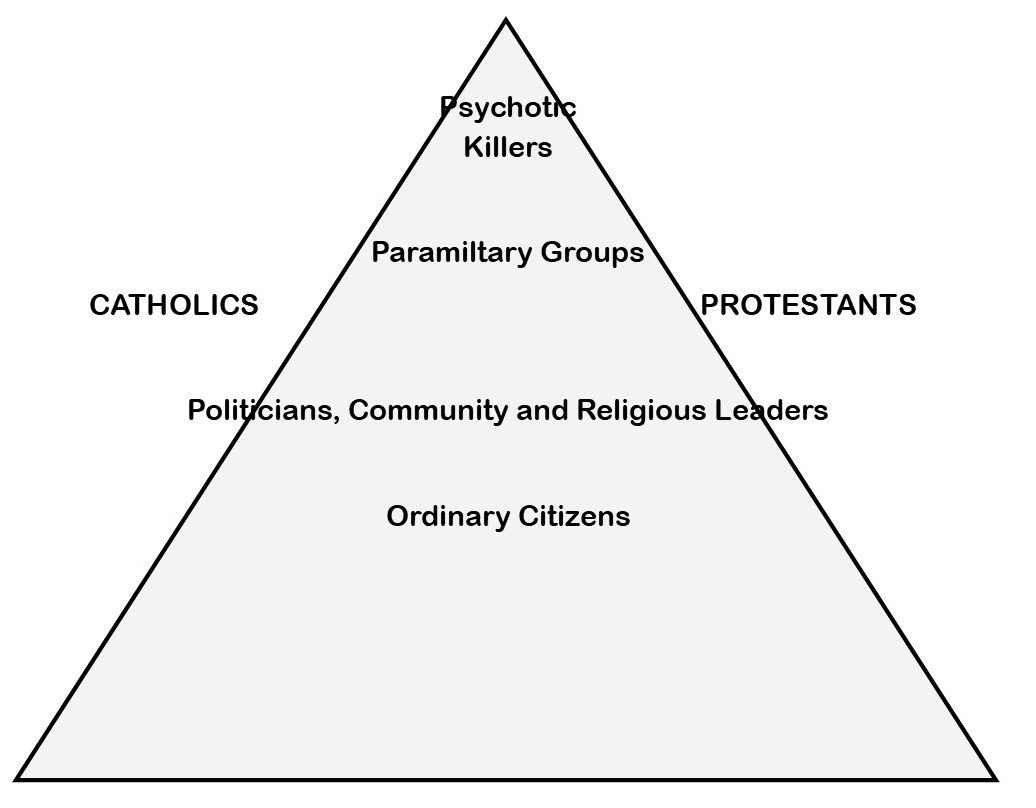
That may be true – as far as it goes. There is a great deal going on ‘under’ the tip of the iceberg: the psychotic killers who use Islamic language to justify their criminal actions are only the visible iceberg. Laws condemning such statements should have some effect. Reducing the number of guns in the community may also reduce opportunities for killers to act.

These psychotic killers are buoyed by hate groups. Neo-Nazis spout hatred of Jews. I note that they are not Islamic terrorists, but nasty just the same. ISIS may not be an identifiable group in Australia, but its hate speech empowered the killers at Bondi. These militant groups may not be killers, but they give permission to the few who are.

But drill down further into the iceberg, into the Australian community. Politicians, community leaders and religious leaders, myself included, have not been strong enough, persistent enough and clear enough in our condemnation of these hate groups.

As a Christian priest, my clear task is to promote the truth that every person, regardless of race, religion, ethnic background, is made in God’s image, beloved by God, and therefore worthy of respect. God loves each person and weeps over every instance of discrimination and hatred. God doesn’t tolerate it.

Other faith and community leaders may express these values differently. Even these differences are wonderful and to be welcomed.  

Our lack of leadership gives permission to the hate groups. We need to own the fact that our condemnation of them has not been strong enough.

And of course, leaders can be strong in promoting community harmony only if the community itself encourages us leaders to speak out against hate and for respect.

As we drill down even further, into the general community, we should examine ourselves: are we harbouring discrimination in our hearts? Are we tainted by not accepting difference ourselves? These are uncomfortable questions, and lead to other questions even more discomforting: do we call out casual racism when we hear it? Do we show acceptance to those of different skin colour or strange religions (strange to us)?
My assessment is that we participate in a society that fails to live up to its values of acceptance and compassion. I cringe when I recognise the sting of the discriminatory attitudes I grew up and I catch myself flinching from different skin colour or distinct dress.

We are a racist mob. And for as long as we don’t challenge it, we let our leaders off the hook. They, in turn, avoid difficult conversation. They fail to condemn. They, in turn, give power to the rhetoric of the hate groups, who, in their turn, give cover to those who would use their rhetoric to kill.

One law won’t stop ‘Islamic terror hatred’ or anti-Muslim diatribes. There’s a rottenness running through our whole society. Of course, not every individual is a racist, but too often I find myself willing, by inaction, to participate in it.

As well as laws against hate speech, we need education for harmony. That is a huge task to get on with, but it is a possible remedy to the danger of the iceberg. The choice to do nothing through every part of the community is the choice to run into more horror like that on the beach at Bondi.

Pyramid courtesy Northern Ireland Mediation

Racism is not a new problem, but all the more reason to tackle it.

The Price of a Human Life?

Surely to be racist, or to allow racist behaviour to continue, is the same as to deny Christ before others.


Matthew 10:24-39

You cannot put a price on human life. Maybe it’s acceptable to buy and sell live animals in the market, ‘two sparrows for a penny’ (Matthew 10:29), but human life is beyond price. Centuries before, Moses had delivered God’s commandment, ‘You shall do no murder’ (Exodus 20:13). When God made human beings, he pronounced them, ‘Very good’.

Desmond Tutu

Note that he made human beings, two individuals, one male, one female. We can conclude that God values three things about us:

1. All human beings are ‘very good’. All of humanity has God’s stamp of approval. I strongly agree that ‘Black Lives Matter’: even more I affirm that ‘All Human Lives Matter!’

2. As individuals as well as a species, you and I are ‘very good’. Every individual is cherished.

3. The differences between male and female are to be celebrated. Diversity is valued. God’s good creation is beautiful because of diversity. I’ve learnt that every magpie has its own personality. Every pebble in a gully is unique.

To treat one human being as though they were of less value than others is sinful. It defies God’s explicit values. To treat groups of human beings as though they were less than others is sinful. It denigrates God’s evident joy in diversity.

It makes me sad and angry that we need to declare that ‘Black Lives Matter’. The truth is that in Australia, as in the USA, we live in a world made for and by whites. Our community is systematically distorted by the sin of racism.

The brute facts spell this out:

* 432 Indigenous deaths in custody since the 1991 Royal Commission.

* 29% of people in prisons are Indigenous, yet there are only 3% in the wider population.

* For the period 2008– 2012, about two-thirds (65%) of Indigenous deaths occurred before the age of 65, compared with 19% of non-Indigenous deaths.

There is much for us to work on to combat the scourge of racism.

Our first task as Christians is to loudly declare the equal value of every human being.

We proclaim the virtue of humility, yet one of the white community’s worst traits is to believe that we know the best for Aboriginal people. It is surely time to listen to Aboriginal voices, to hear what they say about their disadvantage and about white privilege.

It will be an uncomfortable journey. It’s painful to recognise one’s own prejudice. Moreover, people who protest racism, either in person or at a rally, easily divide those around them, ‘setting a man against his father, and a daughter against her mother, and a daughter-in-law against her mother-in-law and one’s foes will be members of one’s own household.’ (Matthew 10: 35-36).

Opposing racism, however, is a crucial struggle for Christians. When we see racism in action, we need the courage to call it out, and not allow people in our circle to get away with casual racist comments. We may be called to work at a political level to oppose racism, making sure Government policies do not cement racism into place, and exhorting politicians to listen to Aboriginal voices.

Surely to be racist, or to allow racist behaviour to continue, is the same as to deny Christ before others (Matthew 10:33). Acknowledging Christ and his values is our calling.

Sticks and Stones: Adam Goodes and Australian Racism


First published on Starts at Sixty website, August 12, 2015.

I’ve never told anybody this story before. 

61 years ago on the veranda of the Infants’ Class Room at Tambellup School, I called Valma Eades ‘a black boong’. I remember the year precisely because the Infants’ (Year I) Room was separate from the rest of the school, and I sought out Valma on the veranda. This veranda was up two steps from a bitumen path. I was a skinny five-year-old white boy, and Valma must have been seven. She loomed over me.

But where on earth did I find the expression ‘black boong’? It was not a term that our family used. I think I had heard the town kids whispering it, and I wondered what the reaction would be if I used it directly on an Aboriginal person, so one play-time, I sought out Valma Eades and  I called her ‘a black boong’. Her reaction was instant and strong. Her fist landed under my jaw and lifted me off the veranda into the air. I landed on my back on the bitumen path.

In that instant of painful encounter first with Valma’s fist and then the hard bitumen path, I learned that Valma was right and I was wrong. Even though I was only five, I learned that it was wrong to use racist names against Aboriginal people. Even though issues between children should not be resolved through violence, in this case, Valma was right to give me a swift, sharp lesson.

You see, I lived on a 4,000 acre (2,000 hectare) family farm that until 100 years before had been the summer range of Valma’s great-grand-parents and their family group. On our farm was a freshwater lake that we called Lake Toolbrunup. Each year for forty, maybe fifty thousand years until just the end of the 19th Century, large groups of Noongar people had gathered at Lake Toolbrunup at the end of summer to enjoy its water,the freshwater crayfish they called ‘gilgies’ and cool shade. Now it supported our sheep.

How this farm had come into the possession of our family, and the white people from whom we had bought it, neither Valma and I had any idea.

Valma, on the other hand, lived with her parents and brothers and sisters  in a canvas tent, 6 foot by 4 foot, on a reservation on the edge of town. A trough at the end of the line of tents boasted one cold water tap between two tents. Their only heating in the bitter Tambelllup winters was an outdoor wood fire. To keep warm, kids burrowed into the sand near the fire. Valma’s mother cooked over this fire.

There were Aboriginal children at the Tambellup school who camped with their families on our farm, as on other farms. They lived in tents and brush shelters. Their diet was kangaroo, sheep and damper. We knew, vaguely as six-year-olds, that the feared Mister A.O. Neville, Protector of Aborigines, had prescribed the places where Aboriginal families could live and who they could live with.

However this exchange of land had taken place, Valma and I were brushed with this history. There was unfathomable sorry business between us. And this history was, and is still, inscribed on every Australian girl and boy. None of us can escape the fact that we live in the shadow of a gigantic land swap.

White Australians booing Adam Goodes is always wrong, just as calling Valma Eades ‘a black boong’ was always wrong. And if Adam Goodes is strong enough to stand up and fight back, it hurts, just as Valma Eades’  uppercut hurt. So it should.