
Sermon on the occasion of 50 years as a priest.
To hear Ted preach this sermon, click ‘play’ below.
In the name of the living God, + Father, Son and Holy Spirit.
+++
Pray for the peace of Jerusalem. (Psalm 122:6a)
It’s a kind of code. The writer of the Psalm believes that if Jerusalem has peace, then the whole world will be at peace. ‘Pray for the peace of Jerusalem’ means pray for peace in Jerusalem and everywhere.
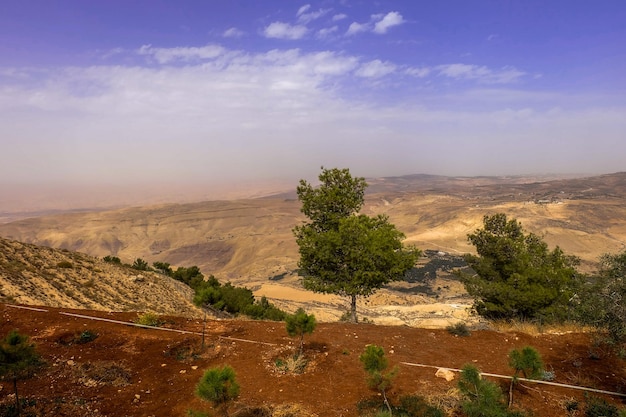
When Moses was 120 years old, the Bible tells us, he climbed Mount Nebo, a mountain in today’s Kingdom of Jordan, about 800 metres above the Plains of Moab. There God showed him all the land that God had promised the children of Israel, from the river to the sea, the river Jordan to the Mediterranean Sea, from Dan in the far north to Gilead near Jerusalem and further south to the Negeb desert. (Deut. 34:1-5).
Then Moses died.
The last thing Moses did in his long life was to look towards the land that God was promising his people. Moses looked forward to how blessed the tribes would be when they crossed the Jordan into Palestine. He paints a picture of how good the future will be for the children of Israel.
13b Blessed by the Lord [is] his land,
with the choice gifts of heaven above
and of the deep that lies beneath,
14 with the choice fruits of the sun
and the rich yield of the months,
15 with the finest produce of the ancient mountains
and the abundance of the everlasting hills,
16 with the choice gifts of the earth and its fullness
and the favour of the one who dwells on Sinai.
(Deuteronomy 33:13b-16 NRSV)
Moses could have sat around the campfire and regaled the Israelites with memories of leading his people out of Egypt. He could tell hoary tales about the 40-year trek through the wilderness, or reprise the joy, and the terror of meeting the living God in the burning bush. But instead, he chose, after 120 years, to go to the high mountain, and to look forward to the future, to the promised land.
Moses couldn’t have prayed for the peace of Jerusalem for the simple reason that Jerusalem didn’t exist until many years later, when King David fortified a tiny Jebusite village and began building the Temple.
What God wants for not only Jerusalem, but for the whole world’s future is peace, ‘shalom’ (שָׁלֹ֥ום). This word appears 237 times in the Old Testament, making shalom a significant concept. It means peace, and shalom is much more than absence of conflict.
Shalom means well-being in all its forms. Shalom means prosperity, but not the prosperity where only a few become wealthy, but prosperity where everyone shares their bounty with one another. Shalom is closer to communism than it is to the capitalism we experience in 2025. The prophet Isaiah reminds us that shalom is the opposite of war, which breeds hatred, fear, and scarcity. Shalom means love-in-action between people.
Pray for the peace of Jerusalem, the psalmist urges us, pray for Jerusalem’s shalom. God will bring peace for Jerusalem out of the fraught and complicated mess in the Middle East today. The promised land that Moses looked forward to stretches from the river to the sea. But today, Palestinians want to be free ‘from the river to the sea.’
These two visions of the future clash. They seem contradictory: how do we pray for the peace of Jerusalem?
How do we pray for peace for a people who were nearly exterminated a generation ago in the Holocaust? There are Palestinians and others like Hamas who say they would like to wipe out the Jewish people. Could it happen again? Never mind the politics: many Jews believe they are surrounded now by the same murderous hatred as they were in 1938.
As Lloyd said last Sunday in his sermon, now it is important for Christians to express solidarity with Jews. Write to Temple David in Mount Lawley; or write to the Perth Hebrew Congregation. Or to both. A simple email will be genuinely appreciated.
And how do we pray for a people who, a generation ago, were pushed out of the land their families had farmed for generations, for thousands of years? The Palestinians believe that Jewish settlement from the river to the sea is a policy that bulldozes them out of the way, often quite literally. What should we pray? How should we support Palestinians and their allies locally? Sending money to an aid agency is one possibility. Gaza desperately needs the basics for life. Or finding out about the rallies held regularly in the city and joining them or supporting them is another.
How do we pray for the peace of Jerusalem? What would bring about the shalom of all the people of the Holy Land? This morning’s readings encourage us to pray with hope. Hope in God. The problems of the Middle East are difficult to fix. But as Christians, we know that God’s intention is for all Jews and all Palestinians to thrive, to enjoy God’s shalom. The divisions will find healing.
We pray with hope, knowing that the future is in God’s hands. We look to the future with hope, learning with a deep confidence that God will meet us there.
Pray for the peace of Jerusalem. We can pray for the peace of Jerusalem only if we pray for peace in our own lives. We ask God to meet us in the conflicts of our families, knowing that some of those fights and divisions seem intractable to us.
We ask God to meet us in our everyday encounters. What do we need to do to foster shalom in our communities, as we encounter people serving us in shops, people on the footpaths, people at homeless respite, and neighbours of all sorts?
As Christians, we have a vocation to be makers of shalom; to be peacemakers. Saint Francis of Assisi, my favourite saint, told his followers to meet everyone with a greeting of peace.
[We should note that we Christians don’t have a monopoly on peacemaking. Jews greet each other with ‘shalom-aka’ and Muslims greet each other ‘As-salamu alaykum’; both saying, ‘peace be with you’.]
We too can make a greeting of peace a holy habit. For most of us, it might be a bit precious to say ‘peace be with you’ or ‘shalom’ every time we greet someone, but we can, for example, sign off emails or end phone conversations with the word ‘Peace’ – and mean it!
In this Eucharist, the priest greets us, ‘The peace of the Lord be with you’, and we respond, ‘And also with you.’ This morning, let us make the peace especially meaningful. Let us pray earnestly for the well-being and security of everyone we greet. Maybe greet fewer people and make sustained eye contact with each one if you can. Take two or three seconds to really see our neighbours, to remember that God delights in each one and seeks their shalom.
+++
As you know, today is the second anniversary of Lloyd’s ordination as a priest (congratulations, Father!), and it is my 50th. At the 8:30 Eucharist, Bryan Shattock marked his 42nd year of priesthood.
We as priests have a special role as a peacemakers.
Firstly, we bid the people we serve to ‘pray for the peace of Jerusalem’, and we bid the people to pray more generally for peace. Temple David replied to me that my email was appreciated because I am a priest. My support as a priest carried your goodwill along with mine.
So, secondly, our role in the community of faith, especially our parish priest, our bishops and the archbishop, is to be bridge-builders.
One of the titles for the Pope is Pontifex, the Latin for ‘bridge-builder’.Pope Leo has an account on X called ‘Pontifex’, and he repeated on social media his first greeting as Pope. This is what the Pontiff said:
“Peace be with you all! This is the first greeting spoken by the Risen Christ, the Good Shepherd. I would like this greeting of peace to resound in your hearts, in your families, and among all people, wherever they may be, in every nation and throughout the world.” (Pope Leo XIV on X)
I’m not saying that priests should be Popes. But like the Pope, the priest builds bridges between people and God.
One of the roles the church entrusts to priests is to speak words of absolution, either to all of us in the Eucharist, or to each of us in private in the Sacrament of Reconciliation, formally and informally. These words of absolution make space for peace with God.
This role of absolving carries with it the responsibility for us priests to make peace, to promote shalom, in the entire community we serve. We should never provoke division or hatred.
But as pontifex, as people entrusted with opening space for God, priests try to discern when to challenge people; when to ask people to fulfil roles for which they feel unworthy or not ready, or when to expose evil and hatred to the light by challenging people to do better, and by challenging, so build peace among people.
One anecdote from my time as a priest at Christ Church Claremont. A few parishioners looked with disapproval at families with young children. They stared at them critically, they shushed them, they rudely moved away from them, and they demanded that parents take their children to the crèche.
One morning during the Eucharist, I saw families being disturbed by these parishioners. There were many whispers and many scowls. I saw one mum on the brink of tears. I got very hot under my dog collar. When we came to the notices at the end, I told the congregation in what I thought were terms everyone could understand, that if they continued to treat kids like that, there would be no church left.
As I shook hands with people leaving, one woman said to me, ‘I’m so glad you said that about the children. Someone has to speak up about how badly behaved they are in church.’
So much for my discernment to challenge, to create connections and shalom between people!
So, we as priests have the privilege of promoting love between the people we serve. Priests speak well of people, knowing that God sees every person as whole, as holy, as complete. Priests who gossip or who speak badly of others are smashing those bridges between people, not building shalom. We try to be peacemakers whenever and wherever we can.
We priests have a special role in building bridges into the future. Like Moses, we look with hope to God’s church in the years ahead. It’s so easy to look at the church and be despondent.
There are fewer churchgoers, we say. There are no young people, we say. We have only seniors who don’t have the energy for organising things, we say. There are divisions tearing Anglicans apart, we say, between St Brendan’s and St Nic’s, reflecting bigger divisions between Canterbury and Sydney. It’s easy for priests to be despondent. It’s easy for priests to think that we must come up with all the solutions.
We should be realists. God’s church is today what it is.
But as priests, we have a responsibility to remind people of a bigger story. God has been faithful to the church for 2,000 years. We have no reason to think God will not continue to grace God’s people with love and harmony, with shalom. Of course God will. God is not going to change or withdraw his love from the church.
Of course, all of us are all called to be bringers of peace, nurturing shalom. In fact, we can all do all the things priests do. But we priests are called to model peacemaking, to make space for peace, to call others to be makers of shalom. It’s a challenge for us, and it’s an extraordinary privilege.
We priests, like Moses on top of Mount Nebo, should be saying to the church:
The church’s future is blessed.
The church is blessed with the choice gifts of heaven above
and of the deep that lies beneath;
with the finest produce from the faith of those who have gone before us,
their stories, their hymns, their deep spirituality.
With the abundance of faith of those who will continue to come,
their joy, their faithfulness to Christ,
their willingness to live a life of service;
with the choicest gifts of love and shalom
And, above all, the church’s future is blessed with
the never-ending favour of the One who dwells with his people.
Pray for the peace of Jerusalem, and pray for your priests.
Peace be with you.
 Mind Journeys