Three Words to Change the World


Prepared for IPLRadio.org.au

Audio (10 minutes)

I’ve got three words to save the world.

The world is in a bad way, and sometimes it’s hard to look at it.

I see a child in Gaza, his eyes filled with horror and a question: ‘How could someone do this to us?’ So, it’s not surprising that people are turning away from the horror of the news. The Reuters Institute at Oxford University showed that fewer young people are looking at the news online; down from 89% to 76% in 2024. That’s a huge drop. The proportion of older people, those over 55, are also turning off, but at not such a fast rate, 73 to 68% in 2024.

2024 was the first time ever I’ve turned away from the news because it’s too hard to bear.

My father instilled in me the habit of news. At 7 p.m. every evening in our farmhouse everything stopped. ‘Shhh!’ my mum would say, ‘It’s time for Dad’s news.’

Reflecting on those years – the 1950s – I take a guess at why Dad insisted on listening to the news every day. On our farm our family could go days and weeks without seeing anybody; a stranger’s car was quite an event. Yet Dad wanted to know how the war in Korea was going; what the price of wool was in Albany and Fremantle; what international role Australia was playing when Labor politician Bert Evatt was President of the United Nations; and, most important of course, the cricket!

Dad reminded himself and us, every day at 7 p.m., that we were part of a much bigger world.

It’s been my habit since childhood to stop at 7 p.m. and listen to the ABC news. These days I can see the news as well as hear them read. My TV takes me straight to the Oval Office, or straight to the front in the battle for Ukraine, so the news has possibly more impact than 60 years ago.

And the news is bad. Once upon a time, an Opposition advanced opposing policies to sharpen the Government’s ideas. It was more a contest of ideas than attacking those on the other side. There is little civility now as they demean their opponents and not their policies.

The United States have become the Divided States, and the President, whether you approve of his policies or not, is a convicted criminal, a proven misogynist, a loudmouth and a bully.

Israel is carpet-bombing Gaza. It’s still happening.

Put a pin just about anywhere in the world, and the news is bad.

So I have three words to save the world.

  • Gratitude,
  • Awe, and
  • Kindness.

So many good things are buried under the rubbish of our contemporary life together.  Most of us are loved. Most of us have food for today and the confidence that we will have food tomorrow. I live in a new house. I have more clothes than I need. I have a new car with all the latest tech. It’s a van actually, with a hoist for my wheelchair, and both the hoist and the chair are gifts from the Government, my fellow citizens caring for me.

Things work. Trains run, roads are smooth, ships bring all kinds of goods to us. We can visit friends in London or Sydney, and the trip will be safe and the aeroplane seats comfortable; well, not that comfortable.

And gratitude Is a spiritual discipline well worth cultivating. To be thankful, we need to look beneath the world’s garbage and find the good that has been provided for us. We can resolve to be thankful regularly, daily, more often.

I say a short grace before meals. ‘Bless, O Lord, this food to our use, and ourselves to your service. Help us remember those who are hungry and homeless.’ The very word, ‘grace’ means ‘thank you’; gratias in Latin, grazie in Italian. It also means ‘grace’: giving thanks is an act of grace, giving thanks embellishes, it gives style to our way of living.

Gratitude is not just a once-off thank you. It is saying thank you regularly.

Gratitude changes the world. It re-affirms our worth, both the person thanked and the person thanking.

I’m in awe of the beauty in the world. Awe is my second word to save the world.

I have stood in awe of the tingle trees and the karri forest of our southwest. They are awesome.

When we lived in Warnbro, my wife and I often made a point of driving five minutes to Warnbro Beach and watching the sun set over the Indian Ocean, in awe of the change of day to night, in awe of the golds and reds and purples and greys. In awe.

I have been stunned by the astonishing beauty of the impressionist paintings in a museum in France.

With 2,000 other music-lovers, I have stood in the Perth Concert Hall clapping the West Australian Symphony Orchestra after it played extraordinary and beautiful music.

The craft of popular artists like Taylor Swifts and TV dramas also lift morale and bring us to awe.

There is so much beauty in the world, created by our God and created by humans, which brings us to awe. That awe can lift our spirits and change the world. Awe and wonder increase the beauty in the world as they prompt us to see the beauty in other people, other scenery, other art.

Awe changes the world.

Kindness, too, will change the world.

I call them angels. I was driving my van in the Busselton Coles carpark and I turned too sharply over a high kerb, and hooked a rear wheel. I couldn’t move forwards or backwards. While I stood there scratching my head, six burly guys in hi-vis shirts and big boots came walking towards me. These tradies surrounded the car. One said, ‘One …, two …, three …, LIFT,’ and the van was free. The tradies waited while I drove off. They were making sure that I didn’t repeat my bad driving. I watched them in my rear-vision mirrors as they walked off in different directions. These kind tradies did not even know each other! They all just banded together in an act of kindness.

I remember this 10 years later. Whether we are the beneficiary, as I was, or one of the angels, or one of those watching in the carpark, when we see kindness like that, the world changes. We all feel more confident that we live in a community where people help each other out.

We see reports of people rescuing their neighbours from their flooded houses: kindness changing the world. We see people taking next door’s bin to the verge when the owner of the bin can’t manage: kindness changing the world. We see it in the smile of the teenager helping someone lift their shopping into their car: kindness changing the world.  

Gratitude; awe; kindness. These three words have power. I used to worry that people might find them too touchy-feely, and of little value. But I know now that kindness, gratitude and awe are far more powerful than the demonic hatred, violence and ugliness that dominates the seven o’clock news. We still need to watch the news; we still need to know where the world is at. But when it seems that evildoing will never end, we remind ourselves that hatred, brutality and greed will come to an end as they are overcome by the more powerful forces of love. Gratitude, awe and kindness will save the world.           

The dangerous badge


The badge has arrived in the mail. Although the package was quite small it may provoke savage reactions and will certainly be misunderstood.

Years ago, I was much more politically active and wore badges to signal my involvement in different causes. I have kept a cloth bag of badges made with those old, primitive badge-makers. I shake them out onto the table, and I see now I supported the Campaign Against Racial Exploitation, Amnesty International, the Wilderness Society and all the predictable leftist crusades.

But this new badge is partly to protest the media who have so manipulated our sympathy that we lose our wider view and demonise a whole group of society.

The badge is a blue star of David on a white background. I will be wearing Israel’s colours, Israel’s symbol.

But why?

It may seem perverse, then, to wear a badge proclaiming. עם ישראל חי” (om Israel chai – let Israel live): how could I show support for a nation set on the annihilation of another?

The media encourage us to make a moral calculation: on October 7th in 2023, 1,200 Israeli citizens were killed and 240 were abducted by Hamas. In defending their country, Israelis killed 1,500 Palestinian terrorists. We want to cry out, ‘Isn’t that enough killing? Isn’t an additional 40,000 Palestinian deaths and flattening of homes overkill?’

Possibly like you, I also wonder whether razing Gaza is a precursor, as President Trump advocates, for wholesale dispossession. ‘Take them somewhere nice,’ he says with a blasé smile, their fate evidently irrelevant to him.

Like you, I have long been aghast at Israel’s harassing Palestinians and clearing them from the West Bank, and the current intensification of the IDF’s activity in the refugee camps where, apparently, terrorists peek out from under every Palestinian bed.

But consider Israel. I see a nation lashing out in fear. Many Israelis are children and grandchildren of the Holocaust. They are terrified that they will again be wiped out. They feel abandoned by the Western nations that created the State of Israel 76 years ago.  Their only friend seems to be the US, and that friendship under President Trump now seems brittle too.

For me, that cannot justify Israel’s behaviour in Gaza. But it goes a long way to explain it. And we have rarely seen that mortal dread expressed in the media. So I support Israel as it recoils from violence done to it. It is scared for its life.

Secondly, there is the agony of the hostages; their own agony, but also the agony of their loved ones and fellow citizens. They’ve ached for them to be returned. They’ve raged against their Government for continually prioritising the military response over bringing the hostages home. I stand with all the hostage families. They’re Israelis.

Thirdly, Israel’s Central Bureau of Statistics counts over 2 million Arab citizens. One Israeli citizen in every five is Arab or Palestinian. At least one Arab is a member of the Knesset, Israel’s parliament. These Israelis are harassed, interrogated and imprisoned if they speak a word against Israel’s actions in Gaza. But they’re Israelis.

Lastly, not all Israelis approve of their Prime Minister. They see his political calculus. He wants to cling to power. He needs to stay in power to forestall criminal proceedings against him. Ordinary Israelis feel the whole gamut of reactions to Netanyahu, from approval to active support, but also from disappointment to feeling betrayed by him. I stand with the critics of the Israeli government.

I like Jewish culture. At its best Judaism is a powerful moral and intellectual force in the world. I like the whole gamut of Jewish ritual from the blast of the shofar to Sabbath meals. It’s no accident that Jews are over-represented in fields as diverse as medicine and music. Judaism was the cradle of Christianity.

Judaism produced the extraordinary collection of books we call the Old Testament. The Jewish Scriptures contain amazing poetry, stunning philosophy and intriguing theology.  I have invested years learning Hebrew and studying the pages of these fascinating books from Genesis to Malachi.

I stand with the Jews’ legacy as builders of an ethical and aesthetic civilisation.

I look into my heart. In the end, I cannot but wear the blue and white badge even it offends random observers. I cannot but stand with Israel.

Prayer in Time of War


Prayer in Time of War

Can you breathe through spreading pain?
Can you bear the suffering again?
Can you bleach the blood-red stain?
Can you stop the rape of Ukraine?

Can you dull the loins of those on heat for war?
Can you block their guns as you’ve done before?
Can the hope of peace-talks cry, ‘No More!’?
Can fiery minds change their very core?

God, so implement the love of Calvary,
Your eirenic Spirit blast the fighters free,
Caress the world with mastery,
Your love that heals painstakingly.

Never war


Make love, not war.

Make love, not war.

Make love, not war.

This is the first and great commandment – at least, as it applies to nation-states and other tribal entities.

We have been so quick to fall victim to the narrative of Ukraine the victim and Russia the aggressor. We prayed this morning at church only for Ukraine. Even if it is the simplest case of Ukraine: victim and Russia: aggressor, Russia still needs praying for. We pray for its leaders that they stay their hand, that they make love, not war.

But we know the situation is more complex than Ukraine: victim and Russia: aggressor. That may be a summary of the politics, but there appear to be some in Ukraine wanting war, wanting to show how great the Ukrainian resistance will be. There are Ukrainians hiding trembling in the Metro and there are Ukrainians actively hunting Russians as ‘the enemy’.

And in Russia, think of those braving the Kremlin and protesting in the streets of Moscow and St Petersburg against their leaders. Think of the Russian legislators compromised by their allegiance to Russia and their reluctance to be the aggressors. Think of those in Putin’s inner circle who he has bullied into support for the war. And Putin himself: He is a brutal dictator, but does he not need prayer too?  He is a human being.

It’s complex, as all human relationships are complex.

So, I protest. I protest about praying for Ukraine as if the ‘blame’ is all on Russia’s side and not on both. I protest that our support for Ukraine is so easily subverted into supporting Ukraine’s war effort.

War can never be the answer. Even the great prosecutor of war Winston Churchill said, ‘Jaw-jaw is always better than war-war.’  

We need to pray. We do. So, let us pray for all caught up in this conflict. And above all, let us pray for peace.

Invictus? Really?


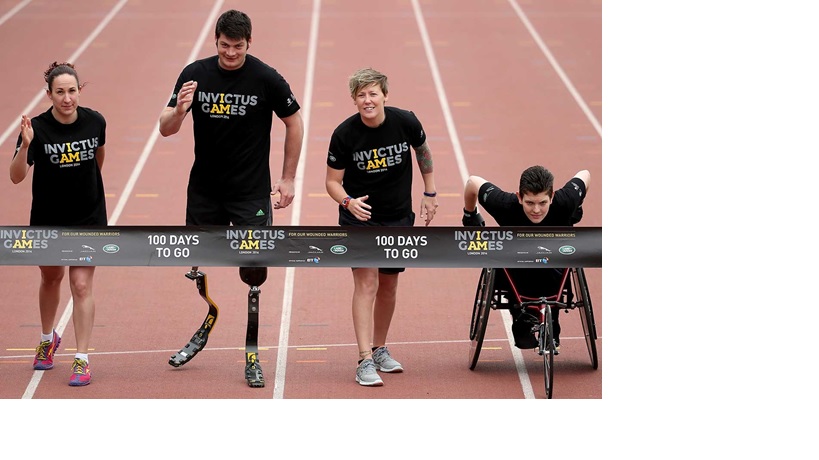
I am troubled by the Invictus Games. Not just the strange ways the Latin participle ‘invictus’ gets used, but by the normalisation of the warrior spirit. The propaganda around the Games makes war seem good.

In a world where it has become part of the culture to thank every member of the military for their ‘service’, and the Invictus Games seems set to increase such thoughtless commentary even more, I know I need to be precise in my criticism.

War is the way of the world. And the world is divided into nation states. I would be crass indeed not to recognise these realities and fail to acknowledge the sacrifices that the military make to keep our nation safe.

I respect individual sailors, soldiers and airmen for their choice and for their part in my freedom. I am in awe of the peace-keeping that Australian forces do around the world. I recognise that much of the activity of the Australian Army in Afghanistan was building schools and hospitals, surely a good legacy.

But war is a sub-optimal activity for humanity. Partly because the nation-state is an imperfect institution – nations both create conditions for our flourishing and also create artificial divisions between human beings – and mainly because the aggression and killing war involves means that we should not consider war the final best way of relating that human beings can find. We live in a fallen world, and war is a symptom of our sinfulness and not of our glory as human beings.

Much of the lethal activity of war is sly. Drones fly invisible above their targets, and ‘clinically’ murder only the targets. Insurgents, who consider themselves patriots, leave death-dealing devices on roadsides. Proxy wars are fought in countries like Syria between the US and Russia, condemning millions of children to a half-life in refugee camps.

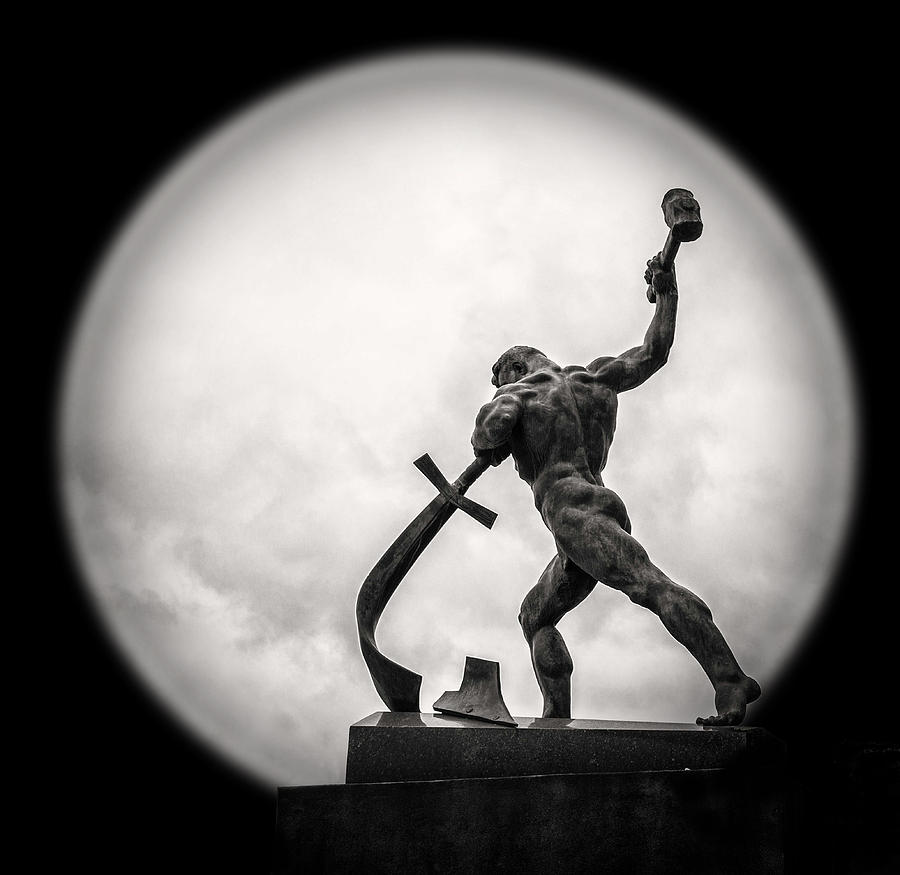
I look forward to a world in which nations are superseded by a common humanity and war has given way to peace, where swords are beaten into ploughshares, and the trillions of dollars we spend on armaments are diverted to the benefit of humanity.

This is why I think we should take care with the language we use, and the language we accept, around the Invictus Games. The fighting spirit that restores the wounded to purposeful lives is to be admired. The positive attitudes to disability the Games foster are to be encouraged. We should applaud the new appliances which improve the lives of those living with disability. The contributions the participants made through their service in the armed forces are to be commended.

But any implication that war itself is unambiguously good needs to be challenged. Let us ‘normalise’ disability, by all means. But let us not ‘normalise’ the fact of war. Let us in all ways and in all circumstances question its place in our common life, and decry the death, destruction and waste it brings. Let us aspire to a world without war, a world without the need for warriors, a world where we embrace, not fight, our fellow human beings.