Canberra-based David Vernon has been running the Stringybark Story Awards since 2010 to promote Australian short story writing. Writers are rightly sceptical of contests where you are asked to pay a fee to enter and then pay to purchase the collection. This would be vanity publishing. In Stringybark’s case, there is an entry fee and the e-book collection is then free to all the authors included. Having entered three or four Stringybark awards, however, I am satisfied that David Vernon’s enterprise is good for writers.
This year 249 entries were received and a panel of four judges including Vernon made the selection of 37 stories.
This year’s selection range over a diversity of themes and styles: there are stories reflecting on mortality and birth, drought and love, children’s imagination and loneliness – the human condition with an Australian accent.
Unlike some contests where the requirements of the contest cause a certain uniformity in the stories, the story-telling in Stringybark is diverse. All are well-crafted, some are strong on dialogue, one is a framed monologue, some are vernacular, others more literary.
It’s hard to review such a variety, but I enjoyed nearly all the stories. Some like Mark Scott’s The Jam Tin evoke the quotidian feelings of diggers in the trenches in World War I. Roger Leigh tells the story of a day-dreaming boy Missing in Action whose fantasies contribute to an actual kidnapping. His ability to show us the boy’s perspective stayed with me long after reading it.
The old lady’s vendetta in Gab Gardner’s Timber! kept its surprise till the last paragraph. An Indian kid included in a game of cricket, a dance instructor in a country town finding a way to make dancing cool, funerals, starting afresh – the plots go on. Martin Lindsay scared me on a Lonely Stretch. There’s even a gentle story by this reviewer about a West Australian con-man.
Timber! is a collection to enjoy and to come back to. I will be looking out for future Stringybark anthologies, and more and more content to enter their contests.
Greg Sheridan, God is Good For You: A defence of Christianity in troubled times, Sydney: Allen & Unwin, 2017.
$24 paperback (online), $14.85 Kindle Book.
Reviewed by Ted Witham.
Greg Sheridan is a foreign affairs journalist at The Australian. From the few pieces I have read I have the impression that he takes a conservative political line in his journalism and that his style can be heavy-handed.
Sheridan’s new book God is God for You was recommended, and for that reason alone I added it to my Kindle as holiday reading. I was pleasantly surprised in every way.
God is Good for You is certainly, as the sub-title says, a defence of Christianity. It is a well-argued, highly informed piece of apologetics. Sheridan’s voice is quiet, reasonable and forceful. He engages the so-called new atheists with strong evidence that belief is more reasonable than non-belief. He shows that many of the benefits of Western democracy come directly from Christianity, and he invites us to explore Christian responses to evil and suffering.
In Part 2, he interviews Christian politicians and national leaders from the major parties, and insists that many politicians are motivated by their faith. As one politician says, ‘You find more Christians in Parliament than in the general population.’ He explores new expressions of Christianity, including Pentecostal churches like Planetshakers in Melbourne and the counter-cultural movements of traditional and new monasticism.
He confesses himself surprised by the pervasive reach of the Focolare movement and interviews its Australian leader, Lucia Compostella. In Perth, he visits Providence City Church with its steady gaze on the new place of Christianity in Australian society – not persecuted, but a minority in exile from the old paradigm of Christendom.
He critiques limited understandings of leadership in the mainline churches and their weak use of traditional and social media.
I was pleasantly surprised at the catholicity of Sheridan’s gaze across the whole church scene, and at the open tone of his writing. There were points of disagreement for me. While I agreed with his statement that Christian faith makes radical claims of transcendence, he made too easy an equation between transcendence and the supernatural, a concept I wanted him to at least qualify. However, points of disagreement were actually few.
This book could safely be offered to any thinking citizen, Christian or not, for its reasonableness, and to any optimistic Christian for its clear-eyed analysis of where we are in modern society and its remedies for the future.
The Holy Gospel of our Lord Jesus Christ, according to Saint Mark. Glory to you, Lord Jesus Christ.
[Mark 6:30-34, 53-56 NRSV]
30 The apostles gathered around Jesus, and told him all that they had done and taught. 31 He said to them, “Come away to a deserted place all by yourselves and rest a while.” For many were coming and going, and they had no leisure even to eat. 32 And they went away in the boat to a deserted place by themselves. 33 Now many saw them going and recognized them, and they hurried there on foot from all the towns and arrived ahead of them. 34 As he went ashore, he saw a great crowd; and he had compassion for them, because they were like sheep without a shepherd; and he began to teach them many things. … … …
53 When they had crossed over, they came to land at Gennesaret and moored the boat. 54 When they got out of the boat, people at once recognized him, 55 and rushed about that whole region and began to bring the sick on mats to wherever they heard he was. 56 And wherever he went, into villages or cities or farms, they laid the sick in the marketplaces, and begged him that they might touch even the fringe of his cloak; and all who touched it were healed.
For the Gospel of the Lord,
Praise to you, Lord Jesus Christ.
In the Name of the Living God, Father, Son and Holy Spirit. Amen.
This morning’s reading is like a three-course meal without the main course. The compilers of the lectionary obviously thought it is a good idea occasionally to have prawns au tire-bouchon and tiramisu, and no meat and veg in between!
The missing verses tell the stories of the feeding of five thousand, plus women and children, and Jesus walking on water. Both are important stories showing us a great deal more about who Jesus is. We could spend several sermons on each of those stories.
But today we are directed to the prawns and ice-cream, I think for good reason. The first section, the entrée, describes the busy apostles returning from healing and teaching, and telling Jesus the good news of their achievements. It then describes the crowd, so busy they had ‘no leisure even to eat’.
The apostles try to escape to a desert place by themselves, but the crowd walked faster than the sail-boat and arrived before the apostles.
There’s an expression, ‘compassion fatigue’, which you have probably heard. If you care for people, there’s a cost. If you are constantly caring for people, day in, day out, then you can become exhausted. ‘Compassion fatigue’ does not apply only to social workers. There are people in this congregation who care for an adult child with challenges, whether at home or living independently (the child, that is), and that’s a burden. There are people in this congregation who are at this church every day, meeting the people who come to the Op. Shop, caring about strangers. That’s a burden. There are people on the Manna & Mercy roster every week. That’s a burden.
I’m not complaining, or inviting you to, although sometimes a good whine is a healthy response. What I’m saying is that people care for others, all of us do, and it carries a cost. We get tired. We get burnout. Just like the people in this morning’s gospel, the few apostles and the many in the crowd. And sometimes we get to the point where we believe ourselves indispensable.
Jesus may be having a joke at our expense when he says that crowd were ‘like sheep without a shepherd’. We all feel, as leaders, that we must be there for the sheep. Without us, who knows what would happen? But really?! most of us have been on Australian farms and we know about sheep without a shepherd. They’re fine. They can eat and drink and lie down to sleep on their own. They don’t need a full-time shepherd.
We get busy caring, and that’s good. But we must at least be aware of compassion fatigue.
I get the impression that the apostles were almost desperate in their search for peace and quiet!
The Jewish concept of ‘Sabbath’ can be helpful. We take it for granted that time is divided into weeks of seven days, but, historically, this seems to have been a deliberate innovation of the Jews.
A seven-day rhythm, with six days of work and one day of not working; six days of work and one day of rest.
You and I grew up when there was no Sunday shopping, no movies were shown, there was no football. It may have been easier back then to keep the work-rest rhythm, but even then, you needed the right attitude, the right reasons.
The Old Testament gives two reasons for Sabbath. Exodus says, ‘Six days you shall labour, and do all your work, but the seventh day is a Sabbath to the Lord your God. On it you shall not do any work … For in six days the Lord made heaven and earth, the sea, and all that is in them, and rested on the seventh day. Therefore the Lord blessed the Sabbath day and made it holy.’ (Exodus 20:9-11)
In other words, we rest after working because God rested after working.
Deuteronomy gives a different reason. ‘You shall remember that you were a slave in the land of Egypt, and the LORD your God brought you out from there with a mighty hand and an outstretched arm. Therefore the LORD your God commanded you to keep the Sabbath day.’ (Deuteronomy 5:15)
We are not slaves. We are free to not work. Our freedom is a gift. Therefore we should keep the Sabbath as a way of showing our thanks to God.
Peaceful Sabbath (courtesy artsncraftisrael.com)
To this day, Jews make a big thing out of Sabbath. They begin the holy day with a special meal on Friday night, gathering all their family. The men wear their yarmulke, the kippa, which reminds them that there is a God above. The women light candles, they bless God, they put aside all their work and their cares for 24 hours. If you are grieving for a loved one, mourning is put on hold for that time. Jews don’t work on Sabbath. Some Jews don’t even light fires on Sabbath, so that they don’t cook, they don’t turn on lights, they don’t start their motor car. They live within 100 paces of the synagogue so that the walk doesn’t count as work! But the point is not the detailed regulations, it is the spirit of Sabbath which is so important.
Sabbath is not about self-care. It is that, but it is much more. To take and enjoy the gift of Sabbath is to honour God.
My challenge for you this morning is to find or review your regular Sabbath practice.
There are excellent retreat places in WA. I would encourage you to stay several nights in the guest house at New Norcia, meet the monks, join in their daily prayers and bask in the atmosphere of prayer and retreat. Koora, out of Southern Cross, is a comfortable place literally in the desert, run by two Anglican clergy. Maybe an annual visit to a place like these, or St John of God Retreat House in Shoalwater could be part of your life.
Or just spend half an hour in the pews here, or in old St Mary’s when you are in Busselton. We take so much care to maintain these buildings, and that’s part of their purpose.
Yallingup beach yesterday
It’s no good going down to the beach and sitting there if all we do is think about the ones we care for, worry about what we need to do next. That’s not Sabbath!
It’s no good finding a place away from home to stay if we end up doing the same housework we do at home. That’s not Sabbath.
I remember my Mum doing all the housework on our farm, on her own, before mod. cons. She washed clothes in a copper and squeezed them through a washboard. She cooked for seven of us on a wood stove. She cleaned without an electric vacuum cleaner. Then every summer, Dad would take us all away on holiday to Busselton or Albany. Mum commented once that on all these holidays, she washed clothes, cleaned house and cooked without a break.
But I also remember Mum religiously dropping everything every Saturday to play sport. For Mum and Dad, tennis, and later bowls, became her Sabbath. She parked us kids somewhere appropriate for our age and made sport her means of being refreshed as carer.
Your Sabbath should be regular, planned, and have an element of ritual. It is important that you put yourself in a different place where you cannot be reached, physically or emotionally, by the ones you care for.
Maybe a regular movie, or reading fiction, can be elements of your Sabbath. Certainly, a holiday like a cruise can be an annual Sabbath where you are physically cut off from the ones you care for, and others care for you.
So, go and find a desert place, a Sabbath rest, and leave the worry about the sheep to the Good Shepherd.
When we untangle all the busy-ness of the first half of this morning’s Gospel, the coming and going of apostles and many others, we find an invitation to be refreshed by God in our caring.
God knows, like Jesus, we will be back in the fray again soon enough. So we come to the dessert, the tiramisu, the pick-me-up. We imagine people all over the region rushing to bring their sick to Jesus. We know that feeling. But there’s a little detail in the tiramisu that stands out to me. The sick could ‘touch the fringe of his cloak, and all who touched it were healed.’ (Mark 6:56) Scholars believe this ‘fringe’ is the leather strap Jesus, a good Jew, used to tie his tefillin, the little prayer boxes, on to his forehead.
The healings, it seems, happened because Jesus prayed habitually. In other words, Jesus was conscious of God working through him, and this enabled him to heal many.
We aren’t Jesus. Again, this is a little hint not to care for others in our own power. We may not wear the tefillin, but we should wear the habit of daily prayer, and remember that our power to care is not really ours. It is God, working through us. And that is a matter for thanks. That’s the sweetness in the dessert.
For the feast of Saint Benedict (July 11), I post again my sonnet on Bonaventure and Pope Benedict!
The Call of Christ
Sage Benedict, Pope, Bonaventure blessed,
Joined theology with prayerful devotion:
from Creation to dazzling Consummation
drew a laser line of Christ’s manifest.
Christ as Wisdom played a creative game
Beside Artisan God in shaping the world.
Christ to Bethlem was human love unfurled;
Jesus was the core of the eager flame.
He the pivot for the Doctor and the Pope,
History’s peak, the beginning of the end:
Christ’s death permits all of death to be friend,
Turns dénouement into theatre of blessed hope.
God gave seraphic minds to faith-filled teachers
So we may learn our arc as recovered creatures.
Jeremiah 4:1-10, 5:14,
John 10:36.
Pope Benedict XVI, General Audiences on the theology of Saint Bonaventure, March 2010
Jeremy Heimans & Henry Timms, New Power: How power works in our hyper-connected world – and how to make it work for you, Sydney: Macmillan 2018.
ISBN 9781743540138; Available online from $25
Reviewed by Ted Witham
You would have to say that the Coalition Government is terrified of the progressive membership organisation GetUp! Not only are there more members of GetUp! than there are of the two main parties combined, but GetUp! has proven expert in using ‘New Power’ to advance specific agendas. Despite two attempts to pass legislation to clip GetUp’s power, the Government has not succeeded in destroying the organisation.
New Power reveals some of the thinking behind GetUp! and its international counterpart Avaaz. Heimans and Timms describe ways to mobilise a community using social media, how to spread ideas, raise funds, and gather participants for action. They use case-studies like Uber, Donald J. Trump, #MeToo and Reddit to show how people seeking change blend old power with new power to influence others.
page 71
Some like candidate Trump used new power to consolidate old power values. The TED organisation spreads ideas by mixing old and new power to retain quality control of TED talks and invite wider participation through TEDx talks. Through this blend of power, Pope Francis and Candidate Obama are ‘Crowd Leaders’ using new power techniques to further new power values. After his election, however, President Obama became more a ‘Cheerleader’ using the old power structures of the presidency to further new power values.
ISIS is a clever manipulator of new power techniques in the service of old power.
The authors of New Power, Australian Jeremy Heimans and Briton Henry Timms write from experience. Heimans, co-founder of GetUp, began that organisation in 2005, before smart-phones and the spread of social media, with the intention of harnessing the internet to spread progressive ideas and change Australia for the better. Timms is CEO and President of 92 Street Y, a ‘cultural and community center that creates programs and movements that foster learning and civil engagement’.
I read the 324-page book in a 48-hour period. The writing is engaging; the stories are fascinating. The implications for action, whether in leadership or in engagement with one’s community are clearly described.
Anyone interested in changing the world – bringing home the refugees from Nauru, stopping the environmental depredations of Adani, or just reminding your politician that you vote – will find good food for thought in New Power.
Glyn Maxwell, Drinks with Dead Poets: The autumn term, Oberon Books, 2012. Hardcover, 200 pages.
$20 online
Reviewed by Ted Witham
Drinks with Dead Poets was a delightful surprise. A professor of poetry called ‘Glyn Maxwell’ turns up in a mysterious village to teach a term of poetry. He meets his eclectic class and directs them to readings of a series of 19th Century poets. Professor Maxwell is not sure if it is by his doing, or the organisation of Kerri, the efficient registrar, but each poet has been invited to the village on the Thursdays of the autumn term.
Each poet arrives in the village according to their personality. Nature poet John Clare walks in across the fields. Emily Dickinson, visiting from the States, arrives by train. The Brownings, Robert and Elizabeth, their relationship as ambiguous as ever, are fetched in their coach. W.B. Yeats appears on the island in the middle of the lagoon.
Each poet behaves in character. It takes some time to warm the serious Father Gerard Manley Hopkins, but once relaxed, he speaks with great joy about the craft of poetry. The conversations teacher and students have with these poets are the actual words of each poet.
Although Professor Maxwell has been allotted a little room off the village hall for his teaching, a lot of the action takes place in one or other of the drinking establishments in the village. The professor is occasionally successful in imparting deep insights about the poets.
The professor himself has limited success in asking questions or directing the questions of the audience. One of the students asks each poet, ‘Where do you get your ideas from?’, and this hackneyed request is met with incomprehension, sarcasm, or gentle correction according to the temperament of the poet in residence.
By using this public reading format, the book avoids long quotations from these poets, providing representative snippets instead.
After a hip-hop celebrity recites a mangled version of The Rime of the Ancient Mariner in Coleridge’s presence, the students tune into the idea of poetry as performance, and look forward to hearing subsequent poets read their work, with questions following.
In November, the professor’s birthday is celebrated in wild style in a nearby country house. In December, Lord Bryon and the students repeat Bryon’s exploit in the Hellespont by swimming across the icy village lagoon.
The professor is never quite sure whether his class is part of the college, or an unofficial elective: poetry is taken not quite seriously by this academy. On the other hand, this professor drinks with students and even sleeps with one of the female students. He would be the subject of disciplinary hearings if he were officially on the staff! These drinks are taken with a suburban bacchanalian spirit which grows out of the playful premise that dead poets can drink with 21st Century students.
I missed out on studying the Romantic poets because of the cycle of the English curriculum at Uni. This wonderful book has partly made up for that. If you love poetry, and you are intrigued by the fantasy setting Glyn Maxwell has created, you will thoroughly enjoy taking Drinks with Dead Poets.
Claire G. Coleman, Terra Nullius, Hachette Australia 2017
(304 pages)
$20 paper, $5 e-book
Reviewed by Ted Witham
Set in occupied Australia, Terra Nullius tells three inter-weaved stories: the first is a residential school for Natives run by Settler Nuns headed by a fearsome Mother Superior, Sister Bagra. In this school, Native children have been forcibly taken from their families and are given a basic education so that they will graduate to domestic service in Settler households.
The second story is the escape of Jacky from a similar place. Jacky is determined to find his birth family. He is told that they may be at the former town of Jerramungup, so proudly takes the name ‘Jacky Jerramungup’.
The third group of Natives live fearful lives in a series of squalid camps, always on the run and moving to a new location as the Settlers drive them into the desert. The only advantage of this is that the Settlers cannot live in the desert.
First-time novelist Claire Coleman, a West Australian Noongar, drops little hints that this is not the occupied Australia we know when the British Settlers occupied the land and treated the indigenous people with cruelty. About half-way through the book, she reveals that these Settlers come from a space-faring Empire, and these Natives are black and white survivors of their arrival.
The Settlers are nicknamed Toads by the Natives because they need moisture to survive. Because of the ever-present threat of Settler violence, the name ‘Toads’ is never used in their hearing.
The three main characters, Sister Bagra, Jacky and Esperance, the de facto leader of the ever-moving camp, are vividly drawn, as well as a big cast around them: Sergeant Rohan the indefatigable hunter of runaway Natives; Johnny Starr, the outlaw Settler whose little gang gathers up Jacky Jerramungup on their way to an eventual show-down with Settler power, and Father Grark the reluctant Inspector sent to Sister Bagra’s mission.
I liked Terra Nullius very much. An atmosphere of dread induced both by the Settlers and the difficulty of surviving in the desert pervades the book. The West Australian settings are familiar but changed. The characters are never reduced to caricatures: most Settlers genuinely believe that the Natives were not human; the Native characters are clear individuals.
The pacing is well-handled. Towards the end, I couldn’t put the book down I was so afraid for Jacky and Esperance, and with reason!
It is a didactic novel. I suspect that Australians sceptical of Aboriginal claims will not be convinced by its premise, and may even be annoyed by its ideas. However, it will appeal to people looking for reconciliation and deeper insights into our shared history, settler and native.
This post originally appeared in my Advent 2015 blog.
****** ******* ******
He’s the Twin. In Aramaic the name Ta’oma means ‘Twin’, and so in the Gospels Thomas gets the Greek nickname Didymos “Twin”. But whose twin is Thomas?
Some say he had a twin sister Lydia. But to be remembered only as ‘The Twin’, is it possible that Jesus was Thomas’ twin? There is certainly a tradition that claims Jesus and Thomas were twins. Maybe even identical twins, as didymos also means ‘double’.
Thomas could have been Jesus’ double. It’s an intriguing possibility. It may explain why of all the disciples, Thomas was prepared to say, ‘Let us also go [to Jerusalem], that we may die with him.’ (John 11:16). Thomas certainly wanted to stick close by Jesus, even when he didn’t understand where that would lead. ‘Thomas said to him, “Lord, we do not know where you are going. How can we know the way?” ‘(John 14:6)
And the need for physical closeness to his twin was also apparent when he reached to verify his physical reality after the resurrection. The gospel-writer never refers to him as ‘Doubting’, but always calls Thomas ‘the Twin’ (John 20:24) when Thomas cries out ‘My Lord and My God!’ (John 20:28).
Twins have a special bond, closer than that of most siblings. We can learn from Thomas to also be twins of Jesus, at our best prepared to share his road, but also feeling safe enough to share our bafflement, ‘Where are we going?’ ‘Lord, can it be really you?’ Above all, to wonder that the One to whom we are so intimately bound can also be ‘My Lord and my God!’
What a twinning!
Imagine that you are the twin of Jesus. What characteristics do you have in common? How can you keep close to your twin?
What baffles you about Jesus? What are some aspects of following Jesus that make no sense to you?
Many of us have been Christians for a long time. Does our familiarity with Jesus make it hard to see him as ‘Lord and God’ and therefore to be filled with awe before him?
Use Thomas’ words ‘My Lord and my God’ as your prayer.
This collection of nearly 50 poems is the second for Ivan Head. Dr Head is a West Australian priest, former director of AIT and Canon of St George’s Cathedral, who has spent the last 27 years as Warden first of Christ’s College in Hobart and then of St Paul’s College within the University of Sydney. He and his wife Christine are now moving into retirement in Sydney.
Many of the poems have been published in Quadrant (where Les Murray is the poetry editor), the West Australian and the Sydney Morning Herald. Their presence in those publications suggests their high quality.
Ivan is a poet who celebrates birds and flowers, trips by train and trips to London and the US. In some the words tumble just to celebrate language:
Montezuma met a Puma going to the fair Said Montezuma to the Puma let me taste your ware. Said the Puma to Montezuma No I prefer my fare rare and so he ate him then and there.
Many of the poems are complex with multiple levels of meanings. I enjoy recognising the double- or triple-meaning, but also knowing there may be more levels that I don’t get. In Swan River, Ivan reflects on boyhood memories of throwing a kylie, or thrusting a home-made gidgie towards a Cobbler. And then:
Aboy knows that prawns rest beneath the sand by day. It is like knowledge of the Pleiades. Under the Narrows Bridge I stood for hours and left a line out all night just in case Something big went past.
After the series of Noongar words and the reference to arcane knowing, the pleasure of ‘Something big’ might mean a fish to catch, or, it might mean deep knowledge of culture, Aboriginal and Western. And it might mean something even bigger.
An undercurrent of Christian faith and theology, which on occasion rises to the surface level of the poems, holds them in a strong web of meaning.
Ivan has a strong ear for the music of words, their sound and rhythm. All his poems are free-form and show the influence of modernist and Beat poetry.
I found real pleasure in their Australianness. The poems are about the plants and animals of Cookernup (near Bunbury), Perth and Sydney. They are about our childhoods in the 1950s. Even when the subject is not directly Australian, Ivan’s attitude is. He punctures pomposity. Here he reduces the English Reformation to Henry VIII’s armour.
…. And now he’s gone, the ghost isn’t in the machine. Just the carapace remains
And what the commentator gawks at for the screen is the gigantic iron cod-piece
With nothing in it.
The Magpie Sermons is printed on quality high-gloss paper and bound simply in a hardcover embossed with gold leaf.
Poetry lovers will enjoy reading, and re-reading, these poems of celebration, irony, contemplation and joy.




 Jeremy Heimans & Henry Timms, New Power: How power works in our hyper-connected world – and how to make it work for you, Sydney: Macmillan 2018.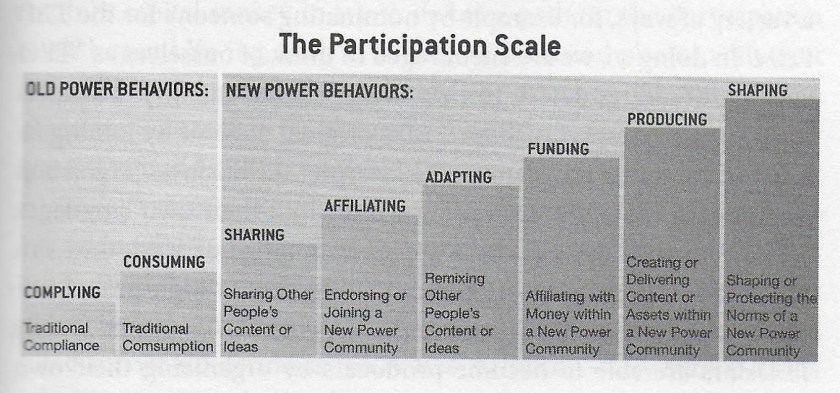
 well, Drinks with Dead Poets: The autumn term, Oberon Books, 2012. Hardcover, 200 pages.
 Claire G. Coleman, Terra Nullius, Hachette Australia 2017
 Some say he had a twin sister Lydia. But to be remembered only as ‘The Twin’, is it possible that Jesus was Thomas’ twin? There is certainly a tradition that claims Jesus and Thomas were twins. Maybe even identical twins, as didymos also means ‘double’.
 Ivan Head, The Magpie Sermons: Poems 2005-2017, Sydney: St Paul’s College 2017.

