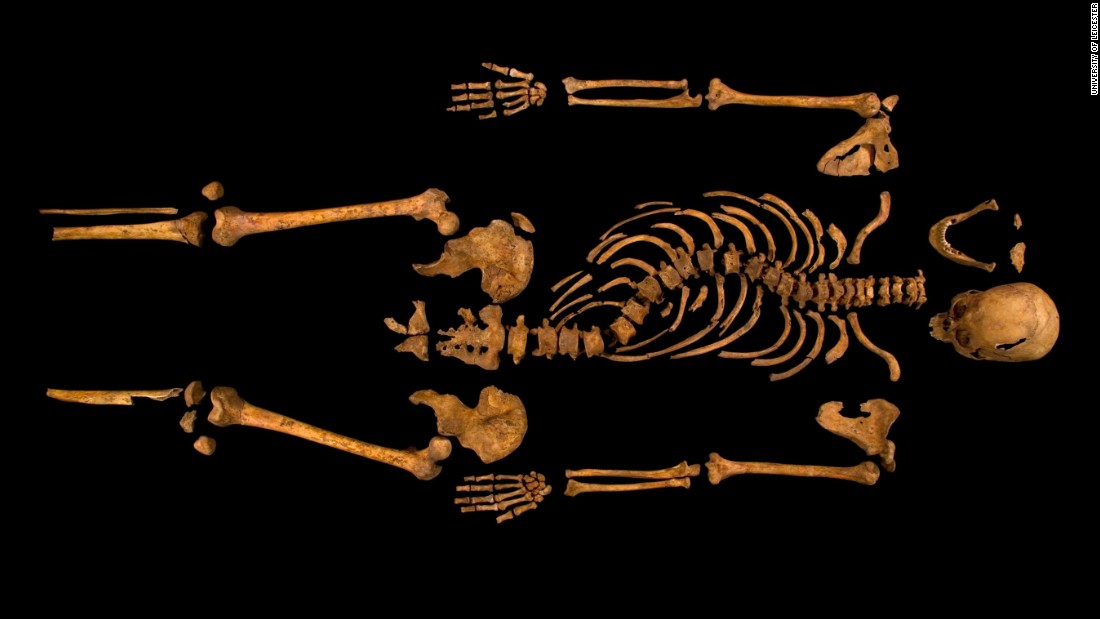
Would you believe I’m a clone of King Richard,
the last of Plantagenet line?
To start with, his spine describes an S-bend,
so his skeleton looks exactly like mine.
A left-hander like me was good King Richard the Third,
so with the sword in his left he surprised.
Does the archaeological record contend
That molly-dukers too are baptised?
A brother of brothers was Richard the King,
All of them in the end killed.
Then his nephews made way for him to ascend,
at murder he was mightily skilled.
Then Richard the Third was himself finished off,
Giving the field to bad Henry Tudor.
While Harry and family may have been thrilled,
It’s hard now to say who was the shrewder.
One thing’s for sure when comparing little me is,
Being a King may be fun while you’re thriving,
But being a nobody you’re much more fulfilled:
At least in the end you’re surviving!
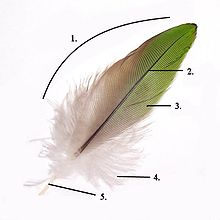
You Lord of grace, you’re breath on a feather,
You inspire us to care, adore;
Your breath helps us to praise you together,
Our song, just our song, can make us more.
You Lord of grace, you’re barbs of a feather,
Strengthen our spirits with love’s surprise;
Your longing heart helps us to tether
Ourselves to you, with you improvise.
You Lord of grace, you’re shaft of a feather,
You hold us tall whatever the storm;
You teach us to hold your standards to treasure,
And upright in virtue our lives may transform.
You Lord of grace, you are the whole vane,
You let us fly to love’s true height;
We feel your guidance your will ascertain
And our obedience makes you shine bright.
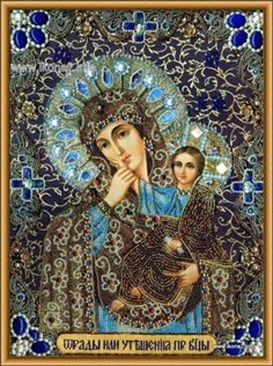
Some churches I have known have had dolls for the baby Jesus that are vanishingly small – one, I swear in North Carolina that was just over two centimetres long. In terms of worship size meant nothing, of course. When I carried in procession tiny dolls on large cushions, the people felt just as drawn to adore the infant Christ as if it were life-size.
The baby Jesus and the wafer-bread for Eucharist are such tiny symbols for such a large action of God: they point to God’s generosity in bringing himself down to the created order. The great wonder of love that we call the Incarnation is represented in tiny symbols.
I love church at Christmas. The joy of children at a Christmas Eve telling of the Nativity, however chaotic, the quiet carols and communion at Midnight Mass, the bustling crowds of Christmas Day. But this year, like the several past, I have not been able to attend any service, let alone the full bill that I enjoyed when I was working as a priest.
This year, I didn’t even try to get to church. The decision to travel to Perth and to be part of our grandchildren’s Christmas came first; and their Christmas is celebrated far from church. I knew I couldn’t even contemplate managing church in addition to the travel and the family feasting.
My body inconveniences me. But I am learning that I should not feel remorse or disappointment at missing the joy of church worship. For what is my body if it is not also a symbol of the Incarnation of God? Like a two-centimetre doll or a wafer weighed in micrograms, my body is a tiny symbol of incarnation!
But Christmas still recalls the Incarnation to me. Christ is the Incarnate God; our humanity is an instant of the Incarnation. It serves me well to remember that my body may just be a tiny instant of incarnation, but I must learn to avoid letting my body be a distraction from the wonder of incarnation. It lets me down. It keeps me at home when the good part of me wants to be at least one Christmas service. But God created my body, and the writer of Genesis emphasises how good creation is, my body included. I must manage the pain and immobility, true, but I must continue to allow God to work through my body by being present in people’s lives. Sometimes that means a card or an email, sometimes it means a visit. Sometimes it means a short story without any apparent Christian message, sometimes it means a homiletic blog like this.
I thank God that the fingers of my body make the physical language of the piece. I know as a pianist how complex and how strategic the anatomy of the wrist, hand and fingers are – they are a wonder. I thank God that the neurons in my brain fire to initiate the thoughts of my writing. 86 billion of them! And there’s a mystery beyond the neurons, somewhere between incarnation and Spirit, and that is what the mind-brain actually is. My brain is a wonder.
I thank God I can see people and be seen, touch people and be touched. Yesterday at the beach-front, I arrived in my wheelchair. Grand-daughter Aurora from 20 metres away opened her arms, ran to me, jumped on my knee and we hugged. Our wonderful is that incarnation!
It may be that I miss the liturgical re-tellings of stars guiding, shepherds running and wise men discerning when it comes to celebrating the Incarnation, but I am certainly not missing out!
Tell the wild tale with vim and with panache
Chorus line of shepherds; veiled discerning
Mystics bringing gifts while earth’s cultures clash
To a baby: He our whole life’s learning.
Ring the bells, all people, stop! Now attend
to whispers of angels, meditations
Of mystics, fresh wisdom to us commend,
kindness of giving, godly fascinations.
Light the candle, we illuminati
with peace, earning goodwill to God’s masses,
Minding the child (He the celebrity)
with lambs and cows and companion asses.
All creation whispers the tale with awe,
All souls are responsive to His divine draw.
I heard of a priest who was asked recently, ‘Do you ever have moments of doubt about your Christian faith?’ The priest replied, ‘On some days I have moments of faith.’
I am intrigued by atheists who seem to think that if they can knock one argument out from under a Christian, they will have of necessity knocked the person off their Christian stool. Comedian Ed Byrne, for example, talking to agnostics, ‘If you haven’t heard God speak to you in a sunset or a beautiful landscape by the time you’re 40, you’re an atheist.’ His assumption appeared to be that just one thing could make the difference between being a Christian or not.
I experience being a Christian not as a series of skittles to be knocked over, but as a tightly tangled skein of meaning-making, experiences and fellowship. Included among my persuasions are doctrines, ethics and aesthetics, the ever-fascinating engagement with the Bible, my identity and my incorporation into particular parts of Christ’s Church.
So atheists sometimes try to win the argument by asking what I would believe it were proved that some bones were definitively identified as the remains of Jesus. The empty tomb is only one little part of my believing, so, depending on the day, my answer is either a confident argument from logic, ‘It will never happen’, or an answer from conviction, ‘It would make no difference to my foundational belief.’
Some Christians trip over philosophical wires by trying to solve the puzzles of the 2nd and 3rd Centuries. What does it mean to call God a Trinity? The Prophet Mohammed was one person for whom the doctrine of the Trinity disproved Christian faith. He founded a new religion with monotheism front and centre. Five times a day, his followers now proclaim the Shahada, ‘There is no God but Allah.’
‘One God in three persons’ makes less sense for our times because of the philosophical assumptions at the time the Creeds were written. Faith that God is one in three is always faith, however, and Christians can choose simply to believe it, or like Catherine La Cugna or Karl Rahner in the 20th Century devise completely new philosophical pre-suppositions for the doctrines of Trinity.
Other Christians recite the Creed each Sunday, ‘We believe in One God’ – the Trinity – as a statement of the historical faith of the Church. This is the Church and its beliefs in which I choose to belong, even while holding lightly to the details of these dogmas.
I have many moments of not believing or understanding how Jesus Christ can be completely human and completely divine: there are just too many paradoxes in the doctrine to contemplate at once. However an atheist who shows me how irrational this belief is will not therefore persuade me out of being a Christian.
Bedrock to my faith is the person of Jesus, yet many atheists join me at the core of acclaiming Jesus as a provocative teacher of good living, although some atheists try to make Jesus interchangeable with other gurus and guides. I do stick to the uniqueness of Jesus. This comes partly from my ongoing fascination with the Hebrew and Christian Scriptures. Many atheists find they can reject Christian faith without reading the Bible. I find its books more and more intriguing as I read them, whether it’s unravelling the insights of Wisdom literature or attempting to interpret the Book of Revelation.
Saint Jerome – courtesy brittanica.com
As I read the Gospels, I find more and more to surprise me. In the ‘Good Samaritan’, Jesus tips the world of loving upside down. Unlike his peers, Jesus calls us loving outsiders as equal a duty as loving our families. Another surprise: Being a neighbour is not so much about those whom I can help, but about who I allow to be neighbourly to me.
Much of my experience of being a Christian comes from the Church which has shaped me, paid for my theological education, and which continues to give me support. Just this fortnight with my wife away, I am experiencing the practical help of the local congregation bringing me meals. Of course, such do-gooding is not limited to Church people, but the fact that it is Church people living out charity as part of their faith reinforces my Christian identity too.
I cannot undo my experiences. I have discovered God in the music of Olivier Messaien. I can try to explain it away in psychological terms, but nothing can change what Messaien has revealed to me.
There are days when I try to persuade myself out of faith, but it can’t be done, I don’t think, because my faith is too vigorous a garden and grows by weeding and digging out old growth. One-punch atheists don’t get the complexity of religious faith as they believe it is a single flower.
I offer this short piece as one flower of my thinking as a Christian.
Our joy in fervent prayer and stately dances,
In full-sung hymns and full-heart confession,
in earnest emotional expression,
all diverse ways to celebrate St Francis.
Liturgical wealth but poverty deep,
In all, radical Godward dependence,
Tangled in matter we find transcendence;
The sole way integrity to keep.
More in story than godly abstraction:
The Pope gives the Order’s permission,
The lepers’ care and pairs for mission,
In mutual prize and always loving action.
Thank God for blessings and seeing all in joy,
Our gifting for love we hurry to employ.
In the name of + the living God, Father, the Son and the Holy Spirit.
**********
You are very welcome to this service. Thanks for bringing your owners with you. I hope you enjoy being here with other animals, and you don’t find that Labrador too big, or that cat too smelly!
There’s a wild story about Saint Francis of Assisi, preaching and birds. Today we mark St Francis’ day, technically on October 4, and this saint, who lived 800 years ago, has a large part in our hearts. We like him partly because he seemed to have a special rapport with you animals.
The story starts with Saint Francis preaching. Saint Francis had a beautiful voice. In fact, one of the brothers, who used to be known for his elegant, resonant beautiful speaking voice, thought he was the best speaker in Italy, until he heard Saint Francis and was so spell-bound he joined the Brothers.
St Francis preaching to the birds. Bardi Chapel – Italian School, (13th century) – Santa Croce, Florence, Italy
But on this occasion Francis was having trouble. A group a swallows was making a racket. ‘Little Sisters,’ St Francis said, ‘no-one can hear the words of the Gospel because of your noise. Please be quiet until I have finished my sermon.’ And they were. And so were the people. They were so moved that they wanted to follow him, leave their town, and become wandering preachers like him.
‘Don’t be in a hurry,’ St Francis, ‘and don’t leave, and I’ll arrange everything for your life with God.’ So St Francis set up the Third Order, which consists of Christians who want St Francis as their guide in Christian living, but who, unlike the Brothers, live in their own homes and get married. This Third Order still exists. My wife Rae and I are members of it.
But after this sermon, St Francis set out on the road again. He saw ahead of him a vast throng of birds. There were thousands of birds, maybe tens of thousands, more than you could count, maybe more that you could make with computer graphics. In any case Francis was impressed with such a mob of birds.
He told his companions to stop while he went ahead to preach, this time to the birds. He told this huge crowd of birds how much God loved them, because God had created them. He told them how thankful they should be for being able to fly and for being well insulated with two or three layers of feathers. They also should thank God for the air to fly in, and for the fact that they didn’t need crops to live. ‘You don’t sow or reap, and God feeds you and gives you the rivers and springs to drink, and trees and high mountains to make safe nests.’
The birds then opened their beaks and stretched their necks and reverently bent their heads to the ground. Their singing and movement showed St Francis how much they’d understood.
St Francis then made the sign of the Cross and let them leave. They followed the Cross Francis had signed. Some went to the north, some to the south, others to the west, the rest to the east. They sang magnificent songs, marvellous songs, as they flew off.
The birds set an example to us, to live according to the Cross of Christ, and to go in every direction, thanking God that we depend only on him, like the birds, trusting God to provide enough for each day, and singing our beautiful song, the song that tells the story of Jesus.
Our beautiful song is our song, our own song. There’s a legend about an African tribe that says a pregnant woman listens to the child in the womb and learns a song that is unique to that child. She teaches the father-to-be the song, then she teaches the midwives who sing it as the child is born. As the child grows up, each time the child falls and hurts herself, the village gathers around and sings her song. When she does something wrong as an adult, she is brought face to face with those she has wronged, the villagers form a circle around her and sing her song. The song is sung at the person’s funeral, and then is never heard again.
Our own song: one that our loved ones sing when we need healing or restoring. Wouldn’t it be wonderful?
The song each bird sang as it flew in one of the directions of the Cross was its own individual song. At the same time, each song fitted in with the songs of all the other birds. It was in close harmony with the song of the community.
In the same way, our own song with its individual story of God with us, with each of us, harmonises with the song of the community with its story of Jesus who came among us to share love.
So when we sing ‘All Creatures of our God and King’, we are singing the song that was originally St Francis’ own song. It’s now the community’s song, and we sing it along with the whole community. But we also make it our song. We remember the times we have been awed by the night sky and we sing,
‘Thou silver moon with softer gleam, O praise him. …
Thou rising moon, in praise rejoice,
Ye lights of evening, find a voice. O praise him.’
When we get to,
‘And all those of tender heart,
Forgiving others, take your part, O sing ye Alleluia’,
we can remember a time in particular when we forgave another, or when we were forgiven even though we were filled with shame and remorse.
I’m now going to make the sign of the Cross over you, and your owners can watch. When you leave, at the end of the service, you can go in the direction of the Cross that is your path, thanking God for God’s provision for you, and continue loving and forgiving your humans. As you go, go singing your wonderful song.
+ As you go to the north, or to the south, or to the west, or to the east, do not be guilty of the sin of ingratitude, but travel with God’s love and with your song. Amen.
I grow tired of the Atheist Foundation and others whingeing that the churches don’t pay tax. Their claim is false.For me it’s personal.
I received a salary from the church for 30 years. This salary was the major portion of parishioners’ donations to the church. I was very happy to pay tax out of this salary. At a quick calculation, I contributed between $150,000 and $200,000 to the nation’s tax revenue over those 30 years. The Australian Bureau of Statistics (God bless them) put the number of ministers of religion in Australia in 2001 as just over 12,000. If we count these as 6,000 full-time equivalent employees, then their contribution to Australia’s tax revenue over 30 years is between 9 and 12 billion dollars.
The churches do pay tax.
The Anglican Church, as a responsible employer, put aside part of my salary into superannuation. Our super fund started before the Super Guarantee, and enabled me later in my career to put additional savings into the fund. This means now in retirement I live partly off my super. Without super, I would be receiving a bigger pension. My super fund makes a contribution by saving the expenditure of tax.
The parishes where I worked have parish centres with rooms that community groups use, either for free or at much less than the commercial rate. While it is true that the parishes were partially exempt from rates, they made a contribution to the community through the sharing of their facilities – again saving the expenditure of rates and taxes. Many self-help groups, political clubs and community organisations could not meet if it were not for the churches.
The churches do save tax.
It’s true that the tax situation of the churches is complex; there may be some unfair exemptions for the churches; there are churches that rort the system. If our community were designing this from scratch they would almost certainly do it differently. But we can only live with our history.
From 1788 Australia has had a ‘love-hate’ relationship with religion. Many convicts and early settlers had good reason to dislike the church. On the other hand, most Australians in the 19th and 20th Century considered themselves believers. Australian Governments look to the churches to provide services that the churches can offer more cheaply and hopefully with more compassion than Government bureaucracy.
Section 116 in our Constitution does not declare Australia to be a secular nation. Rather it acknowledges the existence of both church and state and proclaims that they are to be kept distinct, but not necessarily for the church to be kept out of public life. The church’s contribution to our public life is different from the state’s.
And in the meantime, we can get our facts straight. The churches do pay tax, and they do save taxes.
Wayne Hudson, Australian Religious Thought,
Clayton, VIC: Monash University Publishing, 2015
ISBN (pb): 978-1-922235-76-3
ISBN (e-book): 978-1-922235-77-0
From $AU32 online,
$32 e-book (limited free access online at nla.gov.au)
In Western Australian and Australian public library systems.
Reviewed by Ted Witham
Richard Dawkins once dismissed Genesis 22 as ‘an infamous tale’; he thought that Abraham’s actions as at the least, were ‘child abuse, ‘and if he had actually carried through his plan to sacrifice Isaac, we would have convicted him of first degree murder.’ [1]
I thought it a great pity that Professor Dawkins, who writes so eloquently on biology, missed the fact of 3,000 years of complex thought and interpretation of the Binding of Isaac that rabbis and Christian scholars have recorded. Any good scientist would not regard his experiment as the truth without taking into account the work of scientists before him. Einstein built on Newton. He certainly didn’t ignore him!
In fact, Dawkins’ hero, Charles Darwin waited 15 years before publishing On the Origin of Species. It wasn’t that Darwin doubted his findings: on the contrary, Darwin respected the fact that others had given serious thought to these topics, churchmen and enlightenment figures alike, and had come to different conclusions. Added to that the concern that Darwin had about publishing theories that would appear to deny the evangelical Christianity of his wife Emma, and Darwin’s very different attitude to Dawkins’ is revealed.
Wayne Hudson’s wide-ranging survey of Australian religious thought from 1788 until today shows that we are like Richard Dawkins in our inability to see the richness of religious writings in our country.
According to the publisher’s blurb Australian Religious Thought is ‘the first major survey of this field.’ Wayne Hudson is a Professor in the Centre for the History of European Discourses at the University of Queensland. He is widely read in history, theology, philosophy and literature from 18th Century Europe and on through Australian European settlement. From this store of intellectual life, he shows the surprising amount of religious writings that have been produced in Australia. He is generous about the quality of distinctive Australian theology, but demonstrates that religious thought is much wider than Christian theology.
Dr Hudson explores six themes in writings about the sacred: Shapes of Disbelief, Sacral Secularity, Religious Liberalism, Religious Thought and Philosophy, Theology in Development, and Postsecular Consciousness. His book aims at the general reader, and most readers will applaud the extraordinary range of references. There may have been a cost factor in the decision not to include a formal bibliography which would have added another third to the size of the volume!
I particularly appreciated the ways in which Australian writers have stretched the concept of God. I recently reviewed Lorraine Parkinson’s new book, Made on Earth, which argues that the divinity of Jesus was not intended by the Gospel writers and so we can discount the doctrine of the Trinity. The joy of Australian Religious Thought is to discover that this is not a new heresy in 2016. Hudson quotes Charles Strong founder of the Australian Church who was a proponent of this view from early in the 20th Century. In addition, he traces the proposition back to German historian Adolph von Harnack and celebrity missionary Albert Schweitzer.
Hudson laments the lack of sources showing the impact Aboriginal spiritualities have had on the wider culture, but explores sufficient writers to prime my curiosity.
He suggests that, far from simple secularity, Australians are developing a distinctive religious sensibility. Its nature is partly encompassed in the phrase ‘sacral secularity’. For me, as a Christian reader, this book was like being in a closed room and suddenly having the doors thrown open to disclose a far bigger house. It is good to have more light stream in even as I continue to regard my room as my home.
The book will appeal to all Australians seriously interested in the development of distinctive Australian culture.
—–o0o——
[1] Richard Dawkins, The God Delusion, London: Random House, 2006, 265