First Notes of the New World


An Easter sonnet for my friends who are musicians and poets:

First Sprung from the Dead

The cloth which yesterday so reverently kept
our Lord’s head, is today lying by itself;
the shroud appears like the bed where he has slept,
pillow face cloth arranged on the rock shelf.

The tomb is ordered, the Paschal setting
is not a wild off-planet getaway:
the presence who has folded the netting
has artfully followed the Passion Play.

Easter’s presence/absence on limestone set
covered in the linen weave of white cloth,
powerful mystery in quietest calm yet:
Life bursts from silent Yahweh Sabaoth.

The folded cloth, the ordered tomb resound.
The living Jesus in measured singing found.

  • John 20:1-14
  • empty-tomb-good-evidence

Education in Christian Character and the Dean


First published in the Anglican Messenger, March 2016.

Nearly every week from 1938 to 1972, an elegant lady clutching a music case caught a tram from Perth College. The tram trundled down Beaufort Street to the ABC then situated in the Stirling Institute buildings in the Supreme Court gardens. Dorothea Angus, Head of Music at Perth College made over 250 broadcasts for the ABC performing solo, as well as with contralto Phyllis Everett and violinist Vaughan Hanly. She played concerti with the WA Symphony Orchestra, for example under Henry Krips, Mozart’s A major piano concerto (K488).

Her night-time performances followed a long day of teaching from 7.30 a.m. to 4.00 p.m. and a practice hour until 5 p.m.

She preferred to perform Australian composers like Miriam Hyde. As a star student in Adelaide’s Elder Conservatorium she had made a compact with Hyde and other fellow-students to exchange new compositions. With advance access to Sydney-based composer Dulcie Holland’s piano music, Dorothea encouraged her students to learn Australian music for their exams.

But much more than that, Dorothea instilled in the girls at Perth College a love of music. With the WA Symphony Orchestra established properly in the 1950s, Miss Angus began a Friday night tradition of bussing girls to concerts. I was with the boarders in 1975 as they went wild for WASO’s rendition of Sibelius’ ‘Finlandia’!

Dorothea opened up a bigger world up for her students. In the classroom she talked about music around Australia, and she introduced a world expressed in beauty and art. Her own person, always elegant and fashionable, impressed the girls. The stylish Miss Angus was a fascinating contrast to the Sisters dressed always in habit, veil and wimple.

Dorothea was not a straightforward Christian. In her previous appointment in Adelaide at St Peter’s Cathedral her talents as a world-class organist appear to have been eclipsed by the internal politics of male chauvinism. When I met Dorothea towards the end of her life, I found her always willing to engage in a robust and sceptical discussion about Christian faith. She was deeply interested in it but unable to admit to a commitment to it.

At Perth College, Sister Rosalie, the Principal, often crept into Dorothea’s practice room to enjoy her playing. I can imagine her friendship with Sister Rosalie included similar discussions.

‘Gus’ or ‘Fungi’, as Miss Angus was called, is still remembered with affection by former Perth College students nearly 40 years after her death. A half-dozen still meet annually to salute her memory.

Dorothea championed Australian music to the public. As an artist, she felt a responsibility to share generously her gift with the school and the church. When I met Dorothea she was playing hymns for services in Balga Parish despite a paralysis in her left arm. Her disability frustrated her. She could easily have excused herself, but would not.

To Perth College she brought not just music skills, but education in character. Through her own forceful personality, she modelled character. She opened a wider world to the girls in her care. She chewed into Christian faith, examining it, discerning the truth for herself. Agnostic she may have been, but her respect for Christianity was imprinted on those she met.

I am more optimistic than the Dean, who argued in the December Messenger that church schools were failing in their central task of Christian formation (he and I have been chaplains to the same two church schools!) I believe that our church schools have been deeply enriched by teachers of integrity and longevity – like Miss Angus – who have imbued Christian character in their students.

*****

An article focusing more on Dorothea Angus’ musical achievements appeared in the December 2015/January 2016 issue of Limelight magazine.

The benefits of English, history and so on…


7117626-3x2-220x147I am very happy for scientists to promote science education. I have been a fan of the ABC’s Science Show since Robyn Williams started broadcasting 41 years ago. I am excited by modern technology, and am happy to use its latest tools and gadgets.

Science education can achieve what is claimed for it: clarity of thought based on evidence and the ability to evaluate and patiently work through new ideas.

“The benefits of learning about science for young kids are enormous, says Kevin Squires, a teacher at Tamworth Public [School in NSW] who is employed especially to teach science at the school.

“Science involves a lot of talking and listening to others; it develops patience, too – a lot of the time in science things don’t happen overnight,” he says.

Add to the mix are skills for life such as perseverance, problem-solving and researching.” 1

My problem with this advocacy is not that it isn’t true, but that it implies that education in the humanities does not provide students with equally powerful thinking skills.

I spent a total of 10 years in tertiary education in the humanities. The courses (French the_rice_psalter_use_of_sarum_in_latin_illuminated_manuscript_on_vellu_d5460632hStudies, Theology and Religious Education) may seem to have little in common, but the theme running through all my University studies was the close analysis of texts. Whether those texts were the Bible or Madame Bovary they all taught me how to use the evidence of words and ideas to gain insight in human behaviour.

The key to success in the humanities, like science, is drawing conclusions from evidence.

Studying languages and what people have written in them has many benefits for young people. Like science, language and literature develop patience because maturity and life experience will add to the meaning of texts. Like science, studying languages and texts develops puzzle-solving skills. Like science, the humanities develop a focus on the evidence. The humanities help students uncover human motivation and foster empathy. They give information and human context about other human cultures and faiths.

It seems to me that the study of humanities, perhaps even more than the study of military theory, can contribute to the bringing about of world peace. It can certainly equip young people to be better husbands and wives, lovers and parents.

Yes, studying science opens up exciting worlds and our world need scientists. But we need people who can read the human heart as well.

Moses’ veil


Two treks up the high mountainside for God:
First climb with light pack, heart open to awe
The great man of God ached, yearned and saw God,
And watched God’s finger carve on stone the Law.

 
But the people, Ah! his people, they turned to gold,
Loving it, their greedy false self they fed:
when their prophet returned, he saw they had sold
their souls, and gold had mutely turned to lead.

 
Moses broke the stones, climbed the breathy track,
This time took care with God the work to share:
In anger and in love he wrote the second plaque,
And held God’s heart in God’s shekinah glare.

 
One thing of Moses’ veil is worth to know:
Light that comes from inside has the brightest glow.


– Exodus 34:1-35

Presentation


Presentation

Bush church of my childhood: see server and priest
In tiny vestry; vestment-chest of oak,
White robes laid out immaculately creased,
Christ’s purity, and his mother’s, evoke.

The albs are bordered in fine crafted lace,
Stole and chasuble crisply ironed and laid,
Emptied of sound, in silence of place
The server hears as his precursors prayed.

Inside the small church a reed organ sounds,
On, into the sanctuary the server leads on,
He bashful bows deep then processes ‘round,
He offers water and wine: the Dreaming’s white swan.

My mother and grandma with pride are stilled;
They watch from the pews the now and the willed.

  • Malachi 3:1-4, Psalm 84, Luke 2:22-40


In Native American stories, Dragonfly persuades Swan to surrender to the power of the river so that she can, in a state of grace, be taken into the future. (http://www.swansongs.org/who-we-are/swan-mythology/)
altar-boy-solo

Image courtesy Joe Laufer’s Blog – Memories of a Life Adventure https://burlcohistorian.wordpress.com/2011/02/12/it-takes-a-village-part-ii/

Rejection


Rejection

—They’re dazzling Da-Esh with wonders and signs
Across widespread Islamist latitudes,
Where gospel is grounded in physical confines
And must be proved by miracles’ certitudes.

—We in Nazareth are more Word-based, of course,
Our gospel is rooted in reason’s deep grace,
In doctrine and Midrash is Jesus’ real source,
In text and good preaching we see Jesus’ face.

So Jesus can stand and read the whole scroll,
he can sit and discourse and be learned as well,
he can count off the ways he will save your soul –
but he cannot act. No! We’ll move to expel.

Your water to wine, your sadness to joy,
disrupting our world prepared to destroy.

  • Luke 4:21-30

christpreachnaz

Christ Preaching in the Synagogue at Nazareth. 14th c. fresco (detail).
Visoki Decani Monastery, Kosovo


Transfiguration


Transfiguration

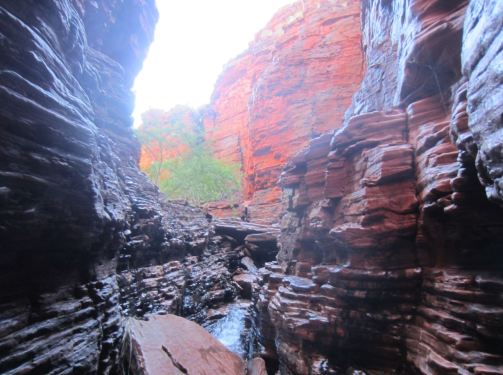
I walk this distant red gorge path alone.
My feet seek strength but I fear its sheer side,
I reach out searching for my God: unknown.
I touch nothing and weep; my faith has died.

I trudge on with the bread and blood and Word
These connect me to the church not to God.
“Scriptura sola” is literally absurd
My only joy is that others have trod

This way; and overstepped the bounds of linking.
I’ve lost the power to feel where God creates,
Abandoned zeal, fearing downfall, am sinking —
Instead of love, my worship isolates.

I falter, fall, free-fall down the chasm deep,
I faithless, God grasps me, who makes the leap.

  • Luke 9:28-36 (February 7, 2016)
    “Scriptura sola” – Latin tag meaning “Scripture alone”.

red-layered-rock

Image courtesy http://www.australiasnorthwest.com/Destinations/The_Pilbara

Sonnets for the Wedding at Cana


1

Wedding at Cana

Press the infinity loop, the Moebius strip,
Christ’s incarnation, two become one, yes,
alloy of connubial companionship,
Wife and spouse bless each other’s tenderness.

Six large pitchers to purify the night –
How much purity do bride and husband need?
No! Throw out the rules of restricting rite,
let newly-weds on love’s infinity feed.

The love of lovers cannot be pegged or clipped.
It flows like cabernet through crypted cellars,
Flooding, spreading like a tide over-tipped,
Baffling gift of Bible’s story-tellers.

Each gives all, receives all, sets each other free,
Bridegroom, Lover, Bride in Holy Trinity.

  • Isaiah 62:1-5, Psalm 36:5-10, John 2-1-11
  • Ted Witham

OLYMPUS DIGITAL CAMERA

2

Cana 2

Mary’s there, Jesus’ mother – and his friends,
(called disciples in pious prophecy.)
There’re some servants whom Jesus sends
With transformed water for the maître-d’.

The maître-d’ drinks deep and calls the host,
The bashful bridegroom takes the praise to heart.
It seems a full cast for the wedding: most
strangely the groom has mislaid his sweetheart.

Good wine, once it’s started, must be consumed,
So starts a party now and for always.
And the Bride herself is forced to be assumed
The attentive Reader prayerfully obeys.

So, dear Reader, put on your wedding gown and ring,
And go to Jesus your spouse, and with him dance and sing!

Ted Witham

the-wedding-feast-at-cana-detail-1304-1306

Christ’s Body is my body


Poem by Symeon the New Theologian(949-1022), Hymn 15 in his Hymns of Divine Love

We awaken in Christ’’s body,
As Christ awakens our bodies
There I look down and my poor hand is Christ,
He enters my foot and is infinitely me.
I move my hand and wonderfully
My hand becomes Christ,
Becomes all of Him
I move my foot and at once
He appears in a flash of lightning.

Do my words seem blasphemous to you?
— Then open your heart to him.
And let yourself receive the one
Who is opening to you so deeply.
For if we genuinely love Him,
We wake up inside Christ’’s body
Where all our body all over,
Every most hidden part of it,
Is realized in joy as Him,
And He makes us utterly real.
And everything that is hurt, everything
That seemed to us dark, harsh, shameful,
maimed, ugly, irreparably damaged
Is in Him transformed.
And in Him, recognized as whole, as lovely,
And radiant in His light,
We awaken as the beloved
In every last part of our body.


Quoted by Richard Rohr, pp. 219-20 in Things Hidden

Epiphany


Epiphany

Arise, ablaze because your light now beams,
Godly light, insight to eternal aims.
The darkness that would cover earth still dreams
Of battle victory in Satanic games.

The poverty of the poor brought to nought,
The dryness of the drought be drowned in rain,
The violence of the vicious be stopped short,
The upright once disgraced honoured again.

So yes: God’s mystery wise has been revealed,
the Gospel locked in sepulchre set free,
and Jesus master of this battle-field
is fruiting flower of frankincense tree.

For darkness has no means of quenching light:
Wise men blaze in the beacon of Twelfth Night.

  • Isaiah 60:1-6, Psalm 72:1-7,10-14, Ephesians 3:1-12, Matthew 2:1-12
  • Ted Witham Epiphany 2016
  • tumblr_nz0tpgzlvt1qbm4heo1_500