Presentation


Presentation

Bush church of my childhood: see server and priest
In tiny vestry; vestment-chest of oak,
White robes laid out immaculately creased,
Christ’s purity, and his mother’s, evoke.

The albs are bordered in fine crafted lace,
Stole and chasuble crisply ironed and laid,
Emptied of sound, in silence of place
The server hears as his precursors prayed.

Inside the small church a reed organ sounds,
On, into the sanctuary the server leads on,
He bashful bows deep then processes ‘round,
He offers water and wine: the Dreaming’s white swan.

My mother and grandma with pride are stilled;
They watch from the pews the now and the willed.

  • Malachi 3:1-4, Psalm 84, Luke 2:22-40


In Native American stories, Dragonfly persuades Swan to surrender to the power of the river so that she can, in a state of grace, be taken into the future. (http://www.swansongs.org/who-we-are/swan-mythology/)
altar-boy-solo

Image courtesy Joe Laufer’s Blog – Memories of a Life Adventure https://burlcohistorian.wordpress.com/2011/02/12/it-takes-a-village-part-ii/

Rejection


Rejection

—They’re dazzling Da-Esh with wonders and signs
Across widespread Islamist latitudes,
Where gospel is grounded in physical confines
And must be proved by miracles’ certitudes.

—We in Nazareth are more Word-based, of course,
Our gospel is rooted in reason’s deep grace,
In doctrine and Midrash is Jesus’ real source,
In text and good preaching we see Jesus’ face.

So Jesus can stand and read the whole scroll,
he can sit and discourse and be learned as well,
he can count off the ways he will save your soul –
but he cannot act. No! We’ll move to expel.

Your water to wine, your sadness to joy,
disrupting our world prepared to destroy.

  • Luke 4:21-30

christpreachnaz

Christ Preaching in the Synagogue at Nazareth. 14th c. fresco (detail).
Visoki Decani Monastery, Kosovo


Transfiguration


Transfiguration

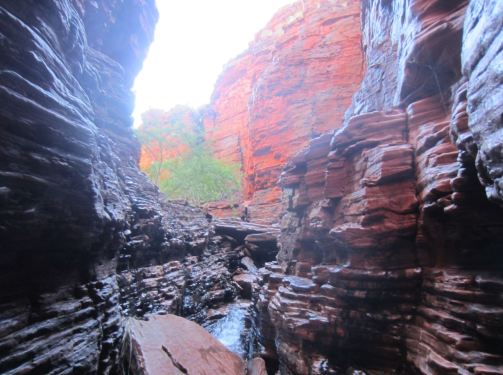
I walk this distant red gorge path alone.
My feet seek strength but I fear its sheer side,
I reach out searching for my God: unknown.
I touch nothing and weep; my faith has died.

I trudge on with the bread and blood and Word
These connect me to the church not to God.
“Scriptura sola” is literally absurd
My only joy is that others have trod

This way; and overstepped the bounds of linking.
I’ve lost the power to feel where God creates,
Abandoned zeal, fearing downfall, am sinking —
Instead of love, my worship isolates.

I falter, fall, free-fall down the chasm deep,
I faithless, God grasps me, who makes the leap.

  • Luke 9:28-36 (February 7, 2016)
    “Scriptura sola” – Latin tag meaning “Scripture alone”.

red-layered-rock

Image courtesy http://www.australiasnorthwest.com/Destinations/The_Pilbara

Sonnets for the Wedding at Cana


1

Wedding at Cana

Press the infinity loop, the Moebius strip,
Christ’s incarnation, two become one, yes,
alloy of connubial companionship,
Wife and spouse bless each other’s tenderness.

Six large pitchers to purify the night –
How much purity do bride and husband need?
No! Throw out the rules of restricting rite,
let newly-weds on love’s infinity feed.

The love of lovers cannot be pegged or clipped.
It flows like cabernet through crypted cellars,
Flooding, spreading like a tide over-tipped,
Baffling gift of Bible’s story-tellers.

Each gives all, receives all, sets each other free,
Bridegroom, Lover, Bride in Holy Trinity.

  • Isaiah 62:1-5, Psalm 36:5-10, John 2-1-11
  • Ted Witham

OLYMPUS DIGITAL CAMERA

2

Cana 2

Mary’s there, Jesus’ mother – and his friends,
(called disciples in pious prophecy.)
There’re some servants whom Jesus sends
With transformed water for the maître-d’.

The maître-d’ drinks deep and calls the host,
The bashful bridegroom takes the praise to heart.
It seems a full cast for the wedding: most
strangely the groom has mislaid his sweetheart.

Good wine, once it’s started, must be consumed,
So starts a party now and for always.
And the Bride herself is forced to be assumed
The attentive Reader prayerfully obeys.

So, dear Reader, put on your wedding gown and ring,
And go to Jesus your spouse, and with him dance and sing!

Ted Witham

the-wedding-feast-at-cana-detail-1304-1306

Christ’s Body is my body


Poem by Symeon the New Theologian(949-1022), Hymn 15 in his Hymns of Divine Love

We awaken in Christ’’s body,
As Christ awakens our bodies
There I look down and my poor hand is Christ,
He enters my foot and is infinitely me.
I move my hand and wonderfully
My hand becomes Christ,
Becomes all of Him
I move my foot and at once
He appears in a flash of lightning.

Do my words seem blasphemous to you?
— Then open your heart to him.
And let yourself receive the one
Who is opening to you so deeply.
For if we genuinely love Him,
We wake up inside Christ’’s body
Where all our body all over,
Every most hidden part of it,
Is realized in joy as Him,
And He makes us utterly real.
And everything that is hurt, everything
That seemed to us dark, harsh, shameful,
maimed, ugly, irreparably damaged
Is in Him transformed.
And in Him, recognized as whole, as lovely,
And radiant in His light,
We awaken as the beloved
In every last part of our body.


Quoted by Richard Rohr, pp. 219-20 in Things Hidden

Epiphany


Epiphany

Arise, ablaze because your light now beams,
Godly light, insight to eternal aims.
The darkness that would cover earth still dreams
Of battle victory in Satanic games.

The poverty of the poor brought to nought,
The dryness of the drought be drowned in rain,
The violence of the vicious be stopped short,
The upright once disgraced honoured again.

So yes: God’s mystery wise has been revealed,
the Gospel locked in sepulchre set free,
and Jesus master of this battle-field
is fruiting flower of frankincense tree.

For darkness has no means of quenching light:
Wise men blaze in the beacon of Twelfth Night.

  • Isaiah 60:1-6, Psalm 72:1-7,10-14, Ephesians 3:1-12, Matthew 2:1-12
  • Ted Witham Epiphany 2016
  • tumblr_nz0tpgzlvt1qbm4heo1_500

New Year 2016

Sonnet to welcome the new year


New Year, A.D. 2016

  • Readings for Christmas 2: John 1:1-18, Jeremiah 31:7-14, Sirach 24:1-12

The Word became our flesh and dwelt with us,
so the cosmos was by God itself restored,
the past is healed, the future bright for us,
Jesus’ poor birth revealed, humanity awed.

With pleas for mercy I will lead them back,
says our Lord, I will make them walk by streams,
I’ll keep my people on the straightest track,
the blind, the lame, I will fill full their dreams.

Wisdom for my homing, mercy’s teacher,
comb through heaven’s reaches and the depths’ abyss,
destination of God’s every creature –
Heart of the Universe accomplish this:

Last grain, and God’s letter spaced to kern,
Made from star-dust, to stars we will return.

Ted Witham 2016


Charles de Foucauld’s original prayer of abandonment


The prayer of abandonment usually attributed to Brother Charles de Foucauld was in fact put together by Little Sister Magdeleine Hutin from de Foucauld’s writings.

To honour the feast day of Brother Charles (who died December 1, 1916), I offer this translation from the French of his original prayer.

****

My Father
I place myself again into Your hands ;
My Father
I entrust my life to You;
My Father
I abandon myself to You;

My Father,
Do with me what You will;
Whatever You do with me, I thank You for it;
Thank you for everything,
I am ready for everything:
I accept everything:

Thank you for everything;
provided that Your Will is done in me, my God,
provided that Your Will is done in all Your creatures,
in all Your children,
in all those loved by Your Heart;
I desire nothing but my God;
I place my soul into Your hands;
I give it to You, my God,
with all the love of my heart,
because I love You,
and because I have a need to give myself in love,
to put myself in Your hands with total openness;
I place myself again in Your hands, with infinite trust,
for You are my Father.

Astrapi for kids


Astrapi is a Paris-based French-language magazine for 7-11 year olds. They distributed a two page supplement in clear language to help the kids of Paris.

It’s common sense, and although a couple of the references are specifically to Paris and France, I thought it was so well thought out that I have translated into English to help anyone respond at a personal level to the attacks. Just click on the link below.

Astrapi on Paris attacks

Buying into violence

We Christians need cool heads to not be caught up in the fear and so fuel the violence: remember André Trocmé and the villagers of Le Chambon


Russia and France have intensified their bombing of Raqqa. ISIL are rejoicing. This is the war they want, the violence they have provoked, whether or not they are the masterminds behind the bombings over Sinai, in Beirut and most recently in Paris.


They want violence to bring in their caliphate. When the West obliges by responding with violence to its violence, the West is playing into its hands. Fighting fire with fire means that everyone gets burnt.


9781742376141I’ve been encouraged in the last few days reading A Good Place to Hide, where Peter Grose tells the story of ‘How one French community saved thousands of lives in World War II’. The village of Le Chambon-sur-Lignon and its neighbours in the surrounding mountainous area hid Jews and others on the run. A small regional railway was the main access to the village which boasted a number of modest boarding houses that had been built for ‘healthy Protestant family holidays’. The village was surrounded by remote farmhouses, many of whom were willing to secrete Jews in their attics or cellars or barns, sometimes for weeks, sometimes for the duration of the war.


Le Chambon is near the Swiss border, and the people of the village opened up a ‘pipeline’ smuggling Jews into neutral Switzerland. Teenagers became expert ‘passeurs’, people-smugglers, risking their lives for others.


This whole operation which saved probably 3,000 Jews, more than Schindler’s List, had its heart in the network of Protestant pastors in the Plateau area. The Huguenot people had a history of sheltering dissidents, whether they were Protestant, Catholics or Jews, and those displaced by World War II were equally welcomed and hid or smuggled out.


The pastor at Le Chambon, André Trocmé, made known his views on non-violence from the beginning of the war. Pastor Trocmé believed that even against the evils of the Nazi regime the only weapons allowed to Christians are the ‘weapons of the Spirit’. Even when the Resistance began to form around him, Trocmé continued to speak out for non-violent methods, including openly protecting foreign Jews and others wanted by the Gestapo. He agreed to go into hiding only when he was persuaded that staying would likely result in a violent Gestapo attack on his family.


The story of Trocmé, his colleagues and parishioners, is inspiring for our time.


We are daily being tempted to back the rush to more and more violence. Pastor Trocmé provides an example of someone who consistently refused to go along with violence as a solution to violent provocation.


We are daily being encouraged to pull the welcome mat away from vulnerable asylum seekers. ‘Maybe they are more a security risk than we first thought.’ The people of Le Chambon reminds us that there are only people – not Muslims or Jews or Christians – to be welcomed to our place.


When the Gestapo came to arrest Trocmé, he wasn’t home. His wife offered them a meal while they waited. They looked for opportunities to see the occupiers as human beings too, even when it made them unpopular with other French people. We cannot excuse or overlook the wanton violence of ISIL, but maybe we can see that those being radicalised are gawky young men looking for a place to belong – not monsters.


It suits the politicians to ramp up the fear following Beirut and Paris. But it suits ISIL more. We Christians need cool heads to not be caught up in the fear and so fuel the violence: remember André Trocmé and the villagers of Le Chambon.