More than Human?


Martin Higgins, Human+,

Kindle E-Book $US 3.99, Paperback 230 pages (online) from $AUD 18.26

Reviewed by Ted Witham

This book and I did not start well together. The narrator initially sounded like science fiction’s clichéd young male narrator who is attempting to channel Raymond Chandler and whose only friend is the barman.  But within a few pages, I was surprised to realise that I was inside the head of a schizoid drug-user with heightened paranoia. I changed from groaning to admiring the writing.

David, the drug-user, turns out to be a select adept at psychological precognition – mind-reading. He has the ability to tune into people’s thoughts, moods and memories. A mystery organisation recruits him and offers to train his precognitive gifts. He befriends the trainers and discovers that his talents outshine theirs.

The organisation engineers a high-profile position for him, inventing a back-story with academic papers and university records. Lawrence, one of the trainers, seemingly deserts the organisation, and David is left to wonder whether being caught up in the world of high capitalism is the best use of his supra-human gifts.

To its credit, the book does not give a pat answer to this question, but leaves the reader with complex possibilities: with the help of nanotechnology, will human beings ever develop advanced communication abilities? Can capitalism deliver the most ethical future for humanity? Will there always be people left behind by human progress – will the poor always be with us despite all the promises of technology? Are reading and story-telling technologies by which we enter the thought-worlds and moods of other humans and transform ourselves into more than humans?

At the end of the book, I was surprised how much I had enjoyed it. I enjoyed the company of the first person narrator, I was intrigued with the bigger questions raised by his experience, and I continued to wonder where the hard science ended and the fiction begun. That’s a mark of good science fiction.

The book was professionally presented, so I did not have the common experience with E-books of being confronted by spelling and grammar clangers. The story kept me interested until the end, and it was altogether an enjoyable and worthwhile read.

Hope for Palestinians


Michelle Cohen Corasanti, The Almond Tree, Reading, UK: Garnet Publishing

Paperback from $AUD 11.22 (online) or Kindle E-book: $US 3.49

Reviewed by Ted Witham

I wept frequently while reading this outstanding first novel.

The Almond Tree tells the story of Ichmad Hamid, a gifted Palestinian boy whose family home is destroyed to make way for Jewish settlers. They lose their orchard and, after some years in a tent, are able to build a one-room cement-block house on the tiny patch of land the Israelis leave for them. Ichmad’s beloved Baba is sent to prison for 14 years after 12-year-old Ichmad helps radicals bury weapons in their backyard.  Their small home and all its possessions are again destroyed by Israeli soldiers.

In his father’s absence, Ichmad takes on the role of provider for his family, working on Israeli settler construction sites for far less wages than the suspicious Iraqis and Russians who work with him. Following his father’s advice Ichmad tries to choose always the way of peace, and despite endless provocations, not to return hatred for hatred.

Teacher Mohammad offers to tutor the gifted boy every evening after work. Ichmad wins a scholarship in Maths and Physics to Hebrew University, and sets out on a stellar academic career. He collaborates with his Professor, a bitter Jew whose family was murdered in Auschwitz. Eventually the two become close friends and win the Nobel Prize jointly for their work on nanotechnology.

Ichmad continues to support his family on his Professor’s wage at Harvard, and maintains close contact with his village. He identifies with their life-giving almond tree with its roots deep in Palestinian soil. At every turn in his story  he encounters tragedy, much of it caused by the brutality of Israeli occupation, and Ichmad’s desire to choose peace almost always – eventually – turns the tragedies into something deeper and positive for his people and his family.

This is a powerful first novel by a courageous Jewish-American woman. I did not need to be persuaded that the occupation of Palestine is anything but a disaster for the Palestinians. It would be wonderful if this novel helped others to see the human cost of providing a secure and secular state for the Jewish people. It may just be sufficiently powerful to do so.


A “plain package” St Francis of Assisi


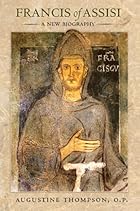
Augustine Thompson, Francis of Assisi: A New Biography, Cornell University Press (2012), Hardcover, 312 pages, $25 from online retailers.

Reviewed by Ted Witham

Augustine Thompson’s biography is “new” in the obvious sense that it is the last in a long line of biographies of St Francis going back to Paul Sabatier’s 1893 Life. Thompson’s, however, is “new” also in that it aims to go back rigorously to historical sources. This approach is in line with other historians who recently have been sifting through historical records and chipping away at the pious accretions to produce a “plain package” St Francis.

William Hugo, for example, a Capuchin formation director produced in 1996 a “Beginner’s Workbook” Studying the Life of St Francis, which invites novices to evaluate the historicity  of early writings. The Melbourne conference in 2009, out of which came Interpreting Francis and Clare of Assisi, was also historical in ambition, using a variety of academic approaches – documentary, art history and so on – to develop a more historical picture of the saints in their world.

These new studies are pushing out the older Lives of St Francis, which were either pious or interpretive: they sought either to show Francis as an exemplar of the Christian life, or they observe St Francis through a particular lens: Jacques Dalarun on Francis and power and Francis and the feminine, and Leonardo Boff on Francis and liberation offer these interpretive visions of Francis.

Augustine Thompson is a Dominican friar, and this gives him an “insider-outsider” perspective. On one hand, he knows what it is to be a friar in an Order with a  charismatic founder. On the other hand, he has greater clarity of vision when he writes about Francis than do many Franciscans in their familiarity with their founder.

Fr Thompson tells a plain story of a man who had no agenda and who could articulate no particular vision for the movement that formed and swarmed around him. Thompson’s Francis simply wanted to live the Gospel. Even at the end of his life, Francis is still surprised, Thompson claims, that “the Lord gave me brothers”.

Even poverty, the Franciscan value that many believe to be the base of Francis’s vision, is held up to question by Thompson. There’s no doubt that poverty was a part of Francis’s vision, but Francis, as Thompson emphasises, mentions the Eucharist much more often than poverty. Francis’s devotion to churches and priests is because of the celebration of the Eucharist – all to be venerated because there God comes to earth in a perceptible form.

The central insight for me in this “new” biography was precisely Francis’s lack of a programme. Francis, at least in Thompson’s telling, was a man who simply wanted to live the Gospel, to be radically available for God. This, I suspect, is one of the main reasons for Francis’s ongoing attraction.

Thompson’s book also has its attractions. It is divided into two halves. In the first Thompson tells the story of Francis simply and without frills or academic apparatus of any kind. Then follow a helpful list of the major biographies of Francis since Sabatier’s and a bibliography of documents from the 12th Century. In the second half of the book, Thompson argues in detail why he has included some details and discarded others as non-historical. These chapters may be mainly for scholars: most of us, I suspect, will be glad to read the first half as a self-standing account of Francis’s life and be refreshed by it.

Human consciousness: complete and inconsistent?


Robin Craig, Frankensteel, Thoughtware Publications 2012
(Kindle edition: Amazon price $US1.99)


Reviewed by Ted Witham in TableAUS (Australian Mensa News)  September/October 2012


Robin Craig’s “Philosophical Reflections” in TableAUS often provoke replies both polite and unmannered from Mensans. In these “Reflections”, Robin presents his highly rational and positivist world-view using the rhetoric of the philosopher. I enjoyed reading a new side of Robin in his novella Frankensteel.


Frankensteel tells the story of an anthropoid robot equipped with an organic brain whose intelligence grows from a few simple learning algorithms. The robot at first appears unable to speak, however, but just the fact of its invention throws the authorities into panic mode. They order its maker Stephen Beldan to destroy it. Frankensteelhas quite a presence in a room, and its first spoken words are effectively a declaration to its maker that it would be inhuman to destroy it. Though the scientist locks the robot away, it inevitably escapes and seeks out the company of Professor David Samuels whose expertise in human consciousness may help it understand whether it is human or not.


Special Investigator Miriam Hunter is ordered to hunt “Steel” down and finds herself drawn into the moral dilemma at the heart of this story:  whether this human creation with its intelligence should be destroyed or not.


The story has been told before. Any writer since Mary Shelley’s 1818 classic attempting a re-write of the Frankenstein myth must have a stand-out factor to distinguish it from its predecessors. Its factory setting and its police hunter skilled in dark arts of pursuit and assassinationgive Frankensteel a modern “industrial” and almost noir feel.  The character of the professor, in particular, gives Robin Craig the narrative licence to develop arguments for and against artificial intelligence and its relationship to human consciousness. Frankensteel brings the old myth up to date bytaking into account recent developments, both in neuroscience and artificial intelligence.


Set against these protagonists are the shadowy Imagist cult, believing that only human beings are made in the Image of God, and therefore set against machine consciousness. These radicals are capable of serious violence, but the robot uses his intelligent understanding of human beings to survive.


Frankensteel is a novella length story which I read in a few hours. Its chief problem is that the characters are not sufficiently developed for me to care what happened to Frankensteel or any of his friends. It might be stronger if it was compressed to a short story length and then told through the eyes of just one of the characters, Frankensteel himself perhaps, so that readers both identified with his nascent humanity and were also drawn into the discussion about machine and human consciousness.


But I salute Robin Craig for imaginatively raising the issues: I enjoyed meeting Frankensteel.


A new priest-detective


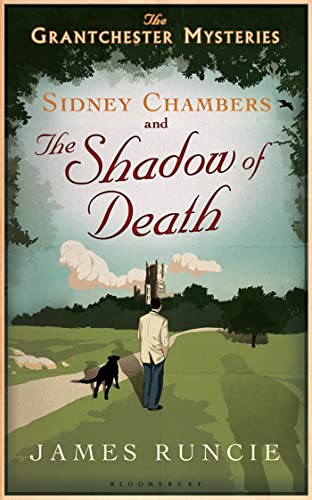
James Runcie, Sidney Chambers and the Shadow of Death (The Grantchester Mysteries),  London: Bloomsbury Publishing PLC (2012), Edition: First Edition, Hardcover, 400 pages, available through (Australian) public libraries. (Paperback $15.00 approx. online)

Reviewed by Ted Witham

I am glad to have met Canon Sidney Chambers, a priest who is an accidental sleuth. The Grantchester Mysteries begin in the early fifties when Sidney Chambers, who has received a minor canonry from an African diocese, begins his ministry as Vicar of Grantchester near Cambridge. Chambers is a war veteran who has seen active service, and a bachelor unable to choose romantically between a young German widow and an old London friend Amanda Keating. He is conscientious about his ministry, wanting to be available pastorally to his people and to frame all the day to day work of the parish as part of the mission of the Kingdom of God.

However, Sidney finds himself drawn into different crimes: partly because of his association with his best friend, Inspector Geordie Keating, with whom he shares a weekly beer and game of backgammon, and partly because a clergyman can go where others cannot. For example, the mother of a young woman he is preparing to marry dies suddenly. The woman’s fiancé is a doctor and her mother would not give her approval for the marriage. The match and dispatch aspects of his ministry give him access to the young murderous couple while his friendship with a policeman gives him a reason to question the coroner.  

The stories are easy to read. Each crime is only short, and the characters move comfortably in and out of the stories depending on whether they are set in Cambridge or London or in the great house of the local gentry. Their tone is light-hearted, and I chuckled gently at many points. Some of the dialogue made me laugh out loud.

This clergyman loves jazz and cricket and dines occasionally at his old College where he teaches New Testament. He wonders whether he is a bit eccentric among clergy. In fact, part of the pleasure of reading The Shadow of Death is the authenticity of the picture created of parish ministry in post-war England.

James Runcie, son of the former Archbishop of Canterbury, may well be writing from his observations growing up as a clergy kid. He has certainly created an engaging priest-detective, a worthy successor to G.K. Chesterton’s Father Brown.  Mr Runcie has promised another five Grantchester Mysteries spanning the period of English history from the accession of Queen Elizabeth II to the marriage of Charles and Diana in 1981. I look forward to following Canon Chambers and his sleuthing.

Emerging Butterfly?


Peter Rollins, How (Not) to Speak of God, Paraclete Press 2006. E-Book 2012

Reviewed by

Ted Witham

The key idea of How (Not) to Speak of God is that many Christians in the “Emergent Church” movement embrace paradox. The first few chapters unpack the implicit idea in the title: that the moment we speak of God, we deny who God is. All attempts to define or describe the Christian God are doomed.

This is, of course, not a new idea, but it is unusual for evangelical Christians to push the point as hard as Rollins does. Essentially, Christians are atheists, because our God is beyond human category. At best, we can glimpse God in icons which often appear to point away from the reality of God, but which express metaphors that are self-consciously metaphors and not definitions.

Christians are defined not so much by what they believe as by how they believe; and this dynamic faith will manifest in works of mercy and restorative justice in the real world.

The second part of this encouraging book is a series of liturgies designed by the house church in the Menagerie Bar, the pub that Rollins calls his spiritual home. The themes range from Judas to Corpus Christi to Eloi Eloi Lama Sabachthani. The description of each liturgy is preceded by a reflection introducing the theme. The liturgies emphasise imagination and emotion and are described in practical detail, so that readers could use them as they are, or adapt them for their own setting.

If this is the coming, emerging church, then I would not mind belonging.

Interviewing Thomas


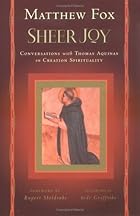
Matthew Fox, Sheer Joy, Conversations with Thomas Aquinas on Creation Spirituality,
HarperSan Francisco, 1992, 532 pages.
reviewed by Ted Witham

In 1986, I was lucky enough to spend 13 weeks with the medieval genius, Saint Thomas d’Aquino. It was by accident. Forced to choose a Church History unit in my studies, I opted for the subject with fewest dates and chronological gymnastics: Thomas Aquinas.

What a joy it was for me to shatter my image of him as a dry-as-dust scholastic theologian, concerned about angels dancing on pinheads.

Brother Thomas came alive for those 13 weeks, a spiritual companion who enlarged the view I had of faith in Christ. His personality is quirky, warm, courageous, utterly straight. He showed complete disinterest in things such as social etiquette.

Thomas was a mystic, and a genius of the order of Albert Einstein.

But after my course I found it difficult to communicate my enthusiasm for the ‘seraphic doctor’. His writings are hard work to read, and if you wish to follow through an idea, apart from the 30-40 volume set of the Summa Theologica, you really need a knowledge of medieval Church Latin. (If you are blessed with a e-Reader, you can download the complete Summa edited by the Dominicans for 99 cents.)

That is, until Matthew Fox’s Sheer Joy. Sheer Joy is a Thomas reader that aims to make Aquinas accessible to a wider audience. In Sheer Joy, Fox “interviews” Thomas, his brother in the Dominican Order (or ex-brother, as Matthew Fox is now an Anglican)! Fox puts questions to Aquinas, the answers to which are the actual words of Aquinas.

This interview format achieves three things:

* Fox can ‘ask’ 20th Century questions to reveal Aquinas’ relevance for us.
* Fox invites Thomas Aquinas to show his skill as an interactive teacher. Brother Thomas has a warmth easily submerged in long passages of translation.
* Fox displays his enthusiasm for his mentor and the reader can catch it!

As it is a selection from the writings of Aquinas, Sheer Joy is inevitably an interpretation of the master theologian’s ideas. Matthew Fox does set out to show in what ways Aquinas is a creation mystic. The themes of the four conversations (decided by Fox not Aquinas) are the movements of mystic theology: the Positive Way, the Negative Way, the Creative Way and the Integrative Way. Fox does take the risk of distorting Aquinas by placing him in an alien framework. I think, however, that the distortion is minimal. Medieval mysticism is not so alien to Thomas, who was a great poet of the Eucharist, influenced by Francis of Assisi and the medieval archetypes of the “goddess” and the “green man”. Fox also takes pains not to limit his viewpoints to modern frameworks of understanding. In any case, the words of Thomas are so powerful as to stand in their own terms.

Matthew Fox succeeds in making Brother Thomas more accessible. Don’t, however, expect an easy read. This is serious and deep stuff demanding real thought. Aquinas is not noted for levity. A brother once tried to tease Thomas by telling him that there was an ox flying outside. Thomas ran to the window. Everyone laughed. Thomas said woodenly, “I would rather believe that an ox could fly than that a friar could tell a lie.” (No wonder they nicknamed Thomas “the Dumb Ox”.)

Thomas tells it straight. He tells it straight from the heart, but through one of the most powerful intellects in the history of Western civilisation. So do persevere with Sheer Joy. It yields depths of wisdom. Thomas yearns for every Christian to draw closer to God, and his insights can light the way.

Fox brings out Aquinas’ holistic teaching about the creation, the delight that God’s love brings to all his creatures and the conscious response of love and pleasure (“sheer joy”) mortals are invited to make to God for themselves and on behalf of all creatures. This basic indwelling of God in all things and all things in God releases creativity both in God and in humanity. Desire to work with God to bring about a better world, what Fox calls ‘social justice’ and what Aquinas calls ‘perfecting’ creation, is the task of all Christians.

Fox shows that the best way to understand Thomas is primarily as a scriptural teacher, who uses philosophy only as a tool to bring contemporary meaning to the Bible. We have the false impression that Aquinas is primarily a philosophical theologian mainly because many of his Biblical commentaries have not been translated before. Fox’s translations are lively, avoiding the muddy ponderings of much previous translation.

I received two gifts from reading Sheer Joy. One was the deep love Thomas Aquinas has for the God who reveals himself in nature and the Bible, and who abides in us in the Eucharist. The second was the burning desire that others might know the embrace of that love.

Moved by Priest’s First Love


Glynn Young, Dancing Priest, Dunrobin Publishing, 2011

ISBN-13: 978-0983236351, paperback 380 pages (from $AUD14.15),
Kindle $US2.99

Reviewed by Ted Witham

I was surprised at how much this first novel moved me. The two main characters, Michael Kent and Sarah Hughes, are attractive young people who have fallen in love with each other, but who believe that Sarah’s lack of faith is keeping them apart.

Michael Kent is charismatic, an Olympic cyclist, and a theology student in Edinburgh. His life keeps turning out for the better and the better, even despite tragedy at the Olympics and other obstacles in his way. He is also good at dancing. Sarah, too, is talented as an artist, and gains recognition for her paintings late in the book.

Of course, I identified strongly with the main character: I was once a young theological student, and I once fell in love. Reading the book recaptured a lost and idealised youth.

The story is set primarily in Edinburgh, Athens and San Francisco. The sense of place was strongest in the descriptions of California and the topography of San Francisco, particularly from a cyclist’s view point. All cities, however, are exotic enough to be interesting.

Glynn Young writes about faith in a believable way, sympathetically capturing an evangelical mind-set in thought and action, and describing well the dynamics of a parish staff.

I had been so disappointed by US ‘Christian’ novels in the past, where ‘Christian’ equates to avoiding swear words and sex, but Dancing Priest is a refreshing change. Here ‘Christian’ equates to thoughtful prayer and care of others.

I had some quibbles with the Anglican aspects of this novel, the worst of which surrounded Michael’s ordination at St Paul’s cathedral in London. In most dioceses I know, the days before ordination are spent in retreat: playing tourist is a poor preparation for such a major step. (It may be that the Church of England is different precisely because it does gather candidates from all over England, some of whom may not have visited the capital). More jarring was the fact that Michael was not ordained deacon before his priestly ordination. Two-step ordination is fundamental to Anglicanism.

For the most part, however, the picture of a church that was like the real Anglican Communion, but not like it, with splits and tensions like the current ones, but not quite the same, was stimulating and entertaining.

Young’s writing has reminded another reviewer of Madeleine l’Engle, and I see the connection. But in the fresh characters, the way the plot invites the reader onwards from page to page, I was more reminded of C.S. Lewis in his Space Trilogy, only with more open emotions.

Untimely, but gentlemanly, Dying


P.D. James, Death Comes to Pemberley

London: Faber & Faber, 2011. Pback 310 pages. ISBN 9-780-57128358-3. RRP $29.99


I’ve had to have been persuaded to read Jane Austen; despite the enthusiasm of some friends for the 19th Century novelist, I have been put off by her high style and the brittle world she builds of English class distinctions at the end of the 18th Century.

I was anticipating the next police procedural of P.D. James, a modern stylist and great crime writer, and I admit to some disappointment when I read the advance publicity for Death Comes to Pemberley: an amalgam of a Jane Austen novel and a crime thriller.

Elizabeth Bennet has married Darcy and settled at Pemberley. They have two sons in the nursery and their marriage is a happy one. Each year, Pemberley Hall is the scene for a grand ball, named in honour of Darcy’s late mother, Lady Anne. Pemberley is thrown into disarray on the night before Lady Anne’s ball by the bloody death of an army officer in the estate woods. The scene needs much untangling as Wickham, a man never to be received at Pemberley is found kneeling over the body, drunk, and exclaiming that it is his fault that his friend is dead. Wickham is married to Elizabeth’s sister Lydia, and causes ongoing distress to the Darcys by living irresponsibly beyond his means. Darcy as a paterfamilias has in the past been obliged to pick up the tab.

In the subsequent investigation and trial, family loyalties are stretched to breaking point, and Pemberley looks set to be shamed for generations to come, until the final resolution, which – in Jane Austen fashion – is a set of happy outcomes for all.

James’s writing is so good that I was drawn into this complex web of family relationships and intrigue and enjoyed this novel almost as much as her other crime novels. (I don’t think she can better Death in Holy Orders – but then, I’m a priest!)

I was amused that Darcy consulted his wrist-watch and Elizabeth her bedside alarm clock: they were needed to establish times of alibis. The year in which Death Comes to Pemberley is set is 1803, well before the mass production of wrist-watches and the miniaturisation of alarm clocks. Darcy, as a gentleman, would much more likely have a pocket watch, if any time-piece on his person, and Elizabeth would more likely be used to consulting a maid who might know the time from a large hall clock. I can’t help feeling there’s a joke element here. P.D. James is too careful to have simply made a mistake.

The incongruity of the time-pieces emphasise how complete the world is that James has created. I believed her portrayal of reactions to death among the British upper-class of the time. I suspect Baroness James has some nostalgia for a time when gentlemen lived on their estates and as magistrates kept good order in the realm.

The downside to this nostalgia is that Death Comes to Pemberley lacks some of the social edge of James’s earlier novels. This has been a divertissement, and a thoroughly enjoyable one, but I do hope she returns to more modern settings if we are blessed with future novels.

Ted Witham