We human beings are sometimes called homo viator, meaning a person on a journey, a pilgrim. We think of the pilgrimage we make each year from Palm Sunday on as the journey to Easter.
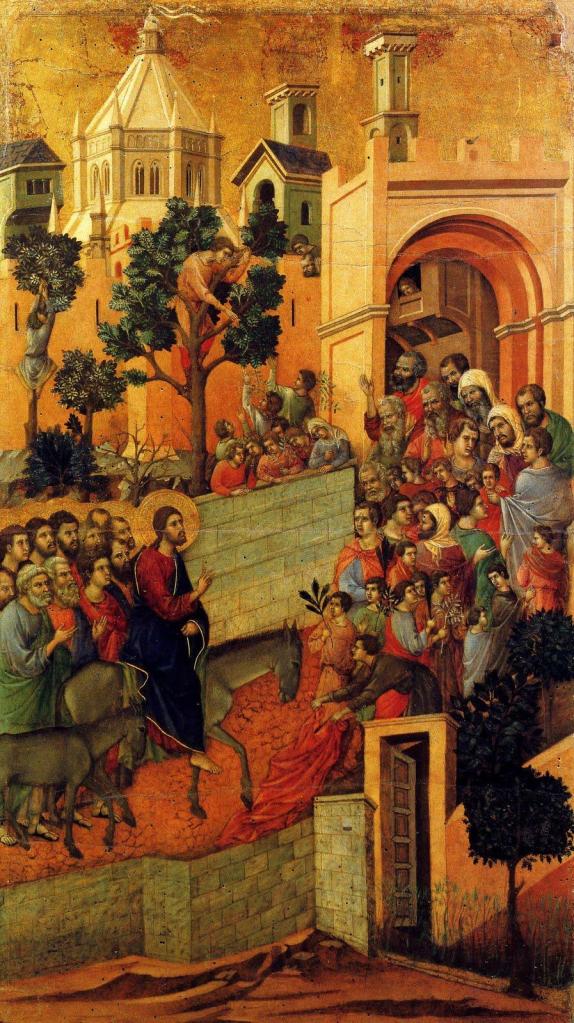
Palm Sunday is a journey by itself; a journey through packed and narrow streets, trying to keep the man riding the donkey in our sight. But he is always just ahead around a corner. It’s a journey where we cheer ourselves hoarse. ‘Hooray,’ we shout, ‘Hosanna to the Son of David!’ it’s a journey where we are jostled in the friendly crowd. Excitement is contagious. ‘Blessed is the One who comes in the name of the Lord!’ we cry out together.
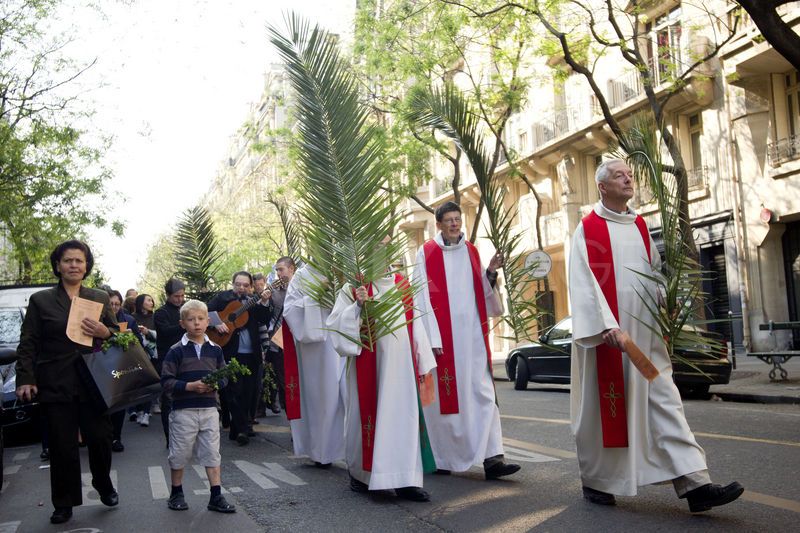
I recall Palm Sunday processions at St David’s, Applecross, when the whole congregation walked from the nearby oval to the church, singing ‘Hosanna, hosanna!’ to a guitar accompaniment, chatting and socialising on the way.
I also recall more formal processions around church buildings with processional cross leading, robed servers and clergy, and all waving zamia palms and singing ‘All glory, laud and honour’. Usually, we managed to get out of time with the organ inside thumping out the tune!
This year, because of the pandemic, we will miss these cheery processions. We will make do with worship at home and online, poor substitutes for the real thing.
We can still reflect on the pilgrimage of Palm Sunday. We know that we are in a crowd that cries ‘Hosanna!’ today and ‘Crucify Him!’ tomorrow. We know that it is hard to keep in view the real Jesus, the humble donkey-rider. We know that our enthusiasm for Jesus will be challenged by the realities of suffering. And we know that our faith holds out against darkness. But this does not erase the truth of joyous praise as a season in our pilgrimage.
As we hear the story of the Entry into Jerusalem this Palm Sunday, whether it is our solitary voice reading it, or someone reading it to us from our screen, let us enter into the emotions of the Jerusalem crowd that day: the joy, the hope, the cheeriness, and the enthusiasm. These emotions can be a powerful antidote to the fear and uncertainty around us. We can own those feelings as a valid and notable season in our journey of faith.
Let us walk in imagination this Palm Sunday with the pressing crowds in Jerusalem and shout with them, ‘Hosanna to the Son of David! Blessed is the One who comes in the name of the Lord!’
Lent 5 (March 29) 2020. Reflection on Ezekiel 37:1-14, ‘The Valley of Dry Bones’.
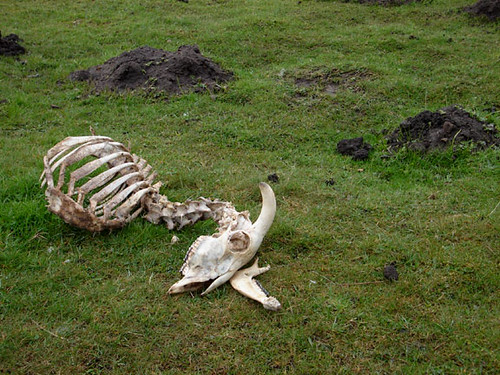
I grew up on a farm and remember being able to wander far from the house. Often, I would come across old bones. They intrigued me. I would wonder whether they were bones from sheep, which was most likely, or from kangaroos or dingoes. I would try to picture where the bones had fitted into the animal when it was alive. I found this hard to imagine: the difference between the bone in my hand and the living creature was too great.
Holding the bones, I felt how dry they were. Bleached by the hot sun, the smooth bones were made even smoother by the drying-out process. Even though I knew it to be the case, I couldn’t imagine how these bones were once alive, part of a creature that knew hunger and fear, vitality and the cool taste of water.
It amazes me when I hear of scientists who extract DNA from old dry bones, much older than the sheep in our paddocks. To measure the life in the bones needs extraordinarily sensitive equipment.
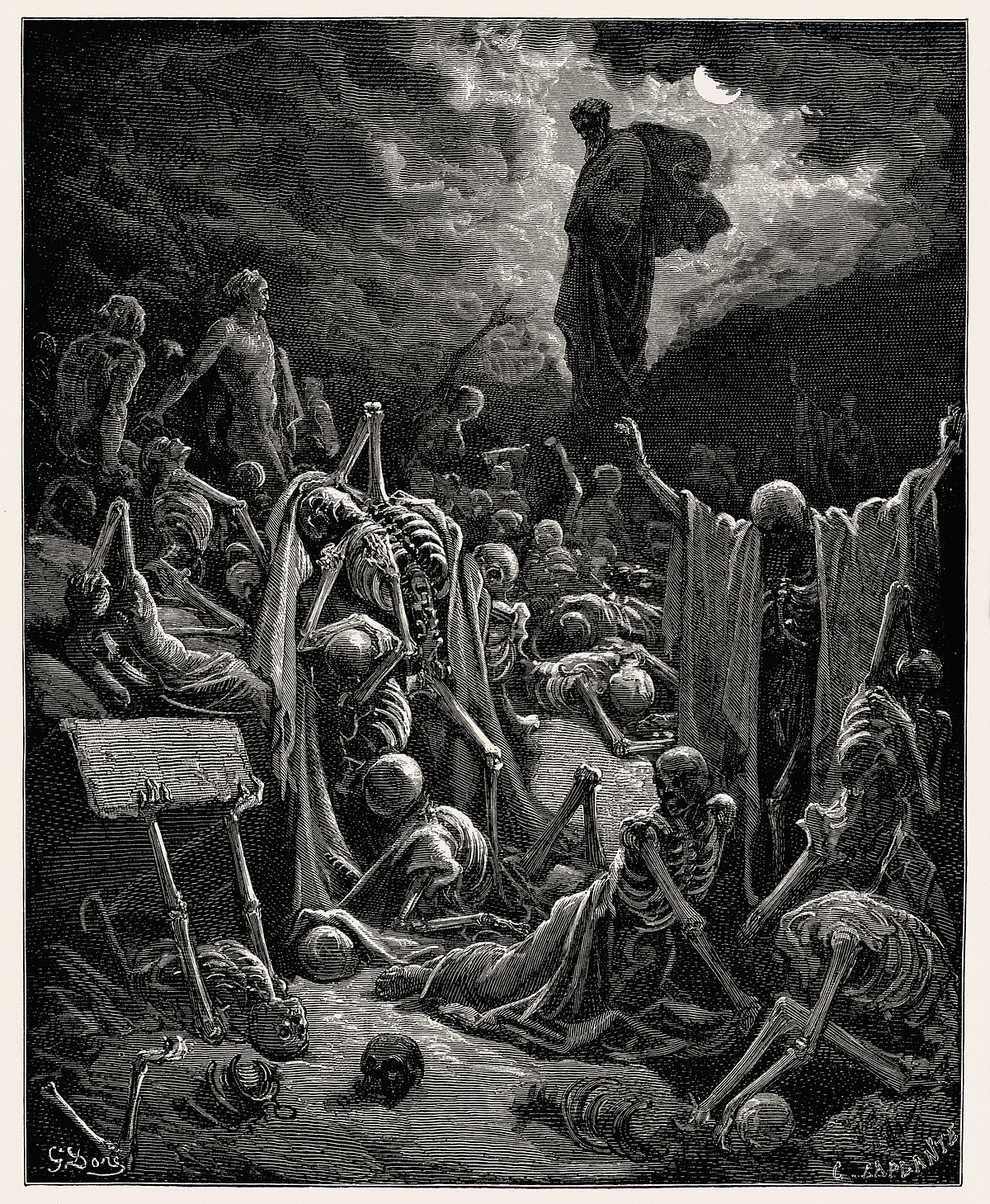
So Ezekiel’s question of the Lord, ‘Can these bones live?’ is perfectly understandable. The common-sense answer, even the scientific answer, must be that life from dry bones is impossible. But in his vision, Ezekiel sees God choreograph the resuscitation of an army of dry bones. Ezekiel describes a drama of rattling, the sound of the four winds, the bones being covered with sinews and skin, then rising in their ranks. He then pictures God breathing into them and making them again living human beings.
Ezekiel is in exile with the people of Israel, a captive with them in Babylonia. Many of them believe that Israel is destroyed. The Israelites will assimilate into Babylon and lose their identity altogether. They will become a footnote to history.
But Ezekiel becomes their comforter. He is disgusted by their ‘shepherds’ who have no vision of the future. He insists God will put a new Spirit into the people of Israel. Even if they seem as dead as dry bones in a valley, God will breathe life into them, just as God did for the first human, Adam.
In the midst of death, Ezekiel is a strident voice of hope.
Ezekiel speaks into the guts of this pandemic, where death is stalking our community, tearing loved ones away from each other. He reminds us that God is Creator. Where there is death, God insists on creating life.
The impact of Covid-19 will fall disproportionately on the poor in our community and the poorer nations of the world. We see the sweep of its story in Italy and China and know we will see something similar here. We have work to do caring for each other in the valley.
Yet Ezekiel reminds us that there will be an end to the scourge of this infection, and there will be new life – new, surprising life.
Our task as Christians is to speak that hope. We are to be Ezekiels, prophets, who speak our hope into the valley of dry bones and affirm, ‘Yes, Lord God, these bones will live!’
In 1527, the reformer Martin Luther was asked how Christians should respond to the plague. His response is gentle and challenging. You can download the whole letter from Lutheran Witness here.
His words are surprisingly relevant for us in 2020 as we face the upheaval of Covid-19. These are the four points I gleaned from his letter.
Trust God – not tempt God
‘Why bother with all this social distancing and hand-washing? God will look after us.’ It is disappointing to hear this from fellow-Christians. Luther claims to admire those who have such strong faith, but most of us need to do what we can to minimise risk to ourselves and to others. Christians who ignore expert advice and carry on hand-shaking and not taking precautions are ‘putting the Lord their God to the test.’ (Deuteronomy 6:16)
Love your neighbour, which is loving Jesus.
This is a time to look out for your neighbour, particularly your vulnerable neighbour. We should be ‘caremongering’ and not scaremongering. Caring for neighbour, even if that somewhat elevates the risks, is the way we show love for God. ‘Even as you did not do this to the least of these, you did not do it to me.’ (Matthew 25:45)
Don’t run from responsibility
There are people who are loading their vehicles with stores and heading out to farms where they plan to live ‘off the grid’ for as long as the pandemic runs.
Luther begins his letter by addressing ‘Whether One May Flee from a Deadly Plague’. In itself he can find no sin in running from the plague. Luther’s concern is that people with responsibility in both spheres of life, preachers and politicians, should not run away from their duties.
Clergy need to stay in their post to accompany their parishioners on their journeys through illness and death. Even if they cannot be physically present with their people, they should devise means of encouraging them in a time of fear. Our age has the internet, and churches are using email, Skype and live-streaming to maintain Christian connection as well as possible.
Choose life – not resign yourself to death
We Aussies sometimes say, ‘If your number is up, it’s up’ in a fatalistic acceptance of death. Christians, however, should ‘choose life’. (Deuteronomy 30:19)
Death is part of life, and we should not fear it. We should approach the possibility of our own death through this time of plague with the assurance that whatever we think follows this life is better than we can imagine. (I Corinthians 2:9) On the other hand, we should honour the life that we have been given now by living it to the full, in self-giving to our neighbour and in gratitude to God.
To me that means living mindfully and choosing to find and share joy where we can.
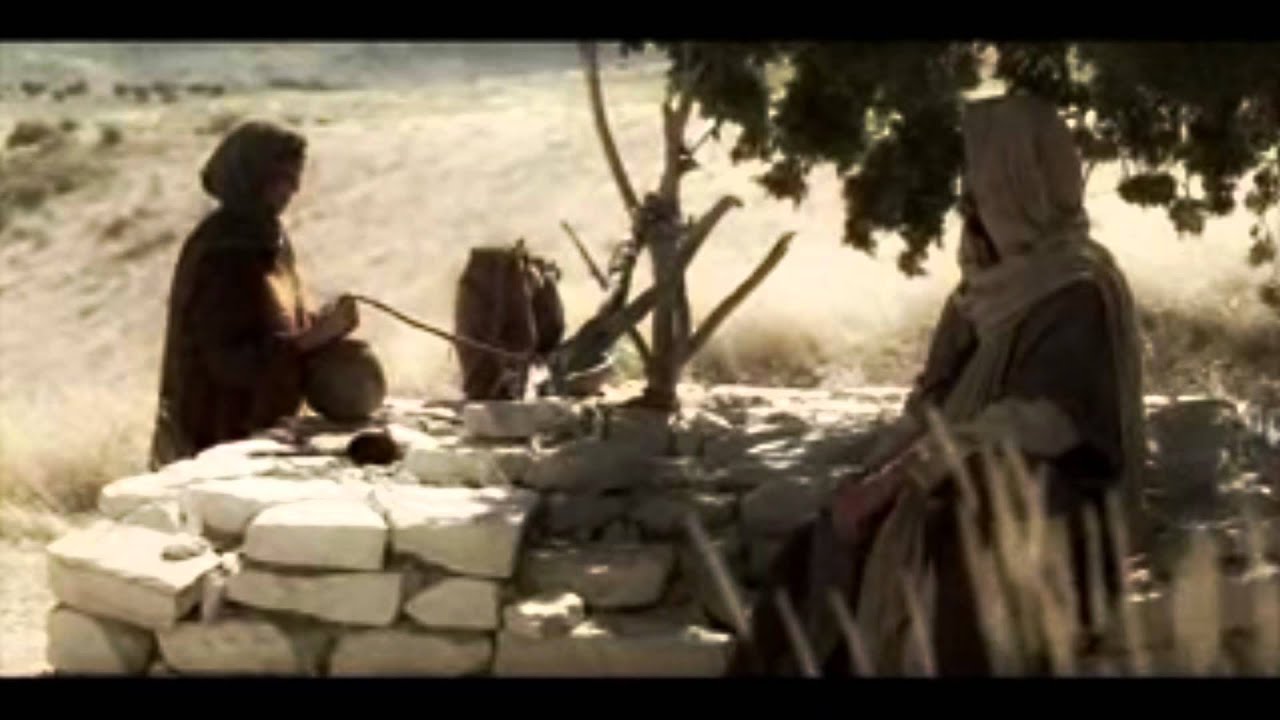
I’m a proud Noongar woman. I belong to this country. And I know how to open the gnamma hole to get water. I know what to sing to the spirits. I shout loudly to tell them that I’m coming. I’m about to throw sand down the gnamma hole to purify the water, when this wadulah man appears.
He’s a wadulah and he’s a man.
Gnamma – courtesty W.A. Museum
He thinks he knows everything, and he thinks he owns our country. But he waits, back where I called the spirits, and says to me, respectful-like: ‘Can you get me some water, Aunty?’
I’m a bit surprised. I’ve never heard a wadulah ask before. For anything. If they know where the gnamma hole is they rip the top off and help themselves.
I’m a bit suspicious too.
‘What wadulah asks a Noongar woman to get him a drink?’ I ask.
‘If you knew who was asking you,’ he says, ‘you would ask him for living water.’
‘Where would you get living water?’ I ask him, ‘You got no gnamma hole and you got no spirits here. Our ancestors told us how the gnamma hole was made, and how the Wagul passed through the country. You’re not greater than the ancestors, are you?’
He said, ‘When you drink your water you get thirsty again. But whoever drinks the water I give will never get thirsty again. The water I give will be a water-hole gushing up to eternal life.’
I didn’t know whether to laugh or run away from this wadulah.
‘You’d better give me some of your water,’ I says, ‘so I don’t have to come out to the gnamma hole to get it no more.’
So he said to me, ‘Go and get your husband and come back here.’
‘Ain’t got no husband.’
He says, ‘Too right you’ve got no husband. You’ve had five husbands. But the man you’re living with now is not your Law husband.’
I swallowed. ‘Uncle, you must be a prophet. Our ancestors called on the spirits on this mountain and you wadulahs say people should worship in church.’
He replied, ‘Believe me, Aunty, time is coming when you will worship the Father not on this hill nor in church. You worship spirits you do not know. We worship God because he brings salvation. But time is coming when true worshippers will worship the Father in a real true spirit. The Father is looking out for people to be his true worshippers. God is spirit.’
I says, ‘The Mission told us Christ will come and when he comes, he will tell us everything.’
Then he turns to me and puts it to me: ‘I, this one talking to you, I am he. ‘
Just then, his followers came back. They looked shocked to see him talking to me, but they didn’t say to me, ‘What are you after?’ or to him ‘Why are you speaking with her?’
I dropped my water-can and ran down into the camp shouting to everyone, ‘I’ve met someone who’s told me everything I’ve ever done. Could he be Christ? Whoever he is, he’s made me proud of being me!’
********
Jesus made a habit of embracing people he shouldn’t.
For the woman at the well in Sychar, there are three reasons he shouldn’t speak to her.
First, she’s a woman. It was unthinkable for a man to talk to an unaccompanied woman in public. Think Saudi Arabia today, only more restrictive. It wasn’t a matter of waiting for an introduction, men just did not talk to someone else’s woman. But Jesus did.
Second, she’s a Samaritan. The Jews were supposed to hate Samaritans. When most of the Jews were taken off into exile in Babylon, the Samaritans were left behind. Even then, they weren’t as high status as other Jews. But while the Jews were away, the Samaritans started to marry out. So they were neither Jews nor foreigners, despised by both. Jews would go to great lengths not to speak to Samaritans. They avoided even travelling through Samaria, although it was the shorter route from Jerusalem to the Galilee. But Jesus spoke to this Samaritan.
Map: courtesy Spend A Year with Jesus
Third, the woman was probably morally unclean. She was fetching water in the heat of noon, presumably because the other women would not associate with her. The village saw her as an adulteress because her previous husbands had divorced her. Morally clean folk do not talk to morally unclean folk. But Jesus did.
Just as he embraced lepers, who were outside proper society. Just as he engaged with Gentiles, who were not Jews, and therefore beyond the boundary of social interaction. Just as he laid his hands on dead people who were unclean and told them to live: the widow of Nain’s son, the 12-year-old girl in Jericho, his close friend Lazarus.
There is so much to unpack in this story of the woman at the well. But this morning I would like to reduce it to just one challenge.
Jesus made a habit of embracing people he shouldn’t, and their lives were transformed for the better. Who are the people who you shouldn’t embrace? The people who are outside our social world change as society changes. In the nineteen eighties, people didn’t embrace folk with AIDS. It was thought to be contagious. And yet courageous people did and made their lives better. Up until the 19th Century, you didn’t embrace lepers. Yet people like Saint Damien in Hawaii lived with lepers and turned their hell into a loving community.
Who are the untouchables for you today? It might be the homeless man begging near Coles. It might be the druggie creating a fuss at the Op. Shop. It might be someone who has abused children. It might be a family member or neighbour who is estranged from you, probably by their fault, of course.
Two things are certain: if you follow Jesus, you are invited to follow him in embracing people you shouldn’t. Engage them. Talk to them. Treat them as human beings.
Secondly, if you embrace these untouchables, your care will transform them.
For Jesus has embraced you and is transforming you too.
On December 6, Prime Minister Scott Morrison announced that the Department of the Arts (then part of the Prime Minister and Cabinet PMC), would come under a new mega-‘Department of Infrastructure, Transport, Regional Development and Communications’. No mention there of the Arts.
There has been widespread dismay at this change. A petition has gathered 10,000 signatures asking that all art and music be withheld from Parliament House. That’ll show them – literally.
Here is my response to keep the issue alive:
Australians, they have made their choice, That fruit hangs low on tree, We now recall that Arts for all Have gone from PMC To Infrastructure’s hieroglyphs To Transport’s slipshod care. Off off the stage into a cage, Dispatch the Arts nowhere, Our trust so strained then let us sing, Dispatch the Arts nowhere!
Many have noticed the flaws in democracy. These days, you
have only to glance at Trump, or watch Britain unravel over Brexit, or notice
the hung parliaments and unconvincing votes around the world. Is it time to find
a new system?
Climate change has defeated democratic decision making. The main
parties are beholden to the big end of town, especially coal and gas, and
rather than choosing to oversee a rational transition to renewable sources,
politicians have dug their heels in and promoted products and practices
that add to harmful emissions. The science is indisputable – or should be.
Don’t imagine that politicians are happy with their alliances with coal and banks. Their overreactions to the #Extinction Rebellion sit-ins have revealed how sensitive they are to criticism. To suggest mandatory jail and cutting protestors’ welfare payments is despotic. Messrs Littleproud and Canavan should note: Blocking roads is not new. I can remember sitting on Riverside Drive at peak-hour in 1969 to protest the danger for pedestrians crossing to and from The University of WA.
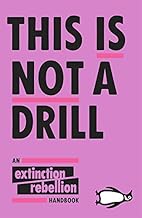
The argument in This is Not a Drill, a series of opinion pieces by supporters of Extinction Rebellion (Penguin 2019) is that the democratic process has failed us by not taking dramatic action to mitigate climate change. In Australia, emissions are increasing, and sales of coal are growing. Younger people fear for their future: coastal flooding, the melting of polar ice, wildfires year-round and cycles of severe drought should cause fear. The mass extinction of many species and the destruction of much of the world’s coral reefs, including the beautiful Great Barrier Reef, should be cause for alarm and grief.
#Extinction Rebellion aims, in part, to shut down capital
cities until governments declare a climate emergency. No one likes the disruption
to daily life this causes, but it is far less that the disruption that climate
change unchecked will bring.
Writers in This is Not a Drill argue that not only
must clean energy be generated and coal and gas phased out, but also the whole
economy must be re-made. The ‘free market’ with its dependence on growth and
consumer addiction to constant purchasing are the cause of climate
change. These writers argue for a more distributive economy, local and
equitable. As they say if fewer than 10% control more than 80% of the wealth,
the system is loaded for reform.
The #Extinction Rebellion street actions have an element of fun. Some placards are humorous, playful floats function as centrepieces. Food shared generously creates a party atmosphere. Rowan Williams, formerly Archbishop of Canterbury, pleads for a place for delight: this is God’s world we are trying to preserve, and our Scriptures describe the act of creation as a form of divine play. If there is no joy, but only earnest protest, #Extinction Rebellion becomes a negative, maybe destructive force. With the element of delight, however, the movement is showing what a renewed world will be like.
The claims of #Extinction Rebellion disturb me deeply. Has
democracy failed? Can a new and loving politics replace it? I fear the answer to
both questions is ‘Yes’. We owe it to our children and grandchildren to act to
preserve their world. Democracy will evolve – it must – but we must fight for
the future.
As a writer and language teacher, I know the power of
language. We express ourselves in words and sentences. With language we
persuade others to see things the way we do. The language of others influences
the way we see the world.
Think of the differences between Ayers Rock and Uluru: the former celebrating the Chief Secretary of SA at the time explorer William Gosse sighted the rock in 1873; the latter marking the complex relationship the Anangu have formed with Uluru-Kata Tjuta over tens of thousands of years.
The English names in our country reflect the dispossession of the land by its Second Peoples. Ayers Rock, backed up by the colonists’ military power, rendered Uluru invisible. This has been repeated time and again across Australia. The obliteration of Aboriginal names may not have been a deliberate policy, but it was part of the large-scale destruction of Indigenous culture by the incomers.
We should rejoice that, at times, the settlers listened to the locals and used their name for the place. (According to Professor Leonard Collard, about half of south-western Australia’s placenames are Noongar.)
Wejulahs (my mob!) enjoying the ‘water that is there when all else is dry’, Lake Toolbrunup
Toolbrunup, the name of the lake on our family farm and of the mountain on the horizon, is` close to the original. It means ‘the place which has water when all else is dry’, which was true until 20 years ago. Sadly changing land use has turned the lake into a place which is perpetually dry, but the name still reflects the memory of the Koreng people who gathered there year after year at the end of the hot season well into the European period.
For this is the power of Aboriginal placenames: they record
a staggeringly long bond between people and land. They are memory; they are the
keepers of value; they are part of the record of the most ancient continuous
culture in the world. It is arrogant to continue to give places new European
names if they are already named.
Of course, it is appropriate that the built environment
should be named both for Aboriginal and wejulah
reasons. A new school can be called the Bob Hawke College, but another one
could be named the Wagyl Kaip College after the inland region of Wardandi
country. Above the Forrest Highway could be the Mokine Overpass. Our history
now, for better or for worse, is a joint story.
Mokine – image courtesy Elders Real Estate
Local governments around Australia are developing commendable policies of dual naming, reviving the hidden Aboriginal name for places alongside the European name. Some have also adopted the principle of first using the Aboriginal placename (with appropriate permission from local elders).
The theme for National Reconciliation Week 2019 is ‘Grounded
in Truth: Walk Together with Courage’. What better place to start finding the
truth is in the literal ground, the
land beneath our feet? Sensitivity to placenames will speed this recovery of
truth and memory and help wejulah to
absorb more of Indigenous culture and reality and walk together with courage
into the future.
I have a childhood memory
of Grandad kneeling in his striped flannel pyjamas at his bedside saying his
prayers. Those were the days when the reflexive response of a congregation to
the liturgical command “Let us pray” was to instantly fall to its knees.
Like the American tourist
in London overawed by the Tower and the Beefeaters, we didn’t think about it. When
the tourist heard one uniformed Tower guard call to another, “Neil! Neil!”, he responded
instantly as in church and fell to his knees.
In his diminished height
in the kneeling position, in every folded part of his body, Grandad was
demonstrating his belief that he was in the presence of One far greater than
himself. To bend before such a One is the only way to dare to enter into
conversation with the Eternal One.
The Usher sings in
Gilbert and Sullivan’s Trial by Jury, “Silence
in Court, and all attention lend. Behold
your Judge! In due submission bend!”
More telling for us Christians is the Biblical example. The Hebrew word “shachah” means “to bow down” and implies kneeling and touching the ground with the forehead. Abraham, Moses and many others “bow down” at least 172 times. In the New Testament, the Greek word for “I bow down” is “proskuneo”. It means literally, “I kiss, like a dog licking its master’s hand”, and occurs 60 times in the New Testament. The people of God expect to bow down, to show loving submission to their God.
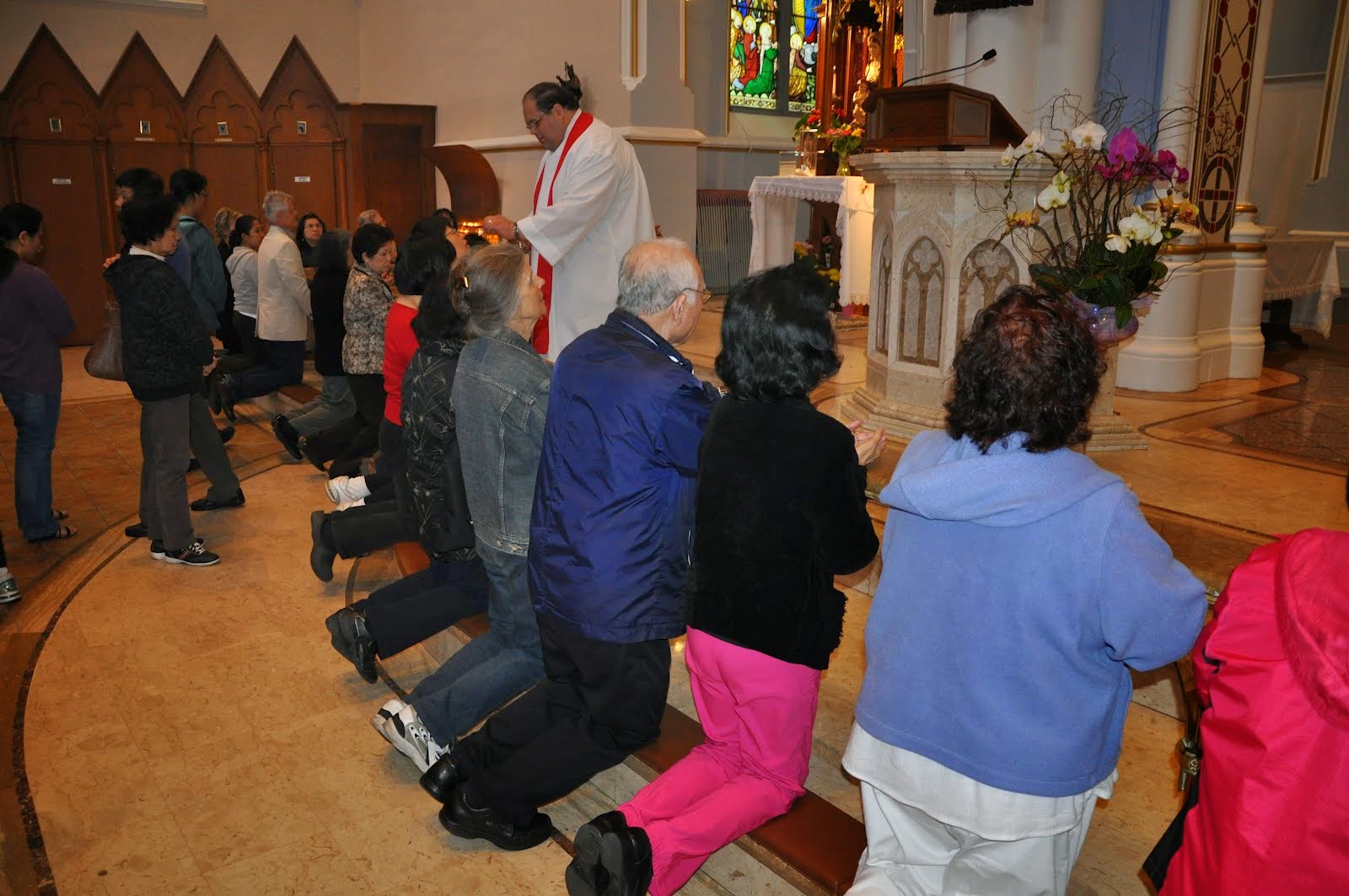
We, as a church, have
made considered decisions over the past 30 years to abolish kneeling. We have decided
to stand as the redeemed people of Christ to hear the Words of Institution
during the Eucharist. In many churches, altar rails have been removed to open
the space and to encourage people to receive communion standing. These
decisions are now inscribed as rubrics in our modern Prayer Books.
What we do in church and
in ritual prayers at home is drill or repetitive training. And in those days when
we knelt, we were training our bodies, minds and souls to enter the presence of
God with adoration, awe and humility.
By standing where we used to kneel, we now train ourselves to stand upright, taking on the posture of people who are not bound and folded up in sin but forgiven and free. I think these changes are a nett gain to us.
What we do in church changes and evolves to meet the needs of today’s Christians. But we have lost much. We must be a people who can bend in the presence of the Almighty. However earnestly I may plead, I doubt habitual kneeling will be restored to general liturgical practice. In any case, I can no longer physically kneel, and as the church ages, there will be many like me.
But I suggest four
changes to church we can make:
To
be aware of kneeling as a proper liturgical posture, and to ask ourselves when
kneeling is appropriate.
To
kneel before and after Communion and before and after the service to mark those
times of prayer.
To
choose to kneel on occasion to receive Holy Communion to express humility.
For
leaders to never say, “Sit for the prayers”, but allow people to kneel by instructing,
“Kneel or sit for the prayers as you are comfortable”.
And at home review our posture for our own individual praying. Should we always be relaxed and comfortable in an armchair? Are there times when kneeling is the best posture, like my Grandad at the bedside before we commend ourselves to God’s keeping while we sleep?
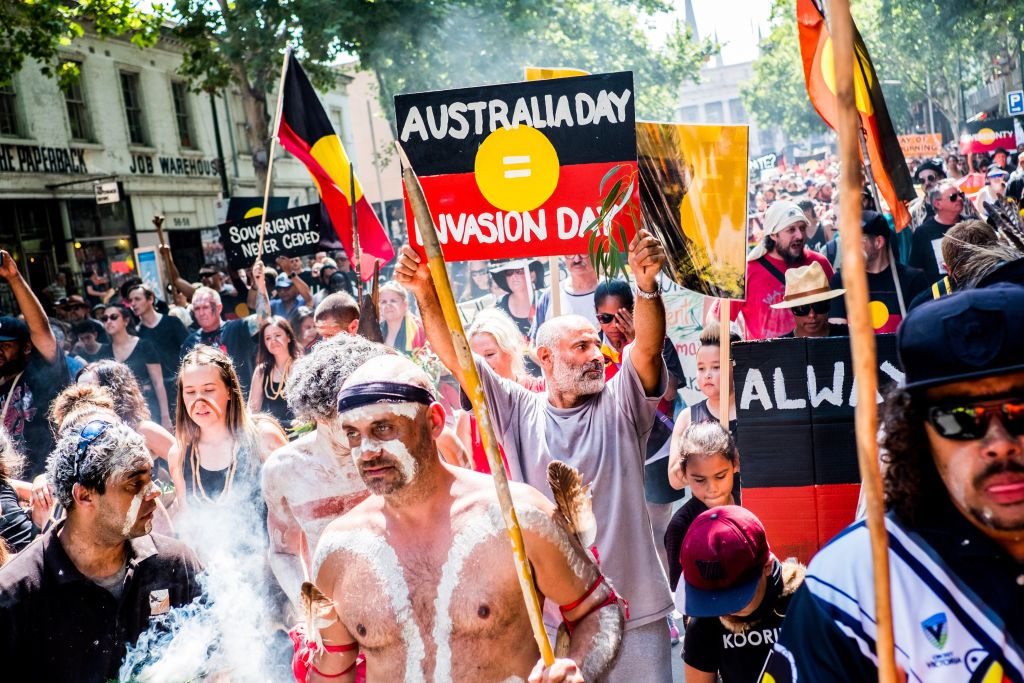
On Australia Day in 2013, I blogged as a native, but not indigenous, Australian that we should prize the anger that comes from seeing this day as Invasion Day: anger that fuels social justice and reconciliation. I believed that we should celebrate the Aboriginal culture, with its complexity, subtlety and beauty, that has survived as Survival Day, and even rejoice in the culture that came from Europe but which has now been modified by its exposure to Aboriginal culture.
Australians all, let us rejoice seemed to be the theme of my blog six Australia Days ago. I still think my piece said it well for a whitefella.
But there has been a change in six years. The #changethedate campaign has made Australians more uncomfortable about celebrating on Invasion Day. But that campaign and others has also had another effect: it has empowered Aboriginal people to make something else of Australia Day.
Yothu Yindi. Photo Mushroom Music
Yesterday on the ABC I watched a smoking ceremony, I was welcomed to Eora country, I heard Yothu Yindi sing Tjapana and Treaty, I thrilled at superb didjeridoo playing, I was intrigued by those who spoke in language, and I felt unexpectedly proud when Advance Australia Fair was sung in an Aboriginal tongue.
It was an ABC concert, so I wasn’t surprised that actor and PlaySchool presenter Luke Carroll acted as one of the hosts, but his presence was a pointer to the extent to which the concert was coloured black! It was an Aboriginal takeover, and I felt moved. I felt pride that this was our land, and I felt warmly welcomed into its deep culture.
There were intense emotions expressed on the streets of capital cities at Invasion Day marches, and it is obvious that not all Indigenous people agree on strategy: should they protest until change happens, or should change happen by changing the mainstream celebration?
Source: Getty
Whichever is the most effective strategy, Aboriginal people are speaking loudly. They must say whether Australia Day can be rescued or whether we can only express our belonging together on a day without the historical resonances of invasion and frontier wars.
I for one look forward to a celebratory date with Aboriginal and all Australians.
I didn’t expect, at age 70, to have to contend again with the dark. Not the dark of my childhood, when I feared a dressing gown draped over the door was an alien axe-wielding murderer, but the darkness of not knowing the God of my Christian faith.
Each time the darkness comes, I find it is easy to forget all I have been taught. Each time the darkness comes, I feel shame; shame as if the relationship with God I thought I had was sham; shame as if the faith I have taught I no longer experience; shame at the thought of having to profess publicly that I was wrong.
Along with the shame comes fear. At age 70, my thoughts turn healthily to my coming death and whatever follows. What if there is no “life after death”? What if there is no “beatific vision”? What if there is nothing? What value then do I have?
So it is good to be reminded by French Franciscan Thaddée Matura, in his essay An Ardent Absence, that darkness in Christian life is the norm, that grand encounters with God are infrequent and fleeting. Matura recalls us to the teaching that God is a fiery furnace, and if we were to encounter him as he is, we would immediately be burnt to nothing. It is due to his grace that we do not see him face-to-face in this lifetime.
Father Matura also reminds us that despite the darkness, we can continue to follow the paths to God to which we are committed. We are to prepare for the beatific vision, for the great meeting that will raise us to God ’s presence.
The darkness is hard. As we pass through it, we do not know what we are doing. We experience both fear and boredom. We may encounter the ‘plague that destroys at noonday’ (Psalm 91), the acedie of the desert fathers and mothers, as we question the whole of Christian life; we wonder if this darkness is the normal, then why? Why?
But I hang on to those fleeting moments of revelation, those traces, hints of reality. A realisation grew through 1969, the year of the Leighton Ford crusade, that friendship with Christ is the heart of Christian living. I remind myself of the dove I saw [in my mind] flying up and expanding its wings over the congregation after we had received communion on the Fourth Sunday in Easter in 1974 in St Mark’s, Fitzroy. I revisit my tears when, meditating in the hard seats in the chapel in Perth’s Wollaston College, I felt enveloped by love. I feel my heart jump when the icon of St Francis behind the chapel of the Franciscan Missionaries of Mary in Brisbane appeared to move and gaze back at me.
And I can simply be affirmed by Thaddée Matura, as I am by St John of the Cross, by St Francis, by St Richard of Victor, by a lengthy list of Christian teachers, that we make our way through this world blind, in darkness, and our joy is real — but anticipatory.
George
Appleton, the prayerful Archbishop of Perth during the 1960s, once
wrote, ‘I go on in cold faith only because you push me.’ That push from an-Other keeps me going.










 Mind Journeys