A Distinctive Australian Spirituality?


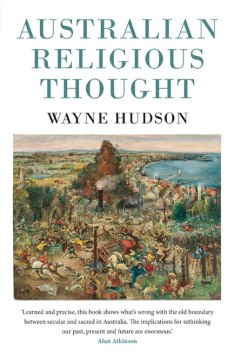
art-9781922235763-cover-printWayne Hudson, Australian Religious Thought,
Clayton, VIC: Monash University Publishing, 2015
ISBN (pb): 978-1-922235-76-3
ISBN (e-book): 978-1-922235-77-0

From $AU32 online,
$32 e-book (limited free access online at nla.gov.au)

In Western Australian and Australian public library systems.


Reviewed by Ted Witham


Richard Dawkins once dismissed Genesis 22 as ‘an infamous tale’; he thought that Abraham’s actions as at the least, were ‘child abuse, ‘and if he had actually carried through his plan to sacrifice Isaac, we would have convicted him of first degree murder.’ [1]

I thought it a great pity that Professor Dawkins, who writes so eloquently on biology, missed the fact of 3,000 years of complex thought and interpretation of the Binding of Isaac that rabbis and Christian scholars have recorded. Any good scientist would not regard his experiment as the truth without taking into account the work of scientists before him. Einstein built on Newton. He certainly didn’t ignore him!

In fact, Dawkins’ hero, Charles Darwin waited 15 years before publishing On the Origin of Species. It wasn’t that Darwin doubted his findings: on the contrary, Darwin respected the fact that others had given serious thought to these topics, churchmen and enlightenment figures alike, and had come to different conclusions. Added to that the concern that Darwin had about publishing theories that would appear to deny the evangelical Christianity of his wife Emma, and Darwin’s very different attitude to Dawkins’ is revealed.

Wayne Hudson’s wide-ranging survey of Australian religious thought from 1788 until today shows that we are like Richard Dawkins in our inability to see the richness of religious writings in our country.

According to the publisher’s blurb Australian Religious Thought is ‘the first major survey of this field.’ Wayne Hudson is a Professor in the Centre for the History of European Discourses at the University of Queensland. He is widely read in history, theology, philosophy and literature from 18th Century Europe and on through Australian European settlement. From this store of intellectual life, he shows the surprising amount of religious writings that have been produced in Australia. He is generous about the quality of distinctive Australian theology, but demonstrates that religious thought is much wider than Christian theology.

Dr Hudson explores six themes in writings about the sacred: Shapes of Disbelief, Sacral Secularity, Religious Liberalism, Religious Thought and Philosophy, Theology in Development, and Postsecular Consciousness. His book aims at the general reader, and most readers will applaud the extraordinary range of references. There may have been a cost factor in the decision not to include a formal bibliography which would have added another third to the size of the volume!

I particularly appreciated the ways in which Australian writers have stretched the concept of God. I recently reviewed Lorraine Parkinson’s new book, Made on Earth,  which argues that the divinity of Jesus was not intended by the Gospel writers and so we can discount the doctrine of the Trinity.  The joy of Australian Religious Thought is to discover that this is not a new heresy in 2016. Hudson quotes Charles Strong founder of the Australian Church who was a proponent of this view from early in the 20th Century. In addition, he traces the proposition back to German historian Adolph von Harnack and celebrity missionary Albert Schweitzer.

Hudson laments the lack of sources showing the impact Aboriginal spiritualities have had on the wider culture, but explores sufficient writers to prime my curiosity.

He suggests that, far from simple secularity, Australians are developing a distinctive religious sensibility. Its nature is partly encompassed in the phrase ‘sacral secularity’. For me, as a Christian reader, this book was like being in a closed room and suddenly having the doors thrown open to disclose a far bigger house. It is good to have more light stream in even as I continue to regard my room as my home.

The book will appeal to all Australians seriously interested in the development of distinctive Australian culture.

—–o0o——

[1] Richard Dawkins, The God Delusion, London: Random House, 2006, 265
Save

Save

Helpful Whiff of Heresy


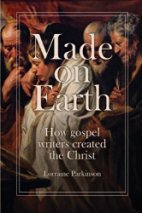
5111brslwkl-_sx142_sy224_sclzzzzzzz_Lorraine Parkinson,
Made on Earth: how the gospel writers created the Christ, Richmond, VIC: Spectrum Publications, 2016.
ISBN 9780867862546
Online: Paperback $49, Kindle $11.99

Reviewed by Ted Witham

For some years, I’ve held lightly to the doctrine that Jesus Christ was fully human and fully divine. It’s not that I wish to demote the importance of Jesus, which was the purpose of the original dogma. It’s more that a pre-modern conception of divinity does not do justice to the ways in which Jesus of Nazareth actually  connects me with the sacred world.
Lorraine Parkinson’s new book Made on Earth helps me on my journey of belief by adding to the ways in which I can articulate my unease about Christology. She systematically works through the gospels in the order of their writing – Mark, Matthew, Luke and John – to show how the message of Jesus about the kingdom was deliberately transformed into a message about the identity of Jesus as the expected Messiah.
Lorraine Parkinson is a retired ordained minister in the Uniting Church based in Victoria, and is in demand as a speaker for meetings of progressive Christians around Australia.
She tells the story crisply of how the infancy narratives appear to have been added to Matthew and Luke inventing the idea of Jesus being conceived by the Holy Spirit, and thereby being God’s Son. She reveals how the life of Jesus was fitted into the typology of Moses or Elijah to further the argument for Jesus’ more than human status. The gospels

2000px-shield-trinity-scutum-fidei-compact-svg
incomprehensible?

were a sermon to persuade readers that Jesus had transcended Judaism and that his followers needed to distinguish themselves from the Jews.

 
She makes a plea for ‘progressive Christians’ to turn back to the original teachings of Jesus. The gospel of Jesus as the one Messiah  has led to a church that

  1. relies on fear (making sure you are right with God so you can enter the afterlife),
  2. that promotes anti-Semitism (the Jews are depicted as Christ-killers), and
  3. that ends up as Christendom (the Church as a new Roman Empire focused on power).

Returning to a simple reliance on the Sermon on the Mount and the parables of Jesus will invigorate individual followers of the Way of Jesus and remove the weight of having doctrinal commitments to a divine Christ.
She asks us to remember that the Gospel writers were ordinary human beings who believed they were inspired by the Holy Spirit. Her arguments here appear to be based on common sense alone and I would have liked her to wrestle with the theology of inspiration a little more deeply. As followers of Jesus, understanding God’s truth and how we know it is an important issue.

 
This book is dangerous. It emits a whiff of heresy. I admire Lorraine Parkinson’s honest courage in questioning the 3rd and 4th Century interpretations of the meaning of the Gospel. We need prophets to show the way forward for followers of Jesus of Nazareth, and Made on Earth is an important step on that path.

sermon-on-the-mount
Sant’Apollinare, Ravenna – mosaic

R.I.P. Colin Holden


Saddened today to hear of the death of old friend Colin Holden. I was at theological college at Trinity College in Melbourne with Colin, and then his colleague as a priest in Western Australia. I met him several times after he returned to Melbourne.

Colin was enormously talented as a linguist, historian and writer. He was a generous but fragile friend. One of the remembrances I still have from Colin is this hymn which he translated as a gift for me in 1974. Reading it again, I am impressed by his skill with metre and assonance, reminding me that he was a musician as well as all the other talents. 

May he rest in peace and rise in glory!

A votive offering for Easter for Ted

Dawn fires the east with glowing rays
The heavens rejoice in hymns of praise;
While earth exults, Hell’s furious roar
Proclaims his lord can rule no more,

For Jesus, clad in triumph, leads
The Patriarchs, ransomed from the dead;
Hell’s prey, once chained in bonds of night
Christ frees to rise in life & light.

A stone & seal secured the tomb;
For Christ’s new life it forms a womb;
First-fruits of all that sleep in earth,
He bursts the gates, to vanquish death.

Now mourning’s bitterness shall cease;
Christ’s rising tolls the death of grief;
His angels joyously proclaim
“Death’s end has come; new life now reigns.”

From sin’s dark death, O Jesu, free
Them that again are born of Thee;
Be Thou alone out Spirit’s guest
At this time of our Paschal Feast.

We praise the Father, who is one
With Jesus Christ, His only Son,
And laud as is forever meet,
The Holy Ghost & Paraclete.

(Aurora Caelum purpurat, Office hymn at Lauds from Low Sunday till Ascension – translated by Colin Holden, Easter 1974)

sea-dawn-sky-sunset


Save

Sermon: Ask, search, knock


Luke 11:9-10

I wrote this poem a few years ago, reflecting on Jesus’ teaching that our desire to love, when taken far enough, eventually leads us to see the world in ‘I-thou’ terms. 

– Ted Witham

I asked for a Mercedes, coupé 220, of course.
Received a mirror, 360, signed, with love, Yours.
Reflected… the shiny image that was my deep desire;
to climb up the world’s path, a higher flyer.

I searched for love in writing reviews,
Expecting my readers to walk in my shoes;
I searched for love, making Church work my life,
but found love closer in children and wife.

I knocked on the door of God, Father, King,
Insight opened: metaphor turns God to ‘thing’;
I opening saw God as all my ‘Thou’,
me to be present in the Eternal Now.

Asking, searching, knocking, all stones stepped
to draw near to the One so wind-swept,
Spirit-blown, tempest-tendered,
The ‘Thou’ who all my love has ended.


Sit back and receive from God


And we think we are being called to greater efforts in hospitality, but we are not listening to Luke, we are not listening to Jesus in the gospel sections. Jesus is calling us to the opposite.

Hospitality was one of the key virtues in Jesus’ society. I would like to think it is one of the key virtues in ours. Last week the gospel began with an example of a Samaritan village refusing to give hospitality to the disciples en route to Jerusalem. Then Jesus tells the Scripture scholar the story of a Samaritan who did treat his neighbour with hospitality. Or at least that’s how the story is usually interpreted. ‘Go and do thou likewise.’

But as so often with Jesus, there’s a twist. The neighbour has become not the one receiving hospitality, but the one giving hospitality. How are we to treat our neighbour? Our neighbour in this case is the Samaritan, the stranger giving us hospitality. How do we receive the gift of kindness from strangers? Especially strangers who we are pre-programmed to distrust, even hate?

In the story, we are called primarily not to be good Samaritans, as worthy as that vocation is, but to  learn to be recipients.

Luke provides a similar twist in today’s gospel concerning Mary and Martha. All the usual interpretations about our hospitality to Jesus – are the tea and scones perfectly cooked and well-supplied? Are we ready to focus on spiritual teaching? Are women important in the church? are secondary issues. The primary issue, it seems to me, is how are we to receive the hospitality of Jesus to us?

In a sense, Mary in the story gives the clue. She is prepared to be a guest in her own home. She is prepared to allow Jesus to host her in Mary and Martha’s family home.

We are always too anxious, like Martha, to get things right. But these two stories are saying that God already has got things right. He is inviting us into the heart of his universe. He is the host. He is the one offering hospitality. And it is not always easy to receive, but what gifts are ours if we are open to God’s hospitality to us. What healing at the roadside; what feeding, what divine spiritual teaching, all are ours. The first action is to let God be God, let God be host, and to prepare to be not in control, not in charge, but to allow God to lead and provide.


[Luke 10:38-42 and Luke 10:25-37]

p32_monastichospitality231231

Image courtesy: https://thevirtualabbey.wordpress.com/category/ora-et-labora/

For Freedom Christ Has Set Us Free


The hymn I wrote last year was sung at the Eucharist marking the 40th celebration of my ordination and that of Chris Albany and Len Firth. Len preached on Galatians 5, which comes around again in today’s lectionary.

For freedom Christ has set us free,
love’s energy to celebrate;
For freedom Christ has set us free,
love’s energy to demonstrate.

We thank you, Lord, for your good grace,
for people loved, for teachers taught;
for insights into who you are;
for all our growth in heart and thought.

We walk in step with you, good Lord,
your Spirit shows us how to live.
You grace our lives with love and joy,
and give us courage all to give.

We go in faith to live for you,
to spread your love, to preach your grace.
Take our hands and guide our feet,
and lead us till we see you face.

For freedom Christ has set us free,
love’s energy to celebrate;
For freedom Christ has set us free,
love’s energy to elevate.


  • Ted Witham TSSF 2015

galatians5-13

The Spirit of Old Age – Pentecost 2016


The Spirit of Old Age – Pentecost 2016

Our hearing goes as years grow old and God
speaks to our hearts in bracing ways and still
God reaches out like fire to lightning rod
to defibrillate deaf hearts, re-set will.

The spoken Word is void and hearing’s sense
has lost its power to move and renovate.
In old age the calm centre flares intense
In inner fire comes Spirit advocate.

The Word has become a perilous false guide
in querulous senility sounds blurred,
trust God not the ear, and be satisfied
when experience matches the remembered Word!

Persist in the tension of paradox,
the Word can appraise the true orthodox.

– Ted Witham 2016


1623742_669424619767393_1520640419_n
Campfire – courtesy Koora Retreat Centre, Western Australia


Psalm 104 for Sandgropers


Bless the Lord, O my soul!
O Lord my God, you are very great!
You are clothed with splendour and majesty,
covering yourself with light as with an overcoat,
stretching out the heavens like a deep blue dome.
He lays cloud-streets as rafter beams for the sky;
he makes cumulus clouds his chariot;
he rides on the wings of the wind;
he makes his messengers winds,
he makes his ministers a flaming fire.

He set the earth on its foundations,
so that it should never be moved.
You covered it with the deep waters like a cloak;
the waters stood above the mountains.
At your rebuke they fled;
at the sound of your thunder they took to flight.
The mountains rose, the valleys sank down
to the place that you appointed for them.
You set a boundary that they may not pass,
so that they might not again cover the earth.

You make springs gush forth in the valleys;
they flow between the hills;
they give drink to every animal in the wild;
the wallabies quench their thirst.
Beside them live the magpies;
they sing carols among the branches.
From your lofty home  you water the mountains;
the earth is satisfied with the fruit of your work.

You make grass to grow for the livestock
and plants for people to cultivate,
that they may bring forth food from the earth
and wine to gladden people’s hearts,
olive oil to make their face shine
and bread to strengthen their hearts.

The trees of the Lord are watered abundantly,
the great karri trees of the south-west that he planted.
In them the birds build their nests;
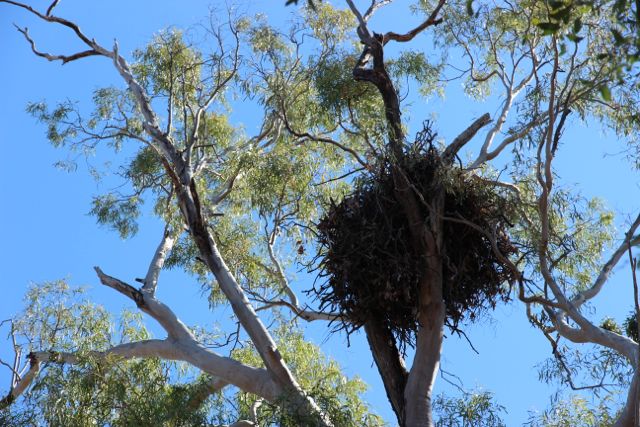
the wedgetail has her home in the great gum trees.
The high mountains are for the mygalomorph spiders;
the rocks are a refuge for the skinks.

He made the moon to mark the seasons;
the sun knows its time for setting.
You make darkness, and it is night,
when all the wild animals creep about.
The dingoes howl for their prey,
seeking their food from God.
When the sun rises, they steal away
and lie down in their dens.

People go out to their work
and to their labour until the evening.

O Lord, how manifold are your works!
In wisdom have you made them all;
the earth is full of your creatures.
Here is the sea, great and wide,
which teems with creatures innumerable,
living things both small and great.
There go the cruise ships,
and the blue whale, which you formed as your playmate.

These all look to you,
to give them their food in due season.
When you give it to them, they gather it up;
when you open your hand, they are filled with good things.
When you hide your face, they are dismayed;
when you take away their breath, they die
and return to their dust.
When you send forth your Spirit, they are created,
and you renew the face of the ground.

May the glory of the Lord endure forever;
may the Lord rejoice in his works,
who looks on the earth and it trembles,
who touches the Stirlings and the mist moves on the mountains!1
I will sing to the Lord as long as I live;
I will sing praise to my God while I have my being.
May my meditation be pleasing to him,
for I rejoice in the Lord.
Bless the Lord, O my soul!
Praise the Lord!


Translation ESV (http://www.esvbible.org/)

1 The Aboriginal (Noongar) name for the Stirling Ranges means “The mist moving on the mountains”.


img_0578
Wedgetail eagle nest – Photo courtesy Jill Sampson bimbleboxartproject.com


Burial at Sea


Burial at Sea

She went on the boat, the toddler Aliya,
an act of love and desperation,
beginning the middle passage of risk and fear,
from war-torn country to wealthy free nation.

They stand in a ring and pray,
the parents, the uncles, the old friends,
they squeeze tight to produce the way
for Aliya to fight through to good ends.

They thought it was better, this boat,
not crowded, not corrupted, not bad,
safely able to cross Europe’s wide moat,
Thus farewells were confident and sad.

Aliya was soon alone, pushed into the hold
of a forty-foot boat with ninety aboard,
the hull, the frame, the motor all old,
no food, no toilet, naught aboveboard.

All around the headache-making stench
of dieseline and human waste and sick,
men groan, women cry, Aliya can clench
her eyes against foul air so thick.

This the middle passage – you must know now
that migrants and crew have been jettisoned.
Peristaltic waves rock Aliya, bitter winds blow,
Motor falters, death has been commissioned.

Little Aliya is quiet. No food for three whole days,
She slips away, a pilgrim to paradise,
her middle passage a satanic maze
She comes to its end a tiny sacrifice.

It’s rough. There’s no one close to grieve.
She’s shrouded. Prayers are said. Blessing and peace
and the Prophet’s words give leave
to the little corpse as it slides beneath the seas.

While in Beirut or Bath they count their US dollars.

  • Ted Witham 2016


a-boatdingy-sinking-between-bodrum-and-kos
Photo courtesy Mirror.co.uk


Isaiah 42 for Western Australia


Thus says God, the Lord,
who created the heavens and stretched them out,
who spread out the earth and what comes from it,
who gives breath to the people on it
and spirit to those who walk in it:

6  “I am the Lord; I have called you in righteousness;
I will take you by the hand and keep you;
I will give you as a covenant for the people,
a light for the nations,

7  to open the eyes that are blind,
to bring out the prisoners from the dungeon,
from the prison those who sit in darkness.

8  I am the Lord; that is my name;
my glory I give to no other,
nor my praise to carved idols.

9  Behold, the former things have come to pass,
and new things I now declare;
before they spring forth
I tell you of them.”

10  Sing to the Lord a new song,
his praise from one side of Australia to the other,
you who go down to the Indian Ocean, and its leviathan surf,
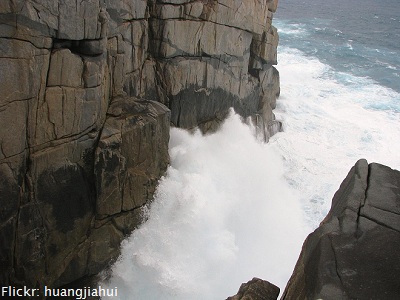
you who explore the wave-carved gaps and blow-holes of Torndirrup National Park.

11  Let the Sandy Desert and places up north raise their voice,
the towns of the Great Western Woodlands cry out to God;
let the wild-flowers of the  south-west sing for joy,
let the climbers shout from the top of the Stirling Ranges.

12  Let us give glory to the Lord,
and declare his praise in Geographe Bay.

– Isaiah 42:5-12 based on ESV

dsc_0308
The Great Western Woodlands