Wading birds on leg extensions delicately pick their way through the thrice-salty shallows of the Rottnest lake as if fearful that the hyper-salinity might bite or burn it. They dip their long beaks quickly to harvest a shrimp or tiny insect. Gently they cross the shallows. This is home and they are at home. This is the eternal present of their lives, the way it always is.
We rarely see the massed take-off when they leave for Siberia.
We never see them feeding, breeding on the snowy wastes of the far northern hemisphere – equally their home.
It’s been an unpleasant surprise to me to find my movements so restricted by my pain. I was upset recently not to be able to travel 3 hours to the city for the interment of my goddaughter’s ashes. I even find it difficult to travel to Dunsborough 30 minutes away. Being ‘stuck at home’ means I have an excuse not to go to meetings. That’s generally good. The down side is that I can feel left out of the various organisations I belong to.
But the unpleasant surprise has been reduced by a gradual pleasant surprise. People are coming to see me about their Christian lives and ministries because I am at home and therefore have a largely empty calendar. They find it possible to fit me in their busy lives because I am here. I am here all the time.
This surprising availability to others has been a joy for me. Not only do my visitors bring me collegial company, but they also allow me to exercise my gifts of pastoral supervision and listening.
I have decided to name this surprise after one of the vows of the Benedictine monastic tradition. In addition to the three ‘Gospel’ vows of poverty, chastity and obedience, a Benedictine monk also makes a promise of ‘stability’ – to remain with this community for the rest of his life. Benedictine stability: courtesy Benedictine community, Camperdown, Vic.
Stability is a protest against the busy running around most of us do in our work and in our family life. Monastic stability reminds the rest of us that being still, being less mobile, is a good thing. For monks, stability means that they can be found by God. But being a still point attracts others.
Unlike that of Benedictine monks, my immobility is not chosen. However, I can welcome it as stability, as a way that will bring me into different contact with people, as a way that links me more firmly to this little corner of my suburb, and as an opportunity where I might be found by God and so deepen my spirituality.
Reframing enforced immobility as chosen stability is a good thing to do with my brain.
The worst thing that the Western church has done is that we have turned God into a man. Ask any six-year-old to draw God, and she will emulate Michelangelo and draw an old man with a white beard. The orthodox Christians, the Jews and Muslims have taken much more notice of the second commandment: “Thou shall not make of the Lord thy God any graven image.” (Exodus 20:4). And God said...
We may not believe that God is literally a human being, but we picture a transcendent God in physical terms. Children may believe God is the “Friend for little children//Above the bright blue sky” in an absolute literal sense, and adults often believe transcendence describes God’s distance from the physical creation.
It’s true that the Bible often anthropomorphosises God: God walks out before the armies of Israel; God picks up and cuddles the human person, like a mother and baby (Hosea 11:3-4). In general, however, the Bible has a sophisticated notion that God is (a) holy, that is set apart from his creation, and (b) intimately involved in creation.
God is a wind (Genesis 1:3), an unseen and uncontrollable energy that stirs up of the raw materials of creation. God “sits above” the thunder and lightning (Psalm 39), more powerful than the raw energy of the storm. God stills the seas (Psalm 65:7), not with a giant hand, but with an irresistible will.
If you have chronic pain, your picture of God matters. If you think God is a sophisticated human upgrade, if you make God in the image of human beings, your God will not be strong enough to make a difference to your pain. Your picture of God will limit your ability to receive the powerful healing God wants for you.
In the last ten or so years, my picture of God has changed radically.
Sometimes this journey has been dangerous. I have wondered if I have lost my faith. The God I had believed in was not big enough, and certainly not powerful enough to positively affect my pain, and I had to let go of that picture of God.
In Peter Jackson’s 2001 film, The Lord of the rings: the Fellowship of the Ring, an underground sequence has the wizard Gandalf confronting a Balrog on a crumbling rock bridge. The hobbits run as fast as possible to get to safety. Gandalf falls with the monster to their death. Growing your faith in God is like that rush across the bridge of Khazad-dûm. When you let go of your picture of God, everything crumbles and precious ideas die.
But let me encourage you. The only way to have a picture of God adequate to your pain is to stop believing in the God you think you know. There is a well-trodden path to this believing atheism, and it is the path of mysticism.
1. Any picture of God you have is by definition too small. To continue to believe in it is to commit idolatry. You have no choice but to let go your picture of God.
2. When you let go of God in this way, you become an atheist in the sense that you have no God to hang on to. What you must then believe is that God is hanging on to you. You cannot know what manner of God this is, you need to trust only that you are being held.
“Blessed be the Lord day by day,
who bears us as his burden;
he is the God of our deliverance,” says the Psalmist (68:19)
3. As this trust develops, so you may begin to grope towards a new understanding of the God who is holding you. You may for example, begin to find new metaphors to describe God. God is energy; God is universal heartbeat, God lives as the tiniest cell in living things. These God-cells begin a process of healthy change in your body, and your pain is reduced.
4. But these are again pictures of God. The irony is that the process of letting go of your new pictures of God must continue.
In the audio for this session, I invite you to image a Spirit, a larger reality and to open yourself to encounter this Spirit. In this process, you may experience the reality of how deeply you are loved, how surely you are held, and how extraordinary is your future in this compassionate universe. This is what I call, and only for convenience’ sake, “contemplation”, the experience beyond muscle relaxation and centring.
I invite you to relax further into this journey into the Unknown God. I encourage along the only path through deeper atheism, which as it unfolds leads to a deeper experience of the power of God in healing your mind/body.
The calm of Meelup Beach, near Dunsborough WAI have been teaching meditation to groups on and off for 30 years. I am always astounded by the depth of response that people make. Meditation usually feels good, and people often love the sense of freedom that meditation opens up for them.
I divide meditation into three levels: progressive muscle relaxation, meditation (guided imagery) and contemplation (openness to encounter). These labels are very artificial. Other people use these labels differently. But I find my labels of the three levels helpful enough. In any case, as you go on in your practice of meditation, you will find the three levels melting together.
For those of us with chronic pain, however, it is helpful to see three ways in which meditation helps our pain.
Firstly, the muscle relaxation reduces pain. Whether our main area of pain is caused by muscle tension or not, we all increase our pain by the way we hold ourselves to compensate for the pain, or we put some muscles to extra work for which they are not ideally fitted. As we relax muscle groups in this form of meditation, other muscles around them also relax. On some days, we will find our whole body very deeply relaxed, on other days, not so much. But even limited relaxation reduces pain.
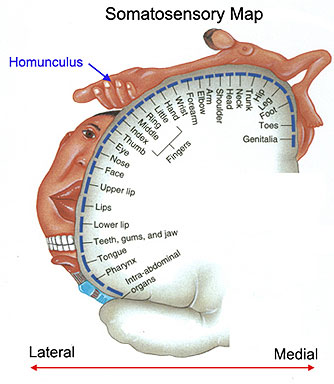
Secondly, the guided imagery assists our mind-body system in locating and managing our pain. Our brains have a map of the whole of our body, and significant interchange takes place between this map and where our pain is. The part of my brain where my thoracic spine is represented sends and receives messages from the spine. Using imagery about the specific area of pain opens up healing possibilities for the brain.
At the third level, in contemplation, the relaxed mind-body opens itself to the possibility of encounter with something other than itself. This ‘something other’ may be a spiritual reality, or it may be the ‘collective unconscious’ where we meet at a deep level with the whole human race, or it may be a construct of our minds. We will describe and understand this encounter according to our beliefs. But the ability to open ourselves to a spiritual power much greater than our own increases healing possibilities, including the relief of pain.
MINDFULNESS
Practising the PresenceThe other powerful aspect of meditation is the way meditation cultivates ‘mindfulness’, or a sense of the presence of God. Meditation does not focus on the nature of God, so much as on the reality of presence. For the 17th century Carmelite friar, Brother Lawrence, cultivating the presence of God at all times, even in the dreariest drudgery of the monastery kitchen, was the secret of his happy life.
Being totally in the present moment removes from us the nostalgia for the past and anxiety for the future. In meditation, we are reminded that we are as we are at this moment. This moment is the only moment we have to live. We cannot live in the past. We cannot bring forward the future to live it now. We are alive in the present.
Much of the sting of our pain can be taken away if we limit it to the present. We are experts at remembering how painful our bodies were. We are superb at looking into the future with fear at how much pain we will have to bear. But if we practice mindfulness, we have to live only with the pain we have right now.
The best way to learn meditation is in a group. Churches, Buddhist and community centres often offer classes in meditation. Before you join, you need to find out enough about them that you feel comfortable with them. You will be entrusting yourself to the leader at a time when you are surprisingly vulnerable.
Also check out whether they will make allowances for your health difficulties. While there may well be a level of physical challenge in meditating, it should not be so rigid that you do not have the opportunity to learn.
In the next three posts I will teach you (1) how to relax your muscles and reduce pain, (2) how to meditate and use guided imagery and non-imagery to banish pain, and (3) an exercise in ‘contemplation’ in which you will be invited to allow a power greater than yourself to take away some of your pain.




 Mind Journeys