God and Chronic Pain


I wrote this back in 2009 – and thought it worth sharing again:

The worst thing that the Western church has done is that we have turned God into a man. Ask any six-year-old to draw God, and she will emulate Michelangelo and draw an old man with a white beard. The orthodox Christians, the Jews and Muslims have taken much more notice of the second commandment: “Thou shall not make of the Lord thy God any graven image.” (Exodus 20:4).

And God said…

We may not believe that God is literally a human being, but we picture a transcendent God in physical terms. Children may believe God is the “Friend for little children//Above the bright blue sky” in an absolute literal sense, and adults often believe transcendence describes God’s distance from the physical creation.

It’s true that the Bible often anthropomorphosises God: God walks out before the armies of Israel; God picks up and cuddles the human person, like a mother and baby (Hosea 11:3-4). In general, however, the Bible has a sophisticated notion that God is (a) holy, that is set apart from his creation, and (b) intimately involved in creation.

God is a wind (Genesis 1:3), an unseen and uncontrollable energy that stirs up of the raw materials of creation. God “sits above” the thunder and lightning (Psalm 39), more powerful than the raw energy of the storm. God stills the seas (Psalm 65:7), not with a giant hand, but with an irresistible will.

If you have chronic pain, your picture of God matters. If you think God is a sophisticated human upgrade, if you make God in the image of human beings, your God will not be strong enough to make a difference to your pain. Your picture of God will limit your ability to receive the powerful healing God wants for you.

In the last ten or so years, my picture of God has changed radically.

Sometimes this journey has been dangerous. I have wondered if I have lost my faith. The God I had believed in was not big enough, and certainly not powerful enough to positively affect my pain, and I had to let go of that picture of God.

In Peter Jackson’s 2001 film, The Lord of the rings: the Fellowship of the Ring, an underground sequence has the wizard Gandalf confronting a Balrog on a crumbling rock bridge. The hobbits run as fast as possible to get to safety. Gandalf falls with the monster to their death. Growing your faith in God is like that rush across the bridge of Khazad-dûm. When you let go of your picture of God, everything crumbles and precious ideas die.

But let me encourage you. The only way to have a picture of God adequate to your pain is to stop believing in the God you think you know. There is a well-trodden path to this believing atheism, and it is the path of mysticism.

1. Any picture of God you have is by definition too small. To continue to believe in it is to commit idolatry. You have no choice but to let go your picture of God.

2. When you let go of God in this way, you become an atheist in the sense that you have no God to hang on to. What you must then believe is that God is hanging on to you. You cannot know what manner of God this is, you need to trust only that you are being held.

“Blessed be the Lord day by day,

who bears us as his burden;

he is the God of our deliverance,” says the Psalmist (68:19)

3. As this trust develops, so you may begin to grope towards a new understanding of the God who is holding you. You may for example, begin to find new metaphors to describe God. God is energy; God is universal heartbeat, God lives as the tiniest cell in living things. These God-cells begin a process of healthy change in your body, and your pain is reduced.

4. But these are again pictures of God. The irony is that the process of letting go of your new pictures of God must continue.

I invite you to image a Spirit, a larger reality and to open yourself to encounter this Spirit. In this process, you may experience the reality of how deeply you are loved, how surely you are held, and how extraordinary is your future in this compassionate universe. This is what I call, and only for convenience’ sake, “contemplation”, the experience beyond muscle relaxation and centring.

I invite you to relax further into this journey into the Unknown God. I encourage along the only path through deeper atheism, which as it unfolds leads to a deeper experience of the power of God in healing your mind/body.

Impossible Things for Breakfast


Gospel: John 6:1-21

You never seem to come to an end to this reading from St John’s Gospel.

When I was about nine years old, I discovered a book on my grandparents’ shelves called The Robe by Lloyd C. Douglas… or was it A.J. Cronin’s The Keys of the Kingdom? The book explained the miracle of the feeding by suggesting that the little boy sharing his lunch shamed all the people into sharing the picnics they had brought with them.

And maybe that’s part of what John is saying to us: that when we recognise that people are hungry, we should share the little we have with our friends and neighbours and that will encourage a spirit of sharing in the community, and there will be enough to go around and more.

I think I knew even at nine that this explanation was a brush-off. Obviously sharing is a good thing, far better than the alternative, but a little disappointing if that was all Jesus was teaching. All the sharing that has happened since then has not made a dent in world hunger, and in any case, the people in the story were hungry, not for food, but for teaching and for a leader, a Messiah.

This is a story about two shocking events: a man who can feed 5,000 with virtually nothing, and who can walk on water. The story is firstly about who Jesus is, not about our puny efforts to feed the world.

I don’t know what to make of the two events. I don’t do miracles. But that in fact is the point. John is introducing a person who does things that cannot be done; a person who doesn’t fit the normal world we live in. We can’t go back in a time-machine and see exactly what happened, but we can be sure that Jesus was so far out of the ordinary that John shocks us into a new recognition: Jesus is no ordinary man. I may not do miracles; but I have spent my life trying to come to terms with who this Jesus is.

On the basis of John’s evidence, I can’t come to an honest conclusion. Jesus continues to escape my understanding. But if he feeds human beings with bread, and, not only with fish and bread, but with symbolic bread, himself, his presence, then, like the crowds, I want to keep following him. If his presence in stormy seas makes the journey more bearable, then, like the disciples, I’m glad to invite him aboard.

The crowds couldn’t pin Jesus down. They saw the signs he had been doing on the sick. These signs pointed to something important, something good, but exactly what Jesus was doing when you closely examined the signs was a bit harder to grasp. Not universal health-care; not every human being without health problems, but a sign that God’s kingdom was breaking in in a new way. While it may seem that evil and disease have the upper hand, the signs Jesus were doing on the sick were pointing to a different reality, and therefore worth following up, worth finding out more.

Maybe he was the Messiah who had come to throw off the Roman yoke. Jesus organised the crowd into men and women. In Mark’s version, they were in companies of 100 and 50, just like an army.

It’s a three-day forced march from Galilee to Jerusalem. There were, presumably, Roman spies in such a large crowd. The crowd acclaimed Jesus as the Prophet, and calculated that they could get to Jerusalem before spies could get to Roman headquarters at Caesarea and alert the Roman legion there, who would take many hours to prepare and then two days to march from Caesarea to Jerusalem.

A popular uprising could just work on that timetable. On the other hand, an uprising like that could be violently put down too. As soon as Jesus saw the way the crowd was thinking, he disappeared. He was not a political Messiah.

If not a political Messiah, then something else. The disciples stuck around to find out.

They were intrigued by Jesus’ handling of the fragments. Twelve baskets full. And of course John, as a master story-teller, is well aware of the symbolism. By the time John writes his Gospel, the Temple has been destroyed, the Jewish nation has been smashed, and only fragments are scattered throughout the Middle East. The twelve new tribes, the twelve fragments, so carefully and lovingly picked up by Jesus, are the new Israel, the followers of Jesus, the Church.

So is Jesus the new Moses? Like Moses he distributes bread to people in the wilderness. Like Moses he teaches on a mountain. As with Moses, the Passover is at hand. Jesus is to lead his people out of slavery to a new promised land. However, this cannot be a geographical Exodus. So what will this new Moses mean? What will his Exodus look like?

John doesn’t tell us that Jesus is God. He doesn’t make the equivalence. But he does tease us, and shock us, into asking the question, well, if not, what? If not God, what is Jesus? If not a political Messiah, what sort of Messiah? If not a new Moses, what sort of Moses? If not only a healer, then what sort of healer?

As I said earlier, I don’t have an answer. Of course, you can’t turn five barley loaves and two fish into bread for five thousand with twelve baskets left over. Of course, you can’t walk on water. But the response of the crowds, and the response of the disciples tells me that Jesus did things that cannot be done, and just like them, I want to know more.

In nearly 50 years of trying to find out who Jesus is, I have found that he feeds me. I gain an enormous amount spiritually and personally from exploring the scriptures and from sharing the Eucharist with you, my brothers and sisters. I have found that when life is hard, frightening, worrying, then in the midst of that, Jesus is there, and suddenly, I am through the storm.

And who Jesus is keeps just out of reach. I need to keep on following someone so intriguing whose only attitude to me is one of enormous love and goodwill.

Holy Massacre


Sermon for the Feast of the Holy Innocents

St George’s, Dunsborough, Christmastide 2014.

The Gospel of our Lord Jesus Christ according to Saint Matthew (Chapter 2 beginning at the 13th verse):

Glory to you, Lord Jesus Christ.

Now after they had left, an angel of the Lord appeared to Joseph in a dream and said, ‘Get up, take the child and his mother, and flee to Egypt, and remain there until I tell you; for Herod is about to search for the child, to destroy him.’ 14Then Joseph got up, took the child and his mother by night, and went to Egypt, 15and remained there until the death of Herod. This was to fulfil what had been spoken by the Lord through the prophet, ‘Out of Egypt I have called my son.’

16 When Herod saw that he had been tricked by the wise men,* he was infuriated, and he sent and killed all the children in and around Bethlehem who were two years old or under, according to the time that he had learned from the wise men. 17Then was fulfilled what had been spoken through the prophet Jeremiah:
18 ‘A voice was heard in Ramah,
wailing and loud lamentation,
Rachel weeping for her children;
she refused to be consoled, because they are no more.’

[NRSV]

The Gospel of our Lord:
Praise to you, Lord Jesus Christ.

In the name of God the Creator, who was born a human being, and lives among us as Spirit. Amen.

“When Herod saw that he had been tricked by the wise men, he became enraged. He sent men to kill all the children in Bethlehem and throughout the surrounding region from the age of two and under.” (Matthew 2:16)

The shock of a psychopath in power. In the 20th Century, Stalin behaved something like Herod. The sad thing is that we remember the psychopath and not the names of his victims. Dmitri Volkogonov writes,

“Stalin personally signed 357 proscription lists in 1937 and 1938 that condemned to execution some 40,000 people, and about 90% of these are confirmed to have been shot. At the time, while reviewing one such list, Stalin reportedly muttered to no one in particular: “Who’s going to remember all this riff-raff in ten or twenty years’ time? No one. Who remembers the names now of the boyars Ivan the Terrible got rid of? No one.” “

 King Herod would resonate with that sentiment.

Mao Tse Tung reportedly killed 45 million people in four years. The records are carefully catalogued in the Public Security Bureau, and researchers can read about the violence Mao ordered and permitted, including deliberately starving the elderly to death because they couldn’t work efficiently. But scholars don’t write critically about Mao: it seems that the Chinese don’t want to face these horrors.

From what I understand, people also tried to forget Herod “the Great” as quickly as humanly possible.

Stalin, Mao and Herod. Eight children murdered by their mother in Cairns. A siege in Sydney by an unhinged Iranian. The horror of it all seems to have set out to spoil our Christmas. We want Christmas Day and the Twelve Days of Christmas to be Lazy, Hazy Days of Summer without a care, yet, with the Feast of the Holy Innocents, the church sets a trap for us three days after Christmas.

Christmas can easily become a fantasy, especially in our consumer-laden culture. People travel hundreds of kilometres to view Christmas lights, and where communities have some success with colour and light one year, householders compete with each other the next year to be brighter and more spectacular than their neighbours. Cummins, a little town on the Eyre Peninsula in South Australia, turns its RSL hall over to a Christmas Wonderland. Carols by Candlelight have become so commercial and so un-focused that I can no longer watch them or join in.

These sparkling displays at Christmas empty Christmas of meaning. And I know that conflict, the conflict between Christmas and Yuletide, has been going on for nearly two thousand years, so I’m not going to win that. But I do know that the Feast of the Holy Innocents is a necessary corrective for us each year. It shocks us out of a fantasy Christmas world back into the real world.

It points out again where God’s concern is in Christmas: not in the cute superficialities of new babies, but in the pain of child-birth, the challenge of poor families, the survival – or not – of refugee families.

God knows the name of each of the boys under two in Bethlehem and the surrounding region who was killed by Herod’s men. God knows the name of each peasant murdered by Ivan the Terrible. God knows by name each of those massacred by Stalin and Mao. God cares for each, as he cares for each of the children killed in Cairns, and weeps over their mother, Mersane Warria.

God can name 141 Pakistanis, 132 of them children, less than two weeks ago in a school in Peshawar.

·         Hamza Ali, 14 years old. Dead.

·         Farhad Hussain, 15. Dead.

·         Hamayun Iqbal, 14. Dead.

To God, the 141 killed last fortnight and the 41,000 Pakistanis in total killed by terror since 2001 are all beloved individuals.

God mourns for the lost lives of Katrina Dawson and Tori Johnson killed in Sydney; and unlike the tabloid press, God does not count Man Haron Monis as monster, but as a human being; he was damaged, disturbed, dangerous and responsible for his crimes; but still of immense value simply because he is a human being, God’s image in him marred and spoiled – as it is in each one of us.

So on the third day of Christmas, the church invites us to gaze compassionately on the horrors of the world. It takes courage, and sometimes it’s a little easier when we know that the victims are Holy Innocents.

We take seriously that God has taken human flesh, God became man in Christ. This means that he gazes through our eyes. God uses us to see. We are called upon to look with clearer focus; to be able to gaze without flinching on horror, and to allow Christ’s compassion to flow through us.

Some rather wonderful things happen when we allow this compassion to gaze through us: it transforms what we see.

First of all it turns victims into treasured human beings; we see them not just as people that happened to be in the way, but in Bethlehem as Jacob and Paran’s and Eliab and Naomi’s little boys, or in another massacre as someone’s lover, someone’s daughter, someone’s friend, someone’s father.

Secondly, this compassionate gaze shows Herod up for what he is – just a petty angry little man, not deserving the title of king. It shows that his values are bankrupt. We will have to deal with Herod as an individual, or someone does, but he is not the king he claims to be. In this story, we see clearly who is the king, who has the values of strength and love and care for his people – and that is God. The real claimant to the throne, not just of Israel, but of our lives, is revealed. God cares.

You may know the story Elie Weisel told of the men hung during the holocaust. As one boy struggled at the end of a rope, with the crowd being forced at gunpoint to watch minute after minute, a voice cried out, “Where is God in all this?” A man pointed to the struggling boy, and said, “There he is.”

God is in the midst of the pain and suffering. That is simply a re-statement of the Christmas message that God has come to live among us. Wherever there is pain and suffering, God is in the midst of it. God is in the outpouring of grief in Martin Place. God is in the fierce anger of the Pakistani government and people. God is in the bewilderment of the community in Cairns.

This God, the God who cares about our suffering, about our human condition, comes to surprise us at Christmas.

There are shepherds and there are wise men. The shepherds struggle. They struggle to make a living looking after the sheep of someone else. They struggle through long shifts in the cold and wet. They are tough, but life is hard. God’s news comes to them first, because God comes to share our struggles.

The wise men are learned astrologers. They know what is wondrous and amazing. God’s news comes to them too, because the coming of God as human being to share our suffering is wondrous and amazing. We are not learned astrologers. We need to be told over and over again.

God has become a human being and shares our suffering however horrific; and God with us is wondrous. Shepherds and wise men were there on the Third Day of Christmas. Glory to God in the highest!

Rachel weeps Artist: Sarah Hempel Irani http://vimeo.com/user13875354

Psalm 114 for Noongar country


When Israel came into the Great South Land:
and the People of God among a people of an alien tongue.

Torndirrup became his sanctuary:
and Walyunga his domain.

The sea saw that, and fled:
Derbal Yiragan was driven back.

Pualaar Miial skipped like a ram:
and the foothills like young sheep.

What ailed you, O sea, that you fled:
O Yiragan, that you were driven back?

O Bluff Knoll, that you skipped like a ram?:
O little hills like young sheep?

Tremble, O Noongar country, at the Lord’s presence:
at the presence of the God of gods.

Who turned the rock into a billabong:
and threw sand into the waterhole to make it safe.

***

(Acknowledging Professor David Frost’s version of Psalm 114 in A Prayer Book for Australia)

 Torndirrup – the National Park on the south coast at Albany with the Gap and Natural Bridge.

Walyunga – National Park on the Darling Range near Perth with many sacred places associated with the Waagyl.

Derbal Yiragan – Swan River

Pualar Miial – Bluff Knoll (tallest peak in the Stirling Ranges)

Throwing sand – When Noongars arrive at a water-hole or river, they throw sand into the water so as not to disturb the Waagyl and make the water safe for drinking and swimming.

The Gap, Torndirrup National Park, courtesy pleasetakemeto.com

Archbishop of Canterbury’s Lent Book Renews Engagement


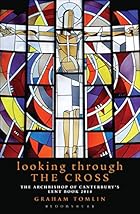
Looking through the Cross

Graham Tomlin, Looking Through the Cross: The Archbishop of Canterbury’s Lent Book 2014, Bloomsbury Academic (2014), Paperback, 240 pages.

Good stocks at St John’s Books, Fremantle. $19.95
Kindle edition available from Amazon for $10.88

Reviewed by Ted Witham. First published in Anglican Messenger, February 2014

Being a Christian requires personal engagement – with God, with Jesus Christ, with neighbour and stranger, with truth, with good and evil. For most of us, being a Christian can be complex and demanding, but we remain committed because we believe that God is eternally committed to us.

A good Lent book refreshes this sense of personal engagement with Christian living. It should encourage, inspire and inform by taking readers both back to when they fell in love with the faith and forward by challenging readers to grow spiritually. Good Lent books are often about the Cross and Resurrection clueing us into the liturgical movement of Lent and the Paschal mystery at its climax.

Graham Tomlin’s Looking through the Cross is a very good Lent book. It is about the Cross. Tomlin tells us that his early chapters are looking at the cross, trying to understand more deeply its meaning for us, and the later chapters are looking through the cross, using the cross as a lens on the world.

In the chapter headings, ‘The Cross and Wisdom’, ‘The Cross and Evil’, ‘The Cross and Power’, ‘The Cross and Identity’, ‘The Cross and Suffering’, ‘The Cross and Ambition’, ‘The Cross and Failure’, ‘The Cross and Reconciliation’, and ‘The Cross and Life’, it is not entirely clear when we change from looking at to looking through. I am sure that ambiguity is deliberate: the cross always both teaches us about itself and reveals how it has changed God’s world.

Graham Tomlin writes clearly. Reading his book is like sitting with the most patient teacher, sharing with us his understanding of how the cross comes alive for him. His explanation of the connection between the cross of Christ and our personal sin is the clearest I’ve encountered in 40 years of reading books about Christianity. ‘Those who have perpetrated evil must be held to account,’ he writes. ‘The evil that has disrupted the world cannot simply be ignored or glossed over: it must be banished, dealt with, put right. Restoration is possible, but only when sin is somehow atoned for.’

Archbishop Rowan Williams commissioned The Reverend Dr Graham Tomlin to write this year’s Lent book. His successor in Canterbury, Justin Welby, ‘could not be more pleased’ with the choice. Centred in scripture, scholarship and pastoral experience, this book seems to me to bridge some of the divides in contemporary Anglican thinking.

The cross demands that we clearly separate Christian faith from the surrounding culture. In the powerful chapter on identity, Tomlin describes how our experience of family christenings obscures the radical change God makes in us in baptism when God gives us a new identity. Using the image of a protected witness or juvenile criminal with a new identity, he reminds us how hard it is to live out of a new identity, and how the old identity will continue to exert a pull on our lives.

But the cross is ultimately the path to life. We are made not to end in death, but in life. Tomlin reminds us of the leap in imagination we need in order to lay hold of this reality, but also rallies us with the knowledge that the new life of the cross and resurrection is ultimately God’s work and not only ours.

It is helpful if a Lent book has some guidance for its use: questions to provoke reflection or small group discussion, suggestions for art response, even a reading program. Looking through the Cross has none. This is a significant drawback in a book promoted for Lenten reading. Even without this, individual laity, clergy and groups will find Dr Tomlin’s book refreshing, challenging and clear. At the end of Lent, the book will help readers emerge at Eastertide re-engaged with their Christian faith.

Christmas in a broken land


Those were the days when the heat’s fitful haze
turned the blue distant ranges to grey oceans,
and the sun’s morning light in spindling beacons bright
shone yolk yellow and all was stilled motion.

The bricks held their heat, shamed by defeat
they could no longer supply cool shelter;
Children ran slow and heard a bleak crow
caw listlessly over carrion with no one to tell it to

celebrate the arrival of God’s survival –
a new child in the bush down under:
not a plaster saint with blue robes faint,
but a battler, a beauty, God’s wonder.

Not a victory march through a triumphal arch,
but a nail-biter, to get there God’s struggling.
In today’s Australia, God appears a failure,
but God hangs on, power in long-suffering.

Maybe that’s why in the hot and the dry
we remember as kids God’s birthing;
nothing fancy or fussy, just a cowshed and mussy –
God’s total commitment to earthing.

–          Ted Witham, Advent 2013

Creation 1.0


God created the heavens and the earth

i. Pieces of God

Pieces of God strewn sparking
across the white-gold star-field of galaxies,
word-spells: breathings and vowels, shutters and consonants,
meaning and yearning –
God uttering creation into being.
 

God created the seas and all that swims and swarms in them

ii. Prayer of the Manta Ray

She stepped deeper. Her ankle was now covered. She shivered even though the sea water was warm and the sun shone. A wisp of warm breeze caressed her. “Prescience of joy,” whispered an angel, as the black disc, the manta ray, circled his way to shore. He delicately manoeuvred his sharp sting away from her tiny ankle and stroked the pale skin with his white under-body. The whole Indian Ocean came flooding into her like a gentle all-powerful tide.

As the manta ray glided back into the depths, not all the tide receded. Her body remained one with the water.


‘…the birds of the air…’

iii. Life after
(Sonnet)

I stand heart-still on bush-edge trail.
Puny next to high bunched boughs
of sage green gums.  The great wedge-tail
eagle soars: all before it stoops, bows.


My eye zooms: the bird has stalled:
gravity forgot; upheld by thermal.
All potential at rest, just the air mauled
by fierce talons; wings held formal.


Then, straight down from pin-head highs
the eagle drops, wings tucked, a grey stone-streak.
The lizard struck and killed, in cold eye’s

wink.  Wings wide as Passion Week.
For all of us in God’s surprise
are taken alive in Christ’s dear beak.


As At The Dawn


As At the Dawn


Because you love them free as they are
They say you have nothing to say


Because you put on a human face
They say you’ve hidden yourself


Because you’re all heart God
They say you’ve gone to sleep


Because your Spirit cannot be grasped
They say everything has gone wrong


Because you refuse to collude with evil
They say you’re good for nothing


Because you don’t crush people
They say they haven’t called on you


Because you’re not just any God
They say you’re just anything


Because you made me in your image
You are also everything they say


Dear God won’t you take pity on me?


Original French P. Fertin “Comme à l’aurore”, Paris: Desclée, 1974, p. 17
Translated by Ted Witham 2013


Beholding the depths


Once a week in Morning Prayer I recite the Song attributed to the three young men Shadrach, Meshach and Abednego as they walked unharmed in the fiery furnace. They sing, ‘Blessed are you who behold the depths’. I’d never thought about that phrase before last Saturday. I hunted out the Greek, which is as close as we can get to the original. (The Aramaic has been lost). A literal version of the Greek is: ‘Blessed are you who look compassionately on the unfathomable.’

Behind ‘Blessed are you’ is the Aramaic and Hebrew, ‘Berakah ata’. This common opening to prayer is praise for the blessings God brings. Every time the refrain of ‘berakah ata’ rings out, it is a celebration of life, because life is the first blessing God pours out on the universe. Every time we say ‘berakah ata’, we celebrate love, God’s driving force which makes of our universe not a meaningless hell but a place of wonder and joy.

The Three then sing that God is ‘looking with favour’ (epiblepon). God holds steady God’s gaze on all God has made, and surveys it with favour. ‘It is good. It is very good,’ Genesis reminds us. God holds in high regard that which God looks upon.

And in this verse, the Three celebrate God’s compassionate regard for the ‘abyssos’, the unfathomable. Thrown into the flames of the fiery furnace Shadrach, Meshach and Abednego, must have believed that they had arrived in the abyss.  The abyss was not only the place of the dead, but paradoxically it was also the bottomless container for the waters under the earth: a place of annihilation. God looks with favour even on the abyss.

God looks with favour, we would say, on black holes. God’s hands, so to speak, hold these most dangerous of phenomena, and God enjoys their power, their blackness and their oddity. God delights in the mathematical underpinnings of the black hole, and in the petite particles, quirky quarks and microscopic molecules which flit in and out of existence in the complex flux of the singularity.

From the macrocosm of dying stars to the abyssos of the inner lives of human beings: God looked with favour on (epiblepon) his handmaid, Mary.  She too knew the encouraging gaze of God on her. God looks compassionately on the depths of our selves. God embraces us – at our heart – with joy. Like the black hole, our lives are a complex of forces, many destructive and many creative, braiding together to create unique individuals. I too am a singularity, as you are. And the good news discovered by the Three in the fiery furnace is this: God is on our side, God looks on us with favour, blessed be God.

When God looks with favour, light, as John points out in his Gospel, pours in and the blackness dissolves. There is blessing even in the darkest of pits, even in the tangles of the human soul, because God gazes with love.

Black hole

Christ’s truth


The truth about Christ


They wanted a Christ to blaze out the Romans,
a warrior, a men amongst men, a giant.
A Christ to right all wrongs, to fight all omens,
To end all nightmares, ultimately defiant.


They wanted a Christ who was nice to people,
a yes-man, a crowd-pleaser, indiscriminately tolerant.
A Christ to suit the moment, a respectable sample,
To grace society, selectively competent.


They wanted a Christ who hated their foes,
on our side, a party man, with the vision of a tunnel.
A Christ to back our bias, who our way goes,
To be our justification, an upside-down funnel.


Jesus lives with an all-blazing love,
a heart saturated with God and endless understanding.
A cruel cross joining below with above,
To be our other side, our way to God’s landing.


© Ted Witham, 1998