SERMON – FEAST OF SAINT FRANCIS
SAINT BRENDAN’S-BY-THE-SEA – OCTOBER 4, 2026
Hear Ted preach this sermon here:
Philippians 3:4b-14
In the name of the living God, Father, Son and Holy Spirit. Amen.
I want to know Christ.
I want to know Christ; St Paul tells the church at Philippi.
I want to know Christ and the power of his resurrection.
Saint Paul invites us to a strange place: the hippodrome, the horse-racing track. Paul had probably visited the hippodrome at Caesarea, the one built by King Herod, and if he hadn’t, he would certainly have heard about it. Hippodromes were a Greek and Roman institution.
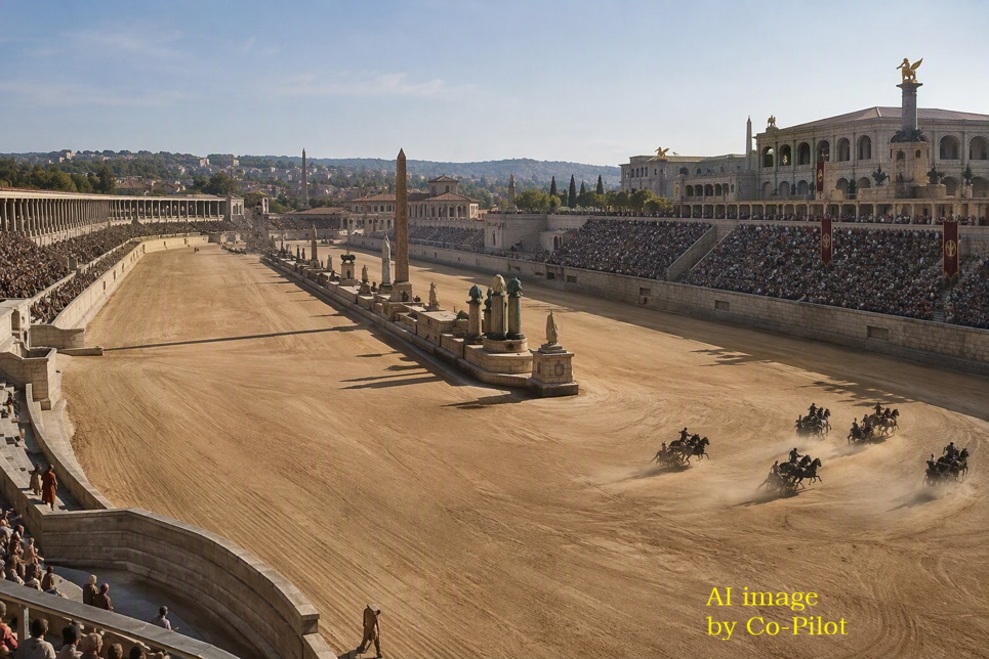
The hippodrome at Caesarea, like most other racetracks in the Roman world was shaped like a U with the top closed. The length of the Caesarea track was about 450 metres. The spectators were seated on steep banks on both sides, arena-style. Up high was the seat of the gods with statues of the gods. The emperor, or Herod, or the rich politician putting on the games, would sit next to the gods.
From this seat up high, up in the gods, the emperor would give the prizes at the end.
Paul invites us to pay particular attention to the charioteers. The chariots were pulled by four horses, making the races very fast and causing crashes at the tight turns. The Romans loved violent drama.
The chariot consisted of a floor with an axle under it and two wheels. A curved piece of iron in front of the rider formed a barrier between rider and horse. There were no bars to hang on to, no back to the chariot, no restraints. They just had to balance themselves – at speed, holding onto the horses – with their boots. The charioteers had to manage four reins plus a whip. Think Ben Hur. Or look up ‘chariot race from Ben Hur’ on YouTube.
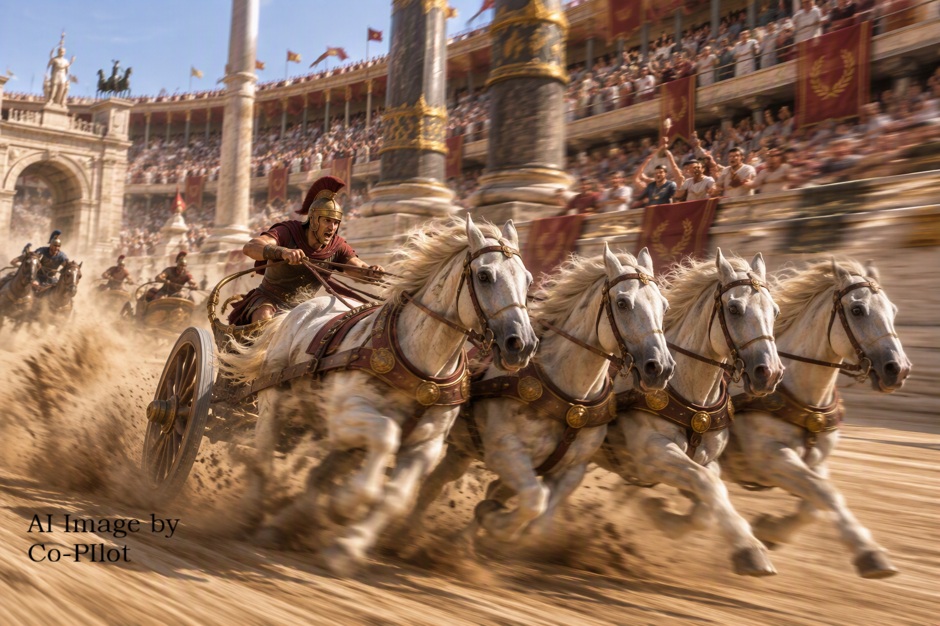
The one and only thing the chariot drivers could think of, Paul writes, was, ‘forgetting what lies behind and straining forward to what lies ahead, [and to] press on toward the goal, toward the prize from up high…’ (Philippians 3:13)
Complete focus. Effort.
For Paul, being a Christian was exciting and arduous. When Paul says, ‘I want to know Christ’ (v.10), he doesn’t mean a leisurely ‘getting to know you’ dialogue with Jesus. He means a life given totally to serving God, an energetic life that leads to the prize of a bigger life, the prize from up high of becoming like Jesus in his death and resurrection. The prize of eternal life – now, in the grit of hanging on to the horses’ reins, and always, in eternity.
When you think about it, Paul’s writings are amazing. Paul’s writings are earlier than the Gospels, so Paul was the first to work through the significance of the crucifixion of Jesus and his resurrection.
He dared to recognise this Jesus as God, as the Christ, the Messiah foretold. Jesus the Christ is the Co-Creator of the Universe. Because of the resurrection of Jesus, each one of us is being transformed. Every creature, human and non-human, is invited into the eternal reality of Christ. Pets, you are included in this wonderful transformation!
Paul knew how advantaged he was before he met Christ on the Damascus road: he was a Jew, properly circumcised, a Hebrew with lineage going back centuries; a Pharisee, a scholar who knew thoroughly both the Hebrew Bible and Greek philosophy, like someone today with a double doctorate; an active zealot for Judaism; a Roman citizen, who could claim Roman privileges even in his occupied land. He even was skilled in the craft of making and mending tents.
Paul knew he was a member of the elite. He knew the value of all these gifts. They were valuable in themselves, and they became essential in his preaching, working out what the death and resurrection of Jesus means about God and the whole created universe.
Yet all of these things, he says, compared to knowing Christ are dogshit (v.8). He used an offensive word, a swear word, to describe their lack of value when the race is all about knowing Christ.
Knowing Christ for Paul is dynamic and all-encompassing. We can never come to the end of knowing Christ.
There’s knowing about Christ, learning that Jesus Christ, the Second Person of the Trinity, is the be-all and end-all of Creation. That’s important. That learning journey continues through life.
And there’s knowing Christ, accepting his invitation to an intimate relationship with God the Son. This knowing Christ includes being known by him and being invited to return his love.
It is an invitation to allow our lives to be towed along by the whirlwind force of love.
God’s love is gentle. But God’s love is also powerful, and to be hauled by God’s love is to be like Paul’s charioteer: we have to hang on to God with energy; and the ride is exhilarating. The more we open ourselves to love – to loving others without reserve – the more exciting and fulfilling our lives are. The more we allow God to love through us, the more we know the prize from on high.
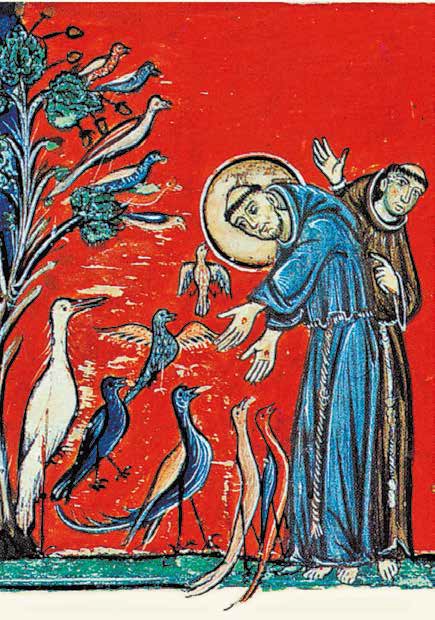
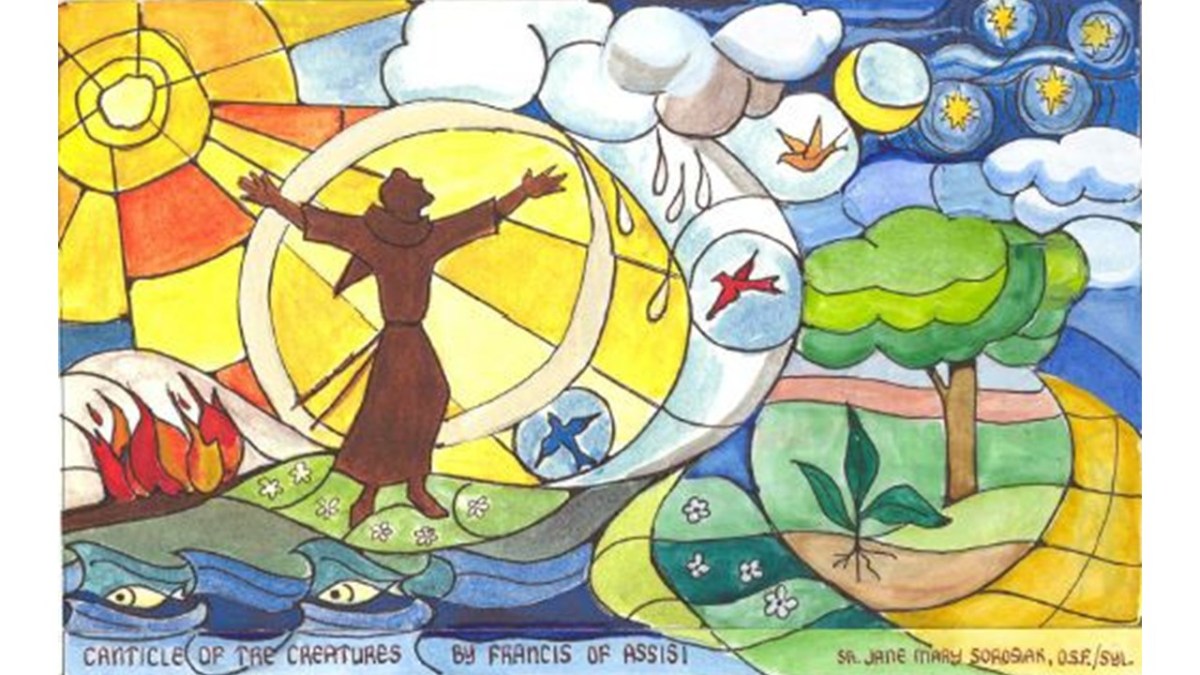
Today is the Feast of Saint Francis of Assisi. Here he is preaching to the birds. St Francis was one who allowed the Holy Spirit to surge through his life, drawing him on to greater and greater love.
His greatest human love was Saint Clare, and their greatness is because they were willing to learn from each other.
His companions, three from Assisi who joined his Order, Brother Leo, Brother Rufino, and Brother Angelo, stayed close to Francis all his life, and they are buried near him in the great Basilica in Assisi.
‘Sister’ Jacopa, who wasn’t a Sister at all, but a noble laywoman from Rome, was one of the Saint’s close friends. He called for Sister Jacopa to be at his side when he died.
His Order grew quickly partly because of the Saint’s gift for friendship, the gift that drew him on with energy.
But the Saint’s love did not stop with human beings. God’s love rushed through him so that Francis was in love with all of creation, from the tiny worm on the road he picked up to make it safe, to the vast systems of sun, moon and water that make all life possible.
Another letter, another writer: The Letter to the Hebrews invites us to another stadium. As we allow our lives to be filled with God’s love, Hebrews reminds us, ‘we are surrounded by so great a cloud of witnesses, …[and so] let us run with perseverance the race that is set before us, 2 looking to Jesus, the pioneer and perfecter of faith’ (Hebrews 12:1-2)’. The MCG stadium holds more than 90,000 spectators. Some of the Roman stadiums held as many. Imagine the whole of the MCG like last week’s Grand Final, cheering you on, barracking for you to run the race – and to keep going.
Being a Christian is like being Saint Paul’s charioteer: make friends with the horses, those magnificent creatures, and trust them to draw you round the track. Trust the Holy Spirit to speed you along so that through you, God loves more and more.
Or think of being a Christian as putting a sail up to catch both the gentle breeze and the powerful storms of Holy Spirit loving through you.
And hold tight!
Godspeed!