Resisting Tyranny in 2025


Tyrants seek to expand their power. While I don’t live in the United States, the actions of its President over the past 100-plus days have implications for us worldwide.

Mr. Trump’s power comes in large part from his wealthy tech. friends, Elon Musk, Mark Zuckerberg, Jeff Bezos and others. Together they form an oligarchy whose talons reach right into our Facebook accounts and grab hold of our book buying on Amazon. We send a message on Messenger, we read a tweet on X and we are forced to see ads which further enrich these billionaires.

Can any one of us individuals change these abuses of power? No, but we can act together, and we can resist the coming tyranny.

Here are 8 acts of resistance that I have been taking. I invite you to join me.

  1. Delete your account with X if you still have one. X is the most destructive platform. It allows bullies and ideologues to channel us into submission to their viewpoint.
  2. Don’t scroll on Facebook. Post what you want to, use ‘Notifications’ to read the posts of friends, but refuse to roll down the screen. Each click puts an ad before your eyes and ears and each ad seen adds to their wealth. The oligarchs are viciously clever. They earn money from us and without our consent.
  3. Stop calling your smart speaker, ‘Hey Google!’ I call, ‘Hey Dougal’, or ‘Hey Bugle’ when I want it to respond. The tech company is happy when you repeat its name a dozen times a day. So don’t say ‘Hey Google’ and don’t say ‘I googled it.’ Avoid the commercial name and say, I searched on the internet.
  4. Avoid buying on Amazon if you can. I find where most books are for sale on the Australian site www.booko.com.au. I usually don’t need Amazon either to find books or to buy them.
  5. Don’t buy a Tesla car. The boycott on Teslas is already hurting Elon Musk’s business. If you are buying electric, WA’s Royal Automobile Club is comfortable recommending a range of electric cars, like the Chinese-made MG or the European-built Jeep Avenger. You don’t need a Tesla.
  6. Think about deleting your Instagram account. Like X, Instagram allows bullies on its platform. It also encourages viewers to have unreal expectations of themselves because it rewards performance over integrity.
  7. Never tick ‘Accept All Cookies’. Cookies are designed to deliver your name to the advertisers. If you can reject all, do so. Otherwise, choose to manage your preferences by unchecking as many choices as the site permits you.
  8. Choose ‘Ask App Not to Follow Across Sites’. When it pops up, this option reduces the ability of the algorithm to create a web of connections and so multiply the points of contact for advertising targeted to you.  

Caravanning around

…extremely funny and bitingly serious about the state of the arts in Australian society.


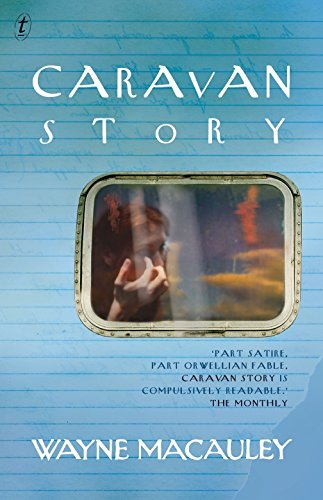
Wayne Macauley, Caravan Story, Melbourne: Text, 2012 (2007)

ISBN 9781922079121

208 pages

Paperback from $15. Kindle $11.96

Reviewed by Ted Witham

The humour is Australian; the settings are banally Australian. There is a lot to like in this savage satire by Melbourne writer Wayne Macauley. Caravan Story was his second novel.

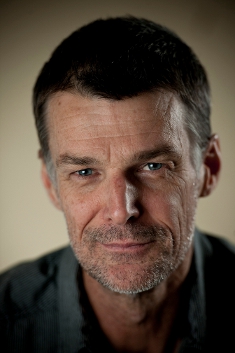
Wayne Macauley

Since the original publication of Caravan Story in 2007, Macauley has published The Cook (2011)and Simpson Returns (2020). A book of stories Other Stories was released in 2011. He has received a number of prestigious prizes for his writing.

In Caravan Story, the writer, ‘Wayne Macauley’, wakes up one morning in a caravan being towed away. The destination is a country town on the footy oval turned into a caravan park.

He finds himself in an oval full of artists, carted here by the Government. They are instructed to make themselves useful members of society. They are fed and housed while they create.

The painters and the actors soon find ways of turning a dollar, but the writers are unable to be so enterprising. Their writing efforts are collected, but it turns out that the rejection slips have already been written. The plot shows ‘Wayne Macauley’ and his partner escaping home from this crazy world of disillusion, and on the way is extremely funny and bitingly serious about the state of the arts in Australian society.

As a writer, I revelled in this book, both for its questioning of the ‘usefulness’ of poems and stories, and for the loving attention to the details of footy clubs, high schools and caravan living. But it is a book for people other than writers, simply to have a laugh at Governments’ total incomprehension of the arts, and the importance of writers, and all of us, to ground ourselves, to have a place that is ours — a home.

Satire kicks our consumerist world

The Transition is the funniest – and best crafted – novel – I have read this year.


Luke Kennard, The Transition, Fourth Estate (2017)

Paperback (Used) from $10, Kindle e-book from $8

ISBN 9780008200459

Reviewed by Ted Witham

The Transition is the funniest – and best crafted – novel – I have read this year. Well-known in Britain as a poet, this is Luke Kennard’s first novel.

Millennials Karl and Genevieve are struggling to make ends meet. Locked out of the housing market with Karl unemployed, Genevieve is a Primary school teacher. She loves her job, and despite her day-to-day frustrations in the classroom, believes in its importance to society.

Karl writes online ‘cheat’ essays for university students of English literature. He is drawn more into the online world of writing for cash until he finds himself convicted for fraud for his almost intentional participation in an illegal scam.

Instead of jail time, the couple is offered a placement in ‘The Transition’, a program that invites a commitment of six months to turn their finances, and lives, around. They are billeted in the spare room of Stu and Jenna, who follow a mysterious Manual to reform their guests.

‘The Transition’ turns out to be not quite as advertised. As Karl explores the scheme’s underbelly, Kennard reveals a wider community based on inequality, where the poorer middle-class are shut out of the common wealth of their society, and where big data distorts and dictates their lives.

These forces override people’s compassion for mental illness, and Genevieve’s descent into illness is sensitively described.

The themes are serious. Kennard treats them seriously, but with a joyous lightness that helps us sympathise with a couple just trying to make it through the week.

I plan to re-gift my copy of The Transition this Christmas – and I have no feelings of guilt whatever in doing so. It’s the sort of novel you want to share!

Unmasking Humourless Powers


I salute my colleagues who were detained and strip-searched yesterday. I salute their courage, their grace and humour. Especially their humour. At the end of the day it is not they who stand naked and humiliated. It is the system that allows children to be indefinitely locked up in third world conditions.

I am outraged, but not surprised. Jarrad and Lorna, I know, have read Pace e Bene non-violence training; they have read Walter Wink; they have read Martin Luther King Jr. They know to expect the full response of the law if they go down the path of civil disobedience: fines, jail and all the police procedures that may go with them. They were prepared to pay the full price.

And they also know from their training that their opposition to the status quo will make it unstable, and their disobedience will provoke unexpected reactions. For their friends, it is distressing to see police attempt to humiliate them, but they are asking us to see beyond this.

Because what Lorna and Jarrad and their colleagues have achieved is to unmask the powers. For a moment we have glimpsed what Australia has become. We can thank the protestors for their courage in bringing to our attention not just the plight of asylum seekers and their children in detention, but the community attitudes that permit such cruelty.

The South African activist theologian Walter Wink points out that that the system cannot bear a sense of humour. Those who promote violence are enraged that they might be made fun of. A laugh is what makes us human. Those who stop us laughing must be stopped. #lovemakesaway

Planks and Splinters


Wood shaving lodged in a man’s eye as he sawed.
It hurt, looked nasty, might be infected.
His mate drove him to the emergency ward
of the Royal Hospital to have it inspected.

The triage nurse made the doctor race.
He arrived – and obvious for all to spy –
A railway sleeper protruded from his face,
Embedded deeply in his left eye.

He stretched to help the patient – but in vain he tried.
The plank was longer than his reaching finger.
He had no binocular vision to guide
Tweezers and needles to the splinter.

The plank, buried deeply in his skull,
Had also caused massive brain haemorrhage.
The doctor was totally dull,
Not knowing his capacity to damage.

Grotesque metaphor, slapstick simile.
It rivals the Doug¯Anthony¯All¯Stars.
The Jewish clown claimed our refusal to see
Our plank in their splinters seriously mars.

Ted Witham 1996

Published in Studio: A Journal of Christians Writing

A Ditter


Changing topic altogether: learning to live with the new social networked internet.

A DITTER
IF you want to be up to date,
to fit in with the glitter,
then you’ll learn to communicate
with the new wondrous Twitter.

Darwin taught that those who survive
are environmentally fitter;
so talk and talk to stay alive
on organism Twitter.

For serious talkers only:
not to giggle or titter,
stop from being lonely –
Put your faith in Twitter.

If you cannot make a page,
then ask the baby-sitter,
who’ll say it’ll take you an age
to communicate with Twitter.

It will keep you up all night,
this new-born cyber-critter.
It’ll give you depth all right:
just you stick with Twitter.

Ted Witham