John J. Kinder, The Canon of Ancona: Raffaele Martelli Missionary in Western Australia, Crawley, WA, University of Western Australia Press, 2026.
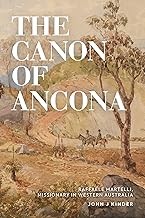
Paperback 351 pages,
In the Public Library system
From $35 online or directly from UWA Press for $45.
ISBN 9781760803216
Reviewed by Ted Witham
There were heroic clergy in the early years of the colony of Western Australia. They roamed vast distances on horseback, paying pastoral visits and bringing the sacraments to remote farms and settlements. They slept out in all weathers as they travelled and, in the days before GPS, or even reliable maps, became lost and sometimes wandered for days before they recovered their route.
While we Anglicans know of John Wollaston, and his archidiaconal journeys around the southwest during the 1840s and 1850s, the Roman Catholic priest Raffaele Martelli is almost unknown, but Father Martelli was a similar local hero.
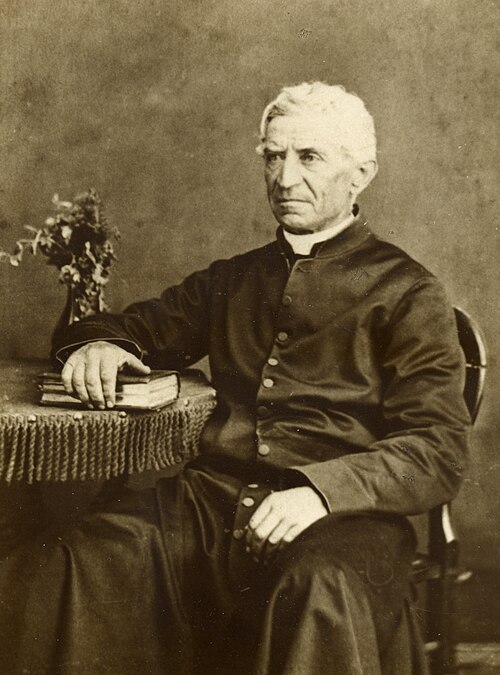
Martelli was born, raised and ordained in Ancona, on the eastern coast of Italy. He loved books and believed that civilisation grew out of religion and education. These convictions marked his missionary efforts later in Australia.
A gifted linguist, Father Martelli taught rhetoric in the seminary in Ancona. His bishop appointed the young professor as a Canon in the local Church of Saint Maria of the Pizza, a stipended position to be part of the rota for saying the Offices and celebrating Mass. In Australia, he relinquished the stipend but continued to style himself Canon.
The Benedictine Order inspired Canon Martelli to become a missionary priest. His goal was to serve ten years in a missionary role before retiring to the Benedictine Abbey at New Norcia, not as a professed monk, but as a secular priest living with the brothers.
This goal was strengthened by his long friendship with the Spanish founder of New Norcia, Bishop Salvado, but the road to his retirement was not smooth. He spent 10 years as chaplain to Fremantle, a role which combined parish priestly duties with chaplaincy to prisoners in Fremantle Gaol and on Rottnest Island.
Because of the shortage of clergy, Martelli visited Catholic communities in Dardanup and York. He found himself caught up in the church politics of the early Archdiocese of Perth, often torn between his own belief in obedience to authority and his sharply critical opinion of those authorities.
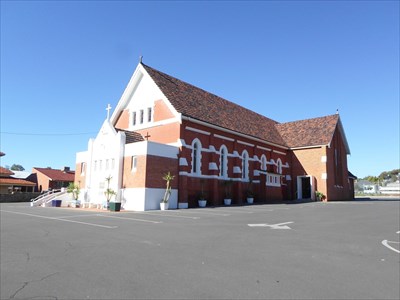
Before his eventual retirement, the Apostolic Administrator prevailed on the Canon to become parish priest at Toodyay, but only after Salvado intervened to make it an issue of obedience. Martelli was well-liked by Catholics and Anglicans alike in Toodyay and in Northam, where he raised the funds to build St Joseph’s.
It was while he was at Toodyay that he travelled extensively, despite being a poor horseman and suffering from haemorrhoids, a condition exacerbated by riding.
It is unlikely that John Wollaston met Father Martelli. Wollaston died only four years after Martelli arrived in WA. I fancy that the two priests would have respected each other. Martelli had a strong gift for friendship.
Martelli always made it clear that he was of the Roman Church. He ignored the jibes of ignorant people among the majority Protestants but reached out nevertheless to work with other clergy and the wider community. He served on the Boards of Public Schools and made friends with the Anglican priest at Toodyay, riding with him to New Norcia frequently.
(This priest Hugh Pidcock and Mrs Pidcock were later received in Sydney into the Roman Church, and, when his wife died, Hugh Pidcock was ordained as a member of the Society of Jesus.)
John J. Kinder, Emeritus Professor of Italian at The University of WA has trawled through the many letters Martelli wrote to Salvado and other friends, and through archives in Italy, Perth and especially New Norcia, and has produced a full-length and vivid biography of this priest. The book is copiously illustrated with photos and maps.
As a linguist rather than a trained historian, Kinder makes sense of the changes in Martelli’s Italian under the influence of Australian English and highlights the many and often funny literary allusions in the letters.
He also charts Martelli’s changing attitude to the mission to Aboriginal children. He had come to Western Australia mainly to be involved in their education so that they might grow up knowing Western civilisation and religion.
When he travels north, far from Noongar country, to invite young Aboriginal boys and girls to join the schools at New Norcia, he realises firstly, that the plan will not work, as the Indigenous people themselves don’t want to accept the invitation, and secondly, that taking young people away from Country will cause more harms than any good it might do.
With other later analysts, including Indigenous commentators, he saw the benefits of the New Norcia mission specifically, which did provide safety and opportunity for some Noongars.
On one hand, he rejoices as Noongar people choose to receive the sacraments and find benefit in European culture, but on the other, comes to doubt that the solution is as simple as giving Aboriginal children education.
The Canon was saddened to see how quickly Noongar culture was being destroyed by settlement and clearly wished the mission effort had begun with understanding the culture.
The Canon of Ancona tells the story of one heroic priest in our early days. The story has importance for readers interested in New Norcia and its Benedictine community, and for all wanting to understand better how the Gospel arrived in Western Australia.
Published in Anglican Messenger, May 2026