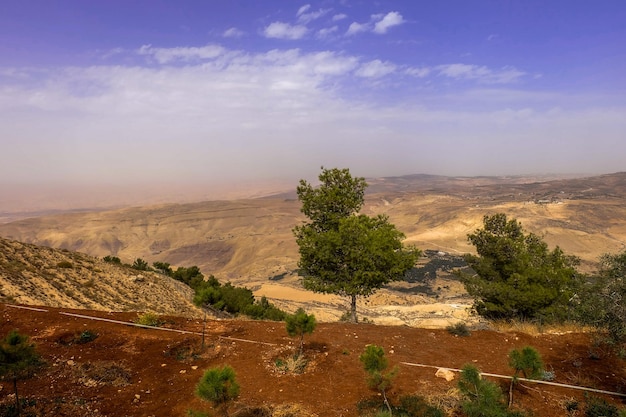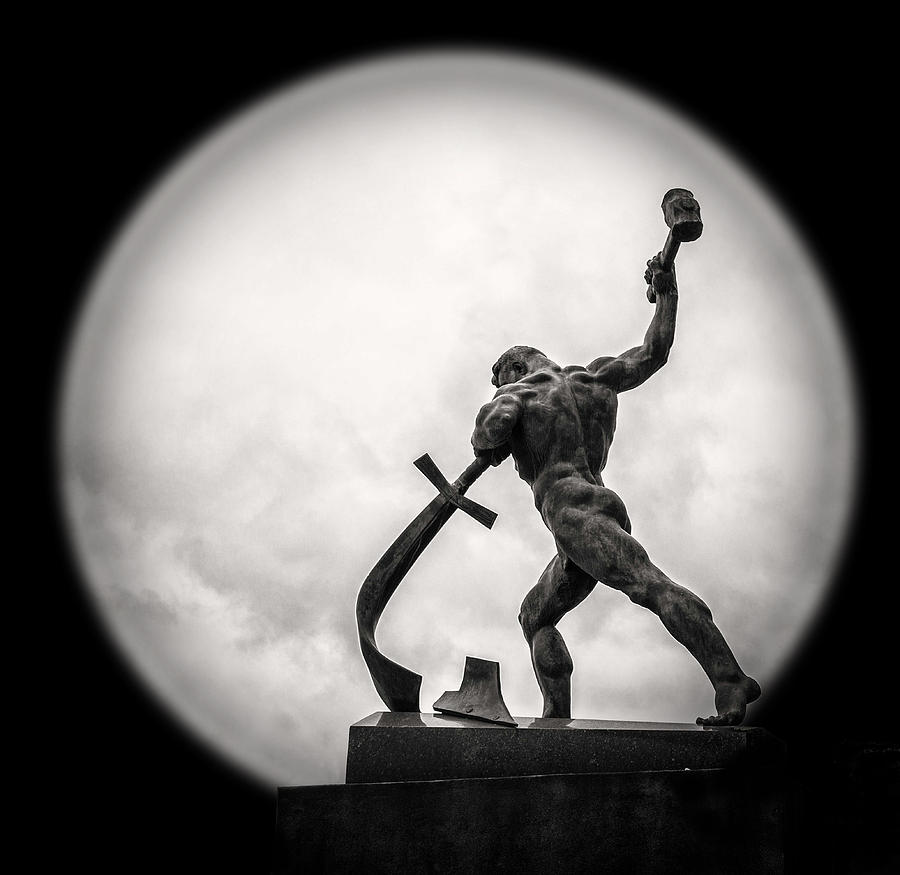
The View from Mount Nebo.


In the name of the living God, + Father, Son and Holy Spirit.

+++

Pray for the peace of Jerusalem. (Psalm 122:6a)

It’s a kind of code. The writer of the Psalm believes that if Jerusalem has peace, then the whole world will be at peace.  ‘Pray for the peace of Jerusalem’ means pray for peace in Jerusalem and everywhere.

When Moses was 120 years old, the Bible tells us, he climbed Mount Nebo, a mountain in today’s Kingdom of Jordan, about 800 metres above the Plains of Moab. There God showed him all the land that God had promised the children of Israel, from the river to the sea, the river Jordan to the Mediterranean Sea, from Dan in the far north to Gilead near Jerusalem and further south to the Negeb desert. (Deut. 34:1-5).

Then Moses died.

The last thing Moses did in his long life was to look towards the land that God was promising his people.  Moses looked forward to how blessed the tribes would be when they crossed the Jordan into Palestine. He paints a picture of how good the future will be for the children of Israel.

13b Blessed by the Lord [is] his land,
    with the choice gifts of heaven above
    and of the deep that lies beneath,
14 with the choice fruits of the sun
    and the rich yield of the months,
15 with the finest produce of the ancient mountains
    and the abundance of the everlasting hills,
16 with the choice gifts of the earth and its fullness
    and the favour of the one who dwells on Sinai.

                                                                            (Deuteronomy 33:13b-16 NRSV)

Moses could have sat around the campfire and regaled the Israelites with memories of leading his people out of Egypt. He could tell hoary tales about the 40-year trek through the wilderness, or reprise the joy, and the terror of meeting the living God in the burning bush.  But instead, he chose, after 120 years, to go to the high mountain, and to look forward to the future, to the promised land.

Moses couldn’t have prayed for the peace of Jerusalem for the simple reason that Jerusalem didn’t exist until many years later, when King David fortified a tiny Jebusite village and began building the Temple. 

What God wants for not only Jerusalem, but for the whole world’s future is peace, ‘shalom’ (שָׁלֹ֥ום). This word appears 237 times in the Old Testament, making shalom a significant concept. It means peace, and shalom is much more than absence of conflict.

Shalom means well-being in all its forms. Shalom means prosperity, but not the prosperity where only a few become wealthy, but prosperity where everyone shares their bounty with one another. Shalom is closer to communism than it is to the capitalism we experience in 2025. The prophet Isaiah reminds us that shalom is the opposite of war, which breeds hatred, fear, and scarcity. Shalom means love-in-action between people.

Pray for the peace of Jerusalem, the psalmist urges us, pray for Jerusalem’s shalom. God will bring peace for Jerusalem out of the fraught and complicated mess in the Middle East today. The promised land that Moses looked forward to stretches from the river to the sea. But today, Palestinians want to be free ‘from the river to the sea.’

These two visions of the future clash. They seem contradictory: how do we pray for the peace of Jerusalem?

How do we pray for peace for a people who were nearly exterminated a generation ago in the Holocaust? There are Palestinians and others like Hamas who say they would like to wipe out the Jewish people. Could it happen again? Never mind the politics: many Jews believe they are surrounded now by the same murderous hatred as they were in 1938.  

As Lloyd said last Sunday in his sermon, now it is important for Christians to express solidarity with Jews. Write to Temple David in Mount Lawley; or write to the Perth Hebrew Congregation. Or to both. A simple email will be genuinely appreciated.    

And how do we pray for a people who, a generation ago, were pushed out of the land their families had farmed for generations, for thousands of years?  The Palestinians believe that Jewish settlement from the river to the sea is a policy that bulldozes them out of the way, often quite literally. What should we pray? How should we support Palestinians and their allies locally? Sending money to an aid agency is one possibility. Gaza desperately needs the basics for life. Or finding out about the rallies held regularly in the city and joining them or supporting them is another.

How do we pray for the peace of Jerusalem? What would bring about the shalom of all the people of the Holy Land? This morning’s readings encourage us to pray with hope. Hope in God. The problems of the Middle East are difficult to fix. But as Christians, we know that God’s intention is for all Jews and all Palestinians to thrive, to enjoy God’s shalom. The divisions will find healing.

 We pray with hope, knowing that the future is in God’s hands. We look to the future with hope, learning with a deep confidence that God will meet us there.

Pray for the peace of Jerusalem. We can pray for the peace of Jerusalem only if we pray for peace in our own lives. We ask God to meet us in the conflicts of our families, knowing that some of those fights and divisions seem intractable to us.

We ask God to meet us in our everyday encounters. What do we need to do to foster shalom in our communities, as we encounter people serving us in shops, people on the footpaths, people at homeless respite, and neighbours of all sorts?

As Christians, we have a vocation to be makers of shalom; to be peacemakers. Saint Francis of Assisi, my favourite saint, told his followers to meet everyone with a greeting of peace.

[We should note that we Christians don’t have a monopoly on peacemaking. Jews greet each other with ‘shalom-aka’ and Muslims greet each other ‘As-salamu alaykum’; both saying, ‘peace be with you’.]

We too can make a greeting of peace a holy habit. For most of us, it might be a bit precious to say ‘peace be with you’ or ‘shalom’ every time we greet someone, but we can, for example, sign off emails or end phone conversations with the word ‘Peace’ – and mean it!

In this Eucharist, the priest greets us, ‘The peace of the Lord be with you’, and we respond, ‘And also with you.’ This morning, let us make the peace especially meaningful. Let us pray earnestly for the well-being and security of everyone we greet. Maybe greet fewer people and make sustained eye contact with each one if you can. Take two or three seconds to really see our neighbours, to remember that God delights in each one and seeks their shalom.

+++

As you know, today is the second anniversary of Lloyd’s ordination as a priest (congratulations, Father!), and it is my 50th. At the 8:30 Eucharist, Bryan Shattock marked his 42nd year of priesthood.

We as priests have a special role as a peacemakers.

Firstly, we bid the people we serve to ‘pray for the peace of Jerusalem’, and we bid the people to pray more generally for peace. Temple David replied to me that my email was appreciated because I am a priest.  My support as a priest carried your goodwill along with mine. 

So, secondly, our role in the community of faith, especially our parish priest, our bishops and the archbishop, is to be bridge-builders.

One of the titles for the Pope is Pontifex, the Latin for ‘bridge-builder’.Pope Leo has an account on X called ‘Pontifex’, and he repeated on social media his first greeting as Pope. This is what the Pontiff said:

“Peace be with you all! This is the first greeting spoken by the Risen Christ, the Good Shepherd. I would like this greeting of peace to resound in your hearts, in your families, and among all people, wherever they may be, in every nation and throughout the world.” (Pope Leo XIV on X)

I’m not saying that priests should be Popes. But like the Pope, the priest builds bridges between people and God.

One of the roles the church entrusts to priests is to speak words of absolution, either to all of us in the Eucharist, or to each of us in private in the Sacrament of Reconciliation, formally and informally. These words of absolution make space for peace with God.

This role of absolving carries with it the responsibility for us priests to make peace, to promote shalom, in the entire community we serve. We should never provoke division or hatred.

But as pontifex, as people entrusted with opening space for God, priests try to discern when to challenge people; when to ask people to fulfil roles for which they feel unworthy or not ready, or when to expose evil and hatred to the light by challenging people to do better, and by challenging, so build peace among people.

One anecdote from my time as a priest at Christ Church Claremont. A few parishioners looked with disapproval at families with young children. They stared at them critically, they shushed them, they rudely moved away from them, and they demanded that parents take their children to the crèche.

One morning during the Eucharist, I saw families being disturbed by these parishioners. There were many whispers and many scowls. I saw one mum on the brink of tears. I got very hot under my dog collar. When we came to the notices at the end, I told the congregation in what I thought were terms everyone could understand, that if they continued to treat kids like that, there would be no church left.

As I shook hands with people leaving, one woman said to me, ‘I’m so glad you said that about the children. Someone has to speak up about how badly behaved they are in church.’

So much for my discernment to challenge, to create connections and shalom between people!

So, we as priests have the privilege of promoting love between the people we serve. Priests speak well of people, knowing that God sees every person as whole, as holy, as complete. Priests who gossip or who speak badly of others are smashing those bridges between people, not building shalom. We try to be peacemakers whenever and wherever we can.

We priests have a special role in building bridges into the future. Like Moses, we look with hope to God’s church in the years ahead. It’s so easy to look at the church and be despondent.

There are fewer churchgoers, we say. There are no young people, we say. We have only seniors who don’t have the energy for organising things, we say. There are divisions tearing Anglicans apart, we say, between St Brendan’s and St Nic’s, reflecting bigger divisions between Canterbury and Sydney.  It’s easy for priests to be despondent. It’s easy for priests to think that we must come up with all the solutions.

We should be realists. God’s church is today what it is.

But as priests, we have a responsibility to remind people of a bigger story. God has been faithful to the church for 2,000 years. We have no reason to think God will not continue to grace God’s people with love and harmony, with shalom. Of course God will. God is not going to change or withdraw his love from the church.

Of course, all of us are all called to be bringers of peace, nurturing shalom. In fact, we can all do all the things priests do. But we priests are called to model peacemaking, to make space for peace, to call others to be makers of shalom. It’s a challenge for us, and it’s an extraordinary privilege.

We priests, like Moses on top of Mount Nebo, should be saying to the church:

The church’s future is blessed.

The church is blessed with the choice gifts of heaven above
and of the deep that lies beneath;
with the finest produce from the faith of those who have gone before us,

their stories, their hymns, their deep spirituality.
With the abundance of faith of those who will continue to come,

their joy, their faithfulness to Christ,
their willingness to live a life of service;
with the choicest gifts of love and shalom

And, above all, the church’s future is blessed with

the never-ending favour of the One who dwells with his people.

Pray for the peace of Jerusalem, and pray for your priests.

Peace be with you.

Slavery, Saint Francis and us


If you prefer to listen to Ted preaching this homily, click below (12 minutes):

The Holy Gospel of our Lord Jesus Christ according to Saint Luke.

Glory to you, Lord Jesus Christ.

[Luke 17:5-10]

The apostles said to the Lord, “Increase our faith!” The Lord replied, “If you had faith the size of a mustard seed, you could say to this mulberry tree, ‘Be uprooted and planted in the sea,’ and it would obey you.

7[Jesus said], “Who among you would say to your slave who has just come in from ploughing or tending sheep in the field, ‘Come here at once and take your place at the table’? Would you not rather say to him, ‘Prepare supper for me; put on your apron and serve me while I eat and drink; later you may eat and drink’? Do you thank the slave for doing what was commanded? 10 So you also, when you have done all that you were ordered to do, say, ‘We are worthless slaves; we have done only what we ought to have done!’”

For the Gospel of the Lord,

Praise to you, Lord Jesus Christ.

In the Name of the Living God, Father, Son and Holy Spirit.

The whole point of having a slave is that person can do whatever you want whenever you want.

When we were in Mauritius Rae and I used to worry about our hosts’ driver who was called Anil. Our hosts owned a sugar plantation and invited us to dinner a couple of times during our seven-week stay on the island.

They would send a message ‘Anil will pick you at 5:30.’ Anil arrived promptly at 5:30. Anil drove us back to the plantation. We had dinner, not with Anil, of course. Just with Pierre and Doris. Pierre showed us over their sugar refinery, a 24-hour operation. We talked. At 11:30 in the evening, it was time to go home.

Pierre yelled across the backyard, ‘Anil! Anil!’ Anil stumbled out of his hut, shook off his sleep and drove us home. It was an hour’s drive, and then, of course, Anil had to drive an hour back again.

Anil wasn’t a slave, but Rae and I worried that he was treated like one.

The people of Jesus’ time had slaves. The Jews had always had slaves, going back to the time of Abraham. At least, the more affluent Jews had slaves. And the whole Roman Empire depended on the labour of slaves. Apparently one third of the population was enslaved. People 2,000 years ago didn’t have the same moral objection to slaves that we have now.

And the whole point of having a slave is that person can do whatever you want whenever you want.

In this morning’s Gospel reading, Jesus invited the people of his day to try a radical thought experiment: imagine you are the owner of a slave who has been ‘working all day in the field, ploughing or tending sheep.’ (Luke 17:7) When evening comes, you allow the slave to take as much time as he wants to wash and change into clean clothes. Then the slave reclines on the best dining couch in the house. Then you, the owner, the master, serve the slave his dinner, and the slave can eat the meal quickly, or can spend four or five hours at the table chatting to friends and drinking wine. You are on call until the slave tells you he has finished his meal.

Then Jesus stops the thought experiment. No: you treat the slave as a worthless slave whose job is to serve you and not the other way around. If it doesn’t suit the slave or the slave is too tired makes no difference.

This thought experiment comes from Jesus, who as Saint Mark and Saint Matthew tell us, ‘…came not to be served but to serve and to give his life a ransom for many.’ (Mark 10:45, Matthew 20:28). Not to be served, but to be a slave.

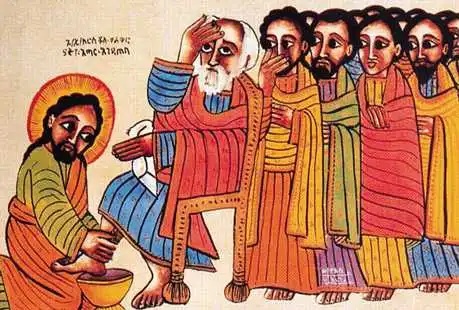
In other words, this thought experiment is not as fanciful as it sounds. Jesus himself swaps the role of Lord for that of a slave for example, when he washed the disciples’ feet (John 13:5), and really upsetting Simon Peter. ‘You will never wash my feet!’ wails Peter (John 13:8).

It’s not possible, we think. Even if you don’t own a slave, the point of having slaves is to do anything their masters want at any time. Jesus upends this idea. A slave is a human being created in the image of God, and simply because of that should be, at least, respected. But more than just respecting slaves, Jesus challenges us to serve others as if we were slaves ourselves. And especially, we should serve those who are treated as slaves.

Yesterday was the feast of Saint Francis of Assisi, a saint who means a great deal to me. Francis was the son of a cloth merchant, Pietro di Bernadone, who was growing richer and richer. Francis was privileged by having the benefit of this extreme wealth, and when he was a teenager, he made the most of the lavish lifestyle. He threw wild parties with his friends, providing the wine and food for the feasts. He gained the nickname ‘The King of The Revels’.

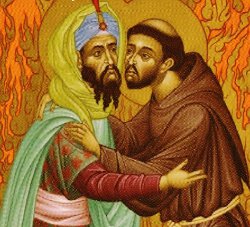
But he grew uncomfortable with this privilege. He was riding outside Assisi one day – and owning a horse was something like owning a Morgan Super 3 sports-car today or maybe a Rolls Royce Sweptail with a million-dollar price tag. As he rode, he saw a leper. Until then, Francis had been revolted by lepers. They were disgusting, repulsive. But on this day, Francis was moved to dismount and approach the leper and embrace him. Something changed in Francis from that moment. ‘That which was bitter had become sweet,’ he wrote later. (The Testament, 1, FAED I, 124.)

One of the first ministries Saint Francis undertook was caring for lepers; becoming their slave, their servant, looking with love on their distorted features and running sores, feeding them, keeping them safe from brigands and dressing their wounds.

Francis knew that this was how Jesus challenges us to be a slave to others. It’s a confronting idea. And we should be confronted. It goes against the way things are. It turns the world upside down.

I find it interesting that even though Francis is known for poverty, in the early years, many of his followers were queens and princesses: the Blessed Isabelle of France, Saint Louis’ sister, was a princess, and Saint Elizabeth was the wife of the future king of Hungary. Saint Clare too was from a noble family. These royals and aristocrats responded to the challenge to become a slave for others, serving the poorest, putting their lives at the service of the neediest.

I am impressed by Saint Jeanne Jugan in France just after the French revolution. She was inspired by Saint Francis to look after homeless women, eventually setting up a network of refuges throughout the east of France and becoming the Little Sisters of the Poor, who are in 2025 still serving the elderly poor. They have a house in Glendalough just north of Perth city. She too, and her sisters, respond to the challenge to be a slave to others.

And we are followers of Jesus too. The same challenge applies to us – as individuals, as the people of Saint Brendan’s. We don’t have to be the founder of a religious order, or even join one, to take up this challenge of Jesus. But if royals and aristocrats can become slaves, so can you and I.

Is there some situation where God is calling you to be a slave? Is there a person whose needs you can try to meet, but whom you avoid because you know it will be difficult? Is someone you know being held captive, ensnared in some way by someone? Is there a way to be a slave to them, to serve them in their needs? Being a slave is not about knowing you can succeed. It’s about putting aside our needs to achieve, to make a mark. Being a slave’s only about obeying the master. ‘When you have done all that you were ordered to do, say, ‘We are worthless slaves; we have done only what we ought to have done!’” (Luke 17:10)

And our ultimate Master is Jesus, and Jesus chooses to serve when others are certain it’s beneath Him.

As a parish community, we rightly hold up our ministry to the Homeless as one example where we put energy and care into serving others whatever their needs. But just because we are serving one needy group does not mean there are not others in the Warnbro/Rockingham community calling out for our service as a parish.

Today we bless our pets. The same challenge applies to animals as it does to human beings. We sometimes think of our pets as slaves. We keep them locked them up in our house or yard. We have them on a leash when we take them outside. We expect them to do emotional work for us, loving us when we come home from being away. But I am sure that we bless our cats and dogs because we know the challenge to be a slave to them too. Take note of that Lottie, and Caesar.

So this story in the Gospel about a slave coming in from a day’s work in the field is not a hypothetical. It’s a challenge. It confronts us to find ways in which serving others turns the world on its head and creates a kinder, more loving world in partnership with the One who came to serve.

Where is God calling you to be a slave today?

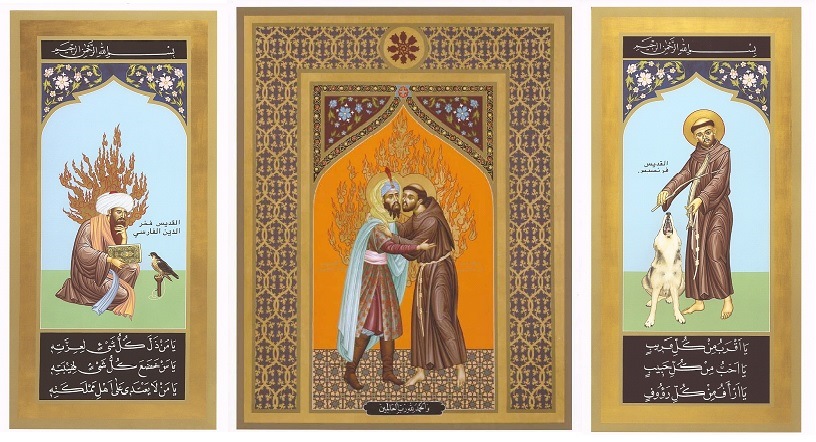
THE SULTAN PREACHES TO SAINT FRANCIS, AD 1219


 THE SULTAN PREACHES TO SAINT FRANCIS, AD 1219

The Sufi Path of Love – Saint Francis and the Sultan

The Prayers that never were


I prepared the Prayers of the People for the Eucharist this morning – only to discover that they weren’t needed.

There is so much talk on social media about the dire state of the world and the possible end of the world, that I feel it is incumbent of us Christians to recall that Christian faith brings hope not despair.

Below is what I would have prayed:

The response for this morning’s intercessions is:  

God of hope and assurance, 

We thank you and we bless you. 

God of peace, we thank you for those who bring peace to their neighbour and turn their despair and grief to hope and determination; 

Empower those who are in negotiations for peace in Palestine and in Ukraine. Give them diplomacy, skill and a vision for the future.  

Strengthen the leaders who are turning their word of peace into action.  

God of hope and assurance, 

We thank you and we bless you. 

Lord of the Church, we thank you for those who show us the way of the Gospel, for our teachers in the faith as they assist us to work and pray.  

We thank you for our ministry of encouragement one to another.  

We praise you for your world-wide Church and the ways it witnesses to peace and kindness.  

God of hope and assurance, 

We thank you and we bless you. 

God, you are the author of all healing. We thank you for all who care for the sick: for nurses and doctors, for care workers and researchers, for hospital staff and volunteers. We bless you for their ministry.  

We thank you for parents and adult children who take time to care for their loved ones and nurture them back to health. 

We thank you for all who are restored to health, and especially we thank you for Milton as he recovers from surgery. 

God of hope and assurance, 

We thank you and we bless you. 

God, you call us into community. We bless you for the love of all who build and maintain community. We thank you for politicians and councillors as they work to make a more loving community. We thank you for each other as we contribute to the solidarity of our parish community. 

God of hope and assurance, 

We thank you and we bless you. 

God, the author of all life, we praise you that you have called us into this life. We thank you for the joys and blessings of life, for those who love us, for our gifts well-used. We confidently praise you for leading us to a marvelous and eternal life.  

God of hope and assurance, 

We thank you and we bless you. 

God’s Crazy Brave Love


Sermon at Saint Brendan’s-by-the-Sea, Warnbro, October 8, 2023

If you would rather listen to Ted preaching this sermon, click on the audio below:

The Lord be with you.

And also with you.

The Holy Gospel according to Saint Matthew

Glory to you, Lord Jesus Christ.

(Matthew 21:33-46)

33 ‘Listen to another parable. There was a landowner who planted a vineyard, put a fence around it, dug a wine press in it, and built a watch-tower. Then he leased it to tenants and went to another country. 34 When the harvest time had come, he sent his slaves to the tenants to collect his produce. 35 But the tenants seized his slaves and beat one, killed another, and stoned another. 36 Again he sent other slaves, more than the first; and they treated them in the same way. 37 Finally he sent his son to them, saying, “They will respect my son.” 38 But when the tenants saw the son, they said to themselves, “This is the heir; come, let us kill him and get his inheritance.” 39 So they seized him, threw him out of the vineyard, and killed him. 40 Now when the owner of the vineyard comes, what will he do to those tenants?’ 41 They said to him, ‘He will put those wretches to a miserable death, and lease the vineyard to other tenants who will give him the produce at the harvest time.’

42 Jesus said to them, ‘Have you never read in the scriptures:

“The stone that the builders rejected
    has become the cornerstone;[a]
this was the Lord’s doing,
    and it is amazing in our eyes”?

43 Therefore I tell you, the kingdom of God will be taken away from you and given to a people that produces the fruits of the kingdom.[b] 44 The one who falls on this stone will be broken to pieces; and it will crush anyone on whom it falls.’[c]

45 When the chief priests and the Pharisees heard his parables, they realized that he was speaking about them. 46 They wanted to arrest him, but they feared the crowds, because they regarded him as a prophet.

This is the Gospel of the Lord

Praise to you, Lord Jesus Christ.

In the name of the Living God, +  Creator, Redeemer and Spirit.

Amen.

From Psalm 24:

The earth is the Lord’s, and everything in it. (Psalm 24:1)

Ngaala kaaditj Noongar moort keyen kaadak nidja boodja
We acknowledge the Noongar people as the original custodians of this land.

I have a special reason this morning for acknowledging that we are walking on the land of the Whadjuk people here in Noongar country near the border of the Pinjar Noongars.

There is something powerful and mysterious to reflect that human feet have trod this part of God’s world for at least 40,000 years.

I’d like to take you back just 65 years to Tambellup School, 80 kilometres north of Albany. I went to this school for seven years along with 200 other kids. About a quarter of the students were Noongar children.

One day when I was about eight, a group of three or four of the Noongar kids said to me that they had something special to tell me – but it had to be outside the school grounds. I was a well-behaved kid, so they must have been persuasive, because I found myself outside the school in the scrubby sandy country with the Noongar kids.

They told me an exciting story. I didn’t understand much of it, but I gathered it was about their grandparents being shot at. Some were very brave. Some hid in the river. Others ran away. One or two of the old men threw spears.

The same thing happened to me when I was about 11. Different kids, same story. I understood it more this time around. A band of white men on horseback attacked an Aboriginal camp. As they shot indiscriminately into the people for a full 90 minutes, an hour and a half, the frightened Noongars ran. The only way they could go was to the Murray River. They were forced into the river. Some hid in the water for hours using reeds to breathe. Others ran away. They were all brave.

I eventually found out that this event is known as the Pinjarra Massacre. The stories I heard were so vivid, I thought they were describing events in the life of their immediate grandparents, in 1934, but the shooting of perhaps 30 Noongars, maybe more, actually took place in 1834, just 30 minutes from here.

When I started putting these events into the context of European settlement and the taking of Noongar land, I found I wasn’t the only one to hear this story growing up. Other West Australian kids had had the same experience in the 1950s.

It seems to me this was a plan: to encourage Noongar kids to tell white kids the story of the Pinjarra Massacre, and to encourage us to tell other white people the story.  

What amazes me is the tone in which this story was told to us. It wasn’t an accusation. It wasn’t to make us white people feel guilty. It was so that we would see the story from their side. It was to acknowledge that this is our shared history. It was to declare that the Noongar people want to walk side by side with us.

When they say, ‘Welcome to country’, they mean it.  ‘We want to make peace. We want you to walk on our land together with us. We welcome you.’

If I have heard that message of welcome correctly, it’s amazing. The Pinjarra Massacre, as you know, was not the only mass killing of Noongar people near here.

Ambitious Lieutenant Bunbury making the road ‘safe’ for travellers heading south from Perth, led two mass shootings. One, which took place near York, was so ferocious that the Swan River Guardian in 1837 reported it as ‘Barbarities of theMiddle Ages.’[i]

…  and they named the city after the young Lieutenant!

Where we used to live in Busselton, we learned that, on two occasions at least, settlers killed numbers of Wadandi Noongars each time in retaliation for a settler being killed.

Of course, I am not saying that the Noongars like what Europeans have done to them. Of course not. Mass killings to drive the First People off their land has meant that today – in 2023 – more of them are locked up, more of them die young, more of them have poor health and low levels of education.  They grieve all that has happened and is still happening. It creates a burning anger. Noongars have every right to resist, and they have done in the past and they are still fighting. Yagan is a hero for a reason.

But each time violence is done to them, Noongar people still say, ‘We welcome you.’

To go on inviting us to peace, over and over again; this is crazy brave, and, I think, quite amazing.

The parable Jesus tells in this morning’s gospel is about the violence that the tenants in the vineyard inflict on the servants the landowner sends.

‘When the harvest time had come, he sent his slaves to the tenants to collect his produce. But the tenants seized the slaves, and beat one, killed another, and stoned another. Again he sent other slaves, more than the first. And they treated them in the same way.’ (Matthew 21:34-37).

Over and over. Slaves come. They are beaten. Others come. They are stoned. Others are sent. They are killed. The tenants inflict violence over and over. Finally, the landowner sends his son. They throw the son out of the vineyard and kill him.

When you hear this parable the first time, it seems to be about violence. The story shows the violent end that will come to people who live by violence.

But what if the parable is not mainly about the tenants and their violence?

What surprises me about the parable is the landowner’s actions. Right from the beginning we see that how patient this landowner is.

Anyone who plants a vineyard is patient.

My brother Jim decided to grow grapes on his farm at Broomehill. He planted the grapes and fenced the area. He tended the grapes. He attended lessons on viticulture at Harvey Ag. It was four years before he got any kind of harvest, and a couple more years before he could sell his own vintage. If you’ve ever been to Broomehill and bought Wadjekanup wines or Henry Jones port, you will have enjoyed the result of Jim’s patience.

So this landowner in today’s story is prepared to wait for his vines to bear fruit and produce wine. And then, when he thinks he can collect his share, his servants meet violence after violence. And what does the landowner do? He sends more servants. And then what does he do? He sends more servants. Even if they are only slaves, they are worth something. It’s extravagantly expensive to lose so many servants. It must break his heart each time.  But he keeps sending them. Despite the repeated violence, the landowner still believes he can do business with the tenants.

In this way, the landowner is like God. God comes, God invites Godself into the life of his vineyard, over and over again.

God sends servants to us. Moses, for example. We keep hearing about Moses and the Ten Commandments. And we need to. The Ten Commandments are like a fence for the good life. Moses invites us to keep within those boundaries. But it’s so easy to say, ‘We don’t need moral guidance. We know what is good.’ We reject Moses. But God keeps sending him. At least once every three years in the lectionary, Moses pops up. God reminding us of the good life.

And poor Moses. Having led the people of Israel to within sight of the Promised Land, Moses dies on Mount Nebo before he can enter the new land.

God sends other prophets. Jeremiah is a whistleblower who speaks out about corruption. He ends up dropped in a dry well and then exiled to Egypt.

And on and on, through the Old Testament, and still after the time of Jesus.

God keeps sending servants. Last Wednesday, we celebrated the feast day of Saint Francis of Assisi. For me, St Francis is a special prophet.

Through him, God reminds us that all of creation is our sister or brother. Through St Francis God reminds us not to be sucked into consumerism and greed. We need God to go on sending prophets like Saint Francis. Just look at the polluted environment we live in. Just look at the greed that capitalism engenders.

But for all his positive message, Francis ended up ill with malaria, managing the wounds in his hands and sides from the stigmata, coping with blindness and stomach complaints.

I think God is crazy brave, continuing to send us his servants. God is like the Noongars, continuing to invite us into their story, despite our repeated violence to them.

But finally in the parable, the landowner sends us his son. The son is treated no differently from all the other good servants. But we know now that there is a different ending for the Son of God. His death and resurrection are a signal from that the cycle of violence does not just go on and on. God will bring it to a joyful end.

So what is Jesus teaching us in this parable?

Firstly, that God is so generous. God keeps sending people and signs and messengers of all sorts to make sure that you and I know God’s love.

We are full of gratitude that God takes so much trouble to reach each one of us. This morning, as every Sunday morning, God comes to us in the bread and the wine, God’s presence among us and within us. We thank God for God’s persistent love.

Secondly, we too are God’s servants. We may find ourselves called to be messengers of God’s persistent love to others. We see the young Mum in the shops with a baby in her arms and a rebellious toddler screaming her lungs out. We can express sympathy. We’ve been there before. We might even find a way to help her.

Or a relative comes to talk to us about their faltering marriage. We listen. We may even dare to offer some advice.

Or we meet someone with a terminal diagnosis. We hesitantly find the words to say that, in Christ, death is not the end of the story. That God’s love goes on forever, in a more glorious fashion than we can begin to imagine.

Of course, when we are called to be a messenger, there’s a cost. The young Mum may angrily refuse our help. She may misunderstand our intentions.

Other members of the family may resent our intervention in someone’s marriage.

When we try to express God’s love for someone on the journey to death, we trip over our own grief, and our own fears. It hurts us, too.

We just sang William Vanstone’s hymn,

Love that gives, gives ever more, …
            spares not, keeps not, all outpours. …
            Drained is love in making full, …
            weak in giving power to be.

But God gives us the grace to go on being God’s persistent messenger of love. And, whatever the cost, we know ourselves to be more and more deeply immersed in God’s love.

Let us pray the prayer attributed to Saint Francis of Assisi.

Lord, make us channels of your peace:
where there is hatred, let us sow love;
where there is injury, pardon;
where there is discord, union;
where there is doubt, faith;
where there is despair, hope;
where there is darkness, light;
where there is sadness, joy.
O divine Master, grant that we may not so much seek
to be consoled as to console,
to be understood as to understand,
to be loved as to love.
For it is in giving that we receive,
it is in pardoning that we are pardoned,
and it is in dying that we are born to eternal life.

Amen.


[i] Barbarities of the Middle Age have been committed even by boys and servants, who shot the unarmed woman, the unoffensive child, and the men who kindly showed them the road in the bush; the ears of the corpses have been cut off, and hung up in the kitchen of a gentleman, as a signal of triumph.

The Swan River Guardian, 16 November 1837,

Quoted in

Surprised by shock inclusion


Sermon for Pentecost 18, 2022

Sermon – St Brendan’s By The Sea, Warnbro

26th Sunday in Ordinary Time, October 9, 2022

Jeremiah 29:1, 4-7

Luke 17:11-19

The Holy Gospel of our Lord Jesus Christ according to Luke.

Glory to you, Lord Jesus Christ.

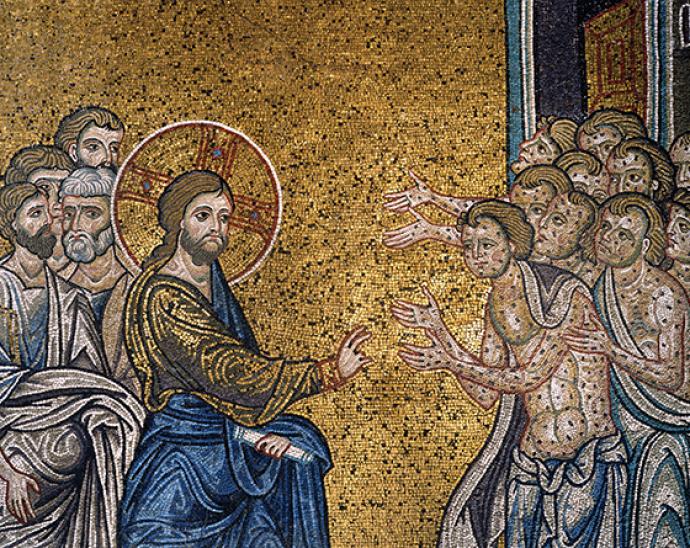
11 On the way to Jerusalem Jesus was going through the region between Samaria and Galilee. 12 As he entered a village, ten men with a skin disease approached him. Keeping their distance, 13 they called out, saying, ‘Jesus, Master, have mercy on us!’ 14 When he saw them, he said to them, ‘Go and show yourselves to the priests.’ And as they went, they were made clean. 15 Then one of them, when he saw that he was healed, turned back, praising God with a loud voice. 16 He prostrated himself at Jesus’s feet and thanked him. And he was a Samaritan. 17 Then Jesus asked, ‘Were not ten made clean? So where are the other nine? 18 Did none of them return to give glory to God except this foreigner?’ 19 Then he said to him, ‘Get up and go on your way; your faith has made you well.’

The Gospel of the Lord.

Praise to you, Lord Jesus Christ.

In the name of the living God, Father, Son and Holy Spirit. Amen.

I want to start with an unpleasant thought experiment.

So, before that, a joke.

An old Irishman walks into a bar, hauls his bad leg over the stool, and asks for a whisky. ‘Hey,’ he says, looking down the bar, ‘is that Jesus down there?’ The bartender nods, so the Irishman orders Jesus one too.

An ailing Italian with a humpback walks in, shuffles up to the bar, and asks for a glass of Chianti. Noticing Jesus, the Italian orders Him a glass of Chianti too.

A redneck swaggers in and hollers, ‘Barkeep, set me up a cold one! Hey! Is that God’s Boy down there?’ The bartender nods, so the redneck orders Him a bottle of beer.

As Jesus gets up to leave, He touches the Irishman and says, ‘For your kindness, you are healed!’ The Irishman jumps up and dances a jig.

Then Jesus touches the Italian and says, ‘For your kindness, you are healed!’ The Italian’s humpback straightens, and he does a flip.

Just then the redneck yells, ‘Hey! Don’t touch me. I’m on disability pension!’

So this is the thought experiment:

What is the worst kind of person you can think of? They may be so morally depraved that even thinking of them makes you feel disgusted, even a bit dirty. They may be so lacking in empathy that there is no lid on their violence; they are happy to lash out with fist or weapon at anyone, child or adult, ordinary citizen or officer of the law.

They may be so different from you that you feel you can’t understand them and their culture. You wouldn’t want your granddaughter to marry one, or even get friendly with one.

I remember my Dad and others of his generation talking about the Japanese as Nips who were both cruel and not real men. Thankfully, that intolerance has gone away as memories of the war have faded.

During the dangerous times of Covid-19, people were intolerant of those who wouldn’t be vaccinated. In fact, some people thought anti-vaxxers should be segregated from the rest of us, like lepers. And I heard anti-vaxxers say similar things about Government officials and employers.   

In some parts of the community, people think of refugees in that way; not as terrified folk fleeing for their lives, but as terrorists and opportunists coming to take our land and our children’s jobs. But in most surveys church people in Australia welcome refugees. So, we in this room are less likely to hold that prejudice.

You may have thought of sex offenders, nasty folk who prey on children and other vulnerable people. Maybe you want a separate town where these people are sent to live; or their addresses known so you can tell kids which houses to avoid.

You may have thought of dictators. There are some at the moment, one or two, who I feel the world would be better without. Put them on an island in the South Pacific, I say, without their armies and nuclear weapons and their egos, and let them get on with each other. Just so long as they don’t threaten our peace.

Whoever this group of people is, your desire is to exclude them from society. One way or another, you want them gone.

Ordinary people in Jesus’ time thought that way about lepers. Whether or not the skin disease in the Bible was the modern Hansen’s disease, the lepers then had severe disfigurements, difficult to look at. It was better to put them out of the towns and villages so you didn’t have to look at their deformed faces, running sores, or twisted bodies.  Living with a leper in close quarters, washing them, having them cough over you, over a period of months you may catch it. Better to separate them from the rest of us.

Even 1300 years later in Europe, in the time of Saint Francis of Assisi, people still felt that way about leprosy.  Push lepers away from society, avoid all contact with them, let them survive on the fringes of the community with the bandits and the very poor.

So, for Jesus to get near enough to lepers to talk to them would have seemed totally unadvisable. Not only might Jesus catch the disease, it gave the wrong message. Don’t encourage them to think they can get better.

Even so, it didn’t seem to bother Jesus. Saint Matthew tells us of another occasion when a leper knelt before Jesus and Jesus ‘stretched out his hand and touched him.’ (Matthew 8:3) Actually touched him. Like hugging a pedophile. Disgusting.

So the unpleasant thought experiment boils down to the question, ‘Who is your leper? Who would you put out of the community?’

Jesus’ actions are astonishing. He approaches lepers. He speaks kindly with them. He blesses them. He heals them. Once the priests certify that they are clean, they can pay their thank-offering. They can go back to their family, to their community. Jesus doesn’t just heal their disease, but he gives them their whole world back.

Imagine your lepers. Imagine Jesus blessing your lepers. Because, be assured, that is what Jesus does. He accepts and embraces the very people you and I can’t stand.

And we are challenged to see that acceptance as Good News. We are invited into a world in which your lepers and mine are included, blessed, healed, welcomed by Jesus.

The Gospel goes a step further. It invites us to emulate Jesus, to copy his way of loving. Not only are we to rejoice that Jesus welcomes those terrible people, but also Jesus dares us to reach out to them in love, and so heal them and reconcile them back into our community.

I mentioned Saint Francis, because he changed his mind. He admits that he was disgusted by lepers. Seeing a leper one day as he rode by, he dismounted, walked over to the leper and embraced him. Then, Francis recalled later, everything changed. Everything that ‘had seemed bitter to me was turned into sweetness of soul and body.’ (The Testament, 1, FAED I, 124.) In fact it was so transformative that Francis realised later that he had embraced Jesus.

With his brothers, Saint Francis went on to set up a rough hospice for lepers, risking contagion and finding joy in nursing them. Saint Francis encourages us: if we are willing to imagine a way to bless our lepers, and act on the imagining, that action will bless us in return.

We can start by praying for them – regularly, every day. It’s amazing how holding our lepers up to God helps us see them as God sees them, as whole, healed human beings.

We can imagine their lives; how they’ve got to where they are now. How their disability or twisted personality has cost them relationships; how they miss out on love because of how others see them, maybe because of the way you see them. Once we know their name, and their story, we see them as an individual, and when we have seen their unique personality, their special contribution to the world, we can’t unsee it. They change from ‘them’ to ‘you’.

When we see them as people, we might risk reaching out to them. What do they most need? We all need to know we are loved. What practical things can we do to ensure that our lepers know they are loved by God?

Gary Chapman is a Baptist pastor and author from North Carolina in the US. He speaks of five ‘love languages’, five practical ways we can express love to other human beings.

The first love language is ‘words of affirmation’. Encouraging and supporting people builds their self-esteem.

The second love language is ‘quality time’. You express how valuable a person is to you by giving the gift of your attentive time.

The third language is ‘receiving gifts’. Physical gifts are symbols of our love. Using this language is as much about the humility of receiving gifts as it is about giving them.

The fourth is ‘acts of service’; doing tasks for a person that will make their life easier.

And last of all is ‘physical touch’, because we all need more than FaceTime and Zoom. We need to feel the bodily presence of a person to know they care about us.

  • Words of affirmation.
    • Quality time.
    • Receiving gifts.
    • Acts of service.
    • Physical touch.

If you haven’t heard of the Five Languages of Love, it’s worth searching on the internet for ‘Gary Chapman, Five Love Languages’. (https://www.supersummary.com/the-5-love-languages/summary/)

With your leper, you don’t have to do all five aspects of practical loving. Start with one of the languages. One may be enough to turn them from despised to esteemed.

There’s one more surprise twist in this morning’s Gospel.  

Samaritans were hated by Jews: pious Jews travelling from Galilee to Jerusalem refused to travel through Samaria, which was the straight and easy route. They crossed the Jordan and travelled down on the Transjordan side before crossing back to get to Jerusalem: a longer trip, and through more desert country than the Samaritan route.

Not Jesus. Luke makes a point of telling us that Jesus was travelling through Samaria. Jesus was taking his disciples the quick way to Jerusalem, through the territory of the despised neighbours, the Samaritans. And the only leper who turned back to give thanks to Jesus was a foreigner, a dirty foreigner, a darky, a Nip, a loathed Samaritan.   

This Samaritan, this ex-leper, give thanks, and Jesus commends him for it. This foreigner gets it right, the other nine miss this step.

How hard it must have been for the disciples to hear that a Samaritan got it right with God. We too have been welcomed, blessed, healed and restored by God, just like the Samaritan, and this despised alien shows us how we should respond to Jesus. Our lives, like his, should be lives of gratitude.

Bryan spoke last week of faith. We already have it. The answer to every prayer, Bryan said, is ‘I am with you.’ Our faith is real. And our faith is that the marvelous healer Jesus continues to be involved in our lives. What can we say to that except ‘Thank you’, and go on saying ‘Thank you’?

The Samaritan is the model of Christian spirituality. Not a Jew. Not St Peter who recognizes Jesus as the Son of the Living God. But a Samaritan. Just as the Samaritan earlier in Luke showed us how to love our neighbour. Our leper shows us how to love God. We should be surprised. And we should go on giving thanks. We will know the sweetness of soul and body as we are embraced by Jesus.   

Practicing Peace: Michael Wood’s new book


270 pages
ISBN 9781666735307
Paperback $45, Hardcover $60, Kindle $11.99

Michael John Wood, Practicing Peace: Theology, Contemplation and Action,
Wipf & Stock, 2022.

Reviewed by Ted Witham

Michael Wood’s eloquent new book aims to show how the non-violent practice of peace arises directly from God’s nature: God is love, and so we are to treat each other and all creatures lovingly.

The Rev’d Michael Wood, former Chaplain to The University of Western Australia, and a long-term priest in the Diocese of Perth, has written Practicing Peace as a handbook for peace-making, using, among others, the insights of Open Space Technology.

Practicing Peace emphasises the New Testament concept of a Christlike God; that God is in every way a peacemaker as was Jesus himself. Wood writes the clearest exposition I have read on René Girard’s theory of mimetic rivalry. We reflect the desires of others and want what they want, creating a conflict between people that can be overcome by ‘recognizing and releasing’ the conflict.

The second part of Practicing Peace is a handbook for peace. We engage in contemplative practices in order to shine a light on our own disoriented desires. We then listen to each other to create an agenda, share assessments of the situation and options for a more peaceful way forward, and commit to trying those options, a process Wood calls ‘collaborative emergent design’.

While the theology of Practicing Peace is profoundly Christian, the insights into peace-making can be used by any people of good will.

Each section of this book is written with a beautiful clarity and is summarised in a series of appendices and charts which turn the declarative theology into useful visuals. An extensive bibliography rounds out the book. West Australians will note references to local authorities and activities – like salsa dancing at Scarborough Beach!

Michael Wood’s book contains much for Christian leaders to mull, and more importantly, practise! All Christian leaders including clergy in formation and clergy in parishes will find here a way of Christlike leadership that will attract others to the dance. I wish I had this wise book when I served parishes and a not-for-profit!

Practicing Peace is a profoundly hopeful book. ‘Imagine the church,’ Wood writes, ‘as constituting an international academy for peace, focused on the Christlike God, shaped by contemplative prayer, and practicing the art of dialogue. This could be a small contribution that Christians could make to the world.’ (223)

Practicing Peace is itself a substantial contribution to a more peaceable world.

Prayer in Time of War


Prayer in Time of War

Can you breathe through spreading pain?
Can you bear the suffering again?
Can you bleach the blood-red stain?
Can you stop the rape of Ukraine?

Can you dull the loins of those on heat for war?
Can you block their guns as you’ve done before?
Can the hope of peace-talks cry, ‘No More!’?
Can fiery minds change their very core?

God, so implement the love of Calvary,
Your eirenic Spirit blast the fighters free,
Caress the world with mastery,
Your love that heals painstakingly.

Never war


Make love, not war.

Make love, not war.

Make love, not war.

This is the first and great commandment – at least, as it applies to nation-states and other tribal entities.

We have been so quick to fall victim to the narrative of Ukraine the victim and Russia the aggressor. We prayed this morning at church only for Ukraine. Even if it is the simplest case of Ukraine: victim and Russia: aggressor, Russia still needs praying for. We pray for its leaders that they stay their hand, that they make love, not war.

But we know the situation is more complex than Ukraine: victim and Russia: aggressor. That may be a summary of the politics, but there appear to be some in Ukraine wanting war, wanting to show how great the Ukrainian resistance will be. There are Ukrainians hiding trembling in the Metro and there are Ukrainians actively hunting Russians as ‘the enemy’.

And in Russia, think of those braving the Kremlin and protesting in the streets of Moscow and St Petersburg against their leaders. Think of the Russian legislators compromised by their allegiance to Russia and their reluctance to be the aggressors. Think of those in Putin’s inner circle who he has bullied into support for the war. And Putin himself: He is a brutal dictator, but does he not need prayer too?  He is a human being.

It’s complex, as all human relationships are complex.

So, I protest. I protest about praying for Ukraine as if the ‘blame’ is all on Russia’s side and not on both. I protest that our support for Ukraine is so easily subverted into supporting Ukraine’s war effort.

War can never be the answer. Even the great prosecutor of war Winston Churchill said, ‘Jaw-jaw is always better than war-war.’  

We need to pray. We do. So, let us pray for all caught up in this conflict. And above all, let us pray for peace.

Short and Narrow: the charming redemption of Silas Marner


George Eliot, Silas Marner, The Weaver of Raveloe, Capuchin Classics, 2009.

Paperback 250 pages

In Public Library System
New from $AU9.99, used from $AU8.99 online.
E-book from $4.

Reviewed by Ted Witham

George Eliot (Mary Ann Evans 1819-1880) wrote Silas Marner as her version of Pilgrim’s Progress. Like Bunyan’s masterpiece, Silas Marner also has the feel of a universal fable, the redemption of a man from desolation to love and riches.

Unlike Progress, however, the characters in Silas Marner are well-drawn and invite sympathy. Knowing how shabbily Silas has been treated and knowing the inner journey of Silas and the nasty young Squire, makes the reader care about the characters.

Eppie, the toddler who appears in Silas’ life after his precious gold has been taken, is less believable as an individual. She is beautiful in body and soul, humble in aspiration and devoted to Silas. But she is lovely because she is so deeply loved by Silas, her ‘Papa’.

The inner journey Silas makes is not like the ‘ascent’ of Pilgrim to the river and the City of Heaven. Nor is it in the tradition of the ‘ascent’ to God mapped by medieval mystics like Bonaventure and Richard of Saint Victor.

Silas’ journey to redemption stays in the gritty reality of Victorian poverty. Grace – in the form of the toddler he names Hephzibah (Eppie) – comes to Silas once and all at once. The name Hephzibah means ‘My delight is in her’, and it is used in the Hebrew Scriptures as the symbolic name for the restored Jerusalem (Isaiah 62:4). The redemption takes the miser, Silas, with his short-sight and propensity to fitting, and teaches him how to love deeply.

Eliot contrasts the emotional and spiritual poverty of his former state with the richness of loving and being loved: the gold is even returned to Silas and secrets, liberating once shared, are brought to light.

Names are important to Eliot: Silas is named for the companion of the Apostle Paul. The New Testament’s Silas and Paul are put in prison and God releases them. God also releases Silas Marner from the darkness of the cultish Lantern Yard and from his self-imposed prison and. Both the New Testament and the village of Raveloe rejoice greatly at Silas’ release.

Is the name ‘Marner’ a reference to Coleridge’s Ancient Mariner published 90 years earlier?  

Silas Marner is my introduction to George Eliot. I found the novel charming and satisfying. There is a central goodness in the novel which will be evident to readers whether or not they are Christian believers. But it is ultimately a Christian novel, an exploration of the journey we all in our own ways make in Christ.