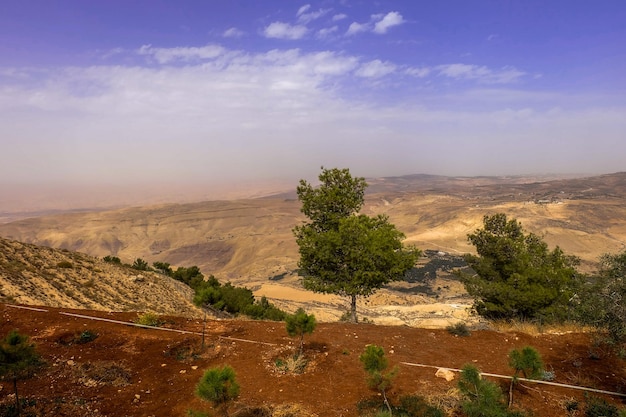
The View from Mount Nebo.


In the name of the living God, + Father, Son and Holy Spirit.

+++

Pray for the peace of Jerusalem. (Psalm 122:6a)

It’s a kind of code. The writer of the Psalm believes that if Jerusalem has peace, then the whole world will be at peace.  ‘Pray for the peace of Jerusalem’ means pray for peace in Jerusalem and everywhere.

When Moses was 120 years old, the Bible tells us, he climbed Mount Nebo, a mountain in today’s Kingdom of Jordan, about 800 metres above the Plains of Moab. There God showed him all the land that God had promised the children of Israel, from the river to the sea, the river Jordan to the Mediterranean Sea, from Dan in the far north to Gilead near Jerusalem and further south to the Negeb desert. (Deut. 34:1-5).

Then Moses died.

The last thing Moses did in his long life was to look towards the land that God was promising his people.  Moses looked forward to how blessed the tribes would be when they crossed the Jordan into Palestine. He paints a picture of how good the future will be for the children of Israel.

13b Blessed by the Lord [is] his land,
    with the choice gifts of heaven above
    and of the deep that lies beneath,
14 with the choice fruits of the sun
    and the rich yield of the months,
15 with the finest produce of the ancient mountains
    and the abundance of the everlasting hills,
16 with the choice gifts of the earth and its fullness
    and the favour of the one who dwells on Sinai.

                                                                            (Deuteronomy 33:13b-16 NRSV)

Moses could have sat around the campfire and regaled the Israelites with memories of leading his people out of Egypt. He could tell hoary tales about the 40-year trek through the wilderness, or reprise the joy, and the terror of meeting the living God in the burning bush.  But instead, he chose, after 120 years, to go to the high mountain, and to look forward to the future, to the promised land.

Moses couldn’t have prayed for the peace of Jerusalem for the simple reason that Jerusalem didn’t exist until many years later, when King David fortified a tiny Jebusite village and began building the Temple. 

What God wants for not only Jerusalem, but for the whole world’s future is peace, ‘shalom’ (שָׁלֹ֥ום). This word appears 237 times in the Old Testament, making shalom a significant concept. It means peace, and shalom is much more than absence of conflict.

Shalom means well-being in all its forms. Shalom means prosperity, but not the prosperity where only a few become wealthy, but prosperity where everyone shares their bounty with one another. Shalom is closer to communism than it is to the capitalism we experience in 2025. The prophet Isaiah reminds us that shalom is the opposite of war, which breeds hatred, fear, and scarcity. Shalom means love-in-action between people.

Pray for the peace of Jerusalem, the psalmist urges us, pray for Jerusalem’s shalom. God will bring peace for Jerusalem out of the fraught and complicated mess in the Middle East today. The promised land that Moses looked forward to stretches from the river to the sea. But today, Palestinians want to be free ‘from the river to the sea.’

These two visions of the future clash. They seem contradictory: how do we pray for the peace of Jerusalem?

How do we pray for peace for a people who were nearly exterminated a generation ago in the Holocaust? There are Palestinians and others like Hamas who say they would like to wipe out the Jewish people. Could it happen again? Never mind the politics: many Jews believe they are surrounded now by the same murderous hatred as they were in 1938.  

As Lloyd said last Sunday in his sermon, now it is important for Christians to express solidarity with Jews. Write to Temple David in Mount Lawley; or write to the Perth Hebrew Congregation. Or to both. A simple email will be genuinely appreciated.    

And how do we pray for a people who, a generation ago, were pushed out of the land their families had farmed for generations, for thousands of years?  The Palestinians believe that Jewish settlement from the river to the sea is a policy that bulldozes them out of the way, often quite literally. What should we pray? How should we support Palestinians and their allies locally? Sending money to an aid agency is one possibility. Gaza desperately needs the basics for life. Or finding out about the rallies held regularly in the city and joining them or supporting them is another.

How do we pray for the peace of Jerusalem? What would bring about the shalom of all the people of the Holy Land? This morning’s readings encourage us to pray with hope. Hope in God. The problems of the Middle East are difficult to fix. But as Christians, we know that God’s intention is for all Jews and all Palestinians to thrive, to enjoy God’s shalom. The divisions will find healing.

 We pray with hope, knowing that the future is in God’s hands. We look to the future with hope, learning with a deep confidence that God will meet us there.

Pray for the peace of Jerusalem. We can pray for the peace of Jerusalem only if we pray for peace in our own lives. We ask God to meet us in the conflicts of our families, knowing that some of those fights and divisions seem intractable to us.

We ask God to meet us in our everyday encounters. What do we need to do to foster shalom in our communities, as we encounter people serving us in shops, people on the footpaths, people at homeless respite, and neighbours of all sorts?

As Christians, we have a vocation to be makers of shalom; to be peacemakers. Saint Francis of Assisi, my favourite saint, told his followers to meet everyone with a greeting of peace.

[We should note that we Christians don’t have a monopoly on peacemaking. Jews greet each other with ‘shalom-aka’ and Muslims greet each other ‘As-salamu alaykum’; both saying, ‘peace be with you’.]

We too can make a greeting of peace a holy habit. For most of us, it might be a bit precious to say ‘peace be with you’ or ‘shalom’ every time we greet someone, but we can, for example, sign off emails or end phone conversations with the word ‘Peace’ – and mean it!

In this Eucharist, the priest greets us, ‘The peace of the Lord be with you’, and we respond, ‘And also with you.’ This morning, let us make the peace especially meaningful. Let us pray earnestly for the well-being and security of everyone we greet. Maybe greet fewer people and make sustained eye contact with each one if you can. Take two or three seconds to really see our neighbours, to remember that God delights in each one and seeks their shalom.

+++

As you know, today is the second anniversary of Lloyd’s ordination as a priest (congratulations, Father!), and it is my 50th. At the 8:30 Eucharist, Bryan Shattock marked his 42nd year of priesthood.

We as priests have a special role as a peacemakers.

Firstly, we bid the people we serve to ‘pray for the peace of Jerusalem’, and we bid the people to pray more generally for peace. Temple David replied to me that my email was appreciated because I am a priest.  My support as a priest carried your goodwill along with mine. 

So, secondly, our role in the community of faith, especially our parish priest, our bishops and the archbishop, is to be bridge-builders.

One of the titles for the Pope is Pontifex, the Latin for ‘bridge-builder’.Pope Leo has an account on X called ‘Pontifex’, and he repeated on social media his first greeting as Pope. This is what the Pontiff said:

“Peace be with you all! This is the first greeting spoken by the Risen Christ, the Good Shepherd. I would like this greeting of peace to resound in your hearts, in your families, and among all people, wherever they may be, in every nation and throughout the world.” (Pope Leo XIV on X)

I’m not saying that priests should be Popes. But like the Pope, the priest builds bridges between people and God.

One of the roles the church entrusts to priests is to speak words of absolution, either to all of us in the Eucharist, or to each of us in private in the Sacrament of Reconciliation, formally and informally. These words of absolution make space for peace with God.

This role of absolving carries with it the responsibility for us priests to make peace, to promote shalom, in the entire community we serve. We should never provoke division or hatred.

But as pontifex, as people entrusted with opening space for God, priests try to discern when to challenge people; when to ask people to fulfil roles for which they feel unworthy or not ready, or when to expose evil and hatred to the light by challenging people to do better, and by challenging, so build peace among people.

One anecdote from my time as a priest at Christ Church Claremont. A few parishioners looked with disapproval at families with young children. They stared at them critically, they shushed them, they rudely moved away from them, and they demanded that parents take their children to the crèche.

One morning during the Eucharist, I saw families being disturbed by these parishioners. There were many whispers and many scowls. I saw one mum on the brink of tears. I got very hot under my dog collar. When we came to the notices at the end, I told the congregation in what I thought were terms everyone could understand, that if they continued to treat kids like that, there would be no church left.

As I shook hands with people leaving, one woman said to me, ‘I’m so glad you said that about the children. Someone has to speak up about how badly behaved they are in church.’

So much for my discernment to challenge, to create connections and shalom between people!

So, we as priests have the privilege of promoting love between the people we serve. Priests speak well of people, knowing that God sees every person as whole, as holy, as complete. Priests who gossip or who speak badly of others are smashing those bridges between people, not building shalom. We try to be peacemakers whenever and wherever we can.

We priests have a special role in building bridges into the future. Like Moses, we look with hope to God’s church in the years ahead. It’s so easy to look at the church and be despondent.

There are fewer churchgoers, we say. There are no young people, we say. We have only seniors who don’t have the energy for organising things, we say. There are divisions tearing Anglicans apart, we say, between St Brendan’s and St Nic’s, reflecting bigger divisions between Canterbury and Sydney.  It’s easy for priests to be despondent. It’s easy for priests to think that we must come up with all the solutions.

We should be realists. God’s church is today what it is.

But as priests, we have a responsibility to remind people of a bigger story. God has been faithful to the church for 2,000 years. We have no reason to think God will not continue to grace God’s people with love and harmony, with shalom. Of course God will. God is not going to change or withdraw his love from the church.

Of course, all of us are all called to be bringers of peace, nurturing shalom. In fact, we can all do all the things priests do. But we priests are called to model peacemaking, to make space for peace, to call others to be makers of shalom. It’s a challenge for us, and it’s an extraordinary privilege.

We priests, like Moses on top of Mount Nebo, should be saying to the church:

The church’s future is blessed.

The church is blessed with the choice gifts of heaven above
and of the deep that lies beneath;
with the finest produce from the faith of those who have gone before us,

their stories, their hymns, their deep spirituality.
With the abundance of faith of those who will continue to come,

their joy, their faithfulness to Christ,
their willingness to live a life of service;
with the choicest gifts of love and shalom

And, above all, the church’s future is blessed with

the never-ending favour of the One who dwells with his people.

Pray for the peace of Jerusalem, and pray for your priests.

Peace be with you.

Practicing Peace: Michael Wood’s new book


270 pages
ISBN 9781666735307
Paperback $45, Hardcover $60, Kindle $11.99

Michael John Wood, Practicing Peace: Theology, Contemplation and Action,
Wipf & Stock, 2022.

Reviewed by Ted Witham

Michael Wood’s eloquent new book aims to show how the non-violent practice of peace arises directly from God’s nature: God is love, and so we are to treat each other and all creatures lovingly.

The Rev’d Michael Wood, former Chaplain to The University of Western Australia, and a long-term priest in the Diocese of Perth, has written Practicing Peace as a handbook for peace-making, using, among others, the insights of Open Space Technology.

Practicing Peace emphasises the New Testament concept of a Christlike God; that God is in every way a peacemaker as was Jesus himself. Wood writes the clearest exposition I have read on René Girard’s theory of mimetic rivalry. We reflect the desires of others and want what they want, creating a conflict between people that can be overcome by ‘recognizing and releasing’ the conflict.

The second part of Practicing Peace is a handbook for peace. We engage in contemplative practices in order to shine a light on our own disoriented desires. We then listen to each other to create an agenda, share assessments of the situation and options for a more peaceful way forward, and commit to trying those options, a process Wood calls ‘collaborative emergent design’.

While the theology of Practicing Peace is profoundly Christian, the insights into peace-making can be used by any people of good will.

Each section of this book is written with a beautiful clarity and is summarised in a series of appendices and charts which turn the declarative theology into useful visuals. An extensive bibliography rounds out the book. West Australians will note references to local authorities and activities – like salsa dancing at Scarborough Beach!

Michael Wood’s book contains much for Christian leaders to mull, and more importantly, practise! All Christian leaders including clergy in formation and clergy in parishes will find here a way of Christlike leadership that will attract others to the dance. I wish I had this wise book when I served parishes and a not-for-profit!

Practicing Peace is a profoundly hopeful book. ‘Imagine the church,’ Wood writes, ‘as constituting an international academy for peace, focused on the Christlike God, shaped by contemplative prayer, and practicing the art of dialogue. This could be a small contribution that Christians could make to the world.’ (223)

Practicing Peace is itself a substantial contribution to a more peaceable world.

Never war


Make love, not war.

Make love, not war.

Make love, not war.

This is the first and great commandment – at least, as it applies to nation-states and other tribal entities.

We have been so quick to fall victim to the narrative of Ukraine the victim and Russia the aggressor. We prayed this morning at church only for Ukraine. Even if it is the simplest case of Ukraine: victim and Russia: aggressor, Russia still needs praying for. We pray for its leaders that they stay their hand, that they make love, not war.

But we know the situation is more complex than Ukraine: victim and Russia: aggressor. That may be a summary of the politics, but there appear to be some in Ukraine wanting war, wanting to show how great the Ukrainian resistance will be. There are Ukrainians hiding trembling in the Metro and there are Ukrainians actively hunting Russians as ‘the enemy’.

And in Russia, think of those braving the Kremlin and protesting in the streets of Moscow and St Petersburg against their leaders. Think of the Russian legislators compromised by their allegiance to Russia and their reluctance to be the aggressors. Think of those in Putin’s inner circle who he has bullied into support for the war. And Putin himself: He is a brutal dictator, but does he not need prayer too?  He is a human being.

It’s complex, as all human relationships are complex.

So, I protest. I protest about praying for Ukraine as if the ‘blame’ is all on Russia’s side and not on both. I protest that our support for Ukraine is so easily subverted into supporting Ukraine’s war effort.

War can never be the answer. Even the great prosecutor of war Winston Churchill said, ‘Jaw-jaw is always better than war-war.’  

We need to pray. We do. So, let us pray for all caught up in this conflict. And above all, let us pray for peace.

Blessings

Being blessed, for Jesus, is owning your need. You are blessed if you know you need God’s mercy and safety, because God is present with love and protection.


Matthew 5:1-12

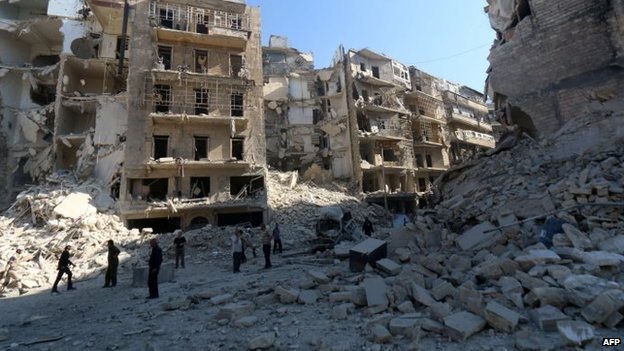
The bombers fly over. At this height, you can see that some are your Government’s air force, others come from one of the superpowers, Russia or the U.S.A., both, as far as you are concerned, as bad as the other. The noise and the dust when a bomb hits the apartment block next to yours is overwhelming. You utter a prayer of thanksgiving that, this time, you have survived. As soon as the drone of the bombers’ engines disappears, you sprint down into the street, looking for your brother, his wife and children. All are gone. Grief fills you like rushing water.

Devastation in Syria – AFP Photo

You go back to your apartment. Your family is there, thank God, but there is no water or electricity. The shops are bombed out, so there is no food. You pack up what you can, photos, documents, a few clothes, in a couple of suitcases and, with your family, start the long walk out of your city towards somewhere, anywhere, that it is safer.

That evening, you take out your tattered Bible and read Matthew 5:1-12. It takes a moment for you to realise that Jesus is directly addressing you: you, grieving the violent deaths of loved ones; you, with your nice life collapsed into rubble; you, without a home or a country you can call your own; you, you are blessed.

Matthew wrote his gospel for a community just like this. The Romans sacked Jerusalem in A.D. 70, killed many of the inhabitants, razed the beautiful Temple to the ground, and hounded the citizens out of the city. Jewish refugees spread out across the Empire looking for somewhere safer, the tiny group of Christians swept along with them.

Matthew believes Jesus’ Sermon on the Mount applies to these shell-shocked refugees with no possessions or place of their own.  They are blessed. Jesus turns upside down the usual idea of blessing. Normally, we think of blessings as things we have – family, personal talents, possessions, a peaceful life – but Jesus re-defines the blessed as poor in spirit, mourning, meek, lacking justice, wanting to make peace, above all, persecuted.

The Temple destroyed – fallen stones from the southwestern wall.

Being blessed, for Jesus, is owning your need. You are blessed if you know you need God’s mercy and safety, because God is present with love and protection. You are blessed if you know that you need to make peace with the world around you, because your neighbours too want to reach out and make peace with you. You are blessed if you know that you don’t have it all and God and God’s creation will provide for you.

For most of history, most of the world has lived in poverty and insecurity. 21st Century Australia, with our prosperity and peace, is an exception. Because we have so much, the power of the Beatitudes doesn’t register strongly with us.

I take these words of Jesus as an invitation, firstly, to enter imaginatively into the lives of the many who are fleeing danger, the many who are hungry, the many who have no shelter. They are more blessed than I am, according to Jesus: is there something I can do to incarnate that blessing for them? Can I use my power and prosperity to help provide safety, food, water, housing?

Secondly, I take Jesus’ words as a warning to me: in my comfortable life, I become complacent. I, too, can learn to see that I cover up my real needs with material comfort. I ask God to show my where are my needs, my lacks, my shortcomings, so that I can learn gratitude for all his blessings.

Invictus? Really?


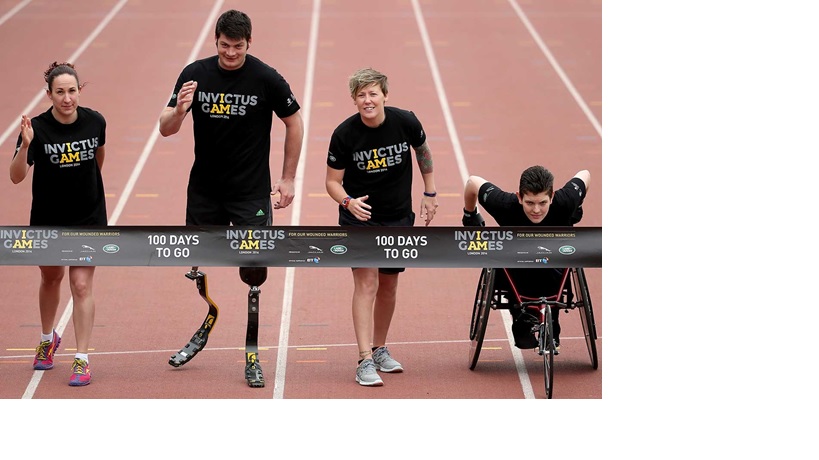
I am troubled by the Invictus Games. Not just the strange ways the Latin participle ‘invictus’ gets used, but by the normalisation of the warrior spirit. The propaganda around the Games makes war seem good.

In a world where it has become part of the culture to thank every member of the military for their ‘service’, and the Invictus Games seems set to increase such thoughtless commentary even more, I know I need to be precise in my criticism.

War is the way of the world. And the world is divided into nation states. I would be crass indeed not to recognise these realities and fail to acknowledge the sacrifices that the military make to keep our nation safe.

I respect individual sailors, soldiers and airmen for their choice and for their part in my freedom. I am in awe of the peace-keeping that Australian forces do around the world. I recognise that much of the activity of the Australian Army in Afghanistan was building schools and hospitals, surely a good legacy.

But war is a sub-optimal activity for humanity. Partly because the nation-state is an imperfect institution – nations both create conditions for our flourishing and also create artificial divisions between human beings – and mainly because the aggression and killing war involves means that we should not consider war the final best way of relating that human beings can find. We live in a fallen world, and war is a symptom of our sinfulness and not of our glory as human beings.

Much of the lethal activity of war is sly. Drones fly invisible above their targets, and ‘clinically’ murder only the targets. Insurgents, who consider themselves patriots, leave death-dealing devices on roadsides. Proxy wars are fought in countries like Syria between the US and Russia, condemning millions of children to a half-life in refugee camps.

I look forward to a world in which nations are superseded by a common humanity and war has given way to peace, where swords are beaten into ploughshares, and the trillions of dollars we spend on armaments are diverted to the benefit of humanity.

This is why I think we should take care with the language we use, and the language we accept, around the Invictus Games. The fighting spirit that restores the wounded to purposeful lives is to be admired. The positive attitudes to disability the Games foster are to be encouraged. We should applaud the new appliances which improve the lives of those living with disability. The contributions the participants made through their service in the armed forces are to be commended.

But any implication that war itself is unambiguously good needs to be challenged. Let us ‘normalise’ disability, by all means. But let us not ‘normalise’ the fact of war. Let us in all ways and in all circumstances question its place in our common life, and decry the death, destruction and waste it brings. Let us aspire to a world without war, a world without the need for warriors, a world where we embrace, not fight, our fellow human beings.

My open letter to the Hon. Julie Bishop MHR


Dear Ms Bishop

I am presumptuously early in congratulating you both on your election, the Coalition’s accession to Government and your appointment as our Foreign Minister. But I do wish you well in representing all of us in the wider world.

Like you, I am appalled by the use by the Assad regime of chemical weapons. I am appalled that they should use such inhumane weapons and I am dumbfounded that they should use them against their own people.

I agree that the rest of the world cannot sit by and by silence condone their use.

However, I cannot see the logical step by which President Obama and the Australian Government believe that the appropriate punitive response is a response of force. A military response, apart from the illegality of attacking a sovereign nation that is not attacking us, reduces us to the level of the Assad government.

Non-violent response to the use of chemical weapons makes a more powerful and far more ethical statement. The rest of the world should not bomb, strafe or murder Syrians. Rather we should

° firstly state our opposition and disgust in response to the Assad regime’s actions through diplomatic channels.

° Secondly the West should better target humanitarian aid so that the real victims of the civil war can at least survive in safety. Standing by the least powerful Syrians, whether in refugee camps or cowering in suburbs in Damascus or Aleppo is a strong condemnation of the war.

° Thirdly the world can use mass media and social media inside and beyond Syria to condemn the actions of the Assad government. Humiliating a tyrant with words is more effective than killing his cousins, which only inflames the situation.

As our future Foreign Minister, Ms Bishop, please avoid adding to blood-shed by urging the world to act ethically and non-violently.

Yours sincerely

(The Rev’d) Ted Witham
Busselton

Episcopal theologian Frank Kirkpatrick has a similar take on Huffington Post.

The Hearth of God


My new translation of an old prayer:

Fill this house with your presence, Loving Lord, and keep far from us all the poison of the enemy. With your holy angels around us, protect us within the circle of your peace, and bless us always with your love. Through Christ Jesus our Lord. Amen.

[The Original:

Visita, quaesumus, Domine, habitionem istam, et omnes insidias inimici ab ea longe repelle: angeli tui sancti habitent in ea, qui nos in pace custodiant, et benediction tua sit super nos semper. Per Christum Iesus Nostrum Dominum. Amen.]

St Francis tells Br. Leo about the incident at Gubbio


My heart in my mouth I set off to meet Wolf.
He filled me with fear. He was Other.
I walked dark into the forest, so deeply looking
That at first I failed to see this Brother.

He appeared to be slinking around a tree.
In shadow, he looked all grey and black.
His eyes though lighted were lifeless,
And I froze, my feet bare on the mountain track.

I stared at the terrible empty eyes.
Brother Wolf still as a stone about to slide.
My eyes entered his and the space between melted.
We became one: my eyes and heart in Wolf’s inside.

He swallowed me whole. Yet I possessed him too.
Confused our hunger for love and humanity.
Crossed our praise of power in life and death.
Gubbio lay below in its simple vulnerability.

We stayed like that for time and a time,
Then slowly, gently in two came apart;
The same, yet different than before.
I burning with hunger and he humbled in heart.

I led him back like a lamb to the village.
Aflame, I rebuked him with voice and with prod.
“Share, show respect, live in harmony.”
The villagers rejoiced. I devoured God.

Ted Witham

Published in Assisi, Volume 2 Issue 2,3, the magazine of St Francis’ College in New York.

Picture by William Schaff.