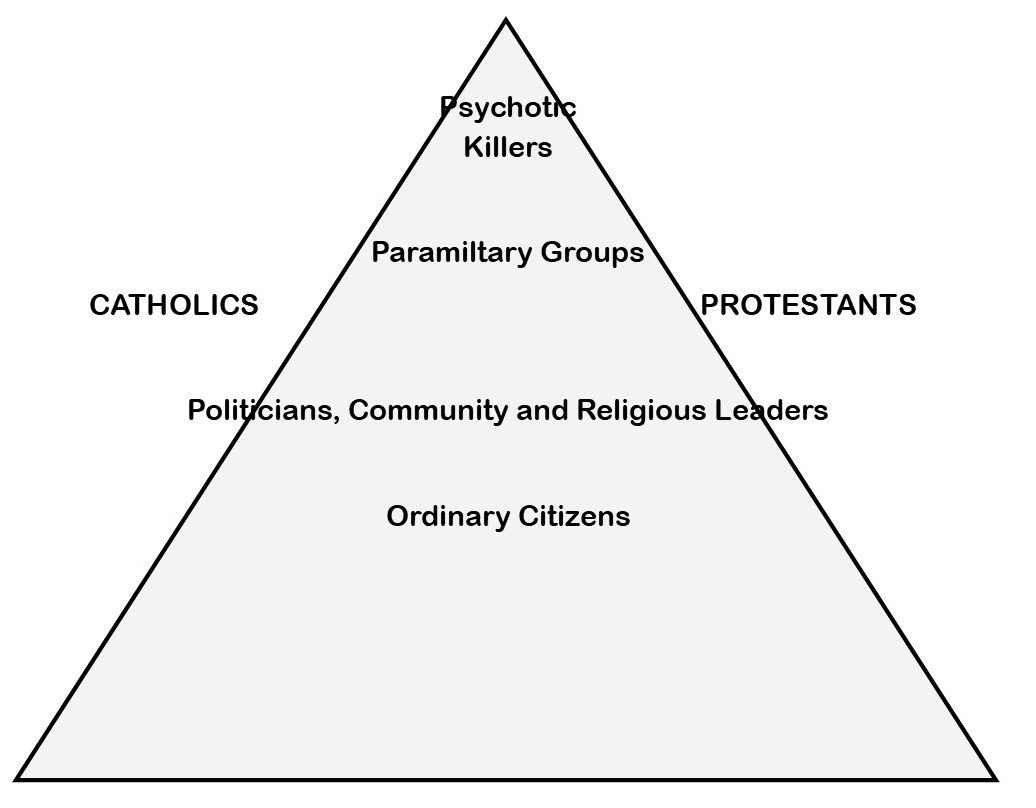
The tips of icebergs are notoriously dangerous: the old saying posits that nine-tenths of the iceberg is under the water. This larger invisible ice stabilises the whole ice structure. Ignoring them is a dangerous choice.
In the past few days politicians have been bandying about the phrase ‘Islamic terror hatred’. They state that preventing such hatred may prevent further shootings. The Government are proclaiming victory. Their new law will make Australian Jews safer.
That may be true – as far as it goes. There is a great deal going on ‘under’ the tip of the iceberg: the psychotic killers who use Islamic language to justify their criminal actions are only the visible iceberg. Laws condemning such statements should have some effect. Reducing the number of guns in the community may also reduce opportunities for killers to act.
These psychotic killers are buoyed by hate groups. Neo-Nazis spout hatred of Jews. I note that they are not Islamic terrorists, but nasty just the same. ISIS may not be an identifiable group in Australia, but its hate speech empowered the killers at Bondi. These militant groups may not be killers, but they give permission to the few who are.
But drill down further into the iceberg, into the Australian community. Politicians, community leaders and religious leaders, myself included, have not been strong enough, persistent enough and clear enough in our condemnation of these hate groups.
As a Christian priest, my clear task is to promote the truth that every person, regardless of race, religion, ethnic background, is made in God’s image, beloved by God, and therefore worthy of respect. God loves each person and weeps over every instance of discrimination and hatred. God doesn’t tolerate it.
Other faith and community leaders may express these values differently. Even these differences are wonderful and to be welcomed.
Our lack of leadership gives permission to the hate groups. We need to own the fact that our condemnation of them has not been strong enough.
And of course, leaders can be strong in promoting community harmony only if the community itself encourages us leaders to speak out against hate and for respect.
As we drill down even further, into the general community, we should examine ourselves: are we harbouring discrimination in our hearts? Are we tainted by not accepting difference ourselves? These are uncomfortable questions, and lead to other questions even more discomforting: do we call out casual racism when we hear it? Do we show acceptance to those of different skin colour or strange religions (strange to us)?
My assessment is that we participate in a society that fails to live up to its values of acceptance and compassion. I cringe when I recognise the sting of the discriminatory attitudes I grew up and I catch myself flinching from different skin colour or distinct dress.
We are a racist mob. And for as long as we don’t challenge it, we let our leaders off the hook. They, in turn, avoid difficult conversation. They fail to condemn. They, in turn, give power to the rhetoric of the hate groups, who, in their turn, give cover to those who would use their rhetoric to kill.
One law won’t stop ‘Islamic terror hatred’ or anti-Muslim diatribes. There’s a rottenness running through our whole society. Of course, not every individual is a racist, but too often I find myself willing, by inaction, to participate in it.
As well as laws against hate speech, we need education for harmony. That is a huge task to get on with, but it is a possible remedy to the danger of the iceberg. The choice to do nothing through every part of the community is the choice to run into more horror like that on the beach at Bondi.
Pyramid courtesy Northern Ireland Mediation
Racism is not a new problem, but all the more reason to tackle it.
To hear Ted preach this sermon, click ‘play’ below.
In the name of the living God, + Father, Son and Holy Spirit.
+++
Pray for the peace of Jerusalem.(Psalm 122:6a)
It’s a kind of code. The writer of the Psalm believes that if Jerusalem has peace, then the whole world will be at peace. ‘Pray for the peace of Jerusalem’ means pray for peace in Jerusalem and everywhere.
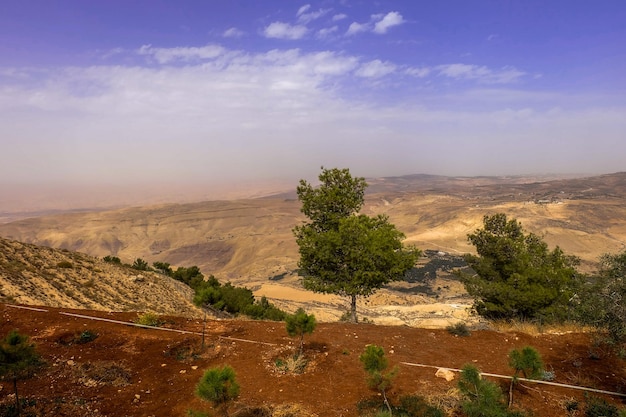
When Moses was 120 years old, the Bible tells us, he climbed Mount Nebo, a mountain in today’s Kingdom of Jordan, about 800 metres above the Plains of Moab. There God showed him all the land that God had promised the children of Israel, from the river to the sea, the river Jordan to the Mediterranean Sea, from Dan in the far north to Gilead near Jerusalem and further south to the Negeb desert. (Deut. 34:1-5).
Then Moses died.
The last thing Moses did in his long life was to look towards the land that God was promising his people. Moses looked forward to how blessed the tribes would be when they crossed the Jordan into Palestine. He paints a picture of how good the future will be for the children of Israel.
13b Blessed by the Lord [is] his land, with the choice gifts of heaven above and of the deep that lies beneath, 14 with the choice fruits of the sun and the rich yield of the months, 15 with the finest produce of the ancient mountains and the abundance of the everlasting hills, 16 with the choice gifts of the earth and its fullness and the favour of the one who dwells on Sinai. (Deuteronomy 33:13b-16 NRSV)
Moses could have sat around the campfire and regaled the Israelites with memories of leading his people out of Egypt. He could tell hoary tales about the 40-year trek through the wilderness, or reprise the joy, and the terror of meeting the living God in the burning bush. But instead, he chose, after 120 years, to go to the high mountain, and to look forward to the future, to the promised land.
Moses couldn’t have prayed for the peace of Jerusalem for the simple reason that Jerusalem didn’t exist until many years later, when King David fortified a tiny Jebusite village and began building the Temple.
What God wants for not only Jerusalem, but for the whole world’s future is peace, ‘shalom’ (שָׁלֹ֥ום). This word appears 237 times in the Old Testament, making shalom a significant concept. It means peace, and shalom is much more than absence of conflict.
Shalom means well-being in all its forms. Shalom means prosperity, but not the prosperity where only a few become wealthy, but prosperity where everyone shares their bounty with one another. Shalom is closer to communism than it is to the capitalism we experience in 2025. The prophet Isaiah reminds us that shalom is the opposite of war, which breeds hatred, fear, and scarcity. Shalom means love-in-action between people.
Pray for the peace of Jerusalem, the psalmist urges us, pray for Jerusalem’s shalom. God will bring peace for Jerusalem out of the fraught and complicated mess in the Middle East today. The promised land that Moses looked forward to stretches from the river to the sea. But today, Palestinians want to be free ‘from the river to the sea.’
These two visions of the future clash. They seem contradictory: how do we pray for the peace of Jerusalem?
How do we pray for peace for a people who were nearly exterminated a generation ago in the Holocaust? There are Palestinians and others like Hamas who say they would like to wipe out the Jewish people. Could it happen again? Never mind the politics: many Jews believe they are surrounded now by the same murderous hatred as they were in 1938.
As Lloyd said last Sunday in his sermon, now it is important for Christians to express solidarity with Jews. Write to Temple David in Mount Lawley; or write to the Perth Hebrew Congregation. Or to both. A simple email will be genuinely appreciated.
And how do we pray for a people who, a generation ago, were pushed out of the land their families had farmed for generations, for thousands of years? The Palestinians believe that Jewish settlement from the river to the sea is a policy that bulldozes them out of the way, often quite literally. What should we pray? How should we support Palestinians and their allies locally? Sending money to an aid agency is one possibility. Gaza desperately needs the basics for life. Or finding out about the rallies held regularly in the city and joining them or supporting them is another.
How do we pray for the peace of Jerusalem? What would bring about the shalom of all the people of the Holy Land? This morning’s readings encourage us to pray with hope. Hope in God. The problems of the Middle East are difficult to fix. But as Christians, we know that God’s intention is for all Jews and all Palestinians to thrive, to enjoy God’s shalom. The divisions will find healing.
We pray with hope, knowing that the future is in God’s hands. We look to the future with hope, learning with a deep confidence that God will meet us there.
Pray for the peace of Jerusalem. We can pray for the peace of Jerusalem only if we pray for peace in our own lives. We ask God to meet us in the conflicts of our families, knowing that some of those fights and divisions seem intractable to us.
We ask God to meet us in our everyday encounters. What do we need to do to foster shalom in our communities, as we encounter people serving us in shops, people on the footpaths, people at homeless respite, and neighbours of all sorts?
As Christians, we have a vocation to be makers of shalom; to be peacemakers. Saint Francis of Assisi, my favourite saint, told his followers to meet everyone with a greeting of peace.
[We should note that we Christians don’t have a monopoly on peacemaking. Jews greet each other with ‘shalom-aka’ and Muslims greet each other ‘As-salamu alaykum’; both saying, ‘peace be with you’.]
We too can make a greeting of peace a holy habit. For most of us, it might be a bit precious to say ‘peace be with you’ or ‘shalom’ every time we greet someone, but we can, for example, sign off emails or end phone conversations with the word ‘Peace’ – and mean it!
In this Eucharist, the priest greets us, ‘The peace of the Lord be with you’, and we respond, ‘And also with you.’ This morning, let us make the peace especially meaningful. Let us pray earnestly for the well-being and security of everyone we greet. Maybe greet fewer people and make sustained eye contact with each one if you can. Take two or three seconds to really see our neighbours, to remember that God delights in each one and seeks their shalom.
+++
As you know, today is the second anniversary of Lloyd’s ordination as a priest (congratulations, Father!), and it is my 50th. At the 8:30 Eucharist, Bryan Shattock marked his 42nd year of priesthood.
We as priests have a special role as a peacemakers.
Firstly, we bid the people we serve to ‘pray for the peace of Jerusalem’, and we bid the people to pray more generally for peace. Temple David replied to me that my email was appreciated because I am a priest. My support as a priest carried your goodwill along with mine.
So, secondly, our role in the community of faith, especially our parish priest, our bishops and the archbishop, is to be bridge-builders.
One of the titles for the Pope is Pontifex, the Latin for ‘bridge-builder’.Pope Leo has an account on X called ‘Pontifex’, and he repeated on social media his first greeting as Pope. This is what the Pontiff said:
“Peace be with you all! This is the first greeting spoken by the Risen Christ, the Good Shepherd. I would like this greeting of peace to resound in your hearts, in your families, and among all people, wherever they may be, in every nation and throughout the world.”(Pope Leo XIV on X)
I’m not saying that priests should be Popes. But like the Pope, the priest builds bridges between people and God.
One of the roles the church entrusts to priests is to speak words of absolution, either to all of us in the Eucharist, or to each of us in private in the Sacrament of Reconciliation, formally and informally. These words of absolution make space for peace with God.
This role of absolving carries with it the responsibility for us priests to make peace, to promote shalom, in the entire community we serve. We should never provoke division or hatred.
But as pontifex, as people entrusted with opening space for God, priests try to discern when to challenge people; when to ask people to fulfil roles for which they feel unworthy or not ready, or when to expose evil and hatred to the light by challenging people to do better, and by challenging, so build peace among people.
One anecdote from my time as a priest at Christ Church Claremont. A few parishioners looked with disapproval at families with young children. They stared at them critically, they shushed them, they rudely moved away from them, and they demanded that parents take their children to the crèche.
One morning during the Eucharist, I saw families being disturbed by these parishioners. There were many whispers and many scowls. I saw one mum on the brink of tears. I got very hot under my dog collar. When we came to the notices at the end, I told the congregation in what I thought were terms everyone could understand, that if they continued to treat kids like that, there would be no church left.
As I shook hands with people leaving, one woman said to me, ‘I’m so glad you said that about the children. Someone has to speak up about how badly behaved they are in church.’
So much for my discernment to challenge, to create connections and shalom between people!
So, we as priests have the privilege of promoting love between the people we serve. Priests speak well of people, knowing that God sees every person as whole, as holy, as complete. Priests who gossip or who speak badly of others are smashing those bridges between people, not building shalom. We try to be peacemakers whenever and wherever we can.
We priests have a special role in building bridges into the future. Like Moses, we look with hope to God’s church in the years ahead. It’s so easy to look at the church and be despondent.
There are fewer churchgoers, we say. There are no young people, we say. We have only seniors who don’t have the energy for organising things, we say. There are divisions tearing Anglicans apart, we say, between St Brendan’s and St Nic’s, reflecting bigger divisions between Canterbury and Sydney. It’s easy for priests to be despondent. It’s easy for priests to think that we must come up with all the solutions.
We should be realists. God’s church is today what it is.
But as priests, we have a responsibility to remind people of a bigger story. God has been faithful to the church for 2,000 years. We have no reason to think God will not continue to grace God’s people with love and harmony, with shalom.Of course God will. God is not going to change or withdraw his love from the church.
Of course, all of us are all called to be bringers of peace, nurturing shalom. In fact, we can all do all the things priests do. But we priests are called to model peacemaking, to make space for peace, to call others to be makers of shalom. It’s a challenge for us, and it’s an extraordinary privilege.
We priests, like Moses on top of Mount Nebo, should be saying to the church:
The church’s future is blessed.
The church is blessed with the choice gifts of heaven above and of the deep that lies beneath; with the finest produce from the faith of those who have gone before us,
their stories, their hymns, their deep spirituality. With the abundance of faith of those who will continue to come,
their joy, their faithfulness to Christ, their willingness to live a life of service; with the choicest gifts of love and shalom
And, above all, the church’s future is blessed with the never-ending favour of the One who dwells with his people.
Pray for the peace of Jerusalem, and pray for your priests.
The world is in a bad way, and sometimes it’s hard to look at it.
I see a child in Gaza, his eyes filled with horror and a question: ‘How could someone do this to us?’ So, it’s not surprising that people are turning away from the horror of the news. The Reuters Institute at Oxford University showed that fewer young people are looking at the news online; down from 89% to 76% in 2024. That’s a huge drop. The proportion of older people, those over 55, are also turning off, but at not such a fast rate, 73 to 68% in 2024.
2024 was the first time ever I’ve turned away from the news because it’s too hard to bear.
My father instilled in me the habit of news. At 7 p.m. every evening in our farmhouse everything stopped. ‘Shhh!’ my mum would say, ‘It’s time for Dad’s news.’
Reflecting on those years – the 1950s – I take a guess at why Dad insisted on listening to the news every day. On our farm our family could go days and weeks without seeing anybody; a stranger’s car was quite an event. Yet Dad wanted to know how the war in Korea was going; what the price of wool was in Albany and Fremantle; what international role Australia was playing when Labor politician Bert Evatt was President of the United Nations; and, most important of course, the cricket!
Dad reminded himself and us, every day at 7 p.m., that we were part of a much bigger world.
It’s been my habit since childhood to stop at 7 p.m. and listen to the ABC news. These days I can see the news as well as hear them read. My TV takes me straight to the Oval Office, or straight to the front in the battle for Ukraine, so the news has possibly more impact than 60 years ago.
And the news is bad. Once upon a time, an Opposition advanced opposing policies to sharpen the Government’s ideas. It was more a contest of ideas than attacking those on the other side. There is little civility now as they demean their opponents and not their policies.
The United States have become the Divided States, and the President, whether you approve of his policies or not, is a convicted criminal, a proven misogynist, a loudmouth and a bully.
Israel is carpet-bombing Gaza. It’s still happening.
Put a pin just about anywhere in the world, and the news is bad.
So I have three words to save the world.
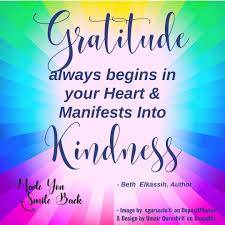
Gratitude,
Awe, and
Kindness.
So many good things are buried under the rubbish of our contemporary life together. Most of us are loved. Most of us have food for today and the confidence that we will have food tomorrow. I live in a new house. I have more clothes than I need. I have a new car with all the latest tech. It’s a van actually, with a hoist for my wheelchair, and both the hoist and the chair are gifts from the Government, my fellow citizens caring for me.
Things work. Trains run, roads are smooth, ships bring all kinds of goods to us. We can visit friends in London or Sydney, and the trip will be safe and the aeroplane seats comfortable; well, not that comfortable.
And gratitude Is a spiritual discipline well worth cultivating. To be thankful, we need to look beneath the world’s garbage and find the good that has been provided for us. We can resolve to be thankful regularly, daily, more often.
I say a short grace before meals. ‘Bless, O Lord, this food to our use, and ourselves to your service. Help us remember those who are hungry and homeless.’ The very word, ‘grace’ means ‘thank you’; gratias in Latin, grazie in Italian. It also means ‘grace’: giving thanks is an act of grace, giving thanks embellishes, it gives style to our way of living.
Gratitude is not just a once-off thank you. It is saying thank you regularly.
Gratitude changes the world. It re-affirms our worth, both the person thanked and the person thanking.
I’m in awe of the beauty in the world. Awe is my second word to save the world.
I have stood in awe of the tingle trees and the karri forest of our southwest. They are awesome.
When we lived in Warnbro, my wife and I often made a point of driving five minutes to Warnbro Beach and watching the sun set over the Indian Ocean, in awe of the change of day to night, in awe of the golds and reds and purples and greys. In awe.
I have been stunned by the astonishing beauty of the impressionist paintings in a museum in France.
With 2,000 other music-lovers, I have stood in the Perth Concert Hall clapping the West Australian Symphony Orchestra after it played extraordinary and beautiful music.
The craft of popular artists like Taylor Swifts and TV dramas also lift morale and bring us to awe.
There is so much beauty in the world, created by our God and created by humans, which brings us to awe. That awe can lift our spirits and change the world. Awe and wonder increase the beauty in the world as they prompt us to see the beauty in other people, other scenery, other art.
Awe changes the world.
Kindness, too, will change the world.
I call them angels. I was driving my van in the Busselton Coles carpark and I turned too sharply over a high kerb, and hooked a rear wheel. I couldn’t move forwards or backwards. While I stood there scratching my head, six burly guys in hi-vis shirts and big boots came walking towards me. These tradies surrounded the car. One said, ‘One …, two …, three …, LIFT,’ and the van was free. The tradies waited while I drove off. They were making sure that I didn’t repeat my bad driving. I watched them in my rear-vision mirrors as they walked off in different directions. These kind tradies did not even know each other! They all just banded together in an act of kindness.
I remember this 10 years later. Whether we are the beneficiary, as I was, or one of the angels, or one of those watching in the carpark, when we see kindness like that, the world changes. We all feel more confident that we live in a community where people help each other out.
We see reports of people rescuing their neighbours from their flooded houses: kindness changing the world. We see people taking next door’s bin to the verge when the owner of the bin can’t manage: kindness changing the world. We see it in the smile of the teenager helping someone lift their shopping into their car: kindness changing the world.
Gratitude; awe; kindness. These three words have power. I used to worry that people might find them too touchy-feely, and of little value. But I know now that kindness, gratitude and awe are far more powerful than the demonic hatred, violence and ugliness that dominates the seven o’clock news. We still need to watch the news; we still need to know where the world is at. But when it seems that evildoing will never end, we remind ourselves that hatred, brutality and greed will come to an end as they are overcome by the more powerful forces of love. Gratitude, awe and kindness will save the world.
The badge has arrived in the mail. Although the package was quite small it may provoke savage reactions and will certainly be misunderstood.
Years ago, I was much more politically active and wore badges to signal my involvement in different causes. I have kept a cloth bag of badges made with those old, primitive badge-makers. I shake them out onto the table, and I see now I supported the Campaign Against Racial Exploitation, Amnesty International, the Wilderness Society and all the predictable leftist crusades.
But this new badge is partly to protest the media who have so manipulated our sympathy that we lose our wider view and demonise a whole group of society.
The badge is a blue star of David on a white background. I will be wearing Israel’s colours, Israel’s symbol.
But why?
It may seem perverse, then, to wear a badge proclaiming. עם ישראל חי” (om Israel chai – let Israel live): how could I show support for a nation set on the annihilation of another?
The media encourage us to make a moral calculation: on October 7th in 2023, 1,200 Israeli citizens were killed and 240 were abducted by Hamas. In defending their country, Israelis killed 1,500 Palestinian terrorists. We want to cry out, ‘Isn’t that enough killing? Isn’t an additional 40,000 Palestinian deaths and flattening of homes overkill?’
Possibly like you, I also wonder whether razing Gaza is a precursor, as President Trump advocates, for wholesale dispossession. ‘Take them somewhere nice,’ he says with a blasé smile, their fate evidently irrelevant to him.
Like you, I have long been aghast at Israel’s harassing Palestinians and clearing them from the West Bank, and the current intensification of the IDF’s activity in the refugee camps where, apparently, terrorists peek out from under every Palestinian bed.
But consider Israel. I see a nation lashing out in fear. Many Israelis are children and grandchildren of the Holocaust. They are terrified that they will again be wiped out. They feel abandoned by the Western nations that created the State of Israel 76 years ago. Their only friend seems to be the US, and that friendship under President Trump now seems brittle too.
For me, that cannot justify Israel’s behaviour in Gaza. But it goes a long way to explain it. And we have rarely seen that mortal dread expressed in the media. So I support Israel as it recoils from violence done to it. It is scared for its life.
Secondly, there is the agony of the hostages; their own agony, but also the agony of their loved ones and fellow citizens. They’ve ached for them to be returned. They’ve raged against their Government for continually prioritising the military response over bringing the hostages home. I stand with all the hostage families. They’re Israelis.
Thirdly, Israel’s Central Bureau of Statistics counts over 2 million Arab citizens. One Israeli citizen in every five is Arab or Palestinian. At least one Arab is a member of the Knesset, Israel’s parliament. These Israelis are harassed, interrogated and imprisoned if they speak a word against Israel’s actions in Gaza. But they’re Israelis.
Lastly, not all Israelis approve of their Prime Minister. They see his political calculus. He wants to cling to power. He needs to stay in power to forestall criminal proceedings against him. Ordinary Israelis feel the whole gamut of reactions to Netanyahu, from approval to active support, but also from disappointment to feeling betrayed by him. I stand with the critics of the Israeli government.
I like Jewish culture. At its best Judaism is a powerful moral and intellectual force in the world. I like the whole gamut of Jewish ritual from the blast of the shofar to Sabbath meals. It’s no accident that Jews are over-represented in fields as diverse as medicine and music. Judaism was the cradle of Christianity.
Judaism produced the extraordinary collection of books we call the Old Testament. The Jewish Scriptures contain amazing poetry, stunning philosophy and intriguing theology. I have invested years learning Hebrew and studying the pages of these fascinating books from Genesis to Malachi.
I stand with the Jews’ legacy as builders of an ethical and aesthetic civilisation.
I look into my heart. In the end, I cannot but wear the blue and white badge even it offends random observers. I cannot but stand with Israel.
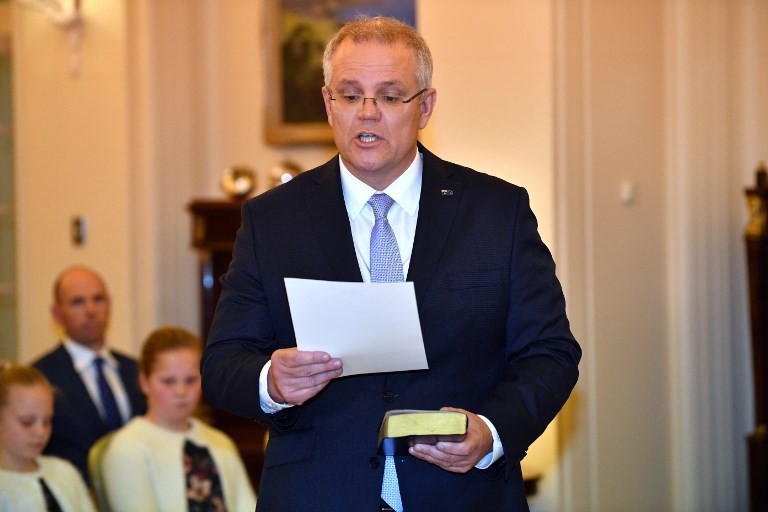
In Church this morning, someone thanked God for our new Christian Prime Minister. I felt disappointed by this rush of enthusiasm. Before I lose my readers, let me state that I am very happy that Mr Morrison is a regular church-goer. I rejoice that God calls Christians to the vocation of politics: our country needs them. However, I reject the implied criticism of Mr Turnbull. For Scott Morrison’s faith to be a welcome novelty is simultaneously a judgement that Malcolm Turnbull is not one.
Mr Turnbull converted to Roman Catholicism. He chose not to politicise his faith. In his recent book God is Good For You, in interviews with Malcolm Turnbull, journalist Greg Sheridan ‘was astonished at the depth of his knowledge of Catholic theology.’ Sheridan comments that Turnbull ‘affirms his belief if asked, nonetheless doesn’t talk publicly about religion all that much, but he very frequently makes reference to love. Perhaps he uses the word ‘love’ more than any previous prime minister.’ (p. 175)
Turnbull’s use of the word ‘love’ is significant as the way he parlayed his faith into the public realm. Even his enemies have noticed this intensely theological language. In fact, one of his detractors mocked his use of ‘love’ in the wake of his defeat. But Turnbull chose not to use his faith as the public face of his policy making. He believed that arguments in the public sphere must stand on their own merits and not on their theological rationale.
Bill Shorten, too, is a convert, in his case from Catholicism to Anglicanism, the faith of his wife Chloe. Shorten is a product of a Jesuit school. Sheridan, no Labor apologist, is impressed by Mr Shorten’s’ serious knowledge’ of Christianity. Shorten takes into the public realm a quote from the legendary Jesuit Pedro Arrupe, ‘to be men for others’ as a key theological virtue. But like Malcolm Turnbull, Bill Shorten disciplines the boundary between his faith and public life.
The stance of Turnbull and Shorten may even make us question politicians who let their faith be known because it is good politics. It may (or may not) increase Mr Morrison’s vote, but it won’t justify the decisions he makes a Prime Minister.
So, all power to PM ‘ScoMo’. I will pray for him as duty bound, and with added interest because he is a fellow-believer. But I thank God for Mr Turnbull too, and for all who choose to serve the community as politicians. It’s a hard job, and they need all the help they can get.
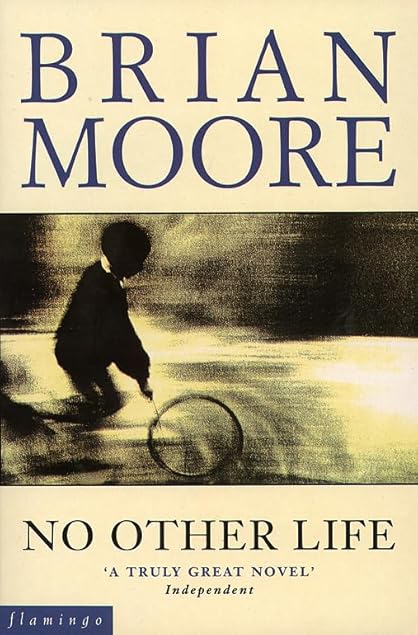
Brian Moore, No Other Life, London: Flamingo 1994. Paperback 216 pages,
ISBN 9780006546924.
In W.A. Public Library system.
Reviewed by Ted Witham
Brian Moore (1921 – 1999) was a well-known writer of the 1980s and 1990s. He wrote the 1991 screenplay based on his novel, Black Robe, exploring the Jesuit missions with Native Americans in frontier Canada. Moore was short-listed three times for the Booker Prize.
In No Other Life, the black robes of Jesuits are exchanged for the white robes of the White Augustinians, and the cold places of Canada for the warmth of Ganae. a desperately poor Caribbean island.
The Augustinian Fathers run a school where the mulâtre (mixed-race) elite educate their children. The noirs, the blacks, are kept in wrenching poverty by corruption. The island has always been run by a mulâtre dictator backed by the army.
Father Paul Michel wants to increase the number of black children at the school. He rescues a talented boy, Jeannot, from abject poverty. Jeannot is a single-minded boy who declares he wants to be a priest like his mentor. He eventually joins the Augustinians but runs a parish for the poor rather than work in the Order’s school. Jeannot’s oratory raises the hopes of the poor and he is elected President. But the effects of his leadership are ambiguous: is he an old-style socialist rabble-rouser, or is he a saint? The locals think he is their Messiah.
When the Augustinians expel Jeannot, he turns to his mentor. He implies that he would rather give up everything than be stripped of his priesthood. There is ‘no other life’.
Father Paul finds himself at the heart of a dilemma: is a priest an educator of the rich, or the servant of the poor? Is faith a pre-requisite for the priestly life, and what happens if a priest loses it? From the moment he meets Jeannot he feels a bond with him, but as their friendship grows, Father Paul learns how to love. When violence and chaos erupt from the actions of his friend Father Paul asks how far does loyal love extend?
This is a gripping and beautiful story, written with a sure touch. The events on the island of Ganae are presented in a fascinating manner, but the themes of ambition and identity resonate everywhere.
No Other Life is certainly a book for priests. What is the core of Christian priesthood, and by extension, Christian practice? Is there ‘no other life’ that we can imagine for ourselves? And if not, that goes to our vocation and identity.
But is also a novel that will draw in any person and open us to the love that is in our midst even when we feel it is absent.
At the end of June 1971, I found myself in ward 52 of Royal Melbourne Hospital, prescribed complete bed rest and given heavy duty drugs to help my back pain. At the same time, the Moratorium Movement was planning its third march to protest against the Vietnam War. My hospital regime allowed visitors for an hour a day, between 7 and 8 p.m. Several of my fellow-theological students were involved in the Moratorium and were keen to recruit me. It was my first opportunity to march: I had been in country WA for the previous two marches and had not been required to make a decision.
‘We could put you in a wheelchair and push you down Swanston Street,’ my friends said, as though it was a student lark. But it was far more serious than that. I was torn, but in the end, when June 30 came around, I was too unwell to participate. At 7 p.m. that night I saw the black and white images on TV and heard my friends’ first-hand reports of the 100,000 citizens who marched to the Shrine on St Kilda Road.
Melbourne Moratorium (courtesy ABC)
In the late 60s and on into the 70s many people, particularly those of us who were students, had to decide whether or not to take part in protests. These were not easy or automatic decisions. We saw people arrested and locked up at protests and knew prison was a possible consequence of civil disobedience. We heard of students in Queensland being jailed simply for gathering. ‘Don’t bother applying for a march permit,’ premier Bjelke-Peterson told potential protestors, ‘You won’t get one. That’s government policy now!’
We read about Martin Luther King Jr and his time in Birmingham City Jail in 1963. Founder of the Plowshares Movement, Catholic priest Dan Berrigan, who had been a leader in the anti-Vietnam war movement went to jail for trespass on and damage to the General Electric nuclear missile facility in Pennsylvania.
Mrs Bessie Riscbieth OBE, JP
A prototypical West Australian protestor was elegant and wealthy Mrs Bessie Rischbieth J.P., O.B.E. Mrs Rischbieth, a theosophist and feminist, was a grande dame from upmarket Peppermint Grove. I remember her in 1966 aged 89 wading into the Swan River in front of the bulldozers as her attempt to prevent the filling in of the river for the building of the Narrows Bridge. While she did not succeed there, her direct action earlier stopped the construction of a swimming pool in Kings Park. In court Mrs Rischbieth was haughtily defiant, but paid her fines. I don’t recall if she was ever sentenced to prison. it’s unlikely. No judge in small town Perth would have risked the fuss!
I learned two things from these protest movements: protestors should expect the normal consequences for their illegal actions. Just because their protests are morally right does not excuse them from the normal legal accountabilities. In fact, doing time is a way of demonstrating moral seriousness. Secondly, protestors need to be part of an organisation, people who can keep them honest, protect them in ugly situations and support them through the processes of court and prison. Solo protestors are extremely vulnerable to early burnout.
I am encouraged by the new round of protests this century, including by groups working to protect the environment. Sea Shepherd and Greenpeace clearly know the history of the anti-Vietnam War and anti-nuclear protests, and like Bessie Rischbieth and Old Testament prophets, take symbolic actions in the very places where the environment is at risk.
We are poorly served by some of the correspondents writing reports of Sea Shepherd and Greenpeace. They seem ignorant of the history of protest. They seem to believe that the protestors think they should be above the law. For the ‘Arctic 30’ (those detained by Russia for their protests against the Gazpron oilrig), the media have been strident in condemning Russia for their over-reaction, but they have not praised the protestors for the legal risks they ran. They have not even appraised their moral stance. The end result is that they denigrate the moral seriousness of the protestors.
Greenpeace provide strong support to those detained and to their families publicly and it would seem privately, but parts of the media don’t get the process.
I’d like those reporters to read about Bessie Rischbieth, about the Berrigan brothers, Martin Luther King Jr, the Palm Sunday marches, Harvey Milk, all the heroes who have made ours a freer society. Maybe then they could more accurately evaluate the efforts of those who put their lives on the line today to make the world a better and safer place.
I am presumptuously early in congratulating you both on your election, the Coalition’s accession to Government and your appointment as our Foreign Minister. But I do wish you well in representing all of us in the wider world.
Like you, I am appalled by the use by the Assad regime of chemical weapons. I am appalled that they should use such inhumane weapons and I am dumbfounded that they should use them against their own people.
I agree that the rest of the world cannot sit by and by silence condone their use.
However, I cannot see the logical step by which President Obama and the Australian Government believe that the appropriate punitive response is a response of force. A military response, apart from the illegality of attacking a sovereign nation that is not attacking us, reduces us to the level of the Assad government.
Non-violent response to the use of chemical weapons makes a more powerful and far more ethical statement. The rest of the world should not bomb, strafe or murder Syrians. Rather we should
° firstly state our opposition and disgust in response to the Assad regime’s actions through diplomatic channels.
° Secondly the West should better target humanitarian aid so that the real victims of the civil war can at least survive in safety. Standing by the least powerful Syrians, whether in refugee camps or cowering in suburbs in Damascus or Aleppo is a strong condemnation of the war.
° Thirdly the world can use mass media and social media inside and beyond Syria to condemn the actions of the Assad government. Humiliating a tyrant with words is more effective than killing his cousins, which only inflames the situation.
As our future Foreign Minister, Ms Bishop, please avoid adding to blood-shed by urging the world to act ethically and non-violently.
Yours sincerely
(The Rev’d) Ted Witham
Busselton
Episcopal theologian Frank Kirkpatrick has a similar take on Huffington Post.
Michelle Cohen Corasanti, The Almond Tree, Reading, UK: Garnet Publishing
Paperback from $AUD 11.22 (online) or Kindle E-book: $US 3.49
Reviewed by Ted Witham
I wept frequently while reading this outstanding first novel.
The Almond Tree tells the story of Ichmad Hamid, a gifted Palestinian boy whose family home is destroyed to make way for Jewish settlers. They lose their orchard and, after some years in a tent, are able to build a one-room cement-block house on the tiny patch of land the Israelis leave for them. Ichmad’s beloved Baba is sent to prison for 14 years after 12-year-old Ichmad helps radicals bury weapons in their backyard. Their small home and all its possessions are again destroyed by Israeli soldiers.
In his father’s absence, Ichmad takes on the role of provider for his family, working on Israeli settler construction sites for far less wages than the suspicious Iraqis and Russians who work with him. Following his father’s advice Ichmad tries to choose always the way of peace, and despite endless provocations, not to return hatred for hatred.
Teacher Mohammad offers to tutor the gifted boy every evening after work. Ichmad wins a scholarship in Maths and Physics to Hebrew University, and sets out on a stellar academic career. He collaborates with his Professor, a bitter Jew whose family was murdered in Auschwitz. Eventually the two become close friends and win the Nobel Prize jointly for their work on nanotechnology.
Ichmad continues to support his family on his Professor’s wage at Harvard, and maintains close contact with his village. He identifies with their life-giving almond tree with its roots deep in Palestinian soil. At every turn in his story he encounters tragedy, much of it caused by the brutality of Israeli occupation, and Ichmad’s desire to choose peace almost always – eventually – turns the tragedies into something deeper and positive for his people and his family.
This is a powerful first novel by a courageous Jewish-American woman. I did not need to be persuaded that the occupation of Palestine is anything but a disaster for the Palestinians. It would be wonderful if this novel helped others to see the human cost of providing a secure and secular state for the Jewish people. It may just be sufficiently powerful to do so.







 Mind Journeys