
Dislocated
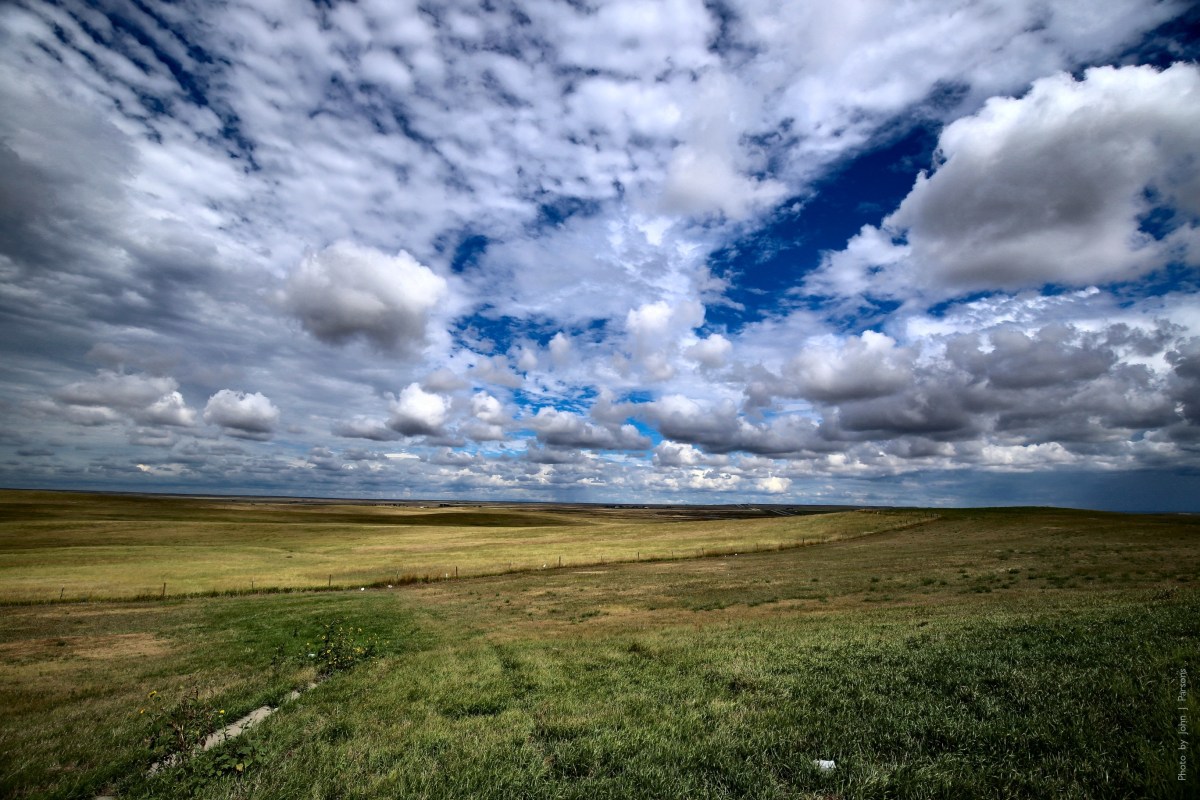
There was a two-roomed school in Moorine Rock, and an old weatherboard hall. There are a few other buildings, including a newly restored hotel, but there is nothing big about Moorine Rock. It’s not a town, just a tiny string of buildings along the Great Eastern Highway 400 km from Perth on the way to Southern Cross.
I was there to collect a ute. Each month for 18 months or so in the mid-1990s, I took the Prospector train to Southern Cross to lead worship in two or three centres and mentor the two farmers who were studying in the parish-based TEAM program.
The parish would organise a car for me. In an average Southern Cross weekend, I would drive several hundreds of kilometres along lonely roads, huge flat paddocks of wheat or canola my only company, in order to take services in Southern Cross and tiny settlements like Bodallin and Mount Walker, each with a half-dozen worshippers.
And on this night, a parishioner had brought me to Moorine Rock to collect my transport. It was convenient because there was a party in the hall, and I could meet some new people who weren’t churchgoers. In theory, a good idea. I thought I would be up for the social challenge, but it didn’t turn out that way.
I was nearly punched.
A line-dancing troupe from Perth had visited the school that afternoon. It stayed on to provide the music for the evening. The Principal chatted with me. Her 12 pupils were lined up on the dance floor to show their parents the moves they had learned that day.
I knew no one. I looked around the hall. There were a couple of dozen mothers chatting in twos and threes. A few of the men lounged against doorframes their fists grasping cold cans of beer. Other men were outside, all in earnest conversations. I overheard ‘wool prices’, ‘canola harvest’, ‘sheep sales’. I thought I was at home in a farming community. I thought this was like the little town where I grew up. But I knew that breaking into tightly knit conversations as a stranger was always hard. I thought I was up to the social challenge.
The music started up again after a break. The Principal called for everyone to get on the floor and join the line dancing. Two or three of the women joined in. They’d done this before. A young man from the Sons of Gwalia mine, an outsider, merrily drunk and hyperactive, took himself to the floor energetically. Not one of the farmers made a move towards the dance floor.
The Principal dragged me onto the floor. Elbows linked, we jigged in our line. The dancing was quite fun, but I noticed that the young miner and I were the only males on the floor. It seemed men didn’t dance.
I scooted back and forth for 15 minutes or so until the Principal released me. I thought I would join a conversation outside in the black night around the barbecues. I stood outside two of the groups waiting for the opportunity to jump into the conversation, either verbally, or physically. I wasn’t there it seemed.
I thought of Tambellup. It was many years since I had seen such strict apartheid: women inside, men outside.
I wandered back inside and tried to join the women’s talk. One group was more inviting and allowed me to move into their circle. But I could find nothing to contribute to their talk of babies and home duties and being a woman on these vast farms. It was on that night I learned that many women in their forties with growing families and solid farm responsibilities were not allowed access to money. Their fathers-in-law insisted that he had sole control of the bank accounts. The women were welcome to shop, but every little item had to go on the farm account – and then be accounted for.
Moorine Rock was in no danger of being liberated, it seemed.
Pretty soon, I gave up trying to socialise. I grabbed a can of Sprite and leaned against a wall: an involuntary wallflower. One of the farmers’ wives took pity and asked me who I was and what I did. The usual small talk. Very soon, we were into her rare trips to Perth. I told her about my travels. She had cruised in Europe and around Greenland. Suddenly there was a man between us, his face red.
‘Let me have my woman back.’ He said it quietly, but I could hear the menace in his voice.
‘Sorry about my husband,’ she said as he led her away.
I assumed that he was drunk and that this was a one-off situation. I still thought I could handle the social challenge.
I repeated the very same mistake five minutes later. This time the angry husband was about to hit me, but his wife restrained him.
I decided it was time to leave. I didn’t fit in. I couldn’t meet the social challenge. I headed for the front door of the hall and out into the night. I had to find the ute. I had to be able to locate the ignition. If I couldn’t succeed in those two challenges, I would have the humiliation of having to go and ask one of the men for help.
I quickly picked out the only ute. I slid into the dark cab, felt for the key slot, started the motor and flicked the headlights on. Three challenges in the pitch dark, really: one, find the ute, two, put the key into the ignition slot, and three, find the headlight switch. Three challenges met. Much easier than the social challenge.
I followed the dirt track from the hall to the highway and piloted the rattly ute to my accommodation in Southern Cross.
I was glad to be alone.
On Monday, back in Perth, I visited my physio. The boot-scooting had put my back out . Dislocated – badly.
ooooooooooooo
Photo credit: jjparsonsphotography

 Mind Journeys