I didn’t expect, at age 70, to have to contend again with the dark. Not the dark of my childhood, when I feared a dressing gown draped over the door was an alien axe-wielding murderer, but the darkness of not knowing the God of my Christian faith.
Each time the darkness comes, I find it is easy to forget all I have been taught. Each time the darkness comes, I feel shame; shame as if the relationship with God I thought I had was sham; shame as if the faith I have taught I no longer experience; shame at the thought of having to profess publicly that I was wrong.
Along with the shame comes fear. At age 70, my thoughts turn healthily to my coming death and whatever follows. What if there is no “life after death”? What if there is no “beatific vision”? What if there is nothing? What value then do I have?
So it is good to be reminded by French Franciscan Thaddée Matura, in his essay An Ardent Absence, that darkness in Christian life is the norm, that grand encounters with God are infrequent and fleeting. Matura recalls us to the teaching that God is a fiery furnace, and if we were to encounter him as he is, we would immediately be burnt to nothing. It is due to his grace that we do not see him face-to-face in this lifetime.
Father Matura also reminds us that despite the darkness, we can continue to follow the paths to God to which we are committed. We are to prepare for the beatific vision, for the great meeting that will raise us to God ’s presence.
The darkness is hard. As we pass through it, we do not know what we are doing. We experience both fear and boredom. We may encounter the ‘plague that destroys at noonday’ (Psalm 91), the acedie of the desert fathers and mothers, as we question the whole of Christian life; we wonder if this darkness is the normal, then why? Why?
But I hang on to those fleeting moments of revelation, those traces, hints of reality. A realisation grew through 1969, the year of the Leighton Ford crusade, that friendship with Christ is the heart of Christian living. I remind myself of the dove I saw [in my mind] flying up and expanding its wings over the congregation after we had received communion on the Fourth Sunday in Easter in 1974 in St Mark’s, Fitzroy. I revisit my tears when, meditating in the hard seats in the chapel in Perth’s Wollaston College, I felt enveloped by love. I feel my heart jump when the icon of St Francis behind the chapel of the Franciscan Missionaries of Mary in Brisbane appeared to move and gaze back at me.
And I can simply be affirmed by Thaddée Matura, as I am by St John of the Cross, by St Francis, by St Richard of Victor, by a lengthy list of Christian teachers, that we make our way through this world blind, in darkness, and our joy is real — but anticipatory.
George
Appleton, the prayerful Archbishop of Perth during the 1960s, once
wrote, ‘I go on in cold faith only because you push me.’ That push from an-Other keeps me going.
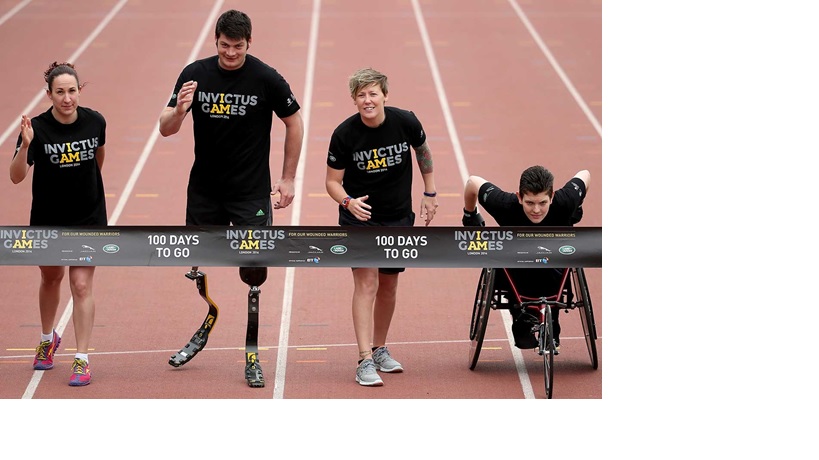
I am troubled by the Invictus Games. Not just the strange ways the Latin participle ‘invictus’ gets used, but by the normalisation of the warrior spirit. The propaganda around the Games makes war seem good.
In a world where it has become part of the culture to thank every member of the military for their ‘service’, and the Invictus Games seems set to increase such thoughtless commentary even more, I know I need to be precise in my criticism.
War is the way of the world. And the world is divided into nation states. I would be crass indeed not to recognise these realities and fail to acknowledge the sacrifices that the military make to keep our nation safe.
I respect individual sailors, soldiers and airmen for their choice and for their part in my freedom. I am in awe of the peace-keeping that Australian forces do around the world. I recognise that much of the activity of the Australian Army in Afghanistan was building schools and hospitals, surely a good legacy.
But war is a sub-optimal activity for humanity. Partly because the nation-state is an imperfect institution – nations both create conditions for our flourishing and also create artificial divisions between human beings – and mainly because the aggression and killing war involves means that we should not consider war the final best way of relating that human beings can find. We live in a fallen world, and war is a symptom of our sinfulness and not of our glory as human beings.
Much of the lethal activity of war is sly. Drones fly invisible above their targets, and ‘clinically’ murder only the targets. Insurgents, who consider themselves patriots, leave death-dealing devices on roadsides. Proxy wars are fought in countries like Syria between the US and Russia, condemning millions of children to a half-life in refugee camps.
I look forward to a world in which nations are superseded by a common humanity and war has given way to peace, where swords are beaten into ploughshares, and the trillions of dollars we spend on armaments are diverted to the benefit of humanity.
This is why I think we should take care with the language we use, and the language we accept, around the Invictus Games. The fighting spirit that restores the wounded to purposeful lives is to be admired. The positive attitudes to disability the Games foster are to be encouraged. We should applaud the new appliances which improve the lives of those living with disability. The contributions the participants made through their service in the armed forces are to be commended.
But any implication that war itself is unambiguously good needs to be challenged. Let us ‘normalise’ disability, by all means. But let us not ‘normalise’ the fact of war. Let us in all ways and in all circumstances question its place in our common life, and decry the death, destruction and waste it brings. Let us aspire to a world without war, a world without the need for warriors, a world where we embrace, not fight, our fellow human beings.
In the name of the living God + Father, Son, and Holy Spirit. Amen.
The land where Jesus lived, the land of Palestine/Israel, consists of the Jordan Valley, which is a little bit green, and rocky hills and dry landforms. Jerusalem was the only city in Jesus’s day, so for the most part, there were no roads. Even the Roman road avoided Jerusalem and crossed the Jordan into Galilee in the northern extreme of the province.
The topsoil was thin, and there were always rocks that poked through the topsoil. If you weren’t watching, these obtruding rocks would trip you up. A rock like this was called a skandalon. We get the English word ‘scandal’ from this Greek word. A ‘scandal’ is something, like one of those rocks, that crops up unexpectedly and makes us stumble or fall. A scandal like the child abuse scandals can make us lose faith; we don’t trust the person involved anymore, we feel betrayed and we re-consider what we think of the person’s character.
Skandaloi – rocky hills of the Negev
In this morning’s epistle and gospel, scandals are there, but somewhat hidden in the English translation. We hear of ‘obstacles’ to faith. We hear how Jews are stopped from believing because the signs are wrong. Gentiles are stopped from believing because they don’t think Christian preaching measures up to their sophisticated world of philosophy. Or in the original Greek, the lack of proper signs is a skandalon, a scandal for Jews, the lack of wisdom is a skandalon, a scandal for Gentiles.
The signs were an obstacle for Jews believing. They indicated the wrong sort of Messiah; the Jews wanted a political or military Messiah, the sign of the cross indicates a Messiah for whom love and forgiveness were the winning combination, not defeat of the Romans and the unity of the Jewish nation.
The Gentiles looked for wisdom, the sort of wisdom they found in debates and complex philosophy. We know that the New Testament has depths of interpretation and meaning, but the Gentiles at the time heard only a simple and direct preaching of the cross.
Having tripped up on the issue of philosophy, the Gentiles then found other factors to be scandalised about. Christians appealed to the poor and weak, not to the masters and house-holders and the powerful. How could that make sense in a patriarchal world where the more power you had the wiser you were, and the wiser you were the more powerful? Women and slaves and children had little power. They could not possibly be wise, could they?
So the question Paul poses to us 2,000 years later is this: what is skandalon for us? What crops up unexpectedly to prevent you from believing, or believing more fully? For you, it could be – I know it is for some people – that the cross is a scandal. If Jesus was exterminated like a criminal, wasn’t that losing rather than winning? For you it could be, as it is for some people, that the cross is ugly, that Jesus’s people, tax-collectors and prostitutes, are not proper advertisements for God.
What obstacle do you trip over?
Let us turn to Mark’s Gospel where Jesus paints a picture of sin creating a skandalon. If your hand is a skandalon, cut it off. We don’t need much imagination to envisage our hand becoming a scandal; imagine the sins we can do with our hands – theft, murder, assault, fiddling our tax returns.
Perhaps we have to think a little harder to imagine our eye becoming a scandal, but we know from other things Jesus said that it is not only what we look at, but how we look, that can be a scandal, an obstacle to our faith. Looking at others’ spouses sexually, with lust, looking at valuable property enviously, in other words using our eye to desire things that if we possessed them would be harmful to others and ruin ourselves – that can become a scandal.
But what is this second sort of skandalon? This is not being tripped up by our wrong expectations; this is being tripped up by our own sinful actions. Imagine someone using his hand to enter fraudulent details on the internet, then he feels guilty for stealing. He is tripped up looking at himself as a thief, as a sinner, as guilty. Uh-oh! He should cut off his hand, perhaps by restricting his internet access, then repent, repay the money and re-consider his desire to be ahead in money or material things. Otherwise he will slide into a hell of self-recrimination, self-loathing and become so self-absorbed that he is unable to be in relationship with others. The path to ruin is too easy a story to write.
Jesus makes us squirm by compelling us to ask ourselves what we trip over with the actions of our hand and our eye. What ruinous actions could be our obstacles to faith?
The gospel today gives three remedies for skandalon; three prescriptions for removing these obstacles to faith.
The first is accepting a cup of water because of our faith. If we can’t be kind to others, Jesus suggests we reflect on the kindness of others to us. What does that mean? How does that recall us to our Christian standards and believing? What does their kindness say about the possibility of Christ working through that person, and through ourselves?
The second is a little strange on the surface. Jesus says, ‘Have salt in yourselves.’ Don’t lose your saltiness. There is a cluster of good things, like salt, that we should take into ourselves that will restore us to faith.
Recall the fire, the sharp burning taste, that is in salt. Allow the fire of appropriate criticism to burn away our inclination to turn away from God. It may be a member of your family or a stranger in the street, but when someone criticises our actions, we should welcome it as from God himself.
Secondly, let the strangeness of the Gospel change us. We say we are trying to be more like Christ. The implication is that if we hear something in the Gospel or in the words of other Christians that seem strange, that may well be because it points to unfamiliar characteristics, unfamiliar because it is not yet part of us, but is part of the Gospel. Welcome the strangeness of the Gospel.
Thirdly, a little sprinkle of salt affects the taste of the whole meal. Let the Gospel spread through the whole of your life so that every aspect reflects the love of God.
Last Thursday we celebrated the Feast of Saint Francis of Assisi, a hero and mentor of mine. Francis grew up thinking the church then, 800 years ago, was a scandal. Its main focus was wealth and the power needed to protect that wealth. For example, there was a large Benedictine monastery up the hill from Assisi. When Benedictine property anywhere in the region was threatened, the monks would down their farming tools, their hoes and scythes, and pick up swords. Even the Pope had a large and busy army.
As a cloth merchant, Francis had experienced firsthand how bishops loved the finest cloth for their vestments! Many of the clergy were squeezing peasants for land rents and whatever other corruption with which they could enrich themselves.
The church then was a scandal. St Francis did three things: firstly, he embraced poverty as a way of life. This meant for him that he constantly experienced the generosity of others. Francis believed that when he experienced people’s generosity he was experiencing God’s generosity through them.
Secondly, Francis could be weird, screwy, pazzo as his fellow Italians said. From
Saint Francis embraces the Christ on the cross – wooden sculpture in the guest house. Society of St Francis, Brisbane
eccentric dress to over-the-top acted parables, like spinning at a crossroads until you were dizzy to decide which way ahead. But there was gospel in his madness. In dressing down like the worst beggar, Francis reminds us of our constant concern about our appearance and what it says about ourselves. Not necessary in God’s kingdom.
In spinning at a crossroads for direction, Francis reminds us how little control we have over our own decisions. For him this points to the need for greater and greater trust in God.
Thirdly Francis was constantly doing little random acts of kindness, bidding people peace, smiling, listening, leaving behind little scraps of gospel wherever he walked, salting the world with hints of Jesus.
What we need to do to hear the gospel through the scandals will be different than Francis in the 13th century. But just like Francis, just like this morning’s readings we too need to:
Have salt in ourselves.
Allow the kindness of others to reveal Christ; and when other criticise, let that reveal Christ too.
Scatter little signs of gospel everywhere we go.
These are the ways to peace with God and with each other.
“He died singing, in the forty-sixth year of his age, and the twenty-fifth of his conversion”.
Today, October 3, we mark the Transitus of Saint Francis. May your Transitus be filled with blessings.
His biographers were keen to show that Saint Francis died happy, and we will repeat this line during the marking of his Transitus tonight. “He died singing.” Joy accompanies the “crossing over” of Saint Francis from this world to eternal life on October 3, 1226.
This cheery approach to dying can be off–putting. A Jesuit admirer of Saint Francis, Gerard Manley Hopkins, was heard whispering throughout the day of his death, June 9, 1889, “I am so happy! I am so happy!” Even my dear friend Father John Wardman with whom I spent hours in the weeks before he died, was inspiring in his eagerness to step into the next page of the adventure God had for him.
For most of us, our own Transitus will not be so uncomplicated. We are circled with images of difficult dying: Will we die lonely in a nursing home? Will we die in pain? Will we die in an instant in a terror attack? These ways of dying are statistically unlikely, but even so it is hard to avoid these negative predictions of the way in which we will die.
But the cheery approach shown by saints to their death also has its problems. My main sadness about my dying is the break that it will mean with my beloved wife, children, grandchildren and others close to me. While I am dying, I am sure the disruption of my loves will cause me much grief. While I am convinced that dying is a door to a wider life than this present one, free from pain and full of praise, it is not unmitigated joyfulness.
The point about the Transitus of Saint Francis, the point about learning from saints how to die, is to restore the balance of our expectations about death. Because we love, we will grieve, but St Francis, poet Hopkins, John Wardman, and all the other happy deaths keep reminding us that we can make a good death.
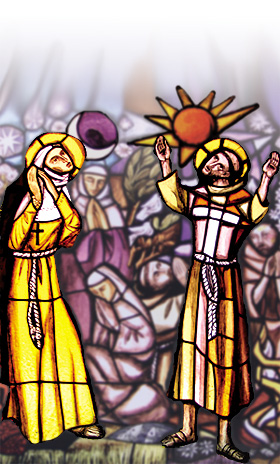
When I was eight years old, I sang “There’s a friend for little children above the bright blue sky”, and believed that heaven was just above that blue dome. [Or was it just behind the blue altar curtain in St Mary’s, Tambellup?] Now I think of heaven in more existentialist terms, a state of being in the presence of God eternally, and I look back and see the many ways in which my concept of the afterlife has grown more sophisticated. The sense of mystery about it has also grown. The more complex my conception of it, the more it is shrouded in a sense of unknowing.
So part of making a good death is constantly interrogating one’s picture of the afterlife and updating it as we update our understanding of God and how completely his love covers our existence.
Practising for a good death includes taking now every opportunity for joy and praise. For me as a musician, singing must be part of my preparation for dying.
Preparing for a good death also includes being conscious of those we love and continuing to work at those relationships, not to increase our grief, but to celebrate the great love which God shares with us.
So while it may be true that I will die in some sadness at leaving behind those I love, I also dare to hope that those with me in those last hours will also be able to say, “He died singing”.
In marking the Transitus of Saint Francis today, we can resolve to turn our attention, however old we are, to preparing to die singing, held by love.
craft carved from hard words and soft,
coloured for the eye and sounded well,
and polished along the true,
tacked with perfume and fathomed for a spell.
argosy launched from the mire of mind
to sail in auditors’ ears,
and float in currents of readers’ specific
memory, bliss and tears.
tender (legal or outlaw) convoyed from hand to hand
rich koine valued by someone new
or poems pocketed lying idle
lost change hiding in plain view.
****
Ted Witham
Joint Winner WA Poets’ 2018 Occasional Poetry Prize.
Keith and Kristyn Getty, Sing! How Worship Transforms your Life, Family and Church, Nashville TN: B&H Books, 2017. 176 pages hardback.
ISBN: 9781462742660. Not yet in Public Libraries.
Online $15 second-hand, $17 new. (My second-hand copy in new condition cost $7)
Reviewed by Ted Witham
What an encouragement to be told that Christians must sing: for the Gettys, congregational singing is both privilege and obligation. They point to many places in the Bible where we are commanded to sing, and, while conceding a place in worship for song as performance, their focus in Sing! is on the central place of congregational singing.
The Gettys make a living from writing and performing songs and encouraging the Body of Christ in music. Many of us have sung their In Christ Alone, an example of a singable melody and strong Biblical content. The chapter headings of Sing! assert that we are created to sing, commanded to sing and compelled to sing. We are to sing with heart and mind, with our family and with our local church. They write of the radical witness when congregations sing, and in a series of ‘bonus tracks’ provide checklists for pastors and elders, for worship and song leaders, for musicians and for songwriters and ‘creatives’.
Each chapter is followed by questions for reflection or discussion in a study group. Sing! would work well as a book club discussion, or a study for the whole congregation.
Sing! invites Christians to consider the first principles of congregational singing. It critiques performances that do not help the congregation to sing. The Gettys affirm the wisdom of a familiar repertoire, limiting the number of new songs and hymns.
In many congregations the idea that singing is compulsory will be controversial. As a musician and priest, however, I am pleased that the case for singing is put so strongly. How much stronger in faith singing congregations can be. How much stronger in faith are families and individuals who sing or listen to the songs and hymns they have sung in church on Sunday. And how much joy is evoked by the beauty and artistry of good music and poetry.
Sing! is not primarily for pastors and worship leaders. They don’t need convincing. A resource for all Christians Sing! will encourage all of us to sing more heartily.
In Church this morning, someone thanked God for our new Christian Prime Minister. I felt disappointed by this rush of enthusiasm. Before I lose my readers, let me state that I am very happy that Mr Morrison is a regular church-goer. I rejoice that God calls Christians to the vocation of politics: our country needs them. However, I reject the implied criticism of Mr Turnbull. For Scott Morrison’s faith to be a welcome novelty is simultaneously a judgement that Malcolm Turnbull is not one.
Mr Turnbull converted to Roman Catholicism. He chose not to politicise his faith. In his recent book God is Good For You, in interviews with Malcolm Turnbull, journalist Greg Sheridan ‘was astonished at the depth of his knowledge of Catholic theology.’ Sheridan comments that Turnbull ‘affirms his belief if asked, nonetheless doesn’t talk publicly about religion all that much, but he very frequently makes reference to love. Perhaps he uses the word ‘love’ more than any previous prime minister.’ (p. 175)
Turnbull’s use of the word ‘love’ is significant as the way he parlayed his faith into the public realm. Even his enemies have noticed this intensely theological language. In fact, one of his detractors mocked his use of ‘love’ in the wake of his defeat. But Turnbull chose not to use his faith as the public face of his policy making. He believed that arguments in the public sphere must stand on their own merits and not on their theological rationale.
Bill Shorten, too, is a convert, in his case from Catholicism to Anglicanism, the faith of his wife Chloe. Shorten is a product of a Jesuit school. Sheridan, no Labor apologist, is impressed by Mr Shorten’s’ serious knowledge’ of Christianity. Shorten takes into the public realm a quote from the legendary Jesuit Pedro Arrupe, ‘to be men for others’ as a key theological virtue. But like Malcolm Turnbull, Bill Shorten disciplines the boundary between his faith and public life.
The stance of Turnbull and Shorten may even make us question politicians who let their faith be known because it is good politics. It may (or may not) increase Mr Morrison’s vote, but it won’t justify the decisions he makes a Prime Minister.
So, all power to PM ‘ScoMo’. I will pray for him as duty bound, and with added interest because he is a fellow-believer. But I thank God for Mr Turnbull too, and for all who choose to serve the community as politicians. It’s a hard job, and they need all the help they can get.
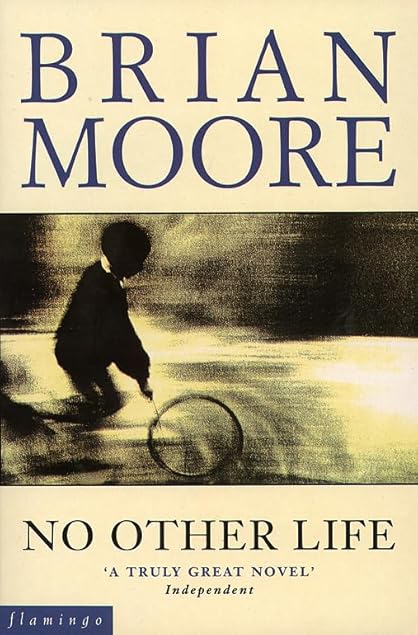
Brian Moore, No Other Life, London: Flamingo 1994. Paperback 216 pages,
ISBN 9780006546924.
In W.A. Public Library system.
Reviewed by Ted Witham
Brian Moore (1921 – 1999) was a well-known writer of the 1980s and 1990s. He wrote the 1991 screenplay based on his novel, Black Robe, exploring the Jesuit missions with Native Americans in frontier Canada. Moore was short-listed three times for the Booker Prize.
In No Other Life, the black robes of Jesuits are exchanged for the white robes of the White Augustinians, and the cold places of Canada for the warmth of Ganae. a desperately poor Caribbean island.
The Augustinian Fathers run a school where the mulâtre (mixed-race) elite educate their children. The noirs, the blacks, are kept in wrenching poverty by corruption. The island has always been run by a mulâtre dictator backed by the army.
Father Paul Michel wants to increase the number of black children at the school. He rescues a talented boy, Jeannot, from abject poverty. Jeannot is a single-minded boy who declares he wants to be a priest like his mentor. He eventually joins the Augustinians but runs a parish for the poor rather than work in the Order’s school. Jeannot’s oratory raises the hopes of the poor and he is elected President. But the effects of his leadership are ambiguous: is he an old-style socialist rabble-rouser, or is he a saint? The locals think he is their Messiah.
When the Augustinians expel Jeannot, he turns to his mentor. He implies that he would rather give up everything than be stripped of his priesthood. There is ‘no other life’.
Father Paul finds himself at the heart of a dilemma: is a priest an educator of the rich, or the servant of the poor? Is faith a pre-requisite for the priestly life, and what happens if a priest loses it? From the moment he meets Jeannot he feels a bond with him, but as their friendship grows, Father Paul learns how to love. When violence and chaos erupt from the actions of his friend Father Paul asks how far does loyal love extend?
This is a gripping and beautiful story, written with a sure touch. The events on the island of Ganae are presented in a fascinating manner, but the themes of ambition and identity resonate everywhere.
No Other Life is certainly a book for priests. What is the core of Christian priesthood, and by extension, Christian practice? Is there ‘no other life’ that we can imagine for ourselves? And if not, that goes to our vocation and identity.
But is also a novel that will draw in any person and open us to the love that is in our midst even when we feel it is absent.
Julia Shaw, The Memory Illusion: Remembering, forgetting, and the science of false memory, London: Random House 2016,
288 pages paperback.
ISBN 9781847947628,
In the WA Public Library system.
New $30, Used $15 online. E-book $14.99.
Reviewed by Ted Witham
The science of false memory is the field of forensic psychologist Dr Julia Shaw’s research. As she discovers more about our unreliable memories, she also uncovers more about how our amazing memories work. Her work could be summarised by the statement that the very unreliability of our memories shows how adaptive the memory system is.
The Memory Illusion is written in an accessible style with many illustrative anecdotes and stories behind scientific discoveries.
Memories are made from networks of neurons. Strong pathways between neurons lay down the memory. Dr Shaw gives two reasons we should not, however, expect accuracy from our memories. The first is that our perception of the world in the first place is a kind of fiction, where we interpret some of the sense data received by our brain as a picture of the world. Secondly, every time we review our memory, we take the memory ‘out of storage’ and rework it, strengthening it with more detail or a slightly different story-line. The memories with which we do this strengthening become over time less and less accurate.
Dr Shaw reminds us of how childhood memories of the same event are remembered differently by family members. While we are sure we have remembered accurately, our siblings will often disagree. Research shows this dissonance to be the norm. At least one person’s memory has degraded over time!
From an opposite standpoint, some married couples reminisce over time and ‘construct’ a memory together, and so agree on its accuracy.
Chapters on false memory in child sexual abuse, in remembering where we were when 9/11 or other ‘flashbulb’ events are fascinating. I remember learning that JFK had been shot in 1964 in the Year 11 dormitory at my school. Someone had heard it on an illegal transistor radio. I am sure that’s right; but after reading The Memory Illusion, I would now need to check whether others present remembered the same event to have confidence in the accuracy of my own memory.
The advantages of our memory system, which seems set up to fail, is that it gives our brains great flexibility without brain overload.
Researchers have shown that brain games do not improve memory. The improvement that participants note is improvement in playing the game. These gains are not transferable. However, mnemonic training like memory palaces and techniques involving WEIRD do help memory by maximising the associative nature of memory. Shaw uses the example of ‘Do not think about pink elephants’ as a good example of WEIRD techniques. We automatically do the opposite of what we are told, that is, we hold pink elephants in our mind. Moreover, ‘pink elephants’ itself becomes a good way of remembering the principle of WEIRD in memory.
What can my baby boomer students of Latin and French learn from The Memory Illusion? They can take comfort that it is harder to remember things as you get older. They can associate new things to learn with things they already know. They can use repetition to strengthen these networks of association. And they can console themselves that synaptic pruning is an important process in memory, always creating possibilities for new learning however aged the learner!







 So part of making a good death is constantly interrogating one’s picture of the afterlife and updating it as we update our understanding of God and how completely his love covers our existence.
 Keith and Kristyn Getty, Sing! How Worship Transforms your Life, Family and Church, Nashville TN: B&H Books, 2017. 176 pages hardback.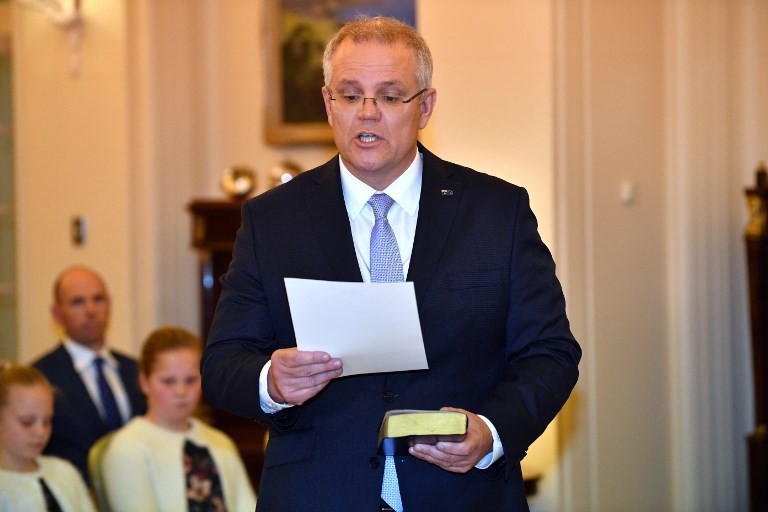
 Julia Shaw, The Memory Illusion: Remembering, forgetting, and the science of false memory, London: Random House 2016,
 Mind Journeys