The Hope of the New Creation


SERMON FOR THE 23RD SUNDAY AFTER PENTECOST

November 17, AD 2019

St George’s Anglican Church, Dunsborough

Gospel:

The Gospel of our Lord Jesus Christ according to Luke,
[Chapter 21 beginning at verse 5].
Glory to you, Lord Jesus Christ.

And while some were speaking of the temple, how it was adorned with noble stones and offerings, he said, “As for these things that you see, the days will come when there will not be left here one stone upon another that will not be thrown down.” And they asked him, “Teacher, when will these things be, and what will be the sign when these things are about to take place?” And he said, “See that you are not led astray. For many will come in my name, saying, ‘I am he!’ and, ‘The time is at hand!’ Do not go after them. And when you hear of wars and tumults, do not be terrified, for these things must first take place, but the end will not be at once.”

10 Then he said to them, “Nation will rise against nation, and kingdom against kingdom. 11 There will be great earthquakes, and in various places famines and pestilences. And there will be terrors and great signs from heaven. 12 But before all this they will lay their hands on you and persecute you, delivering you up to the synagogues and prisons, and you will be brought before kings and governors for my name’s sake. 13 This will be your opportunity to bear witness. 14 Settle it therefore in your minds not to meditate beforehand how to answer, 15 for I will give you a mouth and wisdom, which none of your adversaries will be able to withstand or contradict. 16 You will be delivered up even by parents and brothers[c] and relatives and friends, and some of you they will put to death. 17 You will be hated by all for my name’s sake. 18 But not a hair of your head will perish. 19 By your endurance you will gain your lives.

For the Gospel of the Lord.
Praise to you, Lord Jesus Christ.


Most mornings I walk to the beach with our dog Lottie. There’s something healing about the gently surging waves of Geographe Bay. Its appearance changes from day to day; some days it is calm, on other days the light refracts into bright colours, red, greens and golds.

Some days, walking near the beach is disturbing. Stinking seaweed covers the sand and I’m not sure if that’s a natural process or not. Sinkholes appear in the sand where there was solid sand before. The sea seems to be eating the coast despite the best efforts of the City of Busselton with groynes and trucks bringing loads of sand.

You’ve probably seen the maps predicting greater storm-surges eroding our coastline. It’s sad enough that by 2040 Stilts near us may be under water, but much sadder will be the disappearance of whole cities like Venice and Bangkok, even whole countries like Bangladesh. The Indonesians are building a new capital on the island of Borneo, starting even while Joko Widodo is President, because parts of Jakarta are already under water.

There’s too much water in some places. In other places, there is stubborn drought. The WA Government has built desalination machines with the capacity to deliver half of our water supply… otherwise we would be thirsty.

In Queensland,  northern New South Wales and California, wildfires burn pretty much year-round. Polar ice is melting at never-before rates.

In St Paul’s language, creation is groaning. It’s not my job to tell you where to place your opinion on the climate change emergency, although I’ve probably hinted what mine is!

There’s a story about a speaker who advocated sustainable living, liveable cities, green transport, planting trees and gardens and renewable energy – the list went on. An angry voice from the back called out, ‘And what happens if we create this better world and there wasn’t a climate emergency?’

It is definitely my role to remind you of the preciousness of creation, God’s gift to us and our responsibility to God for it.

I believe that we Christians should have a binocular view of creation: through one lens, we should delight in the beauty of the world, marvel at its wonders, be thankful – more than that, be deeply grateful – for creation as our life-support.

Out of gratitude, we are called to be like our Creator. We are called not just to be grateful, but to be creative, too.

With the Psalmist, we praise God for creation:

O Lord, how manifold are your works!
In wisdom have you made them all;
the earth is full of your creatures
. (Psalm 104 24)

Through a second lens, we should be aware of all that disturbs us about the degradation of the natural world. Whether or not the climate is about to go over some tipping point or not, our response to the damages we see should be one of repentance. Part of our joyful penance is learning how to look after the earth better.

God commands the man and the woman in Genesis:
Fill the earth and subdue it. Take control of the all living things on the earth. (Genesis 1:28a)

Some scholars say that a better translation is:
Fill the earth and look after it. Take up your responsibility for all living things on the earth.

God is not telling humanity to exploit his creation by force; God is saying that our unique position as the dominant species means we have a responsibility to help creation flourish.

We do this partly by being creative people. Some of us take dyed cotton, cut and sew the material to make prayer-quilts, which are not just beautiful objects, but part of our worship: they embody our intercessions. The prayer-quilts respect the environment: some of the fabric is recycled. All of them are designed to last.

Someone among us searches for digital images to help us worship and these are projected. They create an atmosphere and they suggest links with the readings and themes of the day’s worship. Finding and choosing the best images is a time-consuming and creative task.

Not only do our musicians create beautiful sounds to lead our singing, we lift up our voices and blend them together to express our praise together. In music, in particular, we worship as one. Every time we sing or listen to the musicians, we create something new that has never existed before. Each performance creates something from nothing. Each act of creation is exercising our image of God; we are creative as God is creative.

Today’s readings give us every reason for hope.

It’s true, as we heard in the reading from Matthew, that our politics can mess up everything, from implementing Brexit to killing the Great Barrier Reef. Jesus could be confident in predicting the time when the politics in Judea were so bad that the Romans would come and wipe out Jews. In A.D. 70, the Roman army hammered Jerusalem and razed the Temple to the ground. They wrecked the built environment and severely damaged the natural world. They nearly succeeded in erasing every Jew and every trace of Jewish culture from the face of the earth.

We look around the world today – to Great Britain, to the U.S., to Turkey and Syria – and we see the devastation bad politics brings. Just when we think things couldn’t get any worse in Syria, they do. On current trends, if politicians and others don’t act, the Maldives in the Indian Ocean, and Kiribati and Tuvalu in the Pacific, will disappear under the waves.

And it’s easy to be depressed about this. ‘According to a new U.N. report,’ comedian Jay Leno says, ‘the global warming outlook is much worse than originally predicted. Which is pretty bad when they originally predicted it would destroy the planet.’

But Isaiah forcefully reminds us that this is God’s creation, not a human creation. God cares for it. God will act. God invites us to do all that is needed to help the planet flourish, and the human contribution does really matter, but ultimately the earth and the heavens are in God’s hands!

‘Behold, I create new heavens
and a new earth. …
‘Be glad and rejoice forever
in that which I create…’
(Isaiah 17a and 18a)

We Christians are in a different position than others who care about the environment. We believe that the heavens and the earth, the Bible’s shorthand for the Universe, will end up better than it is, better than it started. Some Christians believe that God will destroy this Universe and make another. I don’t think the Bible supports this view. I believe that the new heavens and the new earth will be this Universe, perfectly restored. That way makes a place for human beings ‘raised,’ as we will be ‘to eternal life’, perfectly restored, like the new Universe.

We could choose to disregard the firm intention of God and live in despair. Or we can reach out our hands and receive from God hope as a gift. When you reach out your hands for communion this morning and receive little pieces of God’s creation, some bread and wine, I invite you to see them as God’s gift to you of hope.

We, as Christian people, can re-frame the way we think about the environment. For us, it is not doom and gloom, even when it appears so. If there are challenges, we can see them as God’s invitation to do something, to put into practice all those things we know as individuals and as communities that will help creation flourish.

And then as St Paul says to the Christians at Thessalonica, ‘Give thanks in all circumstances, for this is the will of God in Christ Jesus.’ (I Thess. 5:18). In everything give thanks. This is the key. We give thanks for the opportunity to counter the effects of pollution. We give thanks for those who work with us to see that the environment can flourish. We give thanks for the works of beauty made by artists and craftspeople.

We rejoice, because this side of the new creation, we will continue to learn about our worlds. Astronomers have discovered planets in far-off star systems that may support life. Material scientists, physicists and chemists are making new theories about the science of consciousness; how our physical brain does not explain our mind, that wondrous world of thought and creativity.
Dogs, horses, cats, bobtails , magpies – when we meet them we often feel they are just as aware of us as we of them. They seem to have a mind, a level of consciousness, too. Some scientists even theorise that there is consciousness in every atom, it’s built into the building blocks of the Universe.

Then there’s the research at The University of WA showing how trees communicate, both through the fungus between them, and by sending scents into the air to warn other trees of insect attacks. Trees also give out a fragrance which is healing for us humans.

Exciting ideas.

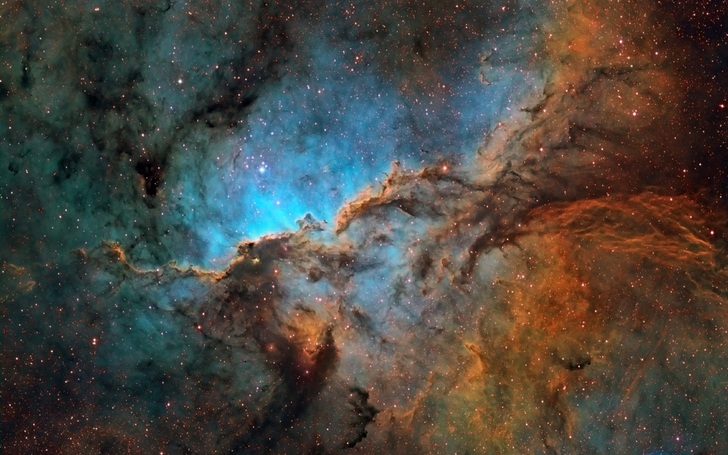
And above all, we give thanks for the breath-taking works of the Creator as they are: the cool air of Ngilgi Cave, the red colour of the bottlebrush, the beguiling scent of crushed sandalwood, the jaunty gait of a running emu, the endless play of light and dark in our galaxy.

If you have A Prayer Book for Australia at home, look up the wonderful ‘Thanksgiving for Australia’ written by Bundjalung Aunty Lenore Parker She is an indigenous Anglican priest and her prayer goes like this:

God of holy dreaming, Great Creator Spirit,
from the dawn of creation you have given your children
the good things of Mother Earth.
You spoke and the gum tree grew.
In the vast desert and dense forest,
and in the cities at the water’s edge,
creation sings your praise.
Your presence endures
as the rock at the heart of our Land.
When Jesus hung on the tree
you heard the cries of all your people
and became one with the wounded ones:
the convicts, the hunted and the dispossessed.
The sunrise of your Son coloured the earth anew,
and bathed it in glorious hope.
In Jesus we have been reconciled to you,
to each other and to your whole creation.
Lead us on, Great Spirit,
as we gather from the four corners of the earth;
enable us to walk together in trust
from the hurt and shame of the past
into the full day which has dawned in Jesus Christ. Amen
.


Lessons from a personable robot


Simon Morden, Bright Morning Star, NewCon Press, 2019.

Kindle edition: $AU 8.75

Paperback: $24.

Reviewed by Ted Witham

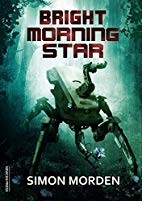
The cover image for Simon Morden’s Bright Morning Star rather spoils the mental picture I built up for the ‘Robot’ who is the main character of this speculative story.

An alien probe lands on earth and finds itself in the midst of humans fighting. The probe’s task is simply to investigate and report back to Mother (the spaceship in orbit). The probe is self-aware and begins to forensically examine the corpses of victims of a mass shooting.

It then realises that there is intelligent life on earth and decides to study this life-form more fully. It gradually becomes aware that the shooting is part of a proxy war between Russia and the USA. The name of the nation-state which first protects him is not given, but this reader gained the impression that it was a fictional version of Ukraine.

As the probe gains understanding of the ramifications of the war, it deduces that war is inefficient and should be replaced by peace and cooperation. The humans who fall under his influence begin to realise that without international cooperation, the human race will never succeed at space-faring and will tear itself apart.

Bright Morning Star is told entirely from the perspective of the ‘Robot’ and in its voice. Simon Morden has taken a risk in making a logic machine the main character in his novel, but ‘Robot’ learns to behave empathetically and forms attachments with different humans.

I gained the impression that ‘Robot’ was much less massive than the cover image: its emerging personality was writ large, not its physical attributes.

Bright Morning Star is a good read and its appeal to the best in humanity worth hearing again.

Translating Saint Francis


I am pleased to announce that two poems I have translated from medieval Italian and Umbrian into English have been published in the Adelaide Literary Journal.

Part of Jacopone da Todi’s Lauda (Praises) on the subject of poverty is published as Lauda XV

Francis Seal of Love, by Vittoria Colonna is a Petrarchan sonnet. Colonna was a great admirer of St Francis.

End of the World?


Many have noticed the flaws in democracy. These days, you have only to glance at Trump, or watch Britain unravel over Brexit, or notice the hung parliaments and unconvincing votes around the world. Is it time to find a new system?

Climate change has defeated democratic decision making. The main parties are beholden to the big end of town, especially coal and gas, and rather than choosing to oversee a rational transition to renewable sources, politicians have dug their heels in and promoted products and practices that add to harmful emissions. The science is indisputable – or should be.

Don’t imagine that politicians are happy with their alliances with coal and banks. Their overreactions to the #Extinction Rebellion sit-ins have revealed how sensitive they are to criticism. To suggest mandatory jail and cutting protestors’ welfare payments is despotic. Messrs Littleproud and Canavan should note: Blocking roads is not new. I can remember sitting on Riverside Drive at peak-hour in 1969 to protest the danger for pedestrians crossing to and from The University of WA.

 The argument in This is Not a Drill, a series of opinion pieces by supporters of Extinction Rebellion (Penguin 2019) is that the democratic process has failed us by not taking dramatic action to mitigate climate change. In Australia, emissions are increasing, and sales of coal are growing. Younger people fear for their future: coastal flooding, the melting of polar ice, wildfires year-round and cycles of severe drought should cause fear. The mass extinction of many species and the destruction of much of the world’s coral reefs, including the beautiful Great Barrier Reef, should be cause for alarm and grief.

#Extinction Rebellion aims, in part, to shut down capital cities until governments declare a climate emergency. No one likes the disruption to daily life this causes, but it is far less that the disruption that climate change unchecked will bring.

Writers in This is Not a Drill argue that not only must clean energy be generated and coal and gas phased out, but also the whole economy must be re-made. The ‘free market’ with its dependence on growth and consumer addiction to constant purchasing are the cause of climate change. These writers argue for a more distributive economy, local and equitable. As they say if fewer than 10% control more than 80% of the wealth, the system is loaded for reform.

The #Extinction Rebellion street actions have an element of fun. Some placards are humorous, playful floats function as centrepieces. Food shared generously creates a party atmosphere. Rowan Williams, formerly Archbishop of Canterbury, pleads for a place for delight: this is God’s world we are trying to preserve, and our Scriptures describe the act of creation as a form of divine play. If there is no joy, but only earnest protest, #Extinction Rebellion becomes a negative, maybe destructive force. With the element of delight, however, the movement is showing what a renewed world will be like.

The claims of #Extinction Rebellion disturb me deeply. Has democracy failed? Can a new and loving politics replace it? I fear the answer to both questions is ‘Yes’. We owe it to our children and grandchildren to act to preserve their world. Democracy will evolve – it must – but we must fight for the future.

RUOK? J.B. Phillips and depression


Vera Phillips & Edwin Robinson,
The Wounded Healer — J.B. Phillips,Triangle, 1983.

From $15 used online. In Public Library system. Reviewed by Ted Witham
110 pages – paper-back

Sometimes an old book comes into your hands at just the right time. I have surprised myself with a severe bout of anxiety and depression: maladies I believed I was exempt from. Apart from the symptoms of feelings of doom, breathlessness and general fatigue, my mental ill-health has stopped me in my tracks, and I have felt I’ve had to give up most of my activities. I’ve stopped (for the moment) teaching French, creative writing and much of my church activities.

I’ve felt a real tension: my therapists warn me of withdrawing from social contact (because being out among people is the best treatment for depression), and yet I simply have not had the energy to keep up with my usual activities.

One of the disappointing symptoms of this depression is that I have lost “the sense” of God. I had had a heightened awareness of the divine when I received communion and in my daily prayers. That has disappeared, just at the moment when it could help.

A friend of mine mentioned that J.B. Phillips, one of the pioneers of translating the Bible into modern English, and the author of Your God is Too Small, suffered from depression. It turns out that Phillips received mountains of correspondence in response to his sales of six million books, and that he answered every letter. Often these letters were to encourage people who opened up to him about their depression.

He also reached out to other notable Christians who had disclosed their depression publicly, seeking their advice, sometimes begging for their help.

Vera Phillips, Jack’s wife, and Edwin Robinson, a long-term friend, have compiled a selection of these letters resulting in a short book (110 pages) of practical help for Christians with depression.

In them, Phillips recounts some of his psychological challenges. He wanted to live up to the perfection he believed his father demanded of him, so was constantly disappointed that he wasn’t the best ever Vicar, or the greatest ever writer. He shows that while these psychological issues were related to his depression, they weren’t the sole or main cause of the illness.

J.B. Phillips was an English evangelical whose faith is attractive and accessible. His voice, the voice of his letters, is practical, compassionate and liberal. I found his advice helpful, and I am sure those who received the letters originally were even more encouraged by their gentle empathy.

Different ways of seeing


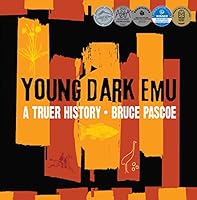
https://images-na.ssl-images-amazon.com/images/P/1925360849.01._SY200_SCLZZZZZZZ_.jpg

Bruce Pascoe, Young Dark Emu: A truer history, Broome WA: Magabala Books 2019.

Hardcover 80 pages.

$18 online

Reviewed by Ted Witham

As kids, my brother and I used to go through phases of collecting Aboriginal grindstones on our farm. These artefacts were ironstone. They weighed perhaps a kilogram and fitted into the palm of an adult hand. A smooth area had been sculpted out of the top. Our Dad told us to look for the other part of the machine, a smaller smooth stone. It was evident that seeds or berries were placed in the scooped-out area and the second stone used to grind.

Grinding stone – booma boyak

There were two inferences we didn’t make as kids. The first was that there is no ironstone near Tambellup. The nearest deposits are in the Mid-West 800 kilometres north. The existence of the grindstones proved there was an active system of trade around the State.

The second inference was that the people who used this device must then have gone on to mix the milled seeds with water and cook them. In Young Dark Emu Bruce Pascoe comments that, if this happened 65,000 years ago, this is the earliest known invention of bread, pre-dating Ancient Egypt by an astonishing 13,000 years. (p. 16)

The basic thesis of Young Dark Emu is twofold: one is that pre-contact Aboriginal culture included sophisticated farming and settled village life, and two that the early ‘explorers’ saw these facts – huge fields under yam cultivation, well-constructed huts that could accommodate 40 people easily – and wrote about them in their journals. By the 1880s the settlers had both deliberately and inadvertently destroyed all this evidence. For example, the hard cloven feet of sheep compacted the soil so that it became too hard to plant yams or seeds.

Once physical evidence had disappeared, Europeans failed to take notice of the eye-witness accounts of ‘explorers’, and soon came to forget the scale of the civilisation they had supplanted.

Young Dark Emu is a version of Bruce Pascoe’s book for older readers, Dark Emu. Young Dark Emu would be suitable for children upwards of 10 years old. Both books are a plea to learn from the land use and fire regimes that Indigenous people developed over 80,000 years (or more) of occupation of this continent. They adapted their crops aquaculture and food storage to the soils and climate of this place.

Text Box: Brewarrina Fish traps - the oldest surviving human construction in the world – Image courtesy ABC
Brewarrina Fish Traps – the oldest surviving human construction in the world

 The book takes its name from the Emu constellation. Traditional Aborigines named constellations not for the patterns made by bright stars, as Europeans did, but by the patterns in the dark spaces between them: a unique way of seeing.

Young Dark Emu invites readers to many levels of diverse ways of seeing. All Australians should read it or Dark Emu.

Naming our land


As a writer and language teacher, I know the power of language. We express ourselves in words and sentences. With language we persuade others to see things the way we do. The language of others influences the way we see the world. 

Think of the differences between Ayers Rock and Uluru: the former celebrating the Chief Secretary of SA at the time explorer William Gosse sighted the rock in 1873; the latter marking the complex relationship the Anangu have formed with Uluru-Kata Tjuta over tens of thousands of years.

The English names in our country reflect the dispossession of the land by its Second Peoples. Ayers Rock, backed up by the colonists’ military power, rendered Uluru invisible.  This has been repeated time and again across Australia. The obliteration of Aboriginal names may not have been a deliberate policy, but it was part of the large-scale destruction of Indigenous culture by the incomers.

We should rejoice that, at times, the settlers listened to the locals and used their name for the place. (According to Professor Leonard Collard, about half of south-western Australia’s placenames are Noongar.)

Wejulahs (my mob!) enjoying the ‘water that is there when all else is dry’, Lake Toolbrunup

Toolbrunup, the name of the lake on our family farm and of the mountain on the horizon, is` close to the original. It means ‘the place which has water when all else is dry’, which was true until 20 years ago. Sadly changing land use has turned the lake into a place which is perpetually dry, but the name still reflects the memory of the Koreng people who gathered there year after year at the end of the hot season well into the European period.

For this is the power of Aboriginal placenames: they record a staggeringly long bond between people and land. They are memory; they are the keepers of value; they are part of the record of the most ancient continuous culture in the world. It is arrogant to continue to give places new European names if they are already named.

Of course, it is appropriate that the built environment should be named both for Aboriginal and wejulah reasons. A new school can be called the Bob Hawke College, but another one could be named the Wagyl Kaip College after the inland region of Wardandi country. Above the Forrest Highway could be the Mokine Overpass. Our history now, for better or for worse, is a joint story.

Mokine – image courtesy Elders Real Estate

Local governments around Australia are developing commendable policies of dual naming, reviving the hidden Aboriginal name for places alongside the European name. Some have also adopted the principle of first using the Aboriginal placename (with appropriate permission from local elders).

The theme for National Reconciliation Week 2019 is ‘Grounded in Truth: Walk Together with Courage’. What better place to start finding the truth is in the literal ground, the land beneath our feet? Sensitivity to placenames will speed this recovery of truth and memory and help wejulah to absorb more of Indigenous culture and reality and walk together with courage into the future.

Wejulah is the Noongar name for non-Noongars.   

Talking the Talk


Israel Folau has been sacked. Rugby Australia could have handled the situation differently. But in the end, it was Folau’s own doing, and he knew it, so cannot escape responsibility. To his credit, it appears that he accepts his punishment.

Folau knew how his post would be heard. He claims it was written in love:  what he posted was bound to be heard as the opposite.

I think I have some credibility to comment on this: for four years I was the CEO of an inter-denominational Christian agency. Our main ministry was in a secular context. I learned that I was constrained in what I could say. Very constrained. But paradoxically, I learned that I could say anything at all – if I said it the right way. 

Effective communication requires you to think yourself into the shoes of the audience. It requires understanding their context, and, specifically, to communicate Christian truth, you must appreciate their beliefs: what they believe and how they express it.

Israel Folau’s post was based on I Corinthians 6:9-10. He added to it the command to ‘Repent’ and ‘Jesus saves.’ He invokes God’s mercy for repentant sinners, a central Christian teaching. However, I Cor. 6:9-10 was not written for non-believers: it was written for ‘brothers and sisters’. What is more, it was written for believers of the 1st Century. Its language does not cut through in the 21st Century; or it cuts through in the wrong way.

Folau’s Instagram followers include non-believers. If he was genuinely warning sinners to repent, then he should have known that they would not hear his message that way. He had already amended I Cor. 6:9-10 to include mercy for the repentant: he could have ditched “hell” and crafted a sermon to be heard!