Unmasking Humourless Powers


I salute my colleagues who were detained and strip-searched yesterday. I salute their courage, their grace and humour. Especially their humour. At the end of the day it is not they who stand naked and humiliated. It is the system that allows children to be indefinitely locked up in third world conditions.

I am outraged, but not surprised. Jarrad and Lorna, I know, have read Pace e Bene non-violence training; they have read Walter Wink; they have read Martin Luther King Jr. They know to expect the full response of the law if they go down the path of civil disobedience: fines, jail and all the police procedures that may go with them. They were prepared to pay the full price.

And they also know from their training that their opposition to the status quo will make it unstable, and their disobedience will provoke unexpected reactions. For their friends, it is distressing to see police attempt to humiliate them, but they are asking us to see beyond this.

Because what Lorna and Jarrad and their colleagues have achieved is to unmask the powers. For a moment we have glimpsed what Australia has become. We can thank the protestors for their courage in bringing to our attention not just the plight of asylum seekers and their children in detention, but the community attitudes that permit such cruelty.

The South African activist theologian Walter Wink points out that that the system cannot bear a sense of humour. Those who promote violence are enraged that they might be made fun of. A laugh is what makes us human. Those who stop us laughing must be stopped. #lovemakesaway

Love Makes A(nother) Way


Love Makes A(nother) Way

A New Strategy in Protesting the Treatment of Asylum Seekers

For those who come across the seas,
We’ve boundless plains to share.

So we sing in our National Anthem. But it’s not Government policy. Not at all for sharing our plains, are we at the moment. I disagree with much of what the Abbott Government, with the agreement of the Labor Opposition, is implementing in refugee policy.

I think:

  • Manus Island and Nauru detention centres should be closed.
  • Processing should be done on the mainland where possible.
  • Detention times should be reduced substantially.
  • Asylum seekers should be cared for in the community where possible.
  • Asylum seekers should be able to work and contribute to Australian society.

I don’t like the language the Government uses. Asylum seekers that arrive by boat are not “illegals”. Border protection is not the issue, rather humanitarian concerns should be the main consideration.

I dream of large projects on which refugees can work, like the hydro-electric scheme in Tasmania and the Snowy River irrigation scheme in NSW after the war.

I dream that the Government could send cruise ships to Indonesia, Pakistan and the Myanmar-Thailand border where refugees gather, and bring 2,000 at a time safely to Australia, rather than have them risk their lives with people-smugglers.

My views are the views of many on the left; I hold them with passion because I am a Christian and relate them to my Christian faith.

I support the #lovemakesaway movement. Friends are being arrested. If it were physically possible, I would consider joining them. All power to their arm.

I have written to the Minister, to the Prime Minister, to my Federal Member, to the Leader of the Opposition, to the Opposition spokesman and to other politicians. Some, like Richard Marles, Nola Marino and Scott Ludlam, take the time to reply. Others have their staffers send form letters.

These are the tried and true strategies. We beg Minister Morrison to be more compassionate, to be more prepared to show that Australia wants to share its boundless plains. And the more we beg, the more punitive his policies become. The last round of legislation whipped through the Senate is stunning in the removal of human rights from asylum seekers.

 “…the more we beg, the more punitive his policies become.”

My concern is that Mr Morrison is actually responding to the Christian left. The more we beg him to be compassionate, the more he believes he has the balance right, and the more licence he has to take a  harder line. We have become a counter-weight. Our strategies may be making things worse for asylum seekers.

I wonder whether we need a new strategy to add to the sit-ins and pleas for compassion.


I plan to write to Minister Morrison again, and affirm him. The policy area of asylum seekers is complex across the region. He deserves credit for dealing with a toxic mix: the push factors in dangerous countries like Afghanistan; the transitions in countries like Indonesia; the people smugglers and the dangerous journeys they sponsor, and dealing with Governments in the region about all this. He does well to keep on top of all these volatile realities.

Managing thousands of vulnerable people in detention is sensitive and difficult. There are outbreaks of serious self-harm and violence, but on the whole, they run smoothly. Christmas, Manus and Nauru are remote islands with limited access to modern technology. His department keeps the detention centres under some control.

The inevitable paper-work to process thousands of asylum seekers under these conditions is handled competently. People-smugglers often force their clients to ditch their identity papers. Sourcing information about individuals in war-torn countries is a big ask, but the Department obviously succeeds regularly.

These, and other behind-the-scenes tasks, deserve credit. If we only beg for more compassion, we are heard as angry, ill-informed and obstinate.

Mr Morrison does many difficult things well. If we tell him so, he may continue the habit, and start doing other difficult things as well!

Father Algy Robertson SSF: died November 23, 1955


Fr Algy and Brother Douglas are often credited as the founders of the Society of Saint Francis; certainly these two early members of the Society represent the two poles of our charism – order and serving the poor.

Brother Douglas, who earned the name ‘Apostle to the Wayfarers’ died on September 7, 1957. He was a priest and Oxford professor of economics. Thousands of men were thrown out of work in the Great Depression and made homeless and moved from shelter to shelter around the English countryside. Brother Douglas put on a pair of overalls painted with a large cross and joined them for two summers before setting up Hilfield Farm as a community to minister to the wayfarers.

All Franciscans recognise this kind of ministry as typically Franciscan, to be expected of both Brothers and Third Order members. Brother Douglas inspires us to serve the poor where we meet them.

Father Algy’s skills were very different and sometimes overlooked. He had a sound knowledge of the religious life, and he was originally invited to help train SSF novices. Algy had an intuitive understanding of the kind of man who should join the fledgling SSF and a detailed plan for its organisation. In her history of the European Province of SSF, This Poor Sort, Petà Dunstan refers to Algy’s reputation as co-founder of both First Order and the Second Order, the Community of St Clare.

There is no doubt that Fr Algy’s eccentricities, and his reluctance to relinquish all his personal wealth, especially his car, caused friction in the Order as it grew. He was a human being and no claim has been made that he was a saint. However, his gift for organisation continues to shape the First Order and to remind the Third Order that you need structure to stay together.

The Third Order also acknowledges another priest, Jack Winslow, the writer of our Principles, for his role in our founding. His attention to the configuration of the Third Order continues to provide the glue for Tertiaries to live together in loving service.

But on this day, November 23, we thank God for Father Algy SSF and his gift of order to the Society of St Francis, the gift that facilitates our Orders to fulfil our calling to loving service.

Rite of Passage


On this day 55 years ago, 21st November 1959, Bishop Ralph Hawkins confirmed me into the Anglican Church in St Mildred’s Church in Tenterden. This was the first time I wore long pants – my new school uniform, in fact. Bishop Ralph preached on the unlikely theme of ‘Motherhood’, earnestly admonishing us to love the three Mothers, our earthly Mother, our Motherland Australia, and God. A feminist sermon before its time. I remember nothing of this sermon, but my mother (earthly mother) reminded me of it frequently!

My grandmother had prepared me for confirmation using the Scripture time at school for this catechesis. I don’t think I was a good student. I got stuck on the first question in the catechism, ‘Question: What is your name? Answer: N or M.’ I made absolutely no sense of this.

Bishop Hawkins prayed:

Defend, O Lord, this thy servant with thy heavenly grace,
that he may continue thine for ever,
and daily increase in thy Holy Spirit more and more
until he come to your everlasting kingdom.

And I, as I had been taught, answered,

Amen.

St Mildred’s in Tenterden

Psalm 34 for WA


Psalm 34:1-10 for WA

I will bless the Lord at all times:
his praise shall be in my mouth.

Let my soul boast of the Lord:
The battlers shall hear it and be happy.
O praise the Lord with me:
let us lift up his name together.

For I looked for the Lord’s help and he answered:
and he freed me from all my fears.

Look towards him and be bright with joy:
your faces shall not be discouraged.

Here is a wretch who cried, and the Lord heard me:
and saved me from all my troubles.

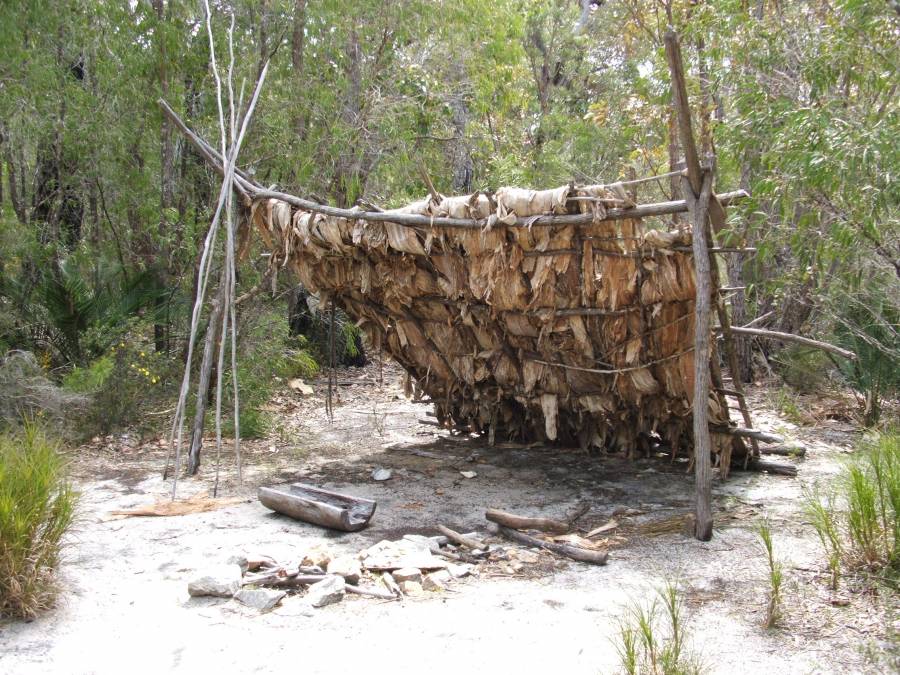
The angel of the Lord places his mia mia behind me:
and kindles his campfire to protect me.

O taste and see that the Lord is good:
happy are they who find sanctuary in him!

Be in awe of the Lord, all you his holy ones:
for if you are, you will have all you need.

Dingoes may go without and be hungry:
but those who seek the Lord lack nothing good.

  • David Frost (A Prayer Book for Australia) adapted Ted Witham
Mia mia and campfire Photo courtesy noongarculture.org.au

The One Horse Race


It’s only a bit of fun. Yet strangely, it’s an essential part of out nation’s psyche. The Melbourne Cup, the Horse Race That Stops A Nation. It’s a day when a non-gambler like me will buy a ticket in a sweepstake, and take an interest in the winner of the race at Flemington.
But even when I lived in Melbourne, I never roused more interest than that. If anything, the second Tuesday in November brings out my inner wowser, and I feel sorry for the millions who prop up the alcohol industry today, when it may be the only thing they are capable of propping up.
We look back in 2014 fifty years to zoos where proud lions where imprisoned in tiny cages in which they could barely turn around, and felt sad because their coats were mangy and there was defeat in their eyes. Today’s zoos with savannah spaces and artificial dens lions can seek out are much better. We can feel some pride ourselves that we care for lions much better and that our zoos are becoming 21st Century Noah’s Arks conserving endangered species.
Another century and a half earlier our great-great grandfathers gathered to stir up roosters to scratch and peck each other to death while howling humans urged them on to greater acts of blood-letting. In the time of the first Queen Elizabeth, bears were pitted against each other in the ring. Are we not now so much more humane in the way we treat animals?
The excuse then was that the animals enjoyed it. Maybe the animals did take some pleasure in pleasing the men who had fed and cared for them, preparing for them to take to the ring. Maybe they did. But maybe, if you could give them the whole choice, the animals would have preferred not to be there at all.
Of course, today’s horse-racing industry is highly regulated, and vets and stewards put a stop to egregious cruelty. But in another hundred years, we may look back at the way we bred horses for racing, horses with ankles as slender as humans’ so they break down, horses who are temperamental, for some reason objecting to running against the herd when nature wants them to run with it, and with some pride in ourselves for stopping the cruel business of making animals race for the pleasure of humans.
Then we will say proudly, we are the Nation that Stopped the Horse Race.
But I can’t say that today, can I?

Confession Worth Reading


William Peak, The Oblate’s Confession, Secant Publishing 2014.
416 pages.

$US18.54 (pre-order on-line)

«««««

A novel set in a monastery in 7th Century Northumbria? Certainly the promise of the historical religious setting drew me to it. I was pre-disposed to enjoy the tale of Winwæd, given to the monastery at Redestone as a boy – the oblate of the title – and living through changes brought to that enclosed world by disease and by impinging politics.

William Peak’s first novel is beautifully told. Winwæd luxuriates in language, in seeing things aright. His tale is both textured and layered. The details, both of daily life in 7th Century England and in the shifting power of kings and warriors – all lovingly researched and presented – create Winwæd’s world convincingly. The guilt Winwæd carries, and which he expresses in his confession, creates the tension in the story as his understanding of his actions grows, and ours with it.

We experience the changes as he grows in the different friendships Winwæd establishes, from Prior Dagan, who takes him on as a very young boy, to the friendship with the hermit living in the mountain, and to the Brother who runs the furnace, are well drawn.

As Winwæd learns to pray from the hermit, so we too learn mystical prayer from him. The hermit’s story of the young child lost in the forest who runs here, there and everywhere, looking to find his way, is pertinent. The child eventually exhausts himself just at the moment of spying a light coming from a cleared field. He collapses before a thick hedge, unable to find a way or to move forward. At the bottom of the hedge is a small space, just big enough to wriggle through, and thus he finds his way home: such is prayer.

Redestone monastery stands for a Christianity not quite settled in its environment, just as Roman Christianity was returning to Britain, but still remembering its Celtic roots. It may be this sense of being at odds with its society that makes this work of fiction speak so clearly to the reader.

I thoroughly enjoyed Winwæd’s confession. He kept me wondering until the end.

No wonder he chose the name ‘Francis’.


Speaking to the World Meeting of Popular Movements, a Vatican-sponsored group n October 28′, the pope said social justice also requires peace and environmental protection, both of which the global economic system inevitably threatens. “There are economic systems that must make war in order to survive,” he said. “An economic system centered on the god of money also needs to plunder nature, plunder nature, in order to maintain the frenetic pace of consumption inherent in it.”

– source Catholic News Service

Dying and Rising – Sermon for St Francistide


Galatians 6:16-18

In the name of the One who died and has risen – Jesus Christ our Lord. Amen

Saint Paul boasts that on his body he bore the marks of Christ. In the Greek, he speaks of the stigmata of Christ. The idea is that somehow the marks made by the nails and the spear when Jesus died were on Paul’s body.  He doesn’t describe these marks, these death marks, in any detail, but it was the only thing he allowed himself to boast about. ‘Forbid it, Lord, that I should boast / save in the death of Christ my God,’ to use Isaac Watts’ wonderful words.

I assume that the reason St Paul does not describe these marks in any more detail is that he does not want us to spend our time speculating about what they were like. What he wants us to pay attention to is the death of Christ – where the marks came from.

1300 years later in central Italy, Francis of Assisi was praying and fasting on lonely and wild Mt Alverna. Brother Leo was bringing him water and food and checking on Francis daily, but apart from that he was as alone with God as he could be. He was praying that he could be as like Jesus as possible. He had probably fasted too long and been on his own too long, but on one day he had a vision of Jesus on the cross. There seemed to be light coming from the wounds of Christ’s wrists and feet and side, and they seemed to come right into the body of Francis.

When the vision was gone, St Francis had on his body open wounds which never healed; on his hands and feet and side. He was embarrassed by these wounds and kept them covered. During his lifetime only Leo and the other two or three others that nursed him when he was ill had any idea about these stigmata. On the night Francis died, he asked to be laid naked on the bare earth in his beloved Portiuncula, down the hill from Assisi. Then, and only then, quite a number of Brothers saw wounds.

I’m not sure whether I am completely convinced of the literal truth of the stigmata of St Francis; I am perhaps about 80% sure. There is certainly no requirement of anyone to believe in them. To get hung up on whether they were true or not, or exactly what form they took, is to miss the point. Like Saint Paul, St Francis bore on his body the marks of Christ. Being personally marked by the death of Christ – that’s the point.

St Paul and St Francis believed they were personally marked by the death of Christ because they were baptised: ‘Do you not know,’ Paul asks the Christians in Rome, ‘that all of us who were baptised into Christ Jesus were baptised into his death?’ (Romans 6:3)

‘All of us’ includes you and me. We were baptised into his death. Archbishop Rowan Williams uses the word ‘swamped’. As Christians, we are swamped by the death of Jesus. That’s why we come into a church-building dominated by a font – where we were drowned – and a cross, where Jesus died. To be a Christian is to be overwhelmed by the death of Jesus.

Our death; and the death of Christ. The two come together in Christian faith to bring life.

Most of us are in the third third of our lives; closer to our death than to our birth. Being a Christian is about being personally marked with death. The death of Jesus, and the experience of St Paul and of St Francis urge us to reflect on our own death. While that may sound morbid, I believe that reflecting on our death actually leads us to life, to deeper life in Christ.

What does it mean to be personally and individually marked with death? For one thing, it means that our psyches, our souls, if you like, have the scars from the particular bereavements we have suffered, the marks from the struggles we have had when death has come to visit us closely. How we deal with the death of loved ones makes a difference. How we allow the grace of God to open us to new growth, to new life, when we suffer the loss of those who are dear shapes us to be the people we are. It matters how we respond to death.

And we get more practice the older we get. It’s not our grandparents who are dying now. It is our parents, and sisters and brothers, and spouses, and lifelong friends. It is easy to build a tough shell and hide from Sister Death, but that way, though it might be easy, leads to us shrivelling up. Let us resolve not to become hard and cynical, but to value deeply the love of each as they pass.

Our bereavements as we grow older can lead us into a deeper experience of the love of God as we open ourselves to all the love given and received in our friends and lovers, living and gone before us.

Secondly, in this third third of life, we are marked with the experience of our own dying. Thankfully, we don’t know exactly what that will be. It may well be that we will die in our sleep, and not be aware of the actually moment of dying.

There used to be many books called something like ‘The Art of Holy Living and Holy Dying’.  How we die matters to God and to us. I have a home communion set given to me by Fr John Wardman as a gift when he was dying. It was wonderful to spend time with that priest in the weeks before he died, as he recollected himself before God, and as he reaffirmed how he believed that his being in God was permanent. He radiated a peace and stillness that was appropriate for him. He died well.

The challenge for me is, What will it mean for me to die well? What outstanding matters of loving relationship must I attend to?  How should I deepen my relationship with God? Do I identify any fears within myself about dying?

Sometimes, when I worked as a parish priest, people would ask me not to visit their relative in hospital. ‘They’ll associate you with dying,’ they would explain. And it’s true. A couple of times I wasn’t warned and people were quite angry with me for visiting someone. I suspect that they were angry because they, the relatives, didn’t want to think about death and dying, and they knew that it is part of a priest’s job to raise the subject.

It’s never too early, really, to start thinking about how our lives are marked with death; how we are to identify with Christ in his death. We live such sheltered lives here in Busselton. We don’t have to face Ebola outbreaks or the massacres of religious fanatics. But maybe we can take a lesson from Ebola and ISIS: many people on the planet face death on a daily basis.

The more urgently we face our coming dying the more we can thank God for each day we live. Each day now is a wonderful gift, even if it is marked with sickness and pain, or if it is spoiled with disappointments in love. One of the things I have learned with a body that doesn’t always work well is how wonderfully it does work.  Our prayer is thank you. We come to this church to make Eucharist. Evcharisto, simply the Greek word for ‘Thank you, God.’

The more we look at death in the face, the more we see it as not a full stop, but more like a bus stop. It’s a staging point. We may not understand what comes after, but we believe with full hearts that we are marked not just with the death of Christ, but also with his resurrection. ‘If we have died with Him, we believe we shall also live with Him.’ St Paul again. (Romans 6:8)

All that love – the love of brothers and sisters; the love of parents, the love of spouse, the love of childhood friends – is not lost. Somehow we know that we will find those loves again after death. St Paul tells us, and it’s one of my favourite verses, ‘What no eye has seen, nor ear heard, nor the human heart imagined, God has prepared for those who love him.’ (I Corinthians 2:9)  In other words, for what happens after death, we imagine the best possible outcomes, and God makes sure that it will be better, far better, than we can imagine.

So for the future, when we look death in the face, the death which marks us in a personal and individual way, as Christians we are filled joyful anticipation. To bear in our bodies the marks of the death of Christ is no bad thing. It leads to the fullness of life.

Vale Dom Michael King OSB (Fr Ernie)


Dom Michael. Photo Courtesy ABC Radio

Vale: Dom Michael King OSB

Dom Michael King OSB – Father Ernie as I knew him – will be welcomed to the heavenly choir. Ernie was blessed with a beautiful voice and perfect pitch. He could gather a note that had been played 10 or 15 minutes earlier. ‘How can you remember the pitch of a note from the end of the opening hymn to singing the Alleluias for the Gospel?’ I asked him one day. ‘I don’t,’ he said, ‘I hear it reverberating round the building. The last note’s still there.’ And he’s right. You have to learn to listen before you can sing as beautifully as Dom Michael. The angels will love him.

From this Benedictine, I learned my first real lessons in Franciscan poverty and community. It was rumoured that Fr Ernie (as I knew him) had given away to those in need all his stipend, and often much of his clothes, by each month’s end. There was a proto-community of about 15 living in the Fitzroy Vicarage, and only a few of them were working and able to pay their way. Mainly due to Fr Ernie’s generosity and wise cooking there was a nightly feast not just for the resident community but for hangers-on like me.

The most interesting facet of community I learned from Fr Ernie was an endless capacity for failure. Often he would invite newly-released prisoners to join the community as part of their release program. These young men sometimes worked out. On other occasions, their thieving and other anti-social behaviour tested the community to its limits. Fr Ernie believed always that there was hope for them.

On Sundays, Fr Ernie celebrated two large Parish Masses and then served a roast lunch for up to 30 people. He put the meat on before the early Mass, checked it between services. After the second Mass, we would gather in the vicarage’s backyard to drink Cinzano on ice before a long table was set for the meat and roast vegetables.

It wasn’t just the Cinzano: there was always much laughter in the Vicarage, and much mutual caring. When I heard some years later that Fr Michael had set up the community at Camperdown, I wasn’t surprised that he wanted to live in a more structured community. I was surprised only that he left inner-city Melbourne for the rolling downs of prosperous dairy and fat lambs country out of town.

Fr Michael is remembered by the secular press for his work at the monastery.

For me, as a student placed for Sundays and three or four weekdays in 1974, Fr Ernie’s parish was an ideal environment to learn what Fr Ernie called ‘Anglo-Catholic’ ministry. I came to love visiting the high-rise social housing with their broken lifts and broken windows and non-functioning playground equipment. Single mothers struggled in those miserable flats. We were, Fr Ernie told me, like Father James Adderley and other early Franciscan priests in 19th Century East London.

I learned the respect Fr Ernie had when I walked around Fitzroy at night in a cassock. The winos and druggies called me ‘Padre’. Without the priestly ‘uniform’, I would most likely have been mugged.

Fr Ernie’s mentoring style was encouraging. He sent me out to the high-rises and the back lanes on my own, but was always ready at the vicarage to debrief and teach. When people came to the vicarage door begging, he kept me with him so I could learn to respond like him with love as well as money to the needy of Fitzroy. Like the pitch of the last note of the previous hymn, ministry for Fr Ernie was about listening to the faint reverberations. He had a sensitivity to pain and need that others easily missed. If you listen, the last note is still sounding.