Francis – program notes


Program notes for the play Francis, presented by the Midnite Youth Theatre Company, November 21, 22, 23 and 24, by Julian Mitchell and directed by Drew Stocker tssf.

By Ted Witham tssf

Poster for the play “Francis”

Saint Francis of Assisi became a leader by giving power away. Francis Bernadone was born in 1181 or 1182 and grew up in a wealthy merchant’s house. As a teenager, he became a leader of wild parties through the streets of Assisi. He was known as ‘The King of the Revels’, and used his money to attract friends.

Like all young men in Assisi, Francis chose to join in the little wars the town fought – for the Emperor (against the Pope) and against the neighbouring hill-town of Perugia. After one battle Francis was taken prisoner in a dark prison in Perugia. Having a wealthy father meant that he was held for ransom.  It took a year to negotiate a price for his release. He began to realise that even with money he couldn’t have what he wanted when he wanted.

After his release he bought a knighthood to fight in the crusades. Instead of a glorious tour in Palestine, Francis returned home sick. In a vision God showed him that he didn’t want him to be a knight, so he gave away his lavish armour.

Everywhere around him, Francis could see people fighting: fighting to keep their possessions and power. Assisi had always been a barter economy, but now, as Francis grew to manhood, it was becoming a greedy money economy. Instead of giving each other life’s necessities, the people of Assisi began to amass cash. The division between the privileged and the poor grew rapidly.

Francis saw a solution to this greed. All people should treat each other as members of their family. Instead of grabbing resources for themselves, they should share with their brothers and sisters what they had. Francis started a community of those who would follow this way. He dreamed of a new world where people gave everything away to each other, so all would be equally rich.

Francis struggled for the rest of his life to find the best way to be the leader of this community. His idea of a leader was someone who did not have power over others. Like Jesus, Francis wanted to be the leader in serving others, a servant leader, a leader in giving power away. The concept was – and is – difficult to put into practice, but the communities Francis founded continue to try to make it work.

Sing a new song to the Lord


Hymns – traditional hymns – have sculpted my theological and spiritual landscape. I’m happy to worship with Dan Schutte (“Holy Darkness‘), Graham McKendrick (‘Beauty for Brokenness’), George Bullock (‘The Power of Your Love‘), and all the other contemporary praise-singers, but they have not dripped steadily, obsessively and repetitively into my heart over 60 and more years as hymns have done.

There was a time in my life when I knew the number of every hymn in Hymns Ancient & Modern Revised. If I saw the number 372 on a bus or number plate, I would immediately think ‘Almighty, Invisible, God only Wise’, and often involuntarily blurt it out – to the amusement of friends.

Many hymns have been with me since childhood. I remember beefing out ‘For Those in Peril on the Sea’ (A&MR 165) at Tambellup Primary School Anzac Day services, and singing – very slowly, with my Mum on the harmonium, ‘Holy, Holy, Holy’ (A&MR 160) in the little church of St Mary in Tambellup.

But there are other hymns that I remember by the person who introduced me to them: Irvin Phillips, organist extraordinaire at St Matthew’s, Armadale, thought my repertoire was incomplete without the tune ’Lucius’ and the lovely words of community that accompany it: ‘All praise to our redeeming Lord, // who joins us by his grace, // and bids us, each to each restored, // together seek his face.’ (TiS 442(i)).

David Overington, my mentor in the Franciscan Third Order, was surprised I did not know the tune ‘Blaenwern’. Together in Song suggests that we should sing ‘What a friend we have in Jesus’ to ‘Blaenwern’,(TiS 590) and, David was right, it adds a depth to that old crusade song that you don’t find with the usual tunes. David also recommended singing ‘Once to every man and nation // comes the moment to decide’ to this tune; and it certainly gives the words a drive towards decision that the curly Welsh tune ‘Ton y Botel’ lacks.

Michael Pennington, Rector of Applecross when I was his curate, introduced me to Samuel Stanley’s great hymn of re-dedication: ‘O thou who camest from above // the pure celestial fire to impart…’ Michael chose it for the 25th anniversary of his ordination to the priesthood, now 15 years ago. It deeply touched my own determination to continue as a priest, offering my life as a sacrifice and knowing that service brings its own reward. ‘Still let me guard the holy fire,// and still stir up the gift in me, // ready for all thy perfect will.’ (TiS 527)

I probably will never know the depth of spirituality that hymns have given me. I will continue to explore new worship music, and I will try to give new life, by giving new words, to old tunes. But it is the old hymns I credit with sustaining my faith through difficulties (‘Great is your faithfulness,’ – TiS 154) and joys (‘Hail thee festival day’, or ‘Christians, lift up your hearts’ in TiS – 423).

May the Lord grant me the joy of continuing to sing hymns; I do hope that they will be one of the options for praise in the eternal worship of the saints.

A “plain package” St Francis of Assisi


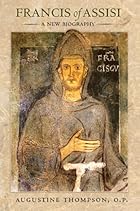
Augustine Thompson, Francis of Assisi: A New Biography, Cornell University Press (2012), Hardcover, 312 pages, $25 from online retailers.

Reviewed by Ted Witham

Augustine Thompson’s biography is “new” in the obvious sense that it is the last in a long line of biographies of St Francis going back to Paul Sabatier’s 1893 Life. Thompson’s, however, is “new” also in that it aims to go back rigorously to historical sources. This approach is in line with other historians who recently have been sifting through historical records and chipping away at the pious accretions to produce a “plain package” St Francis.

William Hugo, for example, a Capuchin formation director produced in 1996 a “Beginner’s Workbook” Studying the Life of St Francis, which invites novices to evaluate the historicity  of early writings. The Melbourne conference in 2009, out of which came Interpreting Francis and Clare of Assisi, was also historical in ambition, using a variety of academic approaches – documentary, art history and so on – to develop a more historical picture of the saints in their world.

These new studies are pushing out the older Lives of St Francis, which were either pious or interpretive: they sought either to show Francis as an exemplar of the Christian life, or they observe St Francis through a particular lens: Jacques Dalarun on Francis and power and Francis and the feminine, and Leonardo Boff on Francis and liberation offer these interpretive visions of Francis.

Augustine Thompson is a Dominican friar, and this gives him an “insider-outsider” perspective. On one hand, he knows what it is to be a friar in an Order with a  charismatic founder. On the other hand, he has greater clarity of vision when he writes about Francis than do many Franciscans in their familiarity with their founder.

Fr Thompson tells a plain story of a man who had no agenda and who could articulate no particular vision for the movement that formed and swarmed around him. Thompson’s Francis simply wanted to live the Gospel. Even at the end of his life, Francis is still surprised, Thompson claims, that “the Lord gave me brothers”.

Even poverty, the Franciscan value that many believe to be the base of Francis’s vision, is held up to question by Thompson. There’s no doubt that poverty was a part of Francis’s vision, but Francis, as Thompson emphasises, mentions the Eucharist much more often than poverty. Francis’s devotion to churches and priests is because of the celebration of the Eucharist – all to be venerated because there God comes to earth in a perceptible form.

The central insight for me in this “new” biography was precisely Francis’s lack of a programme. Francis, at least in Thompson’s telling, was a man who simply wanted to live the Gospel, to be radically available for God. This, I suspect, is one of the main reasons for Francis’s ongoing attraction.

Thompson’s book also has its attractions. It is divided into two halves. In the first Thompson tells the story of Francis simply and without frills or academic apparatus of any kind. Then follow a helpful list of the major biographies of Francis since Sabatier’s and a bibliography of documents from the 12th Century. In the second half of the book, Thompson argues in detail why he has included some details and discarded others as non-historical. These chapters may be mainly for scholars: most of us, I suspect, will be glad to read the first half as a self-standing account of Francis’s life and be refreshed by it.

Oh, the farmer and the greenie….


The Farmer and the Greenie Should Be Friends …. But

I am sitting in my brother’s farm ute. My brother is driving. His best dog keeps his distance from the slow-moving mob of pregnant ewes. We are taking them to a paddock where they’ll have more room for lambing. It’s a slow progress across the paddocks. It’s important not to stress these sheep: by the time their lambs are born they will need to be in top condition with the best pastures easily accessible to them.

This care for animals is not only prudent business: my brother treats the animals on his farm well for their own sakes. I know many farmers like him. Farmers in general are unlikely to be cruel to animals, or allow others to be cruel to their stock coming from their property.

Like many others over the last few years, I have become concerned about the way some animals are treated. I was too distressed to watch to the end the Four Corners program on the slaughtering of cattle in Indonesia. I worry that cattle and chickens are force-fed in smaller and smaller pens. I wish we could always buy free-range animals and eggs.

But one thing I am sure of is that farmers are not enemies to animals. Most do what they can to look after sheep, cattle, dogs, pigs and hens. I am angry at activists who call for radical changes to farming practices without investigating how the majority of farmers do things. Often activists ask people to rally around causes that are based on old or incomplete information.

Take the story on mulesing sheep. Mulesing is a drastic operation where skin is cut away from around the sheep’s backside. Before farmers mulesed, there was a high incidence of fly-strike. When flies lay maggots in sheep, the maggots eat away the flesh of the sheep while the sheep is still alive. Mulesing – with much milder consequences for the animal – reduced the rates of fly-strike considerably.

PETA and other activists groups called for the abolition of mulesing. They showed graphic pictures of a sheep’s rump after the skin had been cut. Rarely did they mention the maggots threatening the lives of sheep, and they certainly showed no gruesome pictures of half-eaten still-living sheep. The farmers could well have countered the arguments of PETA by demonstrating the benefits of mulesing. Instead, the farmers went a step further and agreed to a total ban on mulesing. An enormous research effort produced chemical mulesing.

Animals Australia tells this story with reasonable accuracy, but its concluding call to action does not follow logically from the story and is any case out-dated.

I don’t believe that a perfect solution has been worked out, but I do believe the farmers wanted the same end result as the activists.  And with their first-hand knowledge, they could be honest about the situation.

Animals Australia condemns all live sheep export and describes their investigations showing cruelty against animals in transit and in market countries. It counters industry claims to improvement; but not with detailed evidence, rather with graphic photos.

Their ethical arguments begin with the assertion that raising animals to eat is wrong in itself, and therefore any instances of cruelty, however isolated, prove the point. The reality, however, is that our society accepts the use of animals for eating. Finding enough protein for a healthy and balanced diet without meat is currently an expensive challenge.

Farmers who grow animals for meat are not acting illegally, nor are they anti-social, and to claim that all their activity is unethical is at the very least controversial, and is usually insulting. Environmental concerns may well price meat out of existence over time and we will simply be forced to find replacement protein. But we are not at that place yet. Discouraging cruelty to animals makes more common sense in the short to medium term than calling for a total ban on meat.

Animal activists come over as either unrealistic idealists or deliberately undermining the livelihood of the very farmers on whom we depend for our food.

The greenies and the farmers should be friends. Both groups are genuinely working towards a world in which there is less cruelty to animals. But polarising the debate by calling for a complete ban on meat and demonising all involved in its production and transport is unwise and unproductive. It is no wonder farmers defending live sheep exports organise their gatherings off-line away from the glare of volatile social media. Their cause is so easily hi-jacked by easy and sentimental appeal of the animal activists.

Free-Will Machines


Smart phone talking to other smart things!

Our daughter is a city girl who enjoys her gadgets – especially her smart phone. Recently she was driving towards Dunsborough getting hungry at around 11.30. She tapped the word ‘Restaurants’ into her phone, and immediately a list of Dunsborough’s best wineries and eateries appeared on the screen. One looked enticing. She tapped again, and its menu scrolled down the screen.

To those of us brought up before televisions became common place, this “connectedness” almost seems magic. There’s no denying the convenience of having so much information at your fingertips, but ethical issues raised by information technology are only just beginning to be explored.

Internet users are all becoming familiar with technologies of persuasion: when I visit Amazon to look at books, a list of books that “I might like” greets me. On Facebook, ads target me and my interests, convincing me that everyone out there shares my interests in politics and Biblical languages. Because it knows my age and sex it tries to scare me with ads about prostate cancer or entice me to meet friendly women in the area.  Because web-sites record choices and information we share about ourselves online the internet “knows” our likes and dislikes. Clever mathematical formulae called algorithms match my interests with those of corporations wanting me to buy from them.

The truth is Amazon doesn’t really care what books I like. To a large warehouse like Amazon, books are valuable only for the dollars they fetch. Contrast this with St John’s Books in Fremantle, where Shirley the manager knows me as a person, and is not only interested in what books I like. She shares a genuine interest in books. Shirley occasionally shows me a book that is quite outside my normal interests. An algorithm would never do that.

Alongside the technologies of persuasion is “the internet of things”. You may have noticed how increasingly computers are interacting directly with other computers.

The restaurant “app” my daughter uses interacts with the computers in the restaurants.  Or in large warehouses, robots scan bar-codes and move goods around based on information they have gathered about how many units have sold or shipped. The ”internet of things” changes the ways human beings make decisions: instead of a rough guess as to whether this pallet of goods should be moved, the human operator now consults the machine. Instead of asking friends or reading reviews, my daughter bases her choice of restaurant on the machine’s information.

Smart phone users are downloading dieting programs which calculate the calories they have burned in exercise, those in the cake they have just eaten, and the benefits of the salad they had for lunch. Instead of internal, instinctive decisions about what they eat or where they walk, people defer to the computer.

In the warehouse, or on the way to the restaurant, or in choosing a diet, responsibility for important decisions increasingly shifts outside human minds and hearts.

Thinkers are concerned that machines are eroding our free will by taking over aspects of our decision making.  One recent article asks, “Are we still autonomous?” Stanford University in the US advertises machines designed to change humans.

We don’t need to fear these machines. Humanity has been through the same with other powerful technologies. Imagine the changes brought about by the invention of writing 5,000 years ago – or by the printing press 500 years ago. Both changed the way humans remembered, calculated, argued and decided.  We will live through the changes that the internet of things will bring.

But I do believe we should be aware of the ways information technologies are being used to influence and persuade us, and, by being aware of their power, we can decide the extent to which our machines can tell us what to do.

First posted on Dunsborough Anglican Church web-site.

Life After


Life after

I stand heart-still on bush-edge trail.
My height nothing next to bunched boughs
of sage green gums.  The great wedge-tail
eagle soars: all before it stoops, bows.

The eye zooms: the bird has stalled:
gravity forgot; upheld by thermal.
All potential at rest, just the air mauled
by fierce talons; wings held formal.

Then, straight down from pin-head highs
the eagle drops, wings tucked, a grey stone-streak.
The lizard struck and killed, in cold eye’s

wink.  Wings wide as Passion Week.
For all of us in God’s surprise
are taken alive in Christ’s dear beak.

Human consciousness: complete and inconsistent?


Robin Craig, Frankensteel, Thoughtware Publications 2012
(Kindle edition: Amazon price $US1.99)


Reviewed by Ted Witham in TableAUS (Australian Mensa News)  September/October 2012


Robin Craig’s “Philosophical Reflections” in TableAUS often provoke replies both polite and unmannered from Mensans. In these “Reflections”, Robin presents his highly rational and positivist world-view using the rhetoric of the philosopher. I enjoyed reading a new side of Robin in his novella Frankensteel.


Frankensteel tells the story of an anthropoid robot equipped with an organic brain whose intelligence grows from a few simple learning algorithms. The robot at first appears unable to speak, however, but just the fact of its invention throws the authorities into panic mode. They order its maker Stephen Beldan to destroy it. Frankensteelhas quite a presence in a room, and its first spoken words are effectively a declaration to its maker that it would be inhuman to destroy it. Though the scientist locks the robot away, it inevitably escapes and seeks out the company of Professor David Samuels whose expertise in human consciousness may help it understand whether it is human or not.


Special Investigator Miriam Hunter is ordered to hunt “Steel” down and finds herself drawn into the moral dilemma at the heart of this story:  whether this human creation with its intelligence should be destroyed or not.


The story has been told before. Any writer since Mary Shelley’s 1818 classic attempting a re-write of the Frankenstein myth must have a stand-out factor to distinguish it from its predecessors. Its factory setting and its police hunter skilled in dark arts of pursuit and assassinationgive Frankensteel a modern “industrial” and almost noir feel.  The character of the professor, in particular, gives Robin Craig the narrative licence to develop arguments for and against artificial intelligence and its relationship to human consciousness. Frankensteel brings the old myth up to date bytaking into account recent developments, both in neuroscience and artificial intelligence.


Set against these protagonists are the shadowy Imagist cult, believing that only human beings are made in the Image of God, and therefore set against machine consciousness. These radicals are capable of serious violence, but the robot uses his intelligent understanding of human beings to survive.


Frankensteel is a novella length story which I read in a few hours. Its chief problem is that the characters are not sufficiently developed for me to care what happened to Frankensteel or any of his friends. It might be stronger if it was compressed to a short story length and then told through the eyes of just one of the characters, Frankensteel himself perhaps, so that readers both identified with his nascent humanity and were also drawn into the discussion about machine and human consciousness.


But I salute Robin Craig for imaginatively raising the issues: I enjoyed meeting Frankensteel.


Beholding the depths


Once a week in Morning Prayer I recite the Song attributed to the three young men Shadrach, Meshach and Abednego as they walked unharmed in the fiery furnace. They sing, ‘Blessed are you who behold the depths’. I’d never thought about that phrase before last Saturday. I hunted out the Greek, which is as close as we can get to the original. (The Aramaic has been lost). A literal version of the Greek is: ‘Blessed are you who look compassionately on the unfathomable.’

Behind ‘Blessed are you’ is the Aramaic and Hebrew, ‘Berakah ata’. This common opening to prayer is praise for the blessings God brings. Every time the refrain of ‘berakah ata’ rings out, it is a celebration of life, because life is the first blessing God pours out on the universe. Every time we say ‘berakah ata’, we celebrate love, God’s driving force which makes of our universe not a meaningless hell but a place of wonder and joy.

The Three then sing that God is ‘looking with favour’ (epiblepon). God holds steady God’s gaze on all God has made, and surveys it with favour. ‘It is good. It is very good,’ Genesis reminds us. God holds in high regard that which God looks upon.

And in this verse, the Three celebrate God’s compassionate regard for the ‘abyssos’, the unfathomable. Thrown into the flames of the fiery furnace Shadrach, Meshach and Abednego, must have believed that they had arrived in the abyss.  The abyss was not only the place of the dead, but paradoxically it was also the bottomless container for the waters under the earth: a place of annihilation. God looks with favour even on the abyss.

God looks with favour, we would say, on black holes. God’s hands, so to speak, hold these most dangerous of phenomena, and God enjoys their power, their blackness and their oddity. God delights in the mathematical underpinnings of the black hole, and in the petite particles, quirky quarks and microscopic molecules which flit in and out of existence in the complex flux of the singularity.

From the macrocosm of dying stars to the abyssos of the inner lives of human beings: God looked with favour on (epiblepon) his handmaid, Mary.  She too knew the encouraging gaze of God on her. God looks compassionately on the depths of our selves. God embraces us – at our heart – with joy. Like the black hole, our lives are a complex of forces, many destructive and many creative, braiding together to create unique individuals. I too am a singularity, as you are. And the good news discovered by the Three in the fiery furnace is this: God is on our side, God looks on us with favour, blessed be God.

When God looks with favour, light, as John points out in his Gospel, pours in and the blackness dissolves. There is blessing even in the darkest of pits, even in the tangles of the human soul, because God gazes with love.

Black hole

A new priest-detective


James Runcie, Sidney Chambers and the Shadow of Death (The Grantchester Mysteries),  London: Bloomsbury Publishing PLC (2012), Edition: First Edition, Hardcover, 400 pages, available through (Australian) public libraries. (Paperback $15.00 approx. online)

Reviewed by Ted Witham

I am glad to have met Canon Sidney Chambers, a priest who is an accidental sleuth. The Grantchester Mysteries begin in the early fifties when Sidney Chambers, who has received a minor canonry from an African diocese, begins his ministry as Vicar of Grantchester near Cambridge. Chambers is a war veteran who has seen active service, and a bachelor unable to choose romantically between a young German widow and an old London friend Amanda Keating. He is conscientious about his ministry, wanting to be available pastorally to his people and to frame all the day to day work of the parish as part of the mission of the Kingdom of God.

However, Sidney finds himself drawn into different crimes: partly because of his association with his best friend, Inspector Geordie Keating, with whom he shares a weekly beer and game of backgammon, and partly because a clergyman can go where others cannot. For example, the mother of a young woman he is preparing to marry dies suddenly. The woman’s fiancé is a doctor and her mother would not give her approval for the marriage. The match and dispatch aspects of his ministry give him access to the young murderous couple while his friendship with a policeman gives him a reason to question the coroner.  

The stories are easy to read. Each crime is only short, and the characters move comfortably in and out of the stories depending on whether they are set in Cambridge or London or in the great house of the local gentry. Their tone is light-hearted, and I chuckled gently at many points. Some of the dialogue made me laugh out loud.

This clergyman loves jazz and cricket and dines occasionally at his old College where he teaches New Testament. He wonders whether he is a bit eccentric among clergy. In fact, part of the pleasure of reading The Shadow of Death is the authenticity of the picture created of parish ministry in post-war England.

James Runcie, son of the former Archbishop of Canterbury, may well be writing from his observations growing up as a clergy kid. He has certainly created an engaging priest-detective, a worthy successor to G.K. Chesterton’s Father Brown.  Mr Runcie has promised another five Grantchester Mysteries spanning the period of English history from the accession of Queen Elizabeth II to the marriage of Charles and Diana in 1981. I look forward to following Canon Chambers and his sleuthing.

The Hearth of God


My new translation of an old prayer:

Fill this house with your presence, Loving Lord, and keep far from us all the poison of the enemy. With your holy angels around us, protect us within the circle of your peace, and bless us always with your love. Through Christ Jesus our Lord. Amen.

[The Original:

Visita, quaesumus, Domine, habitionem istam, et omnes insidias inimici ab ea longe repelle: angeli tui sancti habitent in ea, qui nos in pace custodiant, et benediction tua sit super nos semper. Per Christum Iesus Nostrum Dominum. Amen.]