Human consciousness: complete and inconsistent?


Robin Craig, Frankensteel, Thoughtware Publications 2012
(Kindle edition: Amazon price $US1.99)


Reviewed by Ted Witham in TableAUS (Australian Mensa News)  September/October 2012


Robin Craig’s “Philosophical Reflections” in TableAUS often provoke replies both polite and unmannered from Mensans. In these “Reflections”, Robin presents his highly rational and positivist world-view using the rhetoric of the philosopher. I enjoyed reading a new side of Robin in his novella Frankensteel.


Frankensteel tells the story of an anthropoid robot equipped with an organic brain whose intelligence grows from a few simple learning algorithms. The robot at first appears unable to speak, however, but just the fact of its invention throws the authorities into panic mode. They order its maker Stephen Beldan to destroy it. Frankensteelhas quite a presence in a room, and its first spoken words are effectively a declaration to its maker that it would be inhuman to destroy it. Though the scientist locks the robot away, it inevitably escapes and seeks out the company of Professor David Samuels whose expertise in human consciousness may help it understand whether it is human or not.


Special Investigator Miriam Hunter is ordered to hunt “Steel” down and finds herself drawn into the moral dilemma at the heart of this story:  whether this human creation with its intelligence should be destroyed or not.


The story has been told before. Any writer since Mary Shelley’s 1818 classic attempting a re-write of the Frankenstein myth must have a stand-out factor to distinguish it from its predecessors. Its factory setting and its police hunter skilled in dark arts of pursuit and assassinationgive Frankensteel a modern “industrial” and almost noir feel.  The character of the professor, in particular, gives Robin Craig the narrative licence to develop arguments for and against artificial intelligence and its relationship to human consciousness. Frankensteel brings the old myth up to date bytaking into account recent developments, both in neuroscience and artificial intelligence.


Set against these protagonists are the shadowy Imagist cult, believing that only human beings are made in the Image of God, and therefore set against machine consciousness. These radicals are capable of serious violence, but the robot uses his intelligent understanding of human beings to survive.


Frankensteel is a novella length story which I read in a few hours. Its chief problem is that the characters are not sufficiently developed for me to care what happened to Frankensteel or any of his friends. It might be stronger if it was compressed to a short story length and then told through the eyes of just one of the characters, Frankensteel himself perhaps, so that readers both identified with his nascent humanity and were also drawn into the discussion about machine and human consciousness.


But I salute Robin Craig for imaginatively raising the issues: I enjoyed meeting Frankensteel.


Beholding the depths


Once a week in Morning Prayer I recite the Song attributed to the three young men Shadrach, Meshach and Abednego as they walked unharmed in the fiery furnace. They sing, ‘Blessed are you who behold the depths’. I’d never thought about that phrase before last Saturday. I hunted out the Greek, which is as close as we can get to the original. (The Aramaic has been lost). A literal version of the Greek is: ‘Blessed are you who look compassionately on the unfathomable.’

Behind ‘Blessed are you’ is the Aramaic and Hebrew, ‘Berakah ata’. This common opening to prayer is praise for the blessings God brings. Every time the refrain of ‘berakah ata’ rings out, it is a celebration of life, because life is the first blessing God pours out on the universe. Every time we say ‘berakah ata’, we celebrate love, God’s driving force which makes of our universe not a meaningless hell but a place of wonder and joy.

The Three then sing that God is ‘looking with favour’ (epiblepon). God holds steady God’s gaze on all God has made, and surveys it with favour. ‘It is good. It is very good,’ Genesis reminds us. God holds in high regard that which God looks upon.

And in this verse, the Three celebrate God’s compassionate regard for the ‘abyssos’, the unfathomable. Thrown into the flames of the fiery furnace Shadrach, Meshach and Abednego, must have believed that they had arrived in the abyss.  The abyss was not only the place of the dead, but paradoxically it was also the bottomless container for the waters under the earth: a place of annihilation. God looks with favour even on the abyss.

God looks with favour, we would say, on black holes. God’s hands, so to speak, hold these most dangerous of phenomena, and God enjoys their power, their blackness and their oddity. God delights in the mathematical underpinnings of the black hole, and in the petite particles, quirky quarks and microscopic molecules which flit in and out of existence in the complex flux of the singularity.

From the macrocosm of dying stars to the abyssos of the inner lives of human beings: God looked with favour on (epiblepon) his handmaid, Mary.  She too knew the encouraging gaze of God on her. God looks compassionately on the depths of our selves. God embraces us – at our heart – with joy. Like the black hole, our lives are a complex of forces, many destructive and many creative, braiding together to create unique individuals. I too am a singularity, as you are. And the good news discovered by the Three in the fiery furnace is this: God is on our side, God looks on us with favour, blessed be God.

When God looks with favour, light, as John points out in his Gospel, pours in and the blackness dissolves. There is blessing even in the darkest of pits, even in the tangles of the human soul, because God gazes with love.

Black hole

A new priest-detective


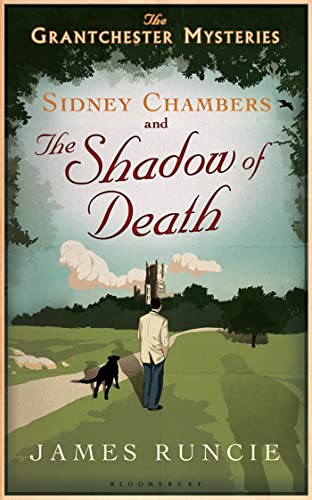
James Runcie, Sidney Chambers and the Shadow of Death (The Grantchester Mysteries),  London: Bloomsbury Publishing PLC (2012), Edition: First Edition, Hardcover, 400 pages, available through (Australian) public libraries. (Paperback $15.00 approx. online)

Reviewed by Ted Witham

I am glad to have met Canon Sidney Chambers, a priest who is an accidental sleuth. The Grantchester Mysteries begin in the early fifties when Sidney Chambers, who has received a minor canonry from an African diocese, begins his ministry as Vicar of Grantchester near Cambridge. Chambers is a war veteran who has seen active service, and a bachelor unable to choose romantically between a young German widow and an old London friend Amanda Keating. He is conscientious about his ministry, wanting to be available pastorally to his people and to frame all the day to day work of the parish as part of the mission of the Kingdom of God.

However, Sidney finds himself drawn into different crimes: partly because of his association with his best friend, Inspector Geordie Keating, with whom he shares a weekly beer and game of backgammon, and partly because a clergyman can go where others cannot. For example, the mother of a young woman he is preparing to marry dies suddenly. The woman’s fiancé is a doctor and her mother would not give her approval for the marriage. The match and dispatch aspects of his ministry give him access to the young murderous couple while his friendship with a policeman gives him a reason to question the coroner.  

The stories are easy to read. Each crime is only short, and the characters move comfortably in and out of the stories depending on whether they are set in Cambridge or London or in the great house of the local gentry. Their tone is light-hearted, and I chuckled gently at many points. Some of the dialogue made me laugh out loud.

This clergyman loves jazz and cricket and dines occasionally at his old College where he teaches New Testament. He wonders whether he is a bit eccentric among clergy. In fact, part of the pleasure of reading The Shadow of Death is the authenticity of the picture created of parish ministry in post-war England.

James Runcie, son of the former Archbishop of Canterbury, may well be writing from his observations growing up as a clergy kid. He has certainly created an engaging priest-detective, a worthy successor to G.K. Chesterton’s Father Brown.  Mr Runcie has promised another five Grantchester Mysteries spanning the period of English history from the accession of Queen Elizabeth II to the marriage of Charles and Diana in 1981. I look forward to following Canon Chambers and his sleuthing.

The Hearth of God


My new translation of an old prayer:

Fill this house with your presence, Loving Lord, and keep far from us all the poison of the enemy. With your holy angels around us, protect us within the circle of your peace, and bless us always with your love. Through Christ Jesus our Lord. Amen.

[The Original:

Visita, quaesumus, Domine, habitionem istam, et omnes insidias inimici ab ea longe repelle: angeli tui sancti habitent in ea, qui nos in pace custodiant, et benediction tua sit super nos semper. Per Christum Iesus Nostrum Dominum. Amen.]

The Parable


THE PARABLE


How sad the sower —
the thrower
of seed.
In bonding for ever
in life
is his need.
Yet the task
the Father asks
is to throw
Far from his heart
to death to part,
and perchance not grow.
It’s utter folly
to risk losing love
and throw life away.
Yet the melancholy
Jewish raconteur
enjoins you and me
to lose all,
and in the losing
not to know
if the prize is yours.

Ted Witham


Christ’s truth


The truth about Christ


They wanted a Christ to blaze out the Romans,
a warrior, a men amongst men, a giant.
A Christ to right all wrongs, to fight all omens,
To end all nightmares, ultimately defiant.


They wanted a Christ who was nice to people,
a yes-man, a crowd-pleaser, indiscriminately tolerant.
A Christ to suit the moment, a respectable sample,
To grace society, selectively competent.


They wanted a Christ who hated their foes,
on our side, a party man, with the vision of a tunnel.
A Christ to back our bias, who our way goes,
To be our justification, an upside-down funnel.


Jesus lives with an all-blazing love,
a heart saturated with God and endless understanding.
A cruel cross joining below with above,
To be our other side, our way to God’s landing.


© Ted Witham, 1998


Emerging Butterfly?


Peter Rollins, How (Not) to Speak of God, Paraclete Press 2006. E-Book 2012

Reviewed by

Ted Witham

The key idea of How (Not) to Speak of God is that many Christians in the “Emergent Church” movement embrace paradox. The first few chapters unpack the implicit idea in the title: that the moment we speak of God, we deny who God is. All attempts to define or describe the Christian God are doomed.

This is, of course, not a new idea, but it is unusual for evangelical Christians to push the point as hard as Rollins does. Essentially, Christians are atheists, because our God is beyond human category. At best, we can glimpse God in icons which often appear to point away from the reality of God, but which express metaphors that are self-consciously metaphors and not definitions.

Christians are defined not so much by what they believe as by how they believe; and this dynamic faith will manifest in works of mercy and restorative justice in the real world.

The second part of this encouraging book is a series of liturgies designed by the house church in the Menagerie Bar, the pub that Rollins calls his spiritual home. The themes range from Judas to Corpus Christi to Eloi Eloi Lama Sabachthani. The description of each liturgy is preceded by a reflection introducing the theme. The liturgies emphasise imagination and emotion and are described in practical detail, so that readers could use them as they are, or adapt them for their own setting.

If this is the coming, emerging church, then I would not mind belonging.

Six Complaints about “Boat-People”


Asylum seekers arrive at Christmas Island

I’ve heard many complaints about boat-people in the past few weeks, no doubt fuelled by the inflammatory statements of some politicians. Here are six of those complaints with my response to them. For each of the complaints there is,  I think, an underlying and unnecessary fear. I have listed these as well because I believe that our community will not begin to resolve these issues unless we listen intently to these fears and reassure people of our safety.

Click on the link below to open a PDF file:

6 THINGS ABOUT BOAT-PEOPLE

Killer planes and Christians


One cheer for the Americans. It is reported that a drone aeroplane killed Abu Yahya al-Libi, Al-Qaeda’s number two. Oh, and by the way, probably six other militants were killed in the same strike.

The world is probably better off without al-Libi and his like. They plot terrorist acts against Westerners, and I have no cheers for terrorists.

But our Christian moral tradition calls this extra-judicial taking of life by its proper name. It is murder. It is a violation of the sixth commandment: “You shall not kill.” It happens that my personal Christian commitment is to non-violence, and I am against all killing including killing in war and killing by the death penalty.

But I respect those who fought in wars. I think of my grandfather and the difficulty he had in re-connecting with his children after nearly three years away on the Western front. I think of my uncle Sim, his body racked with the shakes of Parkinson’s and a fragile mind, pushed to its limits by the memory of an engagement on ‘No-Man’s Land’ between trenches.

As soldiers, they were involved in killing. But they were fighting to keep our kind of society: they wanted a free society; a society where there is due process; a society where the actions of criminals are tried before punishment is pronounced.

Killing bin Laden and killing al-Libi without a trial makes a travesty of our democratic way of life. It is the behaviour not of a true democracy, but the actions of a vigilante group.  We Christians may not agree on the specifics of these targeted strikes against individuals, but we should agree on the desire for justice and the care necessary for every human being if true justice, the justice envisaged by the prophet Isaiah is to be the real experience of our society.

Do you think it was right to kill this man? And what would you say about this to President Obama if you met him … or if you decide to write to him. (Go online to http://www.whitehouse.gov/contact, or address the envelope to The White House, 1600 Pennsylvania Avenue NW, Washington, DC 20500, USA, and (from Australia) put a $2.35 stamp on it).

First posted at Dunsborough Anglican Church