Psalm 24 for Western Australia


Psalm 24

A psalm of David.

The Lord owns Western Australia and all it contains,
the world and all who live in it.
For he set its foundation upon the two oceans,
and established it upon the Leeuwin currents.
Who is allowed to ascend the mountain of the Lord?
Who may go up to his sterling dwelling place?
Those whose deeds are blameless
and whose motives are pure,
who do not lie,
or make promises with no intention of keeping them.
Such godly people are rewarded by the Lord,
and vindicated by the God who delivers them.
Such purity characterises the people who seek his favour,
Wollaston’s descendants, who pray to him.
Look up from Karinjini park, you water-tunnels!
Rise up, you eternal gorges!
Then the majestic king will enter!
Who is this majestic king?
The Lord who is strong and mighty!
The Lord whose power is breathtaking!
Look up, you gorges!
Rise up, you walls of the abyss!
Then the majestic king will enter!
10 Who is this majestic king?
The Lord who gives life breath!
He is the majestic king!

New English Translation (NET)

NET Bible® copyright ©1996-2006 by Biblical Studies Press, L.L.C. http://netbible.com All rights reserved.

dsc_0076-680x1024
A gorge in the Karinjini National Park. Image: Tom Price Visitors’ Centre. W.A.

The Snake’s Sin


The snake, in his tempting, makes us confused,
What is the sin, what punishment to come?
Is it pride, or wisdom or God’s traits to be used
that we deeply desire with our heart’s sum?

The snake, in his tempting, is skilled at misleading,
Look here, I’m a snake! Flabby sin at that address!
Is it sex, is it shame, is it clothes now receding?
Our focus is blurred by cold thoughtlessness.

The snake, in his tempting, makes our souls judder,
Shining skin in its blackness pretends to go deep:
Is it fear, is it self’s fickle flutter
that we dunk our souls in ourselves to steep?

Banish this snake, his crooked advance and sick ways,
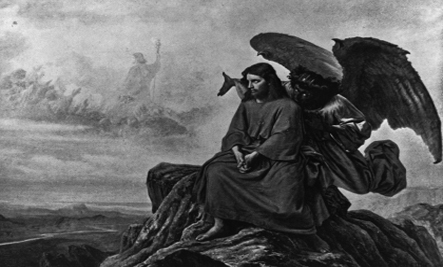
Place God at the heart of our loupes’ precious gaze.

  • Genesis 2:15-17, 3:1-6
  • Luke 4:1-13
  • (Lent 1, Year B Lectionary)
thruloupe
Photo jeweller’s loupe: Courtesy mazaldiamond.com

Psalm 29 for a flooded Western Australia


Psalm 29 for Western Australia

A Psalm of David

1Acknowledge the Lord, you heavenly beings, 

acknowledge the Lord’s majesty and power! 

2 Acknowledge the majesty of the Lord’s reputation! 

Worship the Lord in holy attire! 

3 The Lord’s shout is heard over the water; 

the majestic God thunders, 

the Lord appears over the surging water.

4 The Lord’s shout is powerful,

the Lord’s shout is majestic.

5 The Lord’s shout breaks the jarrah trees,

the Lord shatters the karris of Pemberton.

6 He makes Esperance skip like a calf

and Northam like an emu chick.

7 The Lord’s shout strikes with flaming fire. 

8 The Lord’s shout shakes the desert,

the Lord shakes the Great Sandy Desert. 

9 The Lord’s shout bends the large trees  

and strips the leaves from the forests. 

Everyone in his temple says, “Majestic!” 

10 The Lord sits enthroned over the engulfing waters, 

the Lord sits enthroned as the eternal king.

11 The Lord gives his people strength;

the Lord grants his people security. 

northam-in-flood-feb17
Flood waters near Williams WA. 13/2/2017 Courtesy ABC


Puncturing Trump’s Power


If the idea of the weakness of God in the world of Trump offends you, please read on. The President of the United States has vowed to ‘make America great again’, and logically America’s greatness must be at the expense of the rest of the world. He wants to use his power to decrease the life-chances of Mexicans, Syrian refugees and the environment.

It seems that this is a man using excessive power to accumulate more power. He can bully everyone from a Prime Minister to a girl in the backrooms of the White House. Be sure, the psychologists tell us, that a man like that who can use his power over others will display that power.

The response to Mr Trump portrayed in both traditional media and social media is often hysterical. ‘When will someone exterminate that man?’, one exasperated Facebook post asked. ‘This Crazy Man,’ writes another, ‘will provoke Iran into war.’ Or another typical reaction, ‘I’m terrified for the world.’

For those of us, white Western males in particular, who think we have power in this world, Mr Trump is a challenge. We want to use our power to change Mr Trump’s thoughts and actions., just as we use our power more locally. We are accustomed to our politicians responding to our emails, to bending the way of the people, and to honouring the democratic will every three or four years.

We tell ourselves that we can change things. We fantasise that we are staffers in the TV series The West Wing. We ‘speak truth to power’, and power listens.

But Mr Trump reminds us that we delude ourselves. I think we should take some care how we respond to him for fear of setting off damaging reactions. To bring power against Mr Trump, however great that power, will result in a reaction of more power. We threaten Mr Trump and the violence ratchets up. His Acting Attorney-General defied him on his Executive Order regarding immigration. He sacked her. His Generals advised him of the power of Al-Qaeda in Yemen. Mr Trump used a drone to kill 30 human beings.

It seems to me that we Franciscans have a contribution to make here. Particularly when a power-oriented President is breathing out fire.

We believe that the Divine way is the way of littleness, the path of humility.

Mr Trump, were he to encounter the concept of littleness, would not understand it. For him, being little is the worst kind of weakness.

The path of littleness eschews using all power over others. The path of littleness sees ourselves as fallible pilgrims seeking a way forward that will nurture those around us. The path of humility sees the other as the focus of my concern and not myself. If I have wealth it is at the disposal of others, not myself. If I have earthly power, it is to promote the needs and wants of the least in this world. (And as Australians, as whites, and as males, whatever we say we do have wealth and power).

This way of littleness was incarnated by Jesus. He ‘took the form of a servant and emptied himself’ (Phil. 2:7). He made no claims to overthrow the Roman yoke, or even to get stuck into reforming the Sadducean hierarchy. For us as for Jesus, the way of littleness leads to the greatest of power; but this kind of power is the power of love, not the power of violence.

My resolution – for myself – is to hold back from trying to use my little bit of power to change Mr Trump through outraged blog posts and emails to the White House and to pressing “LIKE” to affirm the violent language of my friends.

I see only two responses I can make: one is satire (but I have no doubt that satire is a form of power), and the other is modelling the humility that seeks to put others first. I think of certain pupils at Christ Church Grammar School, I think of Jews in Auschwitz modestly trying to create a mini-world of care and kindness in the harshness of their surrounds. That’s what will change the world.

 

King Richard and me


Warming up for next week’s monologue workshop:

King Richard III: A History Lesson

Would you believe I’m a clone of King Richard,
the last of Plantagenet line?
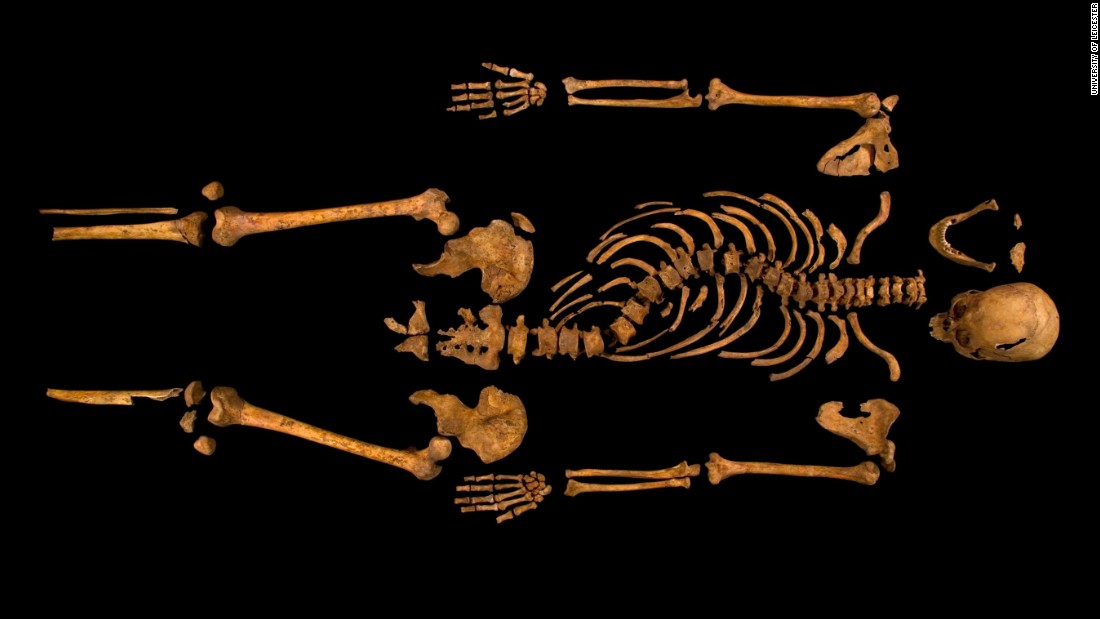
To start with, his spine describes an S-bend,
so his skeleton looks exactly like mine.

A left-hander like me was good King Richard the Third,
so with the sword in his left he surprised.
Does the archaeological record contend
That molly-dukers too are baptised?

A brother of brothers was Richard the King,
All of them in the end killed.
Then his nephews made way for him to ascend,
at murder he was mightily skilled.

Then Richard the Third was himself finished off,
Giving the field to bad Henry Tudor.
While Harry and family may have been thrilled,
It’s hard now to say who was the shrewder.

One thing’s for sure when comparing little me is,
Being a King may be fun while you’re thriving,
But being a nobody you’re much more fulfilled:
At least in the end you’re surviving!

  • Ted Witham 2017
Bosworth Battlefield Anniversary Re-enactment 2013
Battle of Bosworth


Breath on a Feather


A hymn for Epiphany

You Lord of grace, you’re breath on a feather,
You inspire us to care, adore;
Your breath helps us to praise you together,
Our song, just our song, can make us more.

You Lord of grace, you’re barbs of a feather,
Strengthen our spirits with love’s surprise;
Your longing heart helps us to tether
Ourselves to you, with you improvise.

You Lord of grace, you’re shaft of a feather,
You hold us tall whatever the storm;
You teach us to hold your standards to treasure,
And upright in virtue our lives may transform.

You Lord of grace, you are the whole vane,
You let us fly to love’s true height;
We feel your guidance your will ascertain
And our obedience makes you shine bright.


  • Ted Witham 2017
  • 9999 St Clement, O Waly Waly.


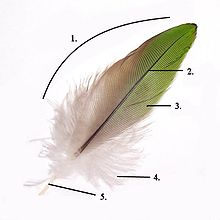
220px-parts_of_feather_modified
Courtesy Wikipedia

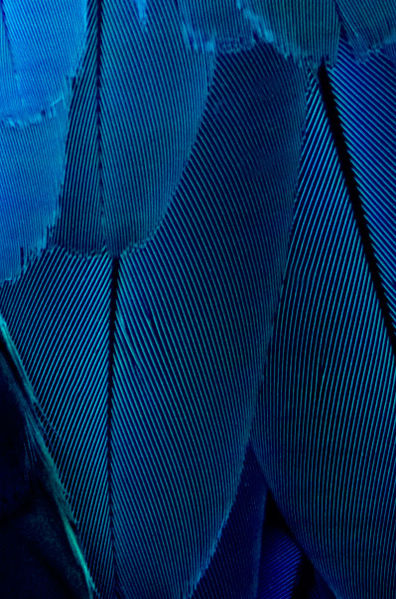
Parts of a feather:

  1. Vane
  2. Rachis
  3. Barb
  4. Afterfeather
  5. Hollow shaft, calamus


Incarnate Wonder


Some churches I have known have had dolls for the baby Jesus that are vanishingly small – one, I swear in North Carolina that was just over two centimetres long. In terms of worship size meant nothing, of course. When I carried in procession tiny dolls on large cushions, the people felt just as drawn to adore the infant Christ as if it were life-size.

The baby Jesus and the wafer-bread for Eucharist are such tiny symbols for such a large action of God: they point to God’s generosity in bringing himself down to the created order. The great wonder of love that we call the Incarnation is represented in tiny symbols.

I love church at Christmas. The joy of children at a Christmas Eve telling of the Nativity, however chaotic, the quiet carols and communion at Midnight Mass, the bustling crowds of Christmas Day. But this year, like the several past, I have not been able to attend any service, let alone the full bill that I enjoyed when I was working as a priest.

This year, I didn’t even try to get to church. The decision to travel to Perth and to be part of our grandchildren’s Christmas came first; and their Christmas is celebrated far from church. I knew I couldn’t even contemplate managing church in addition to the travel and the family feasting.

My body inconveniences me. But I am learning that I should not feel remorse or disappointment at missing the joy of church worship. For what is my body if it is not also a symbol of the Incarnation of God? Like a two-centimetre doll or a wafer weighed in micrograms, my body is a tiny symbol of incarnation!

But Christmas still recalls the Incarnation to me. Christ is the Incarnate God; our humanity is an instant of the Incarnation. It serves me well to remember that my body may just be a tiny instant of incarnation, but I must learn to avoid letting my body be a distraction from the wonder of incarnation. It lets me down. It keeps me at home when the good part of me wants to be at least one Christmas service. But God created my body, and the writer of Genesis emphasises how good creation is, my body included. I must manage the pain and immobility, true, but I must continue to allow God to work through my body by being present in people’s lives. Sometimes that means a card or an email, sometimes it means a visit. Sometimes it means a short story without any apparent Christian message, sometimes it means a homiletic blog like this.

I thank God that the fingers of my body make the physical language of the piece. I know as a pianist how complex and how strategic the anatomy of the wrist, hand and fingers are – they are a wonder. I thank God that the neurons in my brain fire to initiate the thoughts of my writing. 86 billion of them! And there’s a mystery beyond the neurons, somewhere between incarnation and Spirit, and that is what the mind-brain actually is. My brain is a wonder.

I thank God I can see people and be seen, touch people and be touched. Yesterday at the beach-front, I arrived in my wheelchair. Grand-daughter Aurora from 20 metres away opened her arms, ran to me, jumped on my knee and we hugged. Our wonderful is that incarnation!

It may be that I miss the liturgical re-tellings of stars guiding, shepherds running and wise men discerning when it comes to celebrating the Incarnation, but I am certainly not missing out!


Genesis 1:1 – 2:4a, John 1

The Fascinator: A sonnet for Christmas


The Fascinator

Tell the wild tale with vim and with panache
Chorus line of shepherds; veiled discerning
Mystics bringing gifts while earth’s cultures clash
To a baby: He our whole life’s learning.

Ring the bells, all people, stop! Now attend
to whispers of angels, meditations
Of mystics, fresh wisdom to us commend,
kindness of giving, godly fascinations.

Light the candle, we illuminati
with peace, earning goodwill to God’s masses,
Minding the child (He the celebrity)
with lambs and cows and companion asses.

All creation whispers the tale with awe,
All souls are responsive to His divine draw.

  • Ted Witham 2016

Psalm 96 for Australia


7 Ascribe to the Lord, Australians and West Australians,

ascribe to the Lord glory and strength!

8Ascribe to the Lord the glory due his name;

bring an offering, and come into his breathtaking gorges!

Worship the Lord in the splendour of holiness;

tremble before him, all Australia!

10 Say in W.A., “The Lord reigns!

Yes, the world is established; it shall never be moved;

he will judge the peoples with equity.”

11 Let the Milky Way be glad, and let the South West rejoice;

let the Indian Ocean roar, and all that fills it;

12 let the golden canola fields exult, and everything in them!

Then shall all the jarrah trees sing for joy

13 before the Lord, for he comes,

for he comes to judge our nation.

He will judge us Sandgropers in righteousness,

and all Australians in his faithfulness.


Based on the English Standard Version

http://www.esvbible.org/Psalm+96/

grasstree1253-12

Believing: a tangled skein


I heard of a priest who was asked recently, ‘Do you ever have moments of doubt about your Christian faith?’ The priest replied, ‘On some days I have moments of faith.’

I am intrigued by atheists who seem to think that if they can knock one argument out from under a Christian, they will have of necessity knocked the person off their Christian stool. Comedian Ed Byrne, for example, talking to agnostics, ‘If you haven’t heard God speak to you in a sunset or a beautiful landscape by the time you’re 40, you’re an atheist.’ His assumption appeared to be that just one thing could make the difference between being a Christian or not.

I experience being a Christian not as a series of skittles to be knocked over, but as a tightly tangled skein of meaning-making, experiences and fellowship. Included among my persuasions are doctrines, ethics and aesthetics, the ever-fascinating engagement with the Bible, my identity and my incorporation into particular parts of Christ’s Church.

So atheists sometimes try to win the argument by asking what I would believe it were proved that some bones were definitively identified as the remains of Jesus. The empty tomb is only one little part of my believing, so, depending on the day, my answer is either a confident argument from logic, ‘It will never happen’, or an answer from conviction, ‘It would make no difference to my foundational belief.’

Some Christians trip over philosophical wires by trying to solve the puzzles of the 2nd and 3rd Centuries. What does it mean to call God a Trinity? The Prophet Mohammed was one person for whom the doctrine of the Trinity disproved Christian faith. He founded a new religion with monotheism front and centre. Five times a day, his followers now proclaim the Shahada, ‘There is no God but Allah.

trinityflyer‘One God in three persons’ makes less sense for our times because of the philosophical assumptions at the time the Creeds were written. Faith that God is one in three is always faith, however, and Christians can choose simply to believe it, or like Catherine La Cugna or Karl Rahner in the 20th Century devise completely new philosophical pre-suppositions for the doctrines of Trinity.

Other Christians recite the Creed each Sunday, ‘We believe in One God’ – the Trinity – as a statement of the historical faith of the Church. This is the Church and its beliefs in which I choose to belong, even while holding lightly to the details of these dogmas.

I have many moments of not believing or understanding how Jesus Christ can be completely human and completely divine: there are just too many paradoxes in the doctrine to contemplate at once. However an atheist who shows me how irrational this belief is will not therefore persuade me out of being a Christian.

Bedrock to my faith is the person of Jesus, yet many atheists join me at the core of acclaiming Jesus as a provocative teacher of good living, although some atheists try to make Jesus interchangeable with other gurus and guides.  I do stick to the uniqueness of Jesus. This comes partly from my ongoing fascination with the Hebrew and Christian Scriptures. Many atheists find they can reject Christian faith without reading the Bible. I find its books more and more intriguing as I read them, whether it’s unravelling the insights of Wisdom literature or attempting to interpret the Book of Revelation.

123166-004-87cb3f17
Saint Jerome – courtesy brittanica.com

As I read the Gospels, I find more and more to surprise me. In the ‘Good Samaritan’, Jesus tips the world of loving upside down. Unlike his peers, Jesus calls us loving outsiders as equal a duty as loving our families. Another surprise: Being a neighbour is not so much about those whom I can help, but about who I allow to be neighbourly to me.

Much of my experience of being a Christian comes from the Church which has shaped me, paid for my theological education, and which continues to give me support. Just this fortnight with my wife away, I am experiencing the practical help of the local congregation bringing me meals. Of course, such do-gooding is not limited to Church people, but the fact that it is Church people living out charity as part of their faith reinforces my Christian identity too.

I cannot undo my experiences. I have discovered God in the music of Olivier Messaien. I can try to explain it away in psychological terms, but nothing can change what Messaien has revealed to me.

There are days when I try to persuade myself out of faith, but it can’t be done, I don’t think, because my faith is too vigorous a garden and grows by weeding and digging out old growth. One-punch atheists don’t get the complexity of religious faith as they believe it is a single flower.

I offer this short piece as one flower of my thinking as a Christian.

m