The Ghost Theatre by Mat Osman: I loved this novel!

The Ghost Theatre is my standout book for 2023.


Mat Osman, The Ghost Theatre: A Thrilling Adventure, Overlook Press 2023.

ISBN: 9781526654403. Hardback 313 pages

Paperback (Bloomsbury Press) from $20 online

In Public Library system

Reviewed by Ted Witham

The stage is illuminated by just four candles. A boat’s prow appears behind the curtain at the back. A blue cloth billows across the stage, making the boat appear to gyre in the waves. A firecracker above and the drum-roll of wood on metal rock the stage. Cleopatra appears in the bow of the boat. She waits her moment and then speaks. She knows her power. The prompt just below the front of the stage is thrown again as Cleopatra strays off-script.

But she knows her public.

The fifty or so audience members are mesmerised by every word, every stage trick, everything that makes up the theatre experience in 1603 London.  

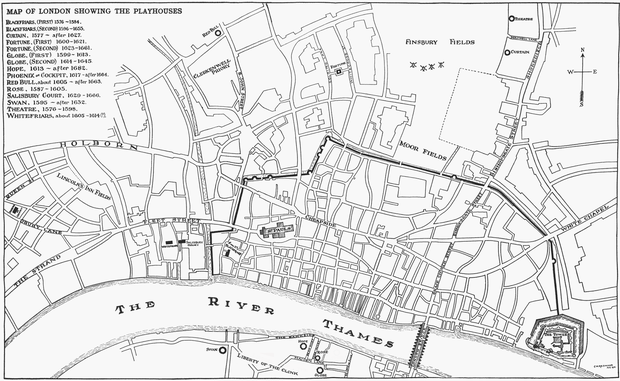
The theatre in Mat Osman’s gorgeous novel is modelled closely on the real Blackfriars Boys, even to the extent that the impresario who owns the boys is named Evans (the historical Henry Evans held the licence for the Blackfriars).

The actor who plays Cleopatra so captivatingly is ‘Lord’ Nonesuch, a 15-year-old boy whose acting brings him fame, ‘name recognition’, throughout the 400,000 residents of the city.  Adoring girls wait for him at the theatre door.

A dark side soon appears: the boys are forced to perform for parties at Evans’ house and the houses of other rich gentlemen. Nonesuch is painted white and stands on a plinth for the aristocrats’ diversion. Osman does not directly describe these tableaux; he appeals to our imagination to fill in the detail – or not.

In a clever misdirection, Nonesuch at first appears to be the main protagonist in The Ghost Theatre. He is so charismatic, and so much the leader of the boys (and girls) of the theatre, that Osman makes us admire him and worry for him. His backstory is dire. He is no Lord, but when he was ten, Evans bought him for sixpence from his drunken parents.

Shay passes as a boy to earn pennies as a messenger. She avoids the crammed streets by running the rooftops like urban runners in the 21st Century.

She lives on the marsh in Southwark. She and her dying father are members of the Aviscultans, a community outside the law (in Elizabeth’s England you have to be Church of England, or else), and is slated to take over from her late mother as the soothsayer who interprets the murmuration of the starlings. In the City, she hides her shaven and tattooed head with a cap.

She is so intrigued by her chance meeting with Nonesuch that she returns with him to the theatre and quickly becomes part of the little world of the boys and special effects girl Alouette and costume maker Blanch, a West Indian diver.

A quiet connection is established with Alvery Trussell, the quiet, clumsy boy who can’t quite learn his lines, and is everything that Nonesuch is not; at least in Nonesuch’s eyes.

Nonesuch is introduced to the rooftops. Their teenage romance is warm and beautiful. The other Blackfriars boys are generously happy for Nonesuch to share his cot with Shay in the dormitory.

Trying to gain a little freedom from Evans he and Shay set up pop-up theatres in pubs and alleyways, the Ghost Theatre. They had to be careful of the Queen’s enforcers, the Swifts, because theatre could only be performed with a licence.

They quickly make enemies. The villains in The Ghost Theatre are portrayed by the actions of their hoodlums; Gilmour’s men are after them, Elizabeth, the dying Queen deploys her Swifts with ruthless cruelty. Evans is ambitious in his cruelty. He is a thoroughgoing nasty man.

As their popularity grows, Shay and Nonesuch are inevitably drawn into these dangerous politics just as the plague hits. They flee the ‘sick city of 1603’ to perform in the country.

The politics and the relationships of the main characters pull the reader to a big dénouement involving a brutally repressed revolt of apprentices (in reality, the Tower Hill riot took place in 1595, so the novel skews the timeline – to good effect).  

I loved this novel. The theatre world is drawn with careful detail, and the descriptions of London are alive and rich. The characters are all lovingly brought to life, and as the plot twists so do Nonesuch, Shay and Thrussell.

Historical fiction fans will enjoy this living, breathing, dirty, roiling London. Although teenage romance is at the heart of the novel, it is a book for all romantics. Shay and Nonesuch may be only 15 but, in order to survive in such a vicious place, they have a dignified maturity.

And, if you love theatre, you will savour the Three Acts of this Thrilling Tale. It is my standout book of 2023.

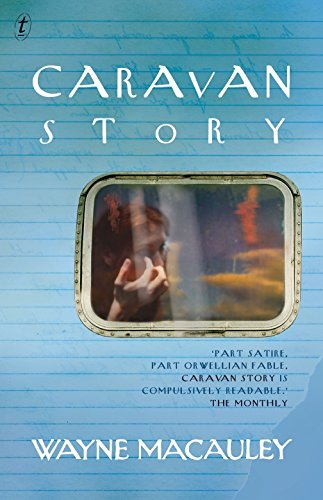
Caravanning around

…extremely funny and bitingly serious about the state of the arts in Australian society.


Wayne Macauley, Caravan Story, Melbourne: Text, 2012 (2007)

ISBN 9781922079121

208 pages

Paperback from $15. Kindle $11.96

Reviewed by Ted Witham

The humour is Australian; the settings are banally Australian. There is a lot to like in this savage satire by Melbourne writer Wayne Macauley. Caravan Story was his second novel.

Wayne Macauley

Since the original publication of Caravan Story in 2007, Macauley has published The Cook (2011)and Simpson Returns (2020). A book of stories Other Stories was released in 2011. He has received a number of prestigious prizes for his writing.

In Caravan Story, the writer, ‘Wayne Macauley’, wakes up one morning in a caravan being towed away. The destination is a country town on the footy oval turned into a caravan park.

He finds himself in an oval full of artists, carted here by the Government. They are instructed to make themselves useful members of society. They are fed and housed while they create.

The painters and the actors soon find ways of turning a dollar, but the writers are unable to be so enterprising. Their writing efforts are collected, but it turns out that the rejection slips have already been written. The plot shows ‘Wayne Macauley’ and his partner escaping home from this crazy world of disillusion, and on the way is extremely funny and bitingly serious about the state of the arts in Australian society.

As a writer, I revelled in this book, both for its questioning of the ‘usefulness’ of poems and stories, and for the loving attention to the details of footy clubs, high schools and caravan living. But it is a book for people other than writers, simply to have a laugh at Governments’ total incomprehension of the arts, and the importance of writers, and all of us, to ground ourselves, to have a place that is ours — a home.

Satire kicks our consumerist world

The Transition is the funniest – and best crafted – novel – I have read this year.


Luke Kennard, The Transition, Fourth Estate (2017)

Paperback (Used) from $10, Kindle e-book from $8

ISBN 9780008200459

Reviewed by Ted Witham

The Transition is the funniest – and best crafted – novel – I have read this year. Well-known in Britain as a poet, this is Luke Kennard’s first novel.

Millennials Karl and Genevieve are struggling to make ends meet. Locked out of the housing market with Karl unemployed, Genevieve is a Primary school teacher. She loves her job, and despite her day-to-day frustrations in the classroom, believes in its importance to society.

Karl writes online ‘cheat’ essays for university students of English literature. He is drawn more into the online world of writing for cash until he finds himself convicted for fraud for his almost intentional participation in an illegal scam.

Instead of jail time, the couple is offered a placement in ‘The Transition’, a program that invites a commitment of six months to turn their finances, and lives, around. They are billeted in the spare room of Stu and Jenna, who follow a mysterious Manual to reform their guests.

‘The Transition’ turns out to be not quite as advertised. As Karl explores the scheme’s underbelly, Kennard reveals a wider community based on inequality, where the poorer middle-class are shut out of the common wealth of their society, and where big data distorts and dictates their lives.

These forces override people’s compassion for mental illness, and Genevieve’s descent into illness is sensitively described.

The themes are serious. Kennard treats them seriously, but with a joyous lightness that helps us sympathise with a couple just trying to make it through the week.

I plan to re-gift my copy of The Transition this Christmas – and I have no feelings of guilt whatever in doing so. It’s the sort of novel you want to share!

Discoveries before The Second Sleep


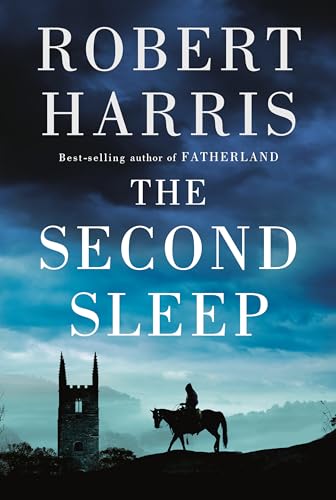
Robert Harris, The Second Sleep, Knopf, 2019, 320 pages.

From $23 online. Kindle $AU 4.99

Reviewed by Ted Witham

The Second Sleep is set several centuries into the future after the great collapse of civilisation. A powerful – and fundamentalist – church has taken power while England has returned to pre-industrial conditions: there are no cars, and therefore roads are poor. The fastest travel is horse-back.  Village life centres around small-scale horticulture, providing just enough for the villagers.

A young priest is sent to a tiny village in Exmoor to bury the parish priest who has died after decades in the same parish. He discovers a world of secrets, from the housekeeper’s relationship to the old priest, to the illegal search for evidence of pre-collapse civilisation.

Many of his discoveries take place between the first and second sleeps, as people have reverted to the pre-electric light habit of having a period of waking between two stretches of sleep. ‘The Second Sleep’ begins to take on more meanings as the novel progresses.

Robert Harris is known for his novels of Ancient Rome (Imperium, Lustrum, Pompeii) and of institutions under stress including the army and the church (An Officer and a Spy, Conclave).  He writes page-turners, and his writing is simple and clear. You feel the mud and slush of unpaved streets and the smell of animals sharing living space with humans.

The Second Sleep is a compelling novel of the new genre of cli-fi (climate science fiction). Itis a meditation on our world on the brink of great destruction, perhaps brought about by climate change, perhaps not, and our values of freedom and progress.

Harris makes no final judgement as to which is worse, our world or his dystopia, but The Second Sleep is an appeal to maintain an open society in which power is shared between citizens and not centralised in a power-hungry institution.

It is also a novel of finding love and the difficulty of holding onto love in a repressive society. After a slow start with the characters, I enjoyed the priest Fairfax, his Lady, Sarah Durston, and Captain Hancock.

Lessons from a personable robot


Simon Morden, Bright Morning Star, NewCon Press, 2019.

Kindle edition: $AU 8.75

Paperback: $24.

Reviewed by Ted Witham

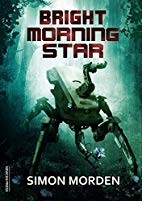
The cover image for Simon Morden’s Bright Morning Star rather spoils the mental picture I built up for the ‘Robot’ who is the main character of this speculative story.

An alien probe lands on earth and finds itself in the midst of humans fighting. The probe’s task is simply to investigate and report back to Mother (the spaceship in orbit). The probe is self-aware and begins to forensically examine the corpses of victims of a mass shooting.

It then realises that there is intelligent life on earth and decides to study this life-form more fully. It gradually becomes aware that the shooting is part of a proxy war between Russia and the USA. The name of the nation-state which first protects him is not given, but this reader gained the impression that it was a fictional version of Ukraine.

As the probe gains understanding of the ramifications of the war, it deduces that war is inefficient and should be replaced by peace and cooperation. The humans who fall under his influence begin to realise that without international cooperation, the human race will never succeed at space-faring and will tear itself apart.

Bright Morning Star is told entirely from the perspective of the ‘Robot’ and in its voice. Simon Morden has taken a risk in making a logic machine the main character in his novel, but ‘Robot’ learns to behave empathetically and forms attachments with different humans.

I gained the impression that ‘Robot’ was much less massive than the cover image: its emerging personality was writ large, not its physical attributes.

Bright Morning Star is a good read and its appeal to the best in humanity worth hearing again.

Laugh-out-loud descendant of Don Quixote


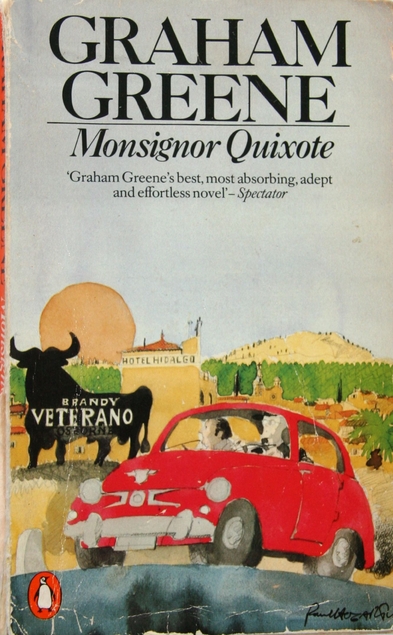
Graham Greene, Monsignor Quixote, London: Penguin Books, 1982.

In public library system.

256 pages, paperback. New $15, Used $10, online

Reviewed by Ted Witham

Graham Greene’s modern take on Don Quixote made me laugh out loud. The way simple parish priest Father Quixote becomes a Monsignor is delightfully unbelievable. With a vague ideathat he is like his ancestor Don Quixote, the new Monsignor sets out on adirectionless road-trip with deposed Communist mayor ‘Sancho’ Panza. He nameshis ancient Seat motor car Rocinante after Don Quixote’s steed.

Fortified by a few sausages and a great deal of wine of La Mancha, the priest and the mayor, old friends and sparring partners, find themselves hilariously tilting at the Guardia Civil, the modern equivalent of windmills.

The two friends discuss faith and communism, friendship and authority, and sleep off the wine. The exploration of these deep topics is playful but insightful.

Greene’s writing is lucid and engaging. I don’t know how I missed this, Greene’s ‘best novel’ according to the Spectator, but it was great fun.

The priesthood: no other life?


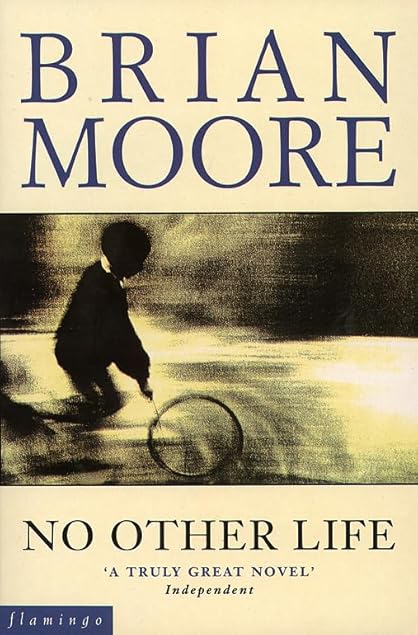
Brian Moore, No Other Life, London: Flamingo 1994. Paperback 216 pages,
ISBN 9780006546924.

In W.A. Public Library system.

Reviewed by Ted Witham

Brian Moore (1921 – 1999) was a well-known writer of the 1980s and 1990s. He wrote the 1991 screenplay based on his novel, Black Robe, exploring the Jesuit missions with Native Americans in frontier Canada. Moore was short-listed three times for the Booker Prize.

In No Other Life, the black robes of Jesuits are exchanged for the white robes of the White Augustinians, and the cold places of Canada for the warmth of Ganae. a desperately poor Caribbean island.

The Augustinian Fathers run a school where the mulâtre (mixed-race) elite educate their children. The noirs, the blacks, are kept in wrenching poverty by corruption. The island has always been run by a mulâtre dictator backed by the army.

Father Paul Michel wants to increase the number of black children at the school. He rescues a talented boy, Jeannot, from abject poverty. Jeannot is a single-minded boy who declares he wants to be a priest like his mentor. He eventually joins the Augustinians but runs a parish for the poor rather than work in the Order’s school. Jeannot’s oratory raises the hopes of the poor and he is elected President. But the effects of his leadership are ambiguous: is he an old-style socialist rabble-rouser, or is he a saint? The locals think he is their Messiah.

When the Augustinians expel Jeannot, he turns to his mentor. He implies that he would rather give up everything than be stripped of his priesthood. There is ‘no other life’.

Father Paul finds himself at the heart of a dilemma: is a priest an educator of the rich, or the servant of the poor?  Is faith a pre-requisite for the priestly life, and what happens if a priest loses it? From the moment he meets Jeannot he feels a bond with him, but as their friendship grows, Father Paul learns how to love. When violence and chaos erupt from the actions of his friend Father Paul asks how far does loyal love extend?

This is a gripping and beautiful story, written with a sure touch. The events on the island of Ganae are presented in a fascinating manner, but the themes of ambition and identity resonate everywhere.

No Other Life is certainly a book for priests. What is the core of Christian priesthood, and by extension, Christian practice? Is there ‘no other life’ that we can imagine for ourselves? And if not, that goes to our vocation and identity.

But is also a novel that will draw in any person and open us to the love that is in our midst even when we feel it is absent.

Magpie remedy


0648146618-01-_sx142_sy224_sclzzzzzzz_Steve Heron, Maximus, Serenity Press 2018

191 pages, $21 online

Reviewed by Ted Witham


Eleven-year-old Mitch feels a little out of place when his Fly In – Fly Out (FIFO) dad’s behaviour becomes erratic. Mitch makes friends with an ailing magpie, whom he names Maximus, and they heal each other.

This inventive novel deals with themes of self-esteem, family love and first love with tenderness and skill. It draws on Steve Heron’s long experience as a worker with children. Steve, the founder of the BUZ programs (Build-Up Zone) for primary-aged children, has written before, but this is his first full-length novel for children.

I enjoyed it. Be-friending a magpie is obviously drawn from experience. The book contains a brilliant description of an inter-school football match.

Maximus means ‘the Greatest’ in Latin, and Steve shows the journey to greater self-esteem in a way that will appeal to middle- and upper-primary readers.

I am a friend of Steve’s and a former colleague, and I am proud to commend this engaging story.