

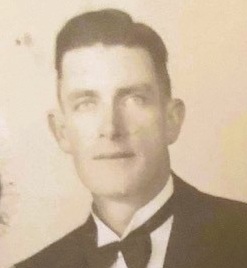
My Dad, William Roy, would have turned 120 on his birthday, July 12. He was born in Goderich Street near Royal Perth Hospital in 1906. Dad was the sixth in his family, and two years later, twin girls, Pix and Kate, completed the family. To celebrate this anniversary, I hope you enjoy the story of his teenage years from 1914-1922.
In 1914, the drought in Western Australia was so severe that it became a benchmark for all subsequent dry years. ‘Not as bad as 1914,’ weather forecasters and farmers alike console themselves in dry years since.
1914 was the year when my grandparents, Walter Moltke and Annie Witham, bought a farm at Brookton, when young Bill was 8. (Dad was known as Bill as a child, but for all of his adult life, everyone called him Roy.) So he was Bill for the time of these events.)
By the end of 1914, the farm was a flop because of the drought (and also, maybe, because Walter Moltke had a lot to learn as a farmer), the Withams moved back to Swan View to resume their life as dairy farmers.
Walter Moltke and Granny Annie did quite well then, because they were able to sell milk and scones at the Blackboy Hill training camp.
Bill had two or three years more of schooling at Perth Boys’ School He left school at 12 or 13, and had a job as a messenger boy in Perth for a year or so. This involved taking the train into the city, which had then a population of about 200,000, and running messages around the central business district.
Young Bill must have had a yen for the bush, because he spent the next 2-4 years working for surveyors. There was a lot of survey activity in the last years of the war and on into the 1920s as Governments scrambled to make farmland available, especially for returned soldiers.
Bill’s first job was in the deep south-west, between Walpole, Manjimup and Augusta. The thick forest made surveys difficult. Surveyors used a theodolite to measure distance, but they were useless in the karri forests because you could rarely get a line of sight. Instead, they used a heavy chain, the length of which was exactly 22 yards, a ‘chain’.
The chain was fastened to a point in the bush and unrolled in as straight a line as possible. Measurement was from point to point. The chain was heavy and it took some manpower to unfurl the chain to its fullest extent. 10 square chain made an acre, so it was slow, often wet, work in the forests.
(Later in life, Bill excelled on the cricket pitch, his skill refined by knowing by muscle memory exactly how long the pitch was – 22 yards, that is, one chain.
Bill got used to camping and living in the bush.
The work in the southwest finished up. Bill thought he would like to work in a chain gang for another season and signed up for work in the central wheatbelt, somewhere around Merredin. I gather this did not last long. Bill hinted that the boss was violent, and returned to Perth.
As far as I know, this was Bill’s last job for pay, apart from helping in the Swan View dairy and orchard. He and his brother Alex joined with his father to apply for land to farm. Because they were not returning soldiers (Walter Moltke was too old to fight in World War 1 and William Roy and Alex too young), they were bumped down the priority list. Eventually, they took up 100 acres in Newdegate around 1922, eventually becoming successful farmers.
No doubt, Bill knew exactly how many square chains they were buying!
⛓The featured image of a chain gang at work was created by Brendan Witham using AI and is used with Brendan’s permission.

