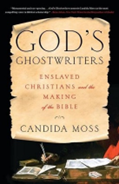
Who really wrote the New Testament?


Candida Moss, God’s Ghostwriters: Enslaved Christians and the Making of the Bible.
London, William Collins, 2024.
Paperback 267 pages + back matter
In Public Library System.
From $52 online.

Reviewed by Ted Witham

The healing of the paralytic is a favourite story in the New Testament. We’ve heard the story. Four friends bring a paralysed man on a stretcher. Unable to carry the man through the crowd to Jesus, they lift the stretcher onto the roof and dig their way down to Jesus.

Except that the story nowhere calls the stretcher-bearers ‘friends’. In the Greek text, they are just called ‘they’ with no indication of their relationship with the man on the stretcher. Some details, however, point to the man’s identity. It took four men to carry him, and the stretcher itself was solid enough to be lowered through the roof. It was a substantial litter. This man is likely an enslaver, and his four bearers are enslaved.

If this is true, it twists the meaning of the story.

Enslaved people were not seen as people.  And yet, when the stretcher touches down, Jesus addresses the four slaves. Courtesy demanded that he address the man being carried about, not his slaves. Jesus, however, chooses first to praise these slaves. He praises their loyalty, their faith. The Greek word pistis means both. In the story as we have it, these slaves come off well.

Only then does Jesus turn to the man on the mattress. He forgives his sin. Jesus faces down the scribes who accuse him of blasphemy. ‘No one can forgive sins but God alone.’ And then he tells the man, ‘Stand up, take up your mat and walk!’ It’s almost as though the man could do that all along. His ‘sin’ may have been ordering others to carry him about when there was no need. He was making that demand on them because, as a slave owner, he could.

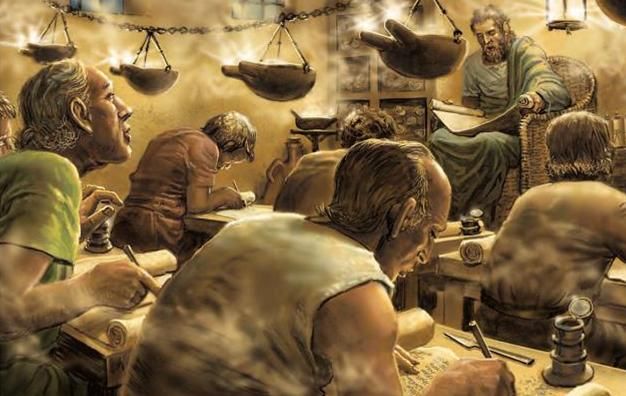
               In God’s Ghostwriters, Candida Moss argues that enslaved people did much of the writing of the New Testament. Named authors like Paul depended on slaves well-trained in literacy to write down his words, edit them, and make copies of them. Messengers, who were usually slaves, would carry these words and read them, often as an after-dinner performance. 

Professor Moss is Edward Cadbury Chair of Theology at the University of Birmingham. She is well-equipped to write about the ancient world and how the Christian scriptures fit into the Roman culture. She writes with verve and clarity.

Dr Moss argues that it is almost certain that these scribal tasks involved changing the words they were given.

Firstly, the slaves had to knead the master’s words into shape. This editing enabled those hearing the words to make sense of them.

Secondly, these slaves would have been tempted to make substantive changes to the text – and probably did. These tweaks would inevitably have introduced changes from the point of view of the enslaved, like the four stretcher-bearers digging through Peter’s roof being obedient slaves and not simply good-hearted friends.

Some parables, as Moss points out, make sense only from the enslaved point of view. Slaves, for example, would have been accustomed to absentee owners of vineyards who appointed their son as master of the vineyard.  The slaves would see that one was the same as the other. So God and Jesus could be simultaneously distinct entities and one person.

Thirdly, as part of their task, messengers would be required to perform these stories or letters. It was the custom for these readings to use voice, gestures, props and other devices to hold the audience. At times when audience attention failed, they would tell the story in other more interesting words, even inventing new passages.

Candida Moss suggests that the ‘long ending’ of Mark’s Gospel may have come into existence in this way. The slave reading the text would come to the words at the end, ‘They said nothing to anyone, for they were afraid!’ In the atmosphere of a dinner at which wine had been consumed, diners would hear this as an anti-climax and the reader would be blamed. Why not add some stories of the appearances of Jesus, wild stories of handling snakes and drinking poison?

Professor Moss concludes that we cannot know the individual changes that enslaved people made in the development of the received texts of the Gospels and letters. But we can know for certain that slaves did do the writing and did make changes as they went.

After reading Professor Moss’s attractive book, I, for one, will not read the New Testament in the same spirit. I will now try to really see these enslaved writers,bring them out of the shadows where they have been taken for granted for 2,000 years, and see what new and fascinating truths God is teaching me through their work.

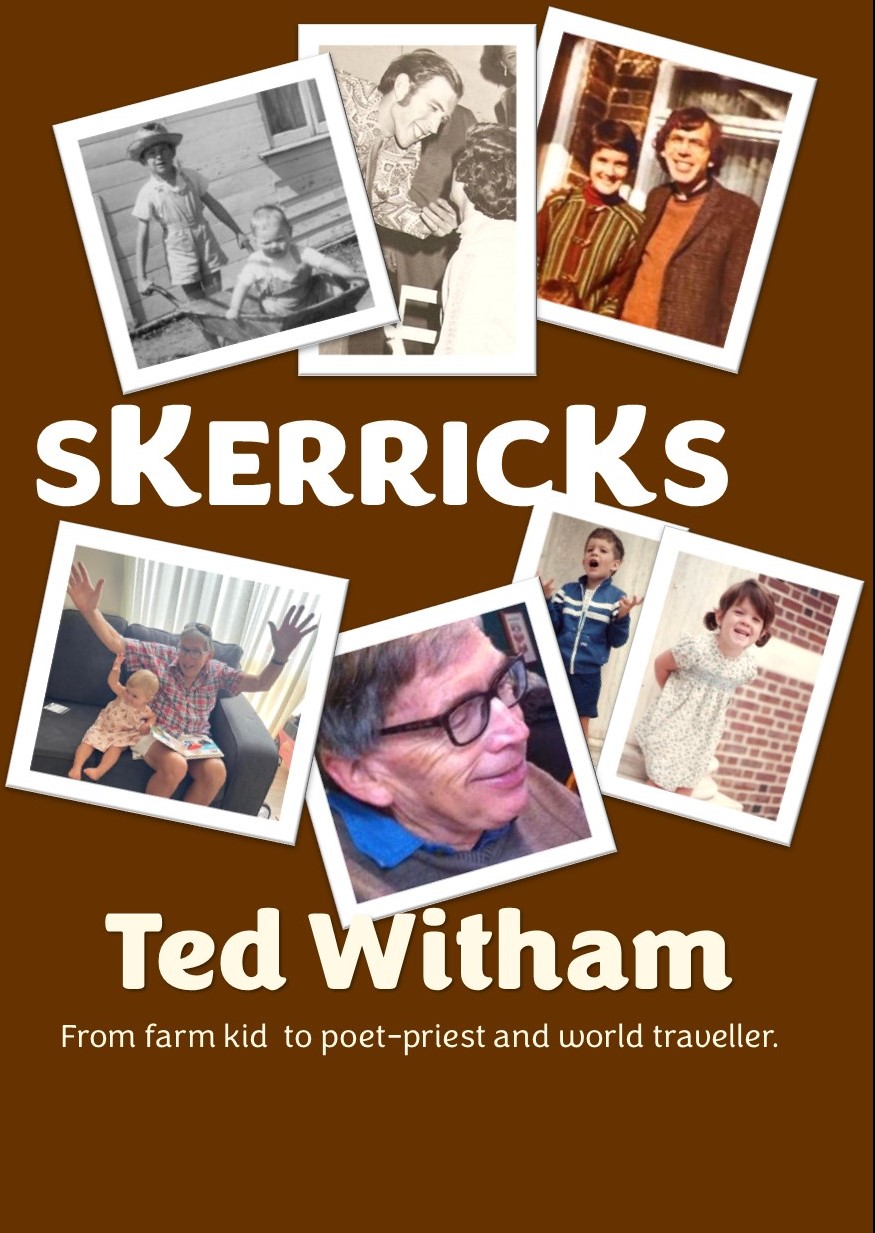
Skerricks – reviewed


Ted Witham, Skerricks: from farm boy to poet-priest and world traveller. 2024

Reviewed by Shirley Claughton

for the Anglican Messenger, September 2024

An impressionable memory in Ted’s teenage years comes from a shearing shed encounter,  “Normally one or the other was away at boarding school, or at a Junior Farmer’s State conference or visiting girlfriends in Perth” But at this party, Ted at 15, was chaperoned by brothers Barry, 18, Len 20 and Jim 24…not only ordered in years but also in height” – from 6 foot to over 6 foot five. When the guttural rumble of motorbikes made their presence felt – spoiling for a fight: Katanning versus Tambellup“ we formed up shoulder to shoulder…making a slow synchronized progress towards the door” and the bikes slowly turned around, revved their bikes with a sneer and drove off…”

But Ted’s life has been punctuated by life-threatening calamities. He ponders that had he been born just a few months earlier, no treatment for his condition (pyloric stenosis) he would simply have died. A surprising number of close calls with death throughout his early life might have started as a “sense of being lucky” but “gradually matured in being grateful.

A wonderful tribute to Sir George Bedbrook OBE who performed experimental surgery, never attempted in Australia before, “which mammoth operation kept me out of a wheelchair and allowed me to walk, run and play sport for many years.” Nevertheless, in his characteristic humbleness, he treats the reader to an image of a theatre crowded with assistants and he “uncomfortably naked”.

He had nurtured his ability for language, from childhood, discovering French “between the pages of Arthur Mee’s Children’s Encyclopedia” and nurtured this secret interest, eventually becoming bilingual, but also studying and excelling in Hebrew and Greek. Ted ponders over the inability of the farming community to recognize the Noongar presence, “they simply weren’t there, and nor were the Noongar words that seeped into our talk…it was as if English had a stubborn claim on the landscape”, and felt subversive when he was discovering the love of language. In a heartening story, this came together when, at twenty-nine years, he met Rae. As curate in the parish, he was writing pastoral notes in French as a measure of confidentiality. “Rae was looking over my shoulder and asked ‘why are you writing in French? ‘Well, I struggled for a reply. it can be private to me.’ Rae grinned. Not if I can read it’”

As a 14-year-old, the experience of attending the Commonwealth Games made a huge impact, “I saw so much, experienced so much…my eyes bulged..I had never seen so many folk in one place. Anticipation swung through the crowd, sweeping me up as it passed…”  “In nine days I had seen the whole world, and the world really could never be the same again.”

Theatre was important – in his 20’s he was involved at all levels and even briefly considered it as a career, but explains his sincere reasons for “not wanting my psyche to be constantly shoved around by one character and then another…” and also seeing incompatibility with his vocation as a priest.  “Now in my eighth decade, I have returned to writing short plays and nudging them onto the stage” And as an addendum, he wonders “if I was wrong to fear the psychological and value downsides of the theatre. People know that plays are storytelling ..”

Ted was a leader of reforms in the institutions he was part of. Whilst he does sometimes suggest he was really in the right place at that time, Ted was a crucial part of the movement of change in recognizing the value of individuals in schools and institutions.

He credits Rae as “his anchor and a magnificent companion, who makes me the best person I can be.”

Some years ago, two delegates to a conference in Sydney, happened to be seated next to each other for the long plane ride from Perth. “Great,” said one, “we can have a good chat to pass the time”. “Sorry ,mate,” said Ted, I have to take a sleeping tablet to get me through the journey” and proceeded to sleep soundly for the next four hours.

For Ted, a huge part of life was survival – in this memoir, he always sees the good in everyone he meets – when they get ripped off by a taxi driver, he nevertheless reflects that “for the rest of our week in Rome, we learned how generous Italians are”.  This charitableness permeates all his encounters. It also helps to recognize the steps toward the journey to the Third Order of St Francis, undertaken by both Ted and Rae.

We are treated to the skerricks of his journey, every little bit revealing more of his humanity, his humbleness, his self-awareness, and his willingness to admit to mistakes. Skerricks is a tell-tale memoir and is a very good read.

Ted acknowledges how lucky he is that his four siblings are alive at the time of writing this memoir: Jim, Len, Barry and Marion, and how blessed he is with Rae, children Brendan and Clare, and grandchildren Sienna, Zoe, Asher and Immie and Aurora.

This book is self-published and available from the author and St Johns Books.

Copies can be made available at Synod for purchase if requested beforehand.

Email: TedWitham1@gmail.com

Cost $22.50 + postage.

Enquiries: books@stjohnsbooks.com.au

The Ghost Theatre by Mat Osman: I loved this novel!

The Ghost Theatre is my standout book for 2023.


Mat Osman, The Ghost Theatre: A Thrilling Adventure, Overlook Press 2023.

ISBN: 9781526654403. Hardback 313 pages

Paperback (Bloomsbury Press) from $20 online

In Public Library system

Reviewed by Ted Witham

The stage is illuminated by just four candles. A boat’s prow appears behind the curtain at the back. A blue cloth billows across the stage, making the boat appear to gyre in the waves. A firecracker above and the drum-roll of wood on metal rock the stage. Cleopatra appears in the bow of the boat. She waits her moment and then speaks. She knows her power. The prompt just below the front of the stage is thrown again as Cleopatra strays off-script.

But she knows her public.

The fifty or so audience members are mesmerised by every word, every stage trick, everything that makes up the theatre experience in 1603 London.  

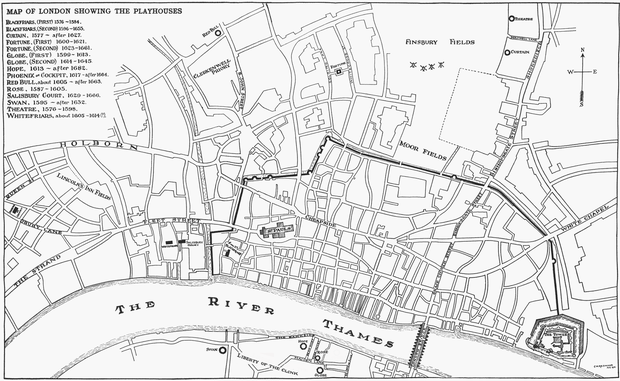
The theatre in Mat Osman’s gorgeous novel is modelled closely on the real Blackfriars Boys, even to the extent that the impresario who owns the boys is named Evans (the historical Henry Evans held the licence for the Blackfriars).

The actor who plays Cleopatra so captivatingly is ‘Lord’ Nonesuch, a 15-year-old boy whose acting brings him fame, ‘name recognition’, throughout the 400,000 residents of the city.  Adoring girls wait for him at the theatre door.

A dark side soon appears: the boys are forced to perform for parties at Evans’ house and the houses of other rich gentlemen. Nonesuch is painted white and stands on a plinth for the aristocrats’ diversion. Osman does not directly describe these tableaux; he appeals to our imagination to fill in the detail – or not.

In a clever misdirection, Nonesuch at first appears to be the main protagonist in The Ghost Theatre. He is so charismatic, and so much the leader of the boys (and girls) of the theatre, that Osman makes us admire him and worry for him. His backstory is dire. He is no Lord, but when he was ten, Evans bought him for sixpence from his drunken parents.

Shay passes as a boy to earn pennies as a messenger. She avoids the crammed streets by running the rooftops like urban runners in the 21st Century.

She lives on the marsh in Southwark. She and her dying father are members of the Aviscultans, a community outside the law (in Elizabeth’s England you have to be Church of England, or else), and is slated to take over from her late mother as the soothsayer who interprets the murmuration of the starlings. In the City, she hides her shaven and tattooed head with a cap.

She is so intrigued by her chance meeting with Nonesuch that she returns with him to the theatre and quickly becomes part of the little world of the boys and special effects girl Alouette and costume maker Blanch, a West Indian diver.

A quiet connection is established with Alvery Trussell, the quiet, clumsy boy who can’t quite learn his lines, and is everything that Nonesuch is not; at least in Nonesuch’s eyes.

Nonesuch is introduced to the rooftops. Their teenage romance is warm and beautiful. The other Blackfriars boys are generously happy for Nonesuch to share his cot with Shay in the dormitory.

Trying to gain a little freedom from Evans he and Shay set up pop-up theatres in pubs and alleyways, the Ghost Theatre. They had to be careful of the Queen’s enforcers, the Swifts, because theatre could only be performed with a licence.

They quickly make enemies. The villains in The Ghost Theatre are portrayed by the actions of their hoodlums; Gilmour’s men are after them, Elizabeth, the dying Queen deploys her Swifts with ruthless cruelty. Evans is ambitious in his cruelty. He is a thoroughgoing nasty man.

As their popularity grows, Shay and Nonesuch are inevitably drawn into these dangerous politics just as the plague hits. They flee the ‘sick city of 1603’ to perform in the country.

The politics and the relationships of the main characters pull the reader to a big dénouement involving a brutally repressed revolt of apprentices (in reality, the Tower Hill riot took place in 1595, so the novel skews the timeline – to good effect).  

I loved this novel. The theatre world is drawn with careful detail, and the descriptions of London are alive and rich. The characters are all lovingly brought to life, and as the plot twists so do Nonesuch, Shay and Thrussell.

Historical fiction fans will enjoy this living, breathing, dirty, roiling London. Although teenage romance is at the heart of the novel, it is a book for all romantics. Shay and Nonesuch may be only 15 but, in order to survive in such a vicious place, they have a dignified maturity.

And, if you love theatre, you will savour the Three Acts of this Thrilling Tale. It is my standout book of 2023.

Abstract, but luminously beautiful


Noel Jeffs SSF, Walking in Stealth: after Pushkin,
Penrith NSW, Moshpit Publishing 2022

37 pages, paperback

$25 online

Reviewed by Ted Witham tssf

My first pass at reading Brother Noel Jeff’s second book of poetry, Walking in Stealth, left me bewildered. I could see the beautiful edifice of the poems, but I felt I was on the outside walking around looking for a way in. These are complex and mysterious poems. Many are in sonnet-like forms, with rhymes that surprise and an attention to musicality, both in the sounds of words and the overall effect of the poems. They are best appreciated read aloud.

Writing in the New Yorker about the 19th Century symbolist French poet Stéphane Mallarmé, Alex Ross said, ‘After only a few lines of Mallarmé, you are engulfed in fine mist, and terror sets in.’ I had a similar sense of being put off balance by Noel Jeff’s 18 poems.

These poems ‘were [Noel’s] morning meditations as the sun rose over [his] right shoulder and dawned the day…’  The way into the poems, I am finding, is to stand in imagination next to the poet and look at the dawn with him. The different elements of the morning – the sky, especially, and ‘the grace of birds’, ‘the creating moon’ don’t exactly come into focus, but they float around in the beauty of the words creating an abstract painting.

As these images come into view, the concerns of the poet bubble to the surface of the words: awe before the opening sky, contrasts between the simple beauty of a ‘limpid lake’ and ‘spokes of noise’ (22), the constraints of the human body, the paradox of the beauty and the destructive power of the sun. (31) Physical desire is ‘Crotches burning’ which ‘spin this top in a world’ (30). There are no final answers, just abstract shapes, beautiful Rorschach blots. It’s probably no coincidence that Brother Noel trained as a psychotherapist.

A reader could hunt through these poems simply for arresting images: ‘my own ram’s horn to make a shawm’ (18) takes me straight to Psalms and the Jewish shofar. ‘try perfume lathering’ (13) mixes delight into the two senses of smell and touch.

I found hints of the Franciscan Dun Scotus’s theology of the ‘Word’. Each creature, Scotus taught, is a little ‘Word’ opening itself to the viewer and telling its story of the Creator. Each word in the poems likewise opens into a celebration of the Creator. Noel Jeff’s vocation as an Anglican Franciscan friar is at home in this Creation Theology.

Ultimately, however, Brother Noel’s delight is in words, their beauty and how the meaning of words shape-shifts.

It was said of Mallarmé that the challenge was not to translate his French poetry into English; what was needed was a translation into French! You could say the same for these poems; they would be impossible to translate into English! And yet, they deserve time, opening yourself as readers to the play of meaning, the gambol of musical words, and finding an ineffable effect on you, drawing you back into the words.

I know too little about Pushkin to understand the link with Pushkin, but Noel Jeff’s poems can be enjoyed without knowing the connections. The reader simply needs time to find a way in. They are beautiful on the inside as on the out.

Luscious book on Aboriginal Journey Ways

Even the arrival date (of Noongars in southwest WA) is still 35 to 40 thousand years before Homer, before Stonehenge was built, or scribes began to write the Old Testament.


Noel Nannup OAM and Francesca Robertson,
Aboriginal Journey Ways: How ancient trails shaped our roads.

Main Roads Department and Edith Cowan University, 2022

Reviewed by Ted Witham

It is no accident that contemporary roads often trace the paths of the ancient trails used by the Aboriginal people of this State for trade and ceremony. The topography of the land often dictates the best route to travel whether on foot or in modern vehicles.

This captivating coffee-table book explores the State from the Kimberley to the Eucla, from Gaambera country in the far north to Noongar country in the south-west and tells the story of the roads and trails of WA.

The details of these journey ways are depicted in clear maps, but what makes the book stand out for me is the lavish illustrations of Aboriginal art and glorious photos from many parts.

Stories from every time in our 60,000-year history are told: ancient stories, alongside the recollections of Indigenous folk and summaries of more Western knowledge are included.

It’s intriguing and humbling to learn that it took five to ten thousand years after first settlement for the First Peoples to spread from the north to the south-west. Even that arrival date is still 35 to 40 thousand years before Homer, before Stonehenge was built, or scribes began to write the Old Testament. These time-periods are truly astonishing.

I grew up in tiny Tambellup, a Great Southern town on the borders between Koreng and Minang Country. Of course I checked to see whether Tambellup was represented in the volume..  There are vivid descriptions of Tambellup and recollections of Elders from there – so I am well satisfied! I am interested to know that Aunty Gabrielle Hanson derives the town’s name from the tamar wallaby. I have heard other versions that say the town was named after the Nyoongar word for ‘thunder’. (Though that’s unlikely: the usual Noongar word for ‘thunder’ is ‘malkar’.)

Noongar knowledge-keeper Uncle Noel Nannup OAM and social work academic Associate Professor Francesca Robertson have collaborated on this and three earlier books (published by Batchelor Press) sharing their research of how people have moved around this State for tens of thousands of years.

I recall the research of Uncle Len Collard showing that about 50% of place names in WA are Aboriginal names. We have done better than other parts of Australia in remembering the names of this ancient country. But this current book brings to mind many more place names and how the places were connected one with another.

Indigenous people speak of their efforts in bringing language and culture back to life after nearly 200 years of colonisation in WA. Aboriginal Journey Ways revives even more of this Country for all of us – Indigenous and wajelah.

I am so enjoying the quality of the photos and artwork in this book that I wish I did not have to return it to the library! If you can find it in a library, it is a book I highly commend. 

Wisdom: My review of Jill Firth’s Honoring the Wise

. Sometimes wise, sometimes provocative, and sometimes surprising, Honoring the Wise displays the depth of influence the Hebrew Bible has on Christian thought and behaviour.


Jill Firth & Paul Barker, editors, Honoring the Wise: Wisdom in Scripture, Ministry, and Life: Celebrating Lindsay Wilson’s Thirty Years at Ridley, Wipf and Stock 2022.

281 pages + 25 pages Introduction

Paperback ISBN: 978-1-6667-3647-2
Hardcover ISBN: 978-1-6667-9480-9
eBook         ISBN:  978-1-6667-9481-6

Paperback from $45, Hardcover $70. Kindle $11

Reviewed by Ted Witham
(first published in Anglican Messenger, July 2022)

Old Testament scholar The Rev’d Dr Jill Firth, a former West Australian, with her colleague Paul Barker at Ridley College in Melbourne, has produced this splendid collection of 18 essays to mark Lindsay Wilson’s thirty years as a teacher of Old Testament at Ridley.

Dr Wilson’s central area of scholarship is the Wisdom literature in the Old Testament, and the title, Honoring the Wise, reflects a wide scope: some of the contributions are specifically on Wisdom texts, others honour Dr Wilson as a wise teacher and scholar.

Honoring the Wise is structured in five parts: Wisdom as Narrative, Wisdom in the Writings, Wisdom in Prophecy, Wisdom in Preaching and Teaching, and Wisdom in Life.

As with all collections like this, some chapters appeal more than others to the reader. I was intrigued by Andrew Judd’s exploration of Judges 19 – an obscure horror story for most of us – and his insistence that this fable-like story is an invitation to seek wisdom and to infer better ethics in a society where there is a king, and where Levites behave with wisdom.

According to Judd, “We are invited to sit with the wise and observe the messiness of reality, with all its ambivalence and discontinuity; to get on top of it, take counsel, and then, only then, to speak out.” (26)

Dr Firth’s own contribution on finding relational wisdom in the book of Jeremiah concludes that “In his prophecy and confessions, Jeremiah comes to know God through apprenticeship, questioning, dialogue, and lament.” (58) This fourfold pattern suggest a workable framework for helping Christians come to wisdom in a world where there is conflict and pain.

Ridley College’s biblical theology has a strong reputation both for its academic rigour and its evangelical flavour: here you will find, for example, a consistent belief not shared by all scholars of the Hebrew Scriptures, that the “whole Gospel” is contained in the Old Testament. This collection of essays will appeal to all who wish to be refreshed and challenged in their understanding of the place of the Hebrew Scriptures.

The book has a striking cover by Victorian artist and theology graduate Dr Anne G. Ellison.

The publisher’s insistence on American spelling in a book showcasing Australian scholarship irritated me.

Honoring the Wise deserves an audience wider than the Ridley community and broader than evangelical Christians. Sometimes wise, sometimes provocative, and sometimes surprising, it displays the depth of influence the Hebrew Bible has on Christian thought and behaviour.  

Practicing Peace: Michael Wood’s new book


270 pages
ISBN 9781666735307
Paperback $45, Hardcover $60, Kindle $11.99

Michael John Wood, Practicing Peace: Theology, Contemplation and Action,
Wipf & Stock, 2022.

Reviewed by Ted Witham

Michael Wood’s eloquent new book aims to show how the non-violent practice of peace arises directly from God’s nature: God is love, and so we are to treat each other and all creatures lovingly.

The Rev’d Michael Wood, former Chaplain to The University of Western Australia, and a long-term priest in the Diocese of Perth, has written Practicing Peace as a handbook for peace-making, using, among others, the insights of Open Space Technology.

Practicing Peace emphasises the New Testament concept of a Christlike God; that God is in every way a peacemaker as was Jesus himself. Wood writes the clearest exposition I have read on René Girard’s theory of mimetic rivalry. We reflect the desires of others and want what they want, creating a conflict between people that can be overcome by ‘recognizing and releasing’ the conflict.

The second part of Practicing Peace is a handbook for peace. We engage in contemplative practices in order to shine a light on our own disoriented desires. We then listen to each other to create an agenda, share assessments of the situation and options for a more peaceful way forward, and commit to trying those options, a process Wood calls ‘collaborative emergent design’.

While the theology of Practicing Peace is profoundly Christian, the insights into peace-making can be used by any people of good will.

Each section of this book is written with a beautiful clarity and is summarised in a series of appendices and charts which turn the declarative theology into useful visuals. An extensive bibliography rounds out the book. West Australians will note references to local authorities and activities – like salsa dancing at Scarborough Beach!

Michael Wood’s book contains much for Christian leaders to mull, and more importantly, practise! All Christian leaders including clergy in formation and clergy in parishes will find here a way of Christlike leadership that will attract others to the dance. I wish I had this wise book when I served parishes and a not-for-profit!

Practicing Peace is a profoundly hopeful book. ‘Imagine the church,’ Wood writes, ‘as constituting an international academy for peace, focused on the Christlike God, shaped by contemplative prayer, and practicing the art of dialogue. This could be a small contribution that Christians could make to the world.’ (223)

Practicing Peace is itself a substantial contribution to a more peaceable world.

A Spectre, Haunting: Communism and the Christian today

A Spectre, Haunting is above all a masterly commentary on Marx and Engels’ The Communist Manifesto, written with humour and compassion.


China Miéville, A Spectre, Haunting: On the Communist Manifesto, Head of Zeus, 2022

ISBN 9781803282244

Paperback from $29, Kindle $13.19

Reviewed by Ted Witham

For most bourgeois (and I have to admit to being bourgeois), becoming a Communist is a taboo, a step too far. Even for one with progressive politics, the idea of throwing out the whole system by which society governs itself, and starting again, is too, well, too revolutionary.

China Miéville is an English writer I look out for. His fantasy ‘steam punk’ novels explore the use of power and the experience of the underclass. His writing has vigour and joy, so A Spectre, Haunting appealed to me because of its author. If nothing else, it would be well written.

Miéville himself is active in socialist and communist circles in England, so his commitment was no surprise. A Spectre, Haunting is above all a masterly commentary on Marx and Engels’ The Communist Manifesto, written with humour and compassion. The book includes the whole text of the Manifesto and Engels’ prefaces to later editions. It is rounded out with a comprehensive bibliography.

Miéville assures us that Karl Marx was the main author of The Manifesto. The central problem that Karl Marx discerns is that too much wealth is in the hands of too few. In order to create a fairer society, in which everyone has enough and has opportunities to develop themselves, that 1% must be divested of its money and power, so that all can benefit: a commonwealth.

The French Revolution, say Marx and Miévelle, did not go far enough. It replaced the nobility’s hold on the bulk of the wealth in favour of the bourgeoisie. The paysans and the urban poor still missed out.

The difference today is that the wealth is held not only by Queen Elizabeth II and the Sultan of Brunei, but also by Elon Musk and Rupert Murdoch, bourgeois capitalists who, like their royal forebears, have no intention of sharing!

So, the solution to the inequality Marx discerned in 1848 is still the same in 2022: replace the hegemony of the capitalists with government by the workers and the underclasses. Miéville claims that Marx was not idealistic about this. The working classes still need to grow into that role, because as exploited human beings, they have been conditioned by the rich capitalists into the view that they do not have the capacity to build a fairer world.

In 1848, a year of aborted revolutions, Marx whimsically described communism as ‘a spectre, haunting … [a]ll the powers of Old Europe.’ The Berlin Wall came down in 1989. Thirty-three years later, communism still seems to be a spectre, haunting the globalised world. Though technically dead, its persuasive analysis of capitalist society and its attractive vision of a world where everyone has enough to flourish, still sits in the back of our collective mind.

As Christians, we have a love-hate relationship with Communism. Our analysis agrees with that of Marx: that the greed of the very rich robs the poor of a dignified life. But we are suspicious of Marx’s non-violence. We know, right from the Cross, that non-violence resistance usually provokes the violence of the system, however, my reading is that The Communist Manifesto is too ready to condone that violence.  

Maybe China Miéville, writing so compelling about the revolution, will be part of a movement to bring the haunting spectre back to life. Given the ravages of capitalism, we should arise, because ‘we have nothing to lose except our chains’.

Caravanning around

…extremely funny and bitingly serious about the state of the arts in Australian society.


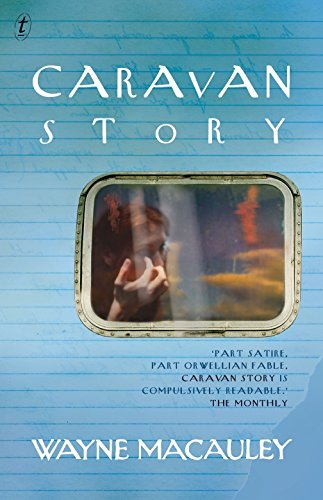
Wayne Macauley, Caravan Story, Melbourne: Text, 2012 (2007)

ISBN 9781922079121

208 pages

Paperback from $15. Kindle $11.96

Reviewed by Ted Witham

The humour is Australian; the settings are banally Australian. There is a lot to like in this savage satire by Melbourne writer Wayne Macauley. Caravan Story was his second novel.

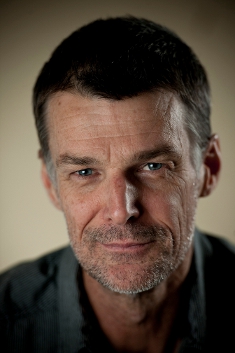
Wayne Macauley

Since the original publication of Caravan Story in 2007, Macauley has published The Cook (2011)and Simpson Returns (2020). A book of stories Other Stories was released in 2011. He has received a number of prestigious prizes for his writing.

In Caravan Story, the writer, ‘Wayne Macauley’, wakes up one morning in a caravan being towed away. The destination is a country town on the footy oval turned into a caravan park.

He finds himself in an oval full of artists, carted here by the Government. They are instructed to make themselves useful members of society. They are fed and housed while they create.

The painters and the actors soon find ways of turning a dollar, but the writers are unable to be so enterprising. Their writing efforts are collected, but it turns out that the rejection slips have already been written. The plot shows ‘Wayne Macauley’ and his partner escaping home from this crazy world of disillusion, and on the way is extremely funny and bitingly serious about the state of the arts in Australian society.

As a writer, I revelled in this book, both for its questioning of the ‘usefulness’ of poems and stories, and for the loving attention to the details of footy clubs, high schools and caravan living. But it is a book for people other than writers, simply to have a laugh at Governments’ total incomprehension of the arts, and the importance of writers, and all of us, to ground ourselves, to have a place that is ours — a home.

Satire kicks our consumerist world

The Transition is the funniest – and best crafted – novel – I have read this year.


Luke Kennard, The Transition, Fourth Estate (2017)

Paperback (Used) from $10, Kindle e-book from $8

ISBN 9780008200459

Reviewed by Ted Witham

The Transition is the funniest – and best crafted – novel – I have read this year. Well-known in Britain as a poet, this is Luke Kennard’s first novel.

Millennials Karl and Genevieve are struggling to make ends meet. Locked out of the housing market with Karl unemployed, Genevieve is a Primary school teacher. She loves her job, and despite her day-to-day frustrations in the classroom, believes in its importance to society.

Karl writes online ‘cheat’ essays for university students of English literature. He is drawn more into the online world of writing for cash until he finds himself convicted for fraud for his almost intentional participation in an illegal scam.

Instead of jail time, the couple is offered a placement in ‘The Transition’, a program that invites a commitment of six months to turn their finances, and lives, around. They are billeted in the spare room of Stu and Jenna, who follow a mysterious Manual to reform their guests.

‘The Transition’ turns out to be not quite as advertised. As Karl explores the scheme’s underbelly, Kennard reveals a wider community based on inequality, where the poorer middle-class are shut out of the common wealth of their society, and where big data distorts and dictates their lives.

These forces override people’s compassion for mental illness, and Genevieve’s descent into illness is sensitively described.

The themes are serious. Kennard treats them seriously, but with a joyous lightness that helps us sympathise with a couple just trying to make it through the week.

I plan to re-gift my copy of The Transition this Christmas – and I have no feelings of guilt whatever in doing so. It’s the sort of novel you want to share!