I am sorry – Podcast for National Sorry Day


Image from the web site of the Pinjarra Massacre Site

Podcast for National Sorry Day

National Sorry Day will be marked on May 26. Some small thoughts to listen to are here.

Information about National Sorry Day is at http://www.nsdc.org.au/.

My review of Cavan Brown’s book on John Gribble is at https://thoughtsprovocateurs.wordpress.com/2013/05/21/rugged-and-painful-past/.

The story of the Pinjarra Massacre is told at http://www.pinjarramassacresite.com/.

PS: A written version of the podcast is on the web-site of the Anglican Parish of Dunsborough. Go to http://dunsboroughchurch.com.au/ and click on the brown folder marked “BLOGGING”.

Christians and Malaysia


The London based weekly journal The Economist has called the recent victory of the ruling party in Malaysia “a tawdry victory”. There is no doubt that the elections were not completely free and fair. After 50 years in power, the Barisan Nasional has engineered a strong gerrymander. There were serious allegations of vote-buying and irregularities like the permanent ink used to mark the fingers of those who have voted being easily washed off.


In addition Government policies favour ethnic Malays and, in Borneo, other indigenous groups.  People of Chinese and Indian origin are not so favoured. A strong whiff of racism pervades politics in Malaysia.


The disquiet of Malaysian Christians goes beyond the immediate problems of the election. They are concerned for example about non-Muslims being banned from using the word “Allah” to describe God. This controversy has been alive since at least 2007 when Christians were banned from using “Allah” in any publication, including the Bible. Catholic Christians took the Government to court, but failed to overturn the ban.


A fatwa issued in 2010 confirmed the ban and in January this year the Sultan of the State of Selangor strengthened it with threats of legal action against anyone who defied it or spoke out against it. Prime Minister Najid Abdul Razak supported the Sultan saying that their viewpoint protects harmony in a country with many religions.


Christians and Hindus in Malaysia argue that the word “Allah” does not belong just to Muslims. It is the normal Arab word for God, and Arab-speaking Christians in the Middle East have been using it probably for 1900 years. “Allah” entered Bahasa (the language spoken by Indonesians and Malays) more recently with both Christians and Muslims using it freely – until the last few years.


This ban, in a country with a secular constitution, obviously discriminates against non-Muslims, but it also restricts Christians in theological discussion about God.


Muslims appeal to Christians to use only the word “Tuhan” (which means “Master” or “Lord”) when speaking of God.


Bible translators, for example, are faced with two different words for God in the Old Testament: “Elohim” and “YHWH” (The Lord). In the New Testament “kyrios” and “theos” both refer to God. To be consistent in Malay Bibles, translators need two words to distinguish “God” and “Lord”.


The Malaysian Christians I know are not anti-Muslim, but they are worried by the way that this and other religious issues are used as a wedge between Muslims and Christians. They want rather to foster dialogue between the two faith communities.


Because of possible legal consequences, Christians in Malaysia are restrained in discussing these issues openly. Praise God that in Australia we have no such restriction. We can help our sisters and brothers by praying, and by expressing our opinions when we have the opportunity. If you know Malaysian Christians, you could tell them of your support and solidarity. They will value it.


Easter Lights


Lueurs pascales – Easter Lights

 A poem by Brother Roger of Taizé (with translation)

Toi, le Christ,
tu te charges de ce qui nous charge,
au point que,
débarrassés de ce qui alourdit notre existence,
nous reprenions à tout moment
la marche légère
de l’inquiétude vers la confiance,
de l’ombre vers la clarté de l’eau vive,
de notre volonté propre
vers la vision du Royaume qui vient.
Alors, bien que nous osions
à peine l’espérer,
tu offres à chaque être humain
d’être un reflet de ton visage.
(Le défunt Frère Roger Schutz de la Communauté de Taizé, dans Reff, Sylvie et Stern, André. Soleil de prières. Editions Albin Michel, 1989).
Prières à Taizé
You, dear Christ,
take all our burdens on yourself,
to the point that,
released from all in our lives that weighs us down,
at every moment we may step lightly again
from anxiety to confidence,
from the shadows to bright living water,
from self love
towards the vision of the coming Kingdom.
So, even though we scarcely dare to hope that it may be,
you offer each human being
to be a reflection of your face.[The late Brother Roger  – translation by Ted Witham]

Keeping alive the rumour of God


One of the few vestiges of “Establishment” in the Anglican Church of Australia is the authority of clergy to act as Commissioners for Declarations. [This authority is unlikely to be withdrawn as it is one of the requirements of Marriage Celebrants.] Several times a year fellow residents of our retirement village ask me to witness their signatures on legal documents. I am glad to oblige. I have even had a stamp made to save me from having to write by hand “The Reverend Edward Peter Witham, Registered Minister of Religion W-ZZZZ.

As a CD, my responsibility is to witness that people have correctly signed their documents. For that I need to know the form of the document – will, passport photo, statutory declaration, bank business, etc. – but not the content. However, most people when they come to sign want to share the background to the document. For my part, I assure them of confidentiality.

So people in the Village do know now that I am a priest – or at least, a handy person for witnessing their signature!

However, when we moved into this village five years ago, we decided we would downplay our faith. We had heard an anecdote about one of the village owners who apparently declared that a public area in the Village Centre would be ideal “for Bible Study or the like”. This remark evoked a strong reaction, almost outrage, among some people.

We thought that if there are people outraged by the thought of Bible study, being public Christians in the village could be counter-productive.

We have discovered the other church-goers in the Village, and we encourage one another in conversation and with cards at Easter and Christmas. We continue all our practice of Christianity outside the Village, both in church attendance and in our involvement in the Franciscan Third Order.

But I treat the Village as though it were a country where wearing distinctive religious garb is banned. I have only once worn my dog-collar in the Village or twice, if you count my performance as the Vicar in the murder mystery one year! I rarely advertise church events within the Village, and if I do, I do it discreetly.

Our stance of being so coy about our faith has been challenged. Once a colleague at church loaned us a DVD of a Passion Play performed in the gardens of Government House. We watched it in our house. When we returned the DVD to our friend, he asked why we had not had a public showing of it in the Village cinema. That was his idea of evangelism. I tried to explain that it might be seen, in our Village, not as an invitation to the Gospel but as an intrusion.

Inspired by Charles de Foucauld and the Little Brothers and Sisters of Jesus, we just try to keep alive the idea of God in our village. The challenge in that is to evangelise simply by presence requires great holiness. If I am not steeped in prayer, and if my lifestyle lacks integrity and sacrifice, then keeping my Christianity quiet in our relatively benign environment may just be an excuse not to talk about Jesus Christ at all.

I am encouraged that people ask me to witness them signing legal documents, and in doing so, to witness something of their trials and difficulties, but, as Lent begins, I am conscious that I have to use my praying and my decisions to be more transparent to God and the Gospel. Brother Charles de Foucauld has set a very high standard!

Christians need more than tolerance


The Government intends to make no changes to the exemptions for religious organisations in employing people. Today the Australian Christian Lobby’s Jim Wallace boasted that the Prime Minister told him that she will not change these exemptions. Hardly something to boast about: the idea that the churches have a right to discriminate is arrogant and disappointing.

Secular views on tolerance may seem closer to a genuine Christian position. Jeff Sparrow assumes that the exemption is essentially against homosexuals in religious schools and hospitals. This commentator notes, “What message does this legislative loophole send, other than that discrimination against gays and lesbians doesn’t matter as much as other forms of bigotry? It’s a statement that homophobia is still OK; that gays and lesbians can still be bullied and harassed, in a way that wouldn’t be tolerated in respect of anyone else.” (Jeff Sparrow, “Religious Freedom Beats Your Rights at Work”, http://www.abc.net.au/unleashed/4467310.html?WT.svl=theDrum, 16 January 2013.)

Many Christians have more sympathy for this than for Mr Wallace’s position. But for Christians it is essentially an empty position; a position which is nothing more than opposition to the ACL and groups like it.

I believe that churches should aspire to a higher standard than the community’s. Jesus included the unacceptable, the unclean and the immoral: the women who had had five relationships, the Roman centurion (and his ambiguously described ‘lad’), tax collectors and prostitutes. We should actively embrace many more people than a typical corporation.  Mr Wallace believes some people should be excluded. I cannot defend that view. But Mr Sparrow’s view that no-one should be excluded comes nowhere near the Gospel paradigm that everyone should be included.

St Francis embraces the leper

That there should be no discrimination is a secular standard, the best we can agree on in a diverse society. But the Church seeking to include every last person requires much more moral effort, and indeed, demands that we be receptive to much more of God’s grace.

We Christians should welcome any move to remove the exemptions for religious organisations. The church should be pleased in this case to submit to secular virtue.

Whether or not the law changes, Christian employers should choose to act according to higher standards and be as inclusive as possible. Of course, the specifics of each employment decision do not simply flow automatically from the principle of maximum inclusion; Christian employers must still wrestle with CVs and references to match the best person for each job. But I believe maximum inclusion is closer to the Gospel, and will be seen in our complex society as closer to the Gospel. We Christians are not merely tolerant, as the Government claims to be; we follow the Lord who is “loving unto every man and woman”. (Psalm 145:9)

Generosity


Generosity

Forget your poverty for a moment,
let us think of the world’s hospitality –
the son of Mary will bring you prosperity,
and every guest will have their share.
Often what is given away comes back
to the generous hand,
and what is kept back disappears altogether.
O living God!

— St Columba
Paraphrased from Franciscans Day by Day December 17

[Franciscans Day by Day is a set of short readings for the year prepared by the JPIC (Justice, Peace and Integrity of Creation) group of the Third Order, Society of Saint Francis in the Province of the Americas.]

Francis – program notes


Program notes for the play Francis, presented by the Midnite Youth Theatre Company, November 21, 22, 23 and 24, by Julian Mitchell and directed by Drew Stocker tssf.

By Ted Witham tssf

Poster for the play “Francis”

Saint Francis of Assisi became a leader by giving power away. Francis Bernadone was born in 1181 or 1182 and grew up in a wealthy merchant’s house. As a teenager, he became a leader of wild parties through the streets of Assisi. He was known as ‘The King of the Revels’, and used his money to attract friends.

Like all young men in Assisi, Francis chose to join in the little wars the town fought – for the Emperor (against the Pope) and against the neighbouring hill-town of Perugia. After one battle Francis was taken prisoner in a dark prison in Perugia. Having a wealthy father meant that he was held for ransom.  It took a year to negotiate a price for his release. He began to realise that even with money he couldn’t have what he wanted when he wanted.

After his release he bought a knighthood to fight in the crusades. Instead of a glorious tour in Palestine, Francis returned home sick. In a vision God showed him that he didn’t want him to be a knight, so he gave away his lavish armour.

Everywhere around him, Francis could see people fighting: fighting to keep their possessions and power. Assisi had always been a barter economy, but now, as Francis grew to manhood, it was becoming a greedy money economy. Instead of giving each other life’s necessities, the people of Assisi began to amass cash. The division between the privileged and the poor grew rapidly.

Francis saw a solution to this greed. All people should treat each other as members of their family. Instead of grabbing resources for themselves, they should share with their brothers and sisters what they had. Francis started a community of those who would follow this way. He dreamed of a new world where people gave everything away to each other, so all would be equally rich.

Francis struggled for the rest of his life to find the best way to be the leader of this community. His idea of a leader was someone who did not have power over others. Like Jesus, Francis wanted to be the leader in serving others, a servant leader, a leader in giving power away. The concept was – and is – difficult to put into practice, but the communities Francis founded continue to try to make it work.

Sing a new song to the Lord


Hymns – traditional hymns – have sculpted my theological and spiritual landscape. I’m happy to worship with Dan Schutte (“Holy Darkness‘), Graham McKendrick (‘Beauty for Brokenness’), George Bullock (‘The Power of Your Love‘), and all the other contemporary praise-singers, but they have not dripped steadily, obsessively and repetitively into my heart over 60 and more years as hymns have done.

There was a time in my life when I knew the number of every hymn in Hymns Ancient & Modern Revised. If I saw the number 372 on a bus or number plate, I would immediately think ‘Almighty, Invisible, God only Wise’, and often involuntarily blurt it out – to the amusement of friends.

Many hymns have been with me since childhood. I remember beefing out ‘For Those in Peril on the Sea’ (A&MR 165) at Tambellup Primary School Anzac Day services, and singing – very slowly, with my Mum on the harmonium, ‘Holy, Holy, Holy’ (A&MR 160) in the little church of St Mary in Tambellup.

But there are other hymns that I remember by the person who introduced me to them: Irvin Phillips, organist extraordinaire at St Matthew’s, Armadale, thought my repertoire was incomplete without the tune ’Lucius’ and the lovely words of community that accompany it: ‘All praise to our redeeming Lord, // who joins us by his grace, // and bids us, each to each restored, // together seek his face.’ (TiS 442(i)).

David Overington, my mentor in the Franciscan Third Order, was surprised I did not know the tune ‘Blaenwern’. Together in Song suggests that we should sing ‘What a friend we have in Jesus’ to ‘Blaenwern’,(TiS 590) and, David was right, it adds a depth to that old crusade song that you don’t find with the usual tunes. David also recommended singing ‘Once to every man and nation // comes the moment to decide’ to this tune; and it certainly gives the words a drive towards decision that the curly Welsh tune ‘Ton y Botel’ lacks.

Michael Pennington, Rector of Applecross when I was his curate, introduced me to Samuel Stanley’s great hymn of re-dedication: ‘O thou who camest from above // the pure celestial fire to impart…’ Michael chose it for the 25th anniversary of his ordination to the priesthood, now 15 years ago. It deeply touched my own determination to continue as a priest, offering my life as a sacrifice and knowing that service brings its own reward. ‘Still let me guard the holy fire,// and still stir up the gift in me, // ready for all thy perfect will.’ (TiS 527)

I probably will never know the depth of spirituality that hymns have given me. I will continue to explore new worship music, and I will try to give new life, by giving new words, to old tunes. But it is the old hymns I credit with sustaining my faith through difficulties (‘Great is your faithfulness,’ – TiS 154) and joys (‘Hail thee festival day’, or ‘Christians, lift up your hearts’ in TiS – 423).

May the Lord grant me the joy of continuing to sing hymns; I do hope that they will be one of the options for praise in the eternal worship of the saints.

A “plain package” St Francis of Assisi


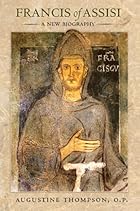
Augustine Thompson, Francis of Assisi: A New Biography, Cornell University Press (2012), Hardcover, 312 pages, $25 from online retailers.

Reviewed by Ted Witham

Augustine Thompson’s biography is “new” in the obvious sense that it is the last in a long line of biographies of St Francis going back to Paul Sabatier’s 1893 Life. Thompson’s, however, is “new” also in that it aims to go back rigorously to historical sources. This approach is in line with other historians who recently have been sifting through historical records and chipping away at the pious accretions to produce a “plain package” St Francis.

William Hugo, for example, a Capuchin formation director produced in 1996 a “Beginner’s Workbook” Studying the Life of St Francis, which invites novices to evaluate the historicity  of early writings. The Melbourne conference in 2009, out of which came Interpreting Francis and Clare of Assisi, was also historical in ambition, using a variety of academic approaches – documentary, art history and so on – to develop a more historical picture of the saints in their world.

These new studies are pushing out the older Lives of St Francis, which were either pious or interpretive: they sought either to show Francis as an exemplar of the Christian life, or they observe St Francis through a particular lens: Jacques Dalarun on Francis and power and Francis and the feminine, and Leonardo Boff on Francis and liberation offer these interpretive visions of Francis.

Augustine Thompson is a Dominican friar, and this gives him an “insider-outsider” perspective. On one hand, he knows what it is to be a friar in an Order with a  charismatic founder. On the other hand, he has greater clarity of vision when he writes about Francis than do many Franciscans in their familiarity with their founder.

Fr Thompson tells a plain story of a man who had no agenda and who could articulate no particular vision for the movement that formed and swarmed around him. Thompson’s Francis simply wanted to live the Gospel. Even at the end of his life, Francis is still surprised, Thompson claims, that “the Lord gave me brothers”.

Even poverty, the Franciscan value that many believe to be the base of Francis’s vision, is held up to question by Thompson. There’s no doubt that poverty was a part of Francis’s vision, but Francis, as Thompson emphasises, mentions the Eucharist much more often than poverty. Francis’s devotion to churches and priests is because of the celebration of the Eucharist – all to be venerated because there God comes to earth in a perceptible form.

The central insight for me in this “new” biography was precisely Francis’s lack of a programme. Francis, at least in Thompson’s telling, was a man who simply wanted to live the Gospel, to be radically available for God. This, I suspect, is one of the main reasons for Francis’s ongoing attraction.

Thompson’s book also has its attractions. It is divided into two halves. In the first Thompson tells the story of Francis simply and without frills or academic apparatus of any kind. Then follow a helpful list of the major biographies of Francis since Sabatier’s and a bibliography of documents from the 12th Century. In the second half of the book, Thompson argues in detail why he has included some details and discarded others as non-historical. These chapters may be mainly for scholars: most of us, I suspect, will be glad to read the first half as a self-standing account of Francis’s life and be refreshed by it.