50 Years a Deacon


In the name of the living God, + Father, Son and Holy Spirit. Amen.

Fifty years a deacon. The Church 50 years ago was a very different church. Churches around Perth were generally full on Sundays – many churches filled two times over with two services. Men still wore suits to church, and women wore Sunday best dresses. Some women wore hats, but hats were beginning to stay away. The declining attendance of hats was a sure sign that the Church was about to change.

We were still ‘The Church of England in Australia’ – our name didn’t change until 1981, and I think our English culture is only now beginning to change.

Sunday Schools around the city were huge. 70 or 80 kids and a dozen teachers turned out every Sunday at Christ Church Claremont and parishes like it. The General Board of Religious Education, set up by the Australian General Synod, produced the course book used by most Anglican Churches. Children were completely segregated from adults, and, many children were dropped off by their parents. These parents may have seen benefit in Christian education for their kids but not for themselves.

There were arguments that you might remember about whether children were really ‘people’ for the purpose of attendance numbers and statistical returns!

By 1975, the once-flourishing Y.A.F. – the Young Anglican Fellowship – had pretty much shrunk and died.  

I grew up in a country church in the 1950s. You could definitely see the decline in little churches all over the southwest corner of the state. Our little church, St Mary’s in Tambellup, might cram 70 people in for Christmas services. They even put out little folding stools with canvas seats down the aisle to accommodate everyone. But the Sunday after Christmas, and for most Sundays of the subsequent year, the congregation was fewer than 15 or so. There was a little Sunday School, taught by Mrs Lorna Taylor, who also played the organ, ducking in and out of the church and the church house next door during the service. That Sunday School had less than five kids.

This was the Church five of us were called to be deacons in 1975. The church appeared to be flourishing, but there were clear signs that we were about to be pruned – enormously.

Although accurate statistics were hard to find, 8,000 or more people turned up to Anglican services across this Diocese each Sunday: more, we were reminded, than attended WAFL football matches each weekend.

The Diocese tried some big things to stop the runaway numbers. 1975 was the year of Celebration 75, a huge mission of the Diocese, culminating in 10,000 Anglicans gathering at Perry Lakes stadium for the Eucharist on Palm Sunday.

Celebration 75 was memorable because of the murder of Archbishop Janani Luwum from Idi Amin’s Uganda. Luwum was one of the bishops visiting Perth for Celebration 75.  Some months after he returned to Uganda he was found in a crashed car just outside Kampala – his body riddled with bullets. ‘The blood of the martyrs,’ Tertullian said 1800 years ago, ‘are the seed of the Church.’ Maybe a little of Luwum’s blood would impact Perth Diocese!

Goals were set for our diocese – 24 new parishes to be planted in 24 months. When we young clergy spent time with Archbishop Sambell, his parlour game was to get us to state as many new suburbs as possible (Kallaroo, Mullaloo, Heathridge, Connolly, Joondalup, Currambine, Iluka, Ocean Reef). Then the Archbishop would comment: ‘And that is our mission field.’

Luke’s telling of the calling of the first disciples reminds us of three things about the ‘mission field’ – the situation which they were called into. The painting by the 14th– Century Italian painter Duccio di Buoninsegna is a sermon in itself. Buoninsegna means ‘teaches well’, and that’s what this beautiful picture does.

Duccio’s painting tells the story of the Miraculous Draft of Fish all in one image. He starts with Jesus meeting Simon and Andrew. Notice the sky is golden. When Simon and Andrew meet Jesus, we are not in the normal everyday world. Duccio paints them in heaven with its gold sky. Jesus is on the rock; Jesus is the rock. Jesus invites Simon and Andrew to step on to the rock, onto the solid ground of a new relationship with Jesus and to turn the everyday world into the glory of heaven.  

I must admit that the two disciples don’t appear to be straining to haul in the heavy net of fish. With Jesus by their side, the effort is shared with Jesus and their burden becomes light. There are fish everywhere in Duccio’s picture, both in the net and outside the net. In this vision of heaven, you don’t need to be inside the net. Everyone is included in God’s love.

Duccio the painter is teaching that what is true for Simon and Andrew then is true for us now. Jesus continues to invite us into a life-giving relationship with God. Jesus calls us to the work of mission with him. We are to be encouraged that in the end, God makes sure that there is a good haul of fish – of people.

Simon’s encounter with Jesus sees him coming to terms with the way Jesus, a carpenter, told him where the fish were. Jesus told Simon to put out into the deep and put his drag net out the other side of the boat. Just imagine how Simon must have swallowed his disbelief: he may be Jesus the preacher, but really, what does he know about finding fish?

Simon puts the cumbersome net into the boat, I imagine with some reluctance, gets the oars organized, rows out to deeper water, puts the net in the water and then drags it in a half-circle from the boat; all the while expecting nothing. What difference can Jesus possibly make?

And then surprise! ‘So many fish that their nets were going to break!’ They filled two boats to the point of sinking. (Luke 5:6)

Simon is shaken. Shocked to the core. This man Jesus is like no other human being Simon has met. ‘Get away from me, Lord, for I am a sinful man!’ (Luke 5:8) Seeing Jesus in this moment makes Simon squinch and shudder. This encounter with the power of Jesus strikes Simon (and Andrew and James and John) as so massive and so stupendous that they left everything – everything! and followed him.

I assume Simon used to go to synagogue and had heard the scrolls read. He knew about the prophet Isaiah, who, like Simon, was overpowered when he was encountered by the Lord God in the Temple, and, like Simon, Isaiah’s first reaction was with dramatic words: ‘Woe is me! I am a man of unclean lips, and I dwell among a people of unclean lips.’ (Isaiah 6:5)

In this squeal of pain, Isaiah recognises that he could not stand before the living God unless God reached out and made him stand. And for Simon, the catch of fish had the same effect.

The second part of Simon being called to the ‘mission field’ was calling others to help him. To haul in so many fish Simon needed to call on his brother Andrew and their partners James and John. You need others. Jesus rarely invites single heroes to do the work of ministry. It’s too hard. It’s too big.

Jesus himself is on a fishing expedition to catch people. Luke implies that his catch, consisting of Simon and Andrew, James and John, is also a good haul.  These four will make a significant difference to the ministry of Jesus.

All ministry requires hauling in people. Maybe ‘hauling in’ people is not the best image. The church is not the Ringling Bros and Barnum & Baileys, hauling suckers into the Big Tent! Rather the church’s business is inviting people respectfully and gathering them in. Even so, the church of God is a Big Tent.

Our parish’s ministry to the homeless always needs volunteers. Morning tea after church needs volunteers. Children’s ministry needs volunteers. Even the work of worship – our liturgy – needs all of us and not just the priest out front.

The third idea is to underline that ministry is always about people.  Simon is called to catch people; not so much catching fish.

This was really underlined 50 years ago during our year as deacons. Five of us deacons and one presbyter from the Church of South India spent 1975 in the Deacon’s Training Program. This program was designed for us to experience the practicalities of every ministry in the Diocese.

We spent 10 weeks in an established parish: I was assigned to Kelmscott Parish, and then to Balga Parish north of the river. Balga was a more catholic parish, and Kelmscott an evangelical parish, so all of us participated in leading different styles of worship.

We spent 4 weeks in hospital chaplaincy, visiting patients and taking them communion.

We spent a fascinating 5 weeks in mental health. We saw the way the behaviour of acutely mentally ill people challenges the staff to care appropriately for them. We visited residential homes and wondered whether those big institutions were the right place for the severely developmentally challenged.

We spent just a few days in Industrial Chaplaincy – basically a visit to the Alcoa Refinery in Kwinana to meet John Bowyer the then chaplain!

For this Deacon’s Year, we resided at Wollaston College We each shared leadership in music and worship in that wonderful big tent Chapel. Following the Benedictine Rule, we had to do some manual work around the College, cleaning windows and pruning and sweeping paths and roads.

I’ve never been one for manual work, so I offered to restore the old harmonium which provided our music in Chapel, and I enjoyed cleaning reeds and fixing wires and bellows. It took me the whole year to complete – conveniently!

The Deacon’s Year was fast-paced. Two weeks in a country parish, where I watched with amazement Henry Tassell, a country pastor who had the rare knack of turning up on a farm at the right time, say, morning teatime during shearing. He kept overalls and work boots in the boot of the car to pitch in and help the farmer.

Two weeks in a church school.

I was anxious to be a school chaplain.

When I was about ten, I had a dream one night. After this dream, I remember rushing to my Mum and blurting out, ‘When I grow up, I’m gonna be a teacher and a priest!’ Mum advised me not to say anything about the dream.

But I did think of it every now and then. I interpreted it to mean that I would be a school chaplain. So, the Headmaster of my school Peter Moyes, even when I was still at school, had also encouraged me to be a school chaplain and  before going to theological college in Melbourne, I had taught in the country for two years and enjoyed it.

So I learned a lot in those two weeks at Perth College. Teaching girls only in a classroom opened my eyes. When girls behave badly, they behave badly in big groups. Suddenly the whole class, it seems, turns on one person and bullies them, one of the girls, or the teacher. Unlike boys, you can’t just pick out the perpetrator and punish him. I had to learn strategies to deal with feminine mob rule!

But that didn’t dampen my determination to be a chaplain. I saw how the chaplain Terry Curtis conducted the Chapel services, what opportunities he had for pastoral care for the girls and for the staff – and a scary Headmistress!

Later, I had nine satisfying years as a school chaplain, one year at Hale School, and eight years at Christ Church Grammar. After those years, I discovered even more ways of being a teacher and a priest.

But back in the Deacons’ Year, we had a tough 36-hour Urban Training course We had to survive in the city without money. We pretended to be homeless, living on the streets, under stress to experience how our society looks after the needy.

A four-day Human Relations course back in Wollaston College turned out to be a deep dive into our inner psychological lives. Some of the deacons found this group work too threatening, so it was abandoned in subsequent years.

Anglicare, Anglican Homes, how to conduct weddings: at the time some of it was a blur. But the basic point was made: ministry is about people – worshippers in a parish, patients in hospitals, kids in schools, brides and grooms, people on the street, certainly neighbours and friends and families. And ministry meant making connections with hospital chaplains, diverse parish clergy, school chaplains, Government agencies, and a whole host of carers who gave us insight into other caring people in our society.

This practical year 1975 followed three years of theology study. None of my fellow deacons complained that the academics were not relevant to ‘real ministry’. I felt, and I think the others agreed, that we can only understand the purpose of practical ministry if we understand a bit about God. In our Deacons’ Year, we experienced God in the marginalised. We made sense of it with Bible study and through Church History.

Luke doesn’t tell us that Jesus ordained deacons. Jesus calls all the baptised to ministry. Jesus invites each one of us to be a deacon and serve the needy. Matthew writes a parable, you remember, about sheep and goats. When we minister to the least of these, we are loving Jesus.  The ministry of service is for all of us.

Deacons, ordained deacons, some permanent deacons and all priests and bishops, we are deacons before we are priests; as ordained deacons, we are the church’s sign to itself of helping the needy. Our life of service shows that all of us rely on God to empower ministries of service. Deacons’ service in the community emphasises that the church doesn’t exist for its own sake. The church exists always for others. The great wartime Archbishop of Canterbury, William Temple, is often quoted that ‘The Church is the only society that exists for the benefit of those who are not its members.’ The church is a diaconal church, a serving church, a church of deacons, and our holy task is to love God by serving people.

Fifty years on. 2075. I won’t be around to see it, but some of you will. And I hope you experience how God keeps loving you, and you will keep loving your neighbour.  Because whatever changes 2075 will bring, we will still be a deacon-shaped church – and that’s worth celebrating.

A Spectre, Haunting: Communism and the Christian today

A Spectre, Haunting is above all a masterly commentary on Marx and Engels’ The Communist Manifesto, written with humour and compassion.


China Miéville, A Spectre, Haunting: On the Communist Manifesto, Head of Zeus, 2022

ISBN 9781803282244

Paperback from $29, Kindle $13.19

Reviewed by Ted Witham

For most bourgeois (and I have to admit to being bourgeois), becoming a Communist is a taboo, a step too far. Even for one with progressive politics, the idea of throwing out the whole system by which society governs itself, and starting again, is too, well, too revolutionary.

China Miéville is an English writer I look out for. His fantasy ‘steam punk’ novels explore the use of power and the experience of the underclass. His writing has vigour and joy, so A Spectre, Haunting appealed to me because of its author. If nothing else, it would be well written.

Miéville himself is active in socialist and communist circles in England, so his commitment was no surprise. A Spectre, Haunting is above all a masterly commentary on Marx and Engels’ The Communist Manifesto, written with humour and compassion. The book includes the whole text of the Manifesto and Engels’ prefaces to later editions. It is rounded out with a comprehensive bibliography.

Miéville assures us that Karl Marx was the main author of The Manifesto. The central problem that Karl Marx discerns is that too much wealth is in the hands of too few. In order to create a fairer society, in which everyone has enough and has opportunities to develop themselves, that 1% must be divested of its money and power, so that all can benefit: a commonwealth.

The French Revolution, say Marx and Miévelle, did not go far enough. It replaced the nobility’s hold on the bulk of the wealth in favour of the bourgeoisie. The paysans and the urban poor still missed out.

The difference today is that the wealth is held not only by Queen Elizabeth II and the Sultan of Brunei, but also by Elon Musk and Rupert Murdoch, bourgeois capitalists who, like their royal forebears, have no intention of sharing!

So, the solution to the inequality Marx discerned in 1848 is still the same in 2022: replace the hegemony of the capitalists with government by the workers and the underclasses. Miéville claims that Marx was not idealistic about this. The working classes still need to grow into that role, because as exploited human beings, they have been conditioned by the rich capitalists into the view that they do not have the capacity to build a fairer world.

In 1848, a year of aborted revolutions, Marx whimsically described communism as ‘a spectre, haunting … [a]ll the powers of Old Europe.’ The Berlin Wall came down in 1989. Thirty-three years later, communism still seems to be a spectre, haunting the globalised world. Though technically dead, its persuasive analysis of capitalist society and its attractive vision of a world where everyone has enough to flourish, still sits in the back of our collective mind.

As Christians, we have a love-hate relationship with Communism. Our analysis agrees with that of Marx: that the greed of the very rich robs the poor of a dignified life. But we are suspicious of Marx’s non-violence. We know, right from the Cross, that non-violence resistance usually provokes the violence of the system, however, my reading is that The Communist Manifesto is too ready to condone that violence.  

Maybe China Miéville, writing so compelling about the revolution, will be part of a movement to bring the haunting spectre back to life. Given the ravages of capitalism, we should arise, because ‘we have nothing to lose except our chains’.

Prime Ministers and Christianity


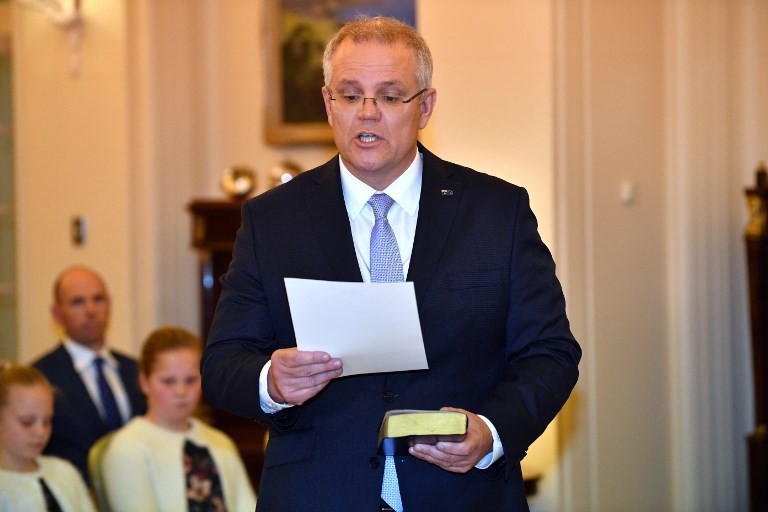
2018_08_24_52341_1535102868-_large
Photo: Courtesy Agence France

In Church this morning, someone thanked God for our new Christian Prime Minister. I felt disappointed by this rush of enthusiasm. Before I lose my readers, let me state that I am very happy that Mr Morrison is a regular church-goer. I rejoice that God calls Christians to the vocation of politics: our country needs them. However, I reject the implied criticism of Mr Turnbull. For Scott Morrison’s faith to be a welcome novelty is simultaneously a judgement that Malcolm Turnbull is not one.

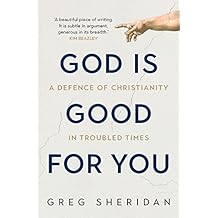
Mr Turnbull converted to Roman Catholicism. He chose not to politicise his faith.  In his recent book God is Good For You, in interviews with Malcolm Turnbull, journalist Greg Sheridan ‘was astonished at the depth of his knowledge of Catholic theology.’ Sheridan comments that Turnbull ‘affirms his belief if asked, nonetheless doesn’t talk publicly about religion all that much, but he very frequently makes reference to love. Perhaps he uses the word ‘love’ more than any previous prime minister.’ (p. 175)

Turnbull’s use of the word ‘love’ is significant as the way he parlayed his faith into the public realm. Even his enemies have noticed this intensely theological language. In fact, one of his detractors mocked his use of ‘love’ in the wake of his defeat.  But Turnbull chose not to use his faith as the public face of his policy making. He believed that arguments in the public sphere must stand on their own merits and not on their theological rationale.

Bill Shorten, too, is a convert, in his case from Catholicism to Anglicanism, the faith of his wife Chloe. Shorten is a product of a Jesuit school. Sheridan, no Labor apologist, is impressed by Mr Shorten’s’ serious knowledge’ of Christianity. Shorten takes into the public realm a quote from the legendary Jesuit Pedro Arrupe, ‘to be men for others’ as a key theological virtue. But like Malcolm Turnbull, Bill Shorten disciplines the boundary between his faith and public life.

The stance of Turnbull and Shorten may even make us question politicians who let their faith be known because it is good politics. It may (or may not) increase Mr Morrison’s vote, but it won’t justify the decisions he makes a Prime Minister.

So, all power to PM ‘ScoMo’. I will pray for him as duty bound, and with added interest because he is a fellow-believer. But I thank God for Mr Turnbull too, and for all who choose to serve the community as politicians. It’s a hard job, and they need all the help they can get.

Warm and helpful apologetics


Greg Sheridan, God is Good For You: A defence of Christianity in troubled times, Sydney: Allen & Unwin, 2017.

$24 paperback (online), $14.85 Kindle Book.

Reviewed by Ted Witham.

Greg Sheridan is a foreign affairs journalist at The Australian. From the few pieces I have read I have the impression that he takes a conservative political line in his journalism and that his style can be heavy-handed.

Sheridan’s new book God is God for You was recommended, and for that reason alone I added it to my Kindle as holiday reading. I was pleasantly surprised in every way.

God is Good for You is certainly, as the sub-title says, a defence of Christianity. It is a well-argued, highly informed piece of apologetics. Sheridan’s voice is quiet, reasonable and forceful. He engages the so-called new atheists with strong evidence that belief is more reasonable than non-belief. He shows that many of the benefits of Western democracy come directly from Christianity, and he invites us to explore Christian responses to evil and suffering.

In Part 2, he interviews Christian politicians and national leaders from the major parties, and insists that many politicians are motivated by their faith. As one politician says, ‘You find more Christians in Parliament than in the general population.’ He explores new expressions of Christianity, including Pentecostal churches like Planetshakers in Melbourne and the counter-cultural movements of traditional and new monasticism.

He confesses himself surprised by the pervasive reach of the Focolare movement and interviews its Australian leader, Lucia Compostella. In Perth, he visits Providence City Church with its steady gaze on the new place of Christianity in Australian society – not persecuted, but a minority in exile from the old paradigm of Christendom.

He critiques limited understandings of leadership in the mainline churches and their weak use of traditional and social media.

I was pleasantly surprised at the catholicity of Sheridan’s gaze across the whole church scene, and at the open tone of his writing. There were points of disagreement for me. While I agreed with his statement that Christian faith makes radical claims of transcendence, he made too easy an equation between transcendence and the supernatural, a concept I wanted him to at least qualify. However, points of disagreement were actually few.

This book could safely be offered to any thinking citizen, Christian or not, for its reasonableness, and to any optimistic Christian for its clear-eyed analysis of where we are in modern society and its remedies for the future.


Martyred Christians at Mosul


For the sake of our fellow-Christians in Mosul, we should keep our outrage burning brightly. The thugs of ISIS are murdering Christians by their tens, burning the churches. They mark their houses with “N” (for “Nazarene”) and occupy them for themselves. Some commentators claim this is the worst pogrom since the Nazis put yellow stars on Jews and rounded them up in Germany.

To bring Christianity in Mosul to an end is a tragedy of the worst kind: Christians have been there since just after the time of Christ. They still speak Aramaic, the language of Christ. ISIS is destroying the community’s ancient irreplaceable texts.

The purpose of ISIS is clear: to wipe our Christianity in Iraq and all historical traces of it. It is shaping up to be a massacre of a people and the death of a culture. As a Christian, I burn with a sad anger to see brothers and sisters in the process of becoming martyrs.

As a teacher of World Religions, I am aware also that for most Muslims, the actions of ISIS is shameful. Their casual cruelty is foreign to Islam, which values human life and respects the People of the Book.

ISIS, like some extreme Christian groups, believes shrines and images lead people away from God. On July 24 this year, for example, the Islamic State levelled the tomb of Jonah in Mosul. This is as incomprehensible to most Muslims as Cromwell’s wanton destruction of English churches during the Revolution is to Christians.

The respected Washington Post, for example, wonders whether the destruction of shrines is to gain media attention. The answer is, I think, only as means to teach Muslims of the perceived dangers of these artefacts. These fundamentalists believe that they deceive people by promising to help them get closer to God, and they are prepared to destroy even the most valuable so that people can have simple direct access to God.

There seems so little that we can do from here in Australia. But I would suggest three actions.

  • Appreciate our freedom to worship. Thank God for it; and, if the occasion arises, express our appreciation to our civic leaders.
  • Stand in solidarity with our fellow-Christians in Mosul. Pray for them and with them. Get on board with the Act for Peace (Christmas Bowl) campaign.
  • Spread the word. Talk about the massacre that is occurring in Mosul with your friends. Re-post this blog, or other blogs about it, or link to it.


Ted Witham
26 July 2014

Orationes matutinae – rusty Latin


Morning in the Great Sandy Desert

I have been scraping the rust off my Latin this morning, translating parts of APBA Morning Prayer. My efforts are in bold. If you can suggest any improvements or corrections, I would be grateful.

OPENING PRAYER

The night has passed and the day lies open before us.
Let us pray with one heart and mind.

Silence may be kept.

As we rejoice in the gift of this new day,
so may the light of your presence
set our hearts on fire with love for you
now and for ever.

ORATIO ORDIENS

Nox fugata est diesque patet pro nobis.
Oremus unitate cordis mentisque.

Silentium potuit sequi

Cum jubilo nostro in dono huius dieis novi,
lux praesentiae tuae amore corda nostra incendat
Et nunc et semper.

***

AFTER THE READING(S)


May Your Word live in us
And bear much fruit to your glory.


 SECUNDUS LECTIONES

Verbum Tuum vivet in nobis.
Ferat multum fructum ad gloriam Tuam.


Passing on the Faith?


It is a privilege to regularly post on the website of Dunsborough Anglican Church. I have just posted there today on passing on the faith. I’ve based some of the article on the ideas of Etienne Wenger and Jean Lave on communities of practice and situated peripheral learning, as I think they have a lot to offer our understandings of faith formation.

Moving Stories


REVIEW:  Robert Béla Wilhelm, Perfect Joy in Holy Week: Walking with St Francis of Assisi in the Footsteps of Our Lord, Storyfest Productions 2013 (Volume 3 of the Collected Works of Robert Béla Wilhelm).

Reviewed by Ted Witham

Dr Robert Béla Wilhelm was our keynote presenter in the Third Order Conference in Perth in 2006. People warmed to Bob and his gentle style of telling stories about St Francis.  Quite a few Tertiaries have kept in touch with Bob since then.

Bob’s style of story-telling moves me, sometimes to tears. I sometimes find them hard to read to others without tearing up. His story-telling evokes an emotional depth to help the listener connect with the richness of his stories.

Perfect Joy in Holy Week is a series of six stories about St Francis for the six days of Holy Week. Each story has a short version and a long version, and each story is introduced by the Scripture readings set for the Eucharist of the day and concluded with provocative reflections.  These stories are accessible to anyone and speak strongly into anyone’s life.

The stories can be used in worship, particularly at an appropriate Eucharist, at an Area/Region meeting or in your private devotions. You can read or tell the story yourself, or, in the iBook version, hear Dr Wilhelm himself bringing these stories to life.

Bob is also an icon writer. Perfect Joy includes traditional icons and paintings as well as some of Bob’s own. So prayerfully are they written I find I have to look carefully to see which are the traditional icons and which are Bob’s.

The attention to detail in this book is obvious. He includes not only the lections for his home Roman Catholic tradition, but also the Anglican and ecumenical lections where they differ. Design values are high even in the E-book versions. The pages were lightly textured and the layout easy to use, colourful and easy on the eye.

While they follow the great events of Holy Week, the stories and reflections can still be enjoyed at any time of the year. Rae and I didn’t get around (typically) to using these stories until Easter week, but we still found them to be fresh, inspiring and encouraging.

The easiest way to obtain either a print or electronic book is by visiting the Storyfest bookstore at http://www.sacredstorytelling.org.

***

Review first published in the Pentecost 2013 Newsletter of the Third Order, Society of Saint Francis, Australian Provinnce.

Christians and Malaysia


The London based weekly journal The Economist has called the recent victory of the ruling party in Malaysia “a tawdry victory”. There is no doubt that the elections were not completely free and fair. After 50 years in power, the Barisan Nasional has engineered a strong gerrymander. There were serious allegations of vote-buying and irregularities like the permanent ink used to mark the fingers of those who have voted being easily washed off.


In addition Government policies favour ethnic Malays and, in Borneo, other indigenous groups.  People of Chinese and Indian origin are not so favoured. A strong whiff of racism pervades politics in Malaysia.


The disquiet of Malaysian Christians goes beyond the immediate problems of the election. They are concerned for example about non-Muslims being banned from using the word “Allah” to describe God. This controversy has been alive since at least 2007 when Christians were banned from using “Allah” in any publication, including the Bible. Catholic Christians took the Government to court, but failed to overturn the ban.


A fatwa issued in 2010 confirmed the ban and in January this year the Sultan of the State of Selangor strengthened it with threats of legal action against anyone who defied it or spoke out against it. Prime Minister Najid Abdul Razak supported the Sultan saying that their viewpoint protects harmony in a country with many religions.


Christians and Hindus in Malaysia argue that the word “Allah” does not belong just to Muslims. It is the normal Arab word for God, and Arab-speaking Christians in the Middle East have been using it probably for 1900 years. “Allah” entered Bahasa (the language spoken by Indonesians and Malays) more recently with both Christians and Muslims using it freely – until the last few years.


This ban, in a country with a secular constitution, obviously discriminates against non-Muslims, but it also restricts Christians in theological discussion about God.


Muslims appeal to Christians to use only the word “Tuhan” (which means “Master” or “Lord”) when speaking of God.


Bible translators, for example, are faced with two different words for God in the Old Testament: “Elohim” and “YHWH” (The Lord). In the New Testament “kyrios” and “theos” both refer to God. To be consistent in Malay Bibles, translators need two words to distinguish “God” and “Lord”.


The Malaysian Christians I know are not anti-Muslim, but they are worried by the way that this and other religious issues are used as a wedge between Muslims and Christians. They want rather to foster dialogue between the two faith communities.


Because of possible legal consequences, Christians in Malaysia are restrained in discussing these issues openly. Praise God that in Australia we have no such restriction. We can help our sisters and brothers by praying, and by expressing our opinions when we have the opportunity. If you know Malaysian Christians, you could tell them of your support and solidarity. They will value it.