Psalm 148 for Western Australia


Praise the Lord. Praise the Lord from heaven:
praise him from the heights of Toolbrunup.

Praise him, all his angels:
O praise him all his hosts.

Praise him, sun and moon, rippling staircase across the sea:
praise him, all you stars of light.

Praise him you highest heaven:
and you Cross bright against the dark of night.

Let them praise the name of the Lord:
for he commanded and they were made.

He established them for ever and ever:
he made an ordinance which shall not pass away.

O praise the Lord from the earth:
praise him you golden super-pit and caves of glistening stalactites.

Bush-fire and hail, cyclone and heat:
and willy-willies fulfilling his command.

Mountains of iron and giant ant-hills:
gum-trees, and grass-trees, and grey-green plains of spinifex.

Dingoes and kangaroos:
creeping things and long loping emus.

Elders of tribes, and many nations:
refugees and boat-people, and all who’ve crossed the seas.

Young folk and children:
Seniors and toddlers together,

Let them praise the name of the Lord:
for his name alone is exalted.

His glory is above earth and heaven:
and he has lifted high the stocks of his people.

Therefore he is the praise of all his servants:
of the children of the West, a people that is near him. Praise the Lord.

(Acknowledging Professor David Frost’s version of Psalm 148 in A Prayer Book for Australia)

* Toolbrunup – second highest peak (1,052 metres above sea level) in the Stirling Range in the Great Southern region of WA

* Staircase of the Moon – in Broome and Meelup in February and March the rising full moon shines over the east-facing beach to create a spectacular light effect like a staircase.

* super-pit – open-cut gold mine near Kalgoorlie 3.5 x 1.5 km and 600 metres deep.

* willy-willy – local word for dust-storm or mini-tornado.

* spinifex – properly called Triodia, these arid grasses are endemic to outback Australia.

Willly-willy


Psalm 89 for Western Australia


Lord, I will sing for ever of your loving kindnesses:
my mouth shall proclaim your faithfulness throughout all generations.

Let the heavens praise your wonders, O Lord:
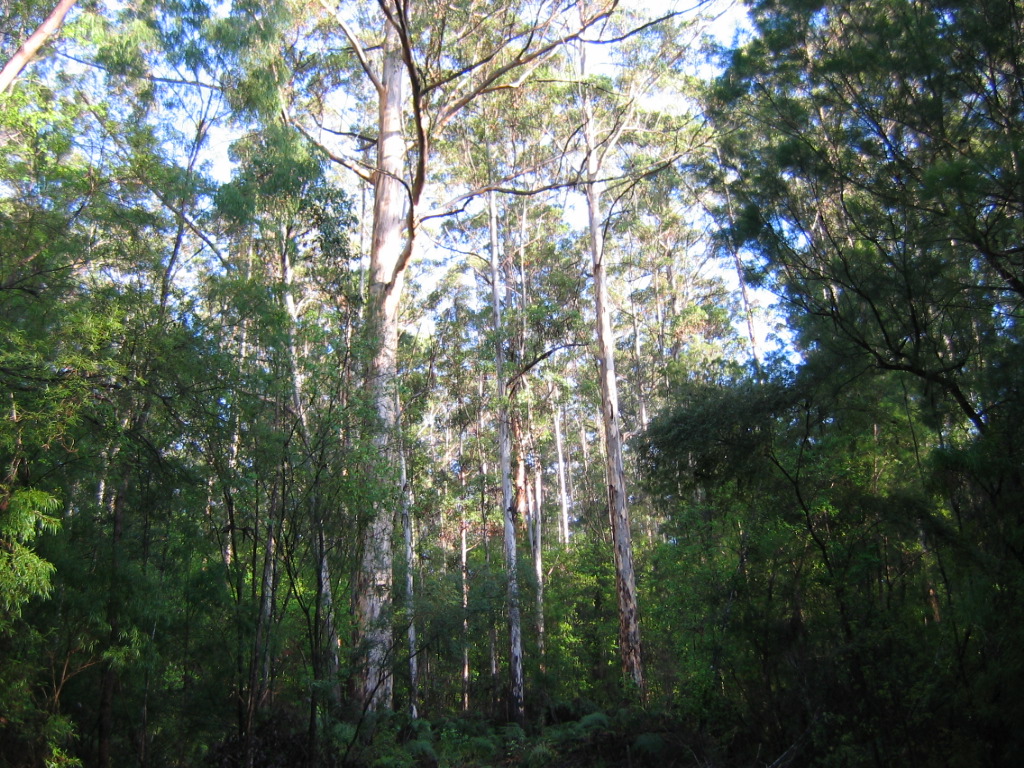
and let your faithfulness be sung by your holy ones in cathedrals and karri forests.

O Lord God of hosts, who is like you?:
your power and your faithfulness are all about you.

You rule the raging of the sea:
when its waves surge at Yallingup, you still them,
when its tides rush in at Hedland, you level them.

You created the Kimberley and the Great Southern:
Kununurra and Esperance shall sing of your name.

The endless array of the stars is yours:
and so are the far-dreamt deserts of the interior.

You founded the fertile valleys of the West:
and filled the rivers with gilgies and fish.

Happy the people who know the cry of the black cockatoo:
who walk, O Lord, in the paths of your creating.

They rejoice all the day because of your name:
because of your righteousness they are exalted.

Our land belongs to our God:
our country to the One who makes us.

(Acknowledging Professor David Frost’s version of Psalm 89 in A Prayer Book for Australia)

* karri – eucalyptus diverticolor trees which grow extremely straight up to 80 metres.

* gilgie – a freshwater crustacean found in West Australian waters.

Karri forest (courtesy Wikipedia)

Visible & Invisible


The Creed, as we recite it in the Eucharist week by week, proclaims the Father as the ‘Pantocrator’, the Maker of all things visible and invisible. The original Greek looks like this:

παντοκράτορα: ποιητὴν οὐρανοῦ καὶ γῆς ὁρατῶν τε πάντων καὶ ἀοράτων·.

Pantocrator

Wonderful words, often translated into wonderful art in Greek churches with Christ as Pantocrator painted in a huge dome dominating the church building as the Trinity is believed to dominate the Universe. The description of God’s creation as everything ‘seen’ (oratōn) and ‘unseen’ (aoratōn) shows that the writers of the Creed had a mighty insight into the nature of the Universe that scientists are only just unravelling.

SBS recently screened a documentary How Big is the Universe? This BBC documentary answered the question in three ways. It is bigger than we can see, one, because we can see only the objects that generate light. Scientists believe that there must be much more matter than can be seen: they call this invisible matter ‘dark matter’. The metaphor used in the program is of flying over the United States at night. You can see an outline of roads and streets lit up; but there is much more going in the dark than shown by the scaffold of light.

Second, telescopes can only ‘see’ 15 billion light-years into the past. What happened beyond is unseen, but that does not mean for scientists that it does not exist. This universe is in principle infinite in size.

Thirdly, it was initiated rather like a bubble, and the energy required to make one bubble could well have made many bubbles. There could be an incalculable number of unseen universes as well as our own. Proof of collisions between our own Universe and another of these ‘bubbles’ has been detected, giving credence to this theory.

In some ways, these distances are simply unimaginable, although in the past hundred years, most human beings have gone from imagining 20 miles as an impossibly long trip to imagining long-haul plane travel around the planet – 20 thousand miles from Perth to Québec in Canada.

The scientists ask us to stretch our imaginations to the size of the Universe: the writers of the Creed ask us to stretch to the size of God. In simplistic terms, if the Universe is so big, then God is bigger. God is celebrated as the Maker of the all things visible and invisible. Poiētēn is the Greek word for ‘Maker’, and you can see its connection to the English word ‘poet’. To be the Maker of all things visible and invisible requires not just a builder, but a Maker with huge imagination; a poet of the extremes.

Both science and creed move us to wonder. The question ‘How big is the Universe?’ morphs into an exclamation of joy, ‘How big is the Universe! How wonderful the Universe!’ And many of us would proclaim, ‘How amazing the Maker!’

courtesy BBC (“How Big is the Universe”)

Study Guide: LOOKING THROUGH THE CROSS


STUDY GUIDE

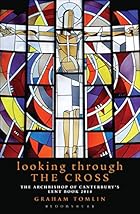
Graham Tomlin, Looking Through the Cross: The Archbishop of Canterbury’s Lent Book 2014,
Bloomsbury Academic (2014), Paperback, 240 pages.
Also available from Amazon in Kindle format.

 +

Chapter 1: The Cross and Wisdom

Questions for Individual Reflection & Group Discussion:

1. Tomlin says that St Paul criticised the Corinthian church for living according to the wisdom of the surrounding society. Does our contemporary church adapt itself too easily to contemporary society?

2. ‘A crucified, shamed and humiliated man is in fact the wisdom and the revelation of the God who made the universe.’ (p. 25) If this is so, what does the cross reveal about God?

Activity & Prayer Cues:

Find a crucifix or picture of Jesus on the cross that speaks to you in some way of God’s wisdom. The cover picture of Looking Through the Cross may be suitable. Sit before it in silence without analysing it or using words to pray. Simply be conscious of God’s presence with you.

+

Chapter 2: The Cross and Evil

Questions for Individual Reflection & Group Discussion:

1. Can you name evidence for the ‘deep wound in creation that needs healing’? (p. 42) Where can you see such a wound today?

2. Does it make sense for Jesus to be a representative of all humanity? How can that be?

Activity & Prayer Cues:

Find the words of ‘Amazing Grace’ by John Newton (Together in Song 129) or Graham Kendrick’s ‘Servant King’ (Together in Song 256) or Thomas Troeger’s extraordinary ‘A Spendthrift Lover’ (TiS 676). Take the words to a quiet place where you will not be disturbed and read them through several times as a way of thanking God for the cross overcoming evil.

+

Chapter 3: The Cross and Power

Questions for Individual Reflection & Group Discussion:

1. Tomlin describes Albert Schweitzer’s choice to work among the poor of Africa as an exercise of power for the sake of other people. Name other examples of this kind of power. Why is it power to make a choice that the world sees as the way of weakness?

2. ‘When we are loved we are able to change. When we are unloved, we dig in our heels and refuse to budge.’ (p.78) Think of a time when you were empowered because you knew you were loved.

Activity & Prayer Cues:

Learn the ‘Jesus Prayer’ by heart: ‘Lord, Jesus Christ, Son of God, have mercy on me, a sinner.’ Use is to pray for those whom you love by substituting the name of each of these people for the word me. So, to pray for my wife, I pray, ‘Lord, Jesus Christ, Son of God, have mercy on Name, a sinner.’

+


Chapter 4: The Cross and Identity

Questions for Individual Reflection & Group Discussion:

1. In what tangible ways has your Christian faith given you a new identity? Tell the story of the different you that now lives in Christ.

2. How do you feel the pull of your old identity? What keeps pulling you back from full life in Christ?

Activity & Prayer Cues:

When Jorge Cardinal Bergoglio was elected Pope, he chose the name Francis for this next stage of his ministry. What name would you choose for yourself to signify who you are now in Christ? Have fun trying on some different names!

+

Chapter 5: The Cross and Suffering

Questions for Individual Reflection & Group Discussion:

1. Can you make sense of the idea that God in Jesus undergoes suffering but God the Father does not? How does this idea help us live with ongoing suffering?

2. When we ‘take up our crosses’ and understand the cross of Christ in a ‘deep, personal heartfelt way’, Tomlin says our hearts are softer. Has he made the right connection? Does choosing suffering increase our empathy?


Activity & Prayer Cues:

Pray in silence before the picture of the cross or crucifixion that you used for Chapter 1. Which suffering people in the world today call to you for a response? What is a costly and meaningful response that you can make to alleviate that suffering?

+

Chapter 6: The Cross and Ambition

Questions for Individual Reflection & Group Discussion:

1. ‘Imagine for a moment a culture where everyone’s main aim was to seek the good of their neighbour, where the only social competitiveness was to find ways to bless the person next door.’ (p. 142) What is stopping us?

2. What strategies should we adopt to learn from modern servants (‘cleaners, gardeners and dinner ladies’ p. 145)? Be ambitious to use the strategies you identify.

Activity & Prayer Cues:

Make a list of serving activities that you don’t normally do that you could undertake today. For example, I could collect cups and plates and load the dish-washer after morning tea at church. Aim to do them. Tick each one off as you do it. Destroy the list at the end of the day. Repeat the exercise next week.

+

Chapter 7: The Cross and Failure

Questions for Individual Reflection & Group Discussion:

1. Is there a sense in which the crucifixion was a failure? Is the crucifixion a phenomenon that looked at from one side is a failure and from another side is a triumph – the means of our coming close to God?

2. Reflect on what you have learned from failure. If you are in a group, consider what aspects of these learnings you can share with the group.

Activity & Prayer Cues:

Read John 21:15-19 several times slowly, aloud if you can. Be conscious of your breathing. Put yourself in Peter’s position, remembering that he has returned to Galilee a failure. As Jesus asks the question ‘Do you love me?’ identify what Peter may have felt. Do you feel a transition?

+

Chapter 8: The Cross and Reconciliation

Questions for Individual Reflection & Group Discussion:

1. What walls dividing people in the Australian community should the Christian community be working to break down?

2. What programs or processes does your local church have in place to help people grow in moral maturity?


Activity & Prayer Cues:

What three specific actions can we take to make our faith community more of a ‘mother’, a nursery of Christian action and reconciliation (pp. 189-190)?

+

Chapter 9: The Cross and Life

Questions for Individual Reflection & Group Discussion:

1. Thinking of the death of your grandparent or parent or other loved one some years ago, what signs of new life do you discern in their dying?

2. Do you agree with C.S. Lewis that we are outside the real world (p. 213)? What does he mean by this image? What does he mean by saying that we shall get in?

Activity & Prayer Cues:

Using a simple medium (crayons or coloured pencils), draw seeds being buried, germinating, growing and bearing fruit. As you draw, meditate on the power of new life, the continuities and the discontinuities between seed and flowering plant, the imbalance between the old and the new life.

+

Archbishop of Canterbury’s Lent Book Renews Engagement


Looking through the Cross

Graham Tomlin, Looking Through the Cross: The Archbishop of Canterbury’s Lent Book 2014, Bloomsbury Academic (2014), Paperback, 240 pages.

Good stocks at St John’s Books, Fremantle. $19.95
Kindle edition available from Amazon for $10.88

Reviewed by Ted Witham. First published in Anglican Messenger, February 2014

Being a Christian requires personal engagement – with God, with Jesus Christ, with neighbour and stranger, with truth, with good and evil. For most of us, being a Christian can be complex and demanding, but we remain committed because we believe that God is eternally committed to us.

A good Lent book refreshes this sense of personal engagement with Christian living. It should encourage, inspire and inform by taking readers both back to when they fell in love with the faith and forward by challenging readers to grow spiritually. Good Lent books are often about the Cross and Resurrection clueing us into the liturgical movement of Lent and the Paschal mystery at its climax.

Graham Tomlin’s Looking through the Cross is a very good Lent book. It is about the Cross. Tomlin tells us that his early chapters are looking at the cross, trying to understand more deeply its meaning for us, and the later chapters are looking through the cross, using the cross as a lens on the world.

In the chapter headings, ‘The Cross and Wisdom’, ‘The Cross and Evil’, ‘The Cross and Power’, ‘The Cross and Identity’, ‘The Cross and Suffering’, ‘The Cross and Ambition’, ‘The Cross and Failure’, ‘The Cross and Reconciliation’, and ‘The Cross and Life’, it is not entirely clear when we change from looking at to looking through. I am sure that ambiguity is deliberate: the cross always both teaches us about itself and reveals how it has changed God’s world.

Graham Tomlin writes clearly. Reading his book is like sitting with the most patient teacher, sharing with us his understanding of how the cross comes alive for him. His explanation of the connection between the cross of Christ and our personal sin is the clearest I’ve encountered in 40 years of reading books about Christianity. ‘Those who have perpetrated evil must be held to account,’ he writes. ‘The evil that has disrupted the world cannot simply be ignored or glossed over: it must be banished, dealt with, put right. Restoration is possible, but only when sin is somehow atoned for.’

Archbishop Rowan Williams commissioned The Reverend Dr Graham Tomlin to write this year’s Lent book. His successor in Canterbury, Justin Welby, ‘could not be more pleased’ with the choice. Centred in scripture, scholarship and pastoral experience, this book seems to me to bridge some of the divides in contemporary Anglican thinking.

The cross demands that we clearly separate Christian faith from the surrounding culture. In the powerful chapter on identity, Tomlin describes how our experience of family christenings obscures the radical change God makes in us in baptism when God gives us a new identity. Using the image of a protected witness or juvenile criminal with a new identity, he reminds us how hard it is to live out of a new identity, and how the old identity will continue to exert a pull on our lives.

But the cross is ultimately the path to life. We are made not to end in death, but in life. Tomlin reminds us of the leap in imagination we need in order to lay hold of this reality, but also rallies us with the knowledge that the new life of the cross and resurrection is ultimately God’s work and not only ours.

It is helpful if a Lent book has some guidance for its use: questions to provoke reflection or small group discussion, suggestions for art response, even a reading program. Looking through the Cross has none. This is a significant drawback in a book promoted for Lenten reading. Even without this, individual laity, clergy and groups will find Dr Tomlin’s book refreshing, challenging and clear. At the end of Lent, the book will help readers emerge at Eastertide re-engaged with their Christian faith.

What’s a Protestor Worth?


How Much is Protestor Worth?

Published on Starts at Sixty January 14, 2014

At the end of June 1971, I found myself in ward 52 of Royal Melbourne Hospital, prescribed complete bed rest and given heavy duty drugs to help my back pain. At the same time, the Moratorium Movement was planning its third march to protest against the Vietnam War. My hospital regime allowed visitors for an hour a day, between 7 and 8 p.m. Several of my fellow-theological students were involved in the Moratorium and were keen to recruit me. It was my first opportunity to march: I had been in country WA for the previous two marches and had not been required to make a decision.

‘We could put you in a wheelchair and push you down Swanston Street,’ my friends said, as though it was a student lark. But it was far more serious than that.  I was torn, but in the end, when June 30 came around, I was too unwell to participate. At 7 p.m. that night I saw the black and white images on TV and heard my friends’ first-hand reports of the 100,000 citizens who marched to the Shrine on St Kilda Road.

Melbourne Moratorium (courtesy ABC)

In the late 60s and on into the 70s many people, particularly those of us who were students, had to decide whether or not to take part in protests. These were not easy or automatic decisions. We saw people arrested and locked up at protests and knew prison was a possible consequence of civil disobedience. We heard of students in Queensland being jailed simply for gathering. ‘Don’t bother applying for a march permit,’ premier Bjelke-Peterson told potential protestors, ‘You won’t get one. That’s government policy now!’

We read about Martin Luther King Jr and his time in Birmingham City Jail in 1963. Founder of the Plowshares Movement, Catholic priest Dan Berrigan, who had been a leader in the anti-Vietnam war movement went to jail for trespass on and damage to the General Electric nuclear missile facility in Pennsylvania.

Mrs Bessie Riscbieth OBE, JP

A prototypical West Australian protestor was elegant and wealthy Mrs Bessie Rischbieth J.P., O.B.E. Mrs Rischbieth, a theosophist and feminist, was  a grande dame from upmarket Peppermint Grove. I remember her in 1966 aged 89 wading into the Swan River in front of the bulldozers as her attempt to prevent the filling in of the river for the building of the Narrows Bridge. While she did not succeed there, her direct action earlier stopped the construction of a swimming pool in Kings Park. In court Mrs Rischbieth was haughtily defiant, but paid her fines. I don’t recall if she was ever sentenced to prison. it’s unlikely.  No judge in small town Perth would have risked the fuss!

I learned two things from these protest movements: protestors should expect the normal consequences for their illegal actions. Just because their protests are morally right does not excuse them from the normal legal accountabilities. In fact, doing time is a way of demonstrating moral seriousness. Secondly, protestors need to be part of an organisation, people who can keep them honest, protect them in ugly situations and support them through the processes of court and prison. Solo protestors are extremely vulnerable to early burnout.

I am encouraged by the new round of protests this century, including by groups working to protect the environment. Sea Shepherd and Greenpeace clearly know the history of the anti-Vietnam War and anti-nuclear protests, and like Bessie Rischbieth and Old Testament prophets, take symbolic actions in the very places where the environment is at risk.

We are poorly served by some of the correspondents writing reports of Sea Shepherd and Greenpeace. They seem ignorant of the history of protest. They seem to believe that the protestors think they should be above the law. For the ‘Arctic 30’ (those detained by Russia for their protests against the Gazpron oilrig), the media have been strident in condemning Russia for their over-reaction, but they have not praised the protestors for the legal risks they ran. They have not even appraised their moral stance. The end result is that they denigrate the moral seriousness of the protestors.

Greenpeace provide strong support to those detained and to their families publicly and it would seem privately, but parts of the media don’t get the process.

I’d like those reporters to read about Bessie Rischbieth, about the Berrigan brothers, Martin Luther King Jr, the Palm Sunday marches, Harvey Milk, all the heroes who have made ours a freer society. Maybe then they could more accurately evaluate the efforts of those who put their lives on the line today to make the world a better and safer place.

Novel Readings of Australian Men’s Emotions


I’ve been reading two new and extraordinary Australian novels: Richard Flanagan’s Narrow Road to the Deep North and Tom Keneally’s Shame and the Captives. Both deal with the Second World War.

My brother and I were born just after the War. He remarked recently how much the men we had grown up with had been marked by that war. We grew up on a farm, and we saw farmers who spent their time drinking not farming; our nearest neighbours lived with their grandparents, but they turned out to be paternal grandmother and maternal grandfather who shared their house. On a remote farm, one farmer loyally cared for ‘Mad Jack’. Today this eccentric would be recognised as an untreated sufferer of Post-Traumatic Stress Disorder.

The novels by Flanagan and Keneally take us to events that damaged many Australian men: the Burma railway and the Cowra break-out.  Both novels, though explicitly fiction, describe the events fully, but exploit what novels do best: they humanise the characters. Both novelists are unusually ambitious. Flanagan’s main character Dorrigo Evans is a doctor who ends up as Officer Commanding the prisoners building the Thai-Burma railway. This is dangerous ground. Australians have made ‘Weary’ Dunlop into a hero and this character is too like the legend of ‘Weary’. But Dorrie Evans believes he is no hero. He is a man just managing to hold himself together in the extreme conditions.

Flanagan shifts the time backwards and forwards between the doctor’s pre-war infatuation with his uncle’s young wife, and his serial womanising after the war. His one real act of heroism may be some years after the war when he saves his society wife and children from a Tasmania bushfire.  But on his death-bed, he has a kind of vision of his heroism on the railway. He remembers when the Japanese guards force him to select 200 men to march to another camp. The men are sick and dying, and he must make selections knowing that he is sending the men to a certain death, others he is saving. Yet he moves through the parade, putting his hand affectionately on the shoulder and naming each man chosen. He gets up early next morning, feeling the heavy responsibility for his choices. In his dream, each man comes up to him, shakes his hand or salutes him with a cheery ‘Thank you, Sir,’ or ‘All the best to you.’ Somehow the little he does, even the mistakes he makes, are seen as heroism, and Flanagan shows us how hollow he feels, almost as though he is a fake, or has been mistaken for someone else.

I was gripped by Flanagan’s depiction of loyalty between ordinary men. Just trying to stay alive in a hellish world, they both helped each other and sometimes failed to help each other. The profound cruelty inflicted on these men created something of beauty, a tiny bloom in the dark jungle. We all know and feel the barrier to giving this bond of mateship its real name. Flanagan dares once in the novel to call it love. The novel also acknowledges how the hardships also ravaged Australian men in ways that their children who are Flanagan’s generation – my generation – are only beginning to understand.

For Richard Flanagan, behind unexpressed emotions the laconic Australian male hides a vulnerability, and many are not only vulnerable but fragile too.


Our emotions are unexplored territory, and Tom Keneally, from an earlier generation, knows that our lack of familiarity with the world of emotions makes it difficult for us to explore the emotional lives of others. The Italians and the Japanese in the POW camp at Gawell, the fictional palimpsest for the real Cowra, provide Keneally with contrasting case studies.

I was surprised to learn that most of the detainees were not internees but were prisoners of war. The Italians and the Japanese were kept in separate compounds and had very different attitudes to being captured: the Italians were on the whole relieved. Their allegiance to Mussolini was not deep, and in any case Italy was about to fall to the allies. The Japanese seethed with resentment both towards themselves and their captors. Their ambition as warriors had been to kill or be killed in the service of the Emperor. To be so weak as to be captured was shameful, and they bore their shame with difficulty.

The Japanese despised the Australians for looking after the camp according to the Geneva Convention. This compassion was weakness. They refused to cooperate and found little ways to make life difficult for their captors.

The Italians by contrast were happy to work on Australian farms, to attend Mass with Australian families and to reach out for human contact. We follow Giancarlo, or “Johnny”, the work-release prisoner on the farm of a widower and his daughter-in-law. An affair develops between the two, leading to confusion in the novel’s climax when Tengan is re-captured on their farm after the “break-out”.

Keneally shows us the emotional deafness of career Colonel Abecare and his subordinate Major Suttor, whose main interest was writing a popular radio serial, both to their own feelings and to the cultural-based emotions of their prisoners. The shame of Japanese warrior Tengan and his hatred for his enemy is well-drawn. On the other hand, the contempt of the Koreans for their Japanese superiors is hidden from the Australians. They saw the warrior mentality and loyalty to the Emperor as dangerous and meaningless.

The killings and suicides in the break-out shock the Australians who are not prepared for such extreme expression of emotion. Abecare, the old English soldier, is slaughtered, and the Australians are left to muddle through. And the novelist continues to hint at a kind of cultural autism, an inability in Australian men to read the emotions of others, because they cannot read or articulate their own.

My brother is right. We accepted that generation of damaged men just as eccentrics. It has taken a life-time to begin to understand their impact on us and to learn to love and hate, and fear and enjoy, to be angry and disgusted, and to know that these emotions are the essence of life.

Punishing sharks


I know nothing about surfing or fishing. My ignorance about boats is profound. So I shouldn’t say anything about the recent fatal shark attacks, except to state how appalling they are for the families of the men killed.

Since records started in Australia in 1791, there have been about 220 fatal shark attacks or about one each year. There were nearly 1300 motor vehicle accident deaths in 2011. But each shark attack gets media headlines.

I can’t help remembering that during the Middle Ages, animals that killed people were brought to court and tried. They were led into the court room on a leash. If they played up, further charges of affray were laid against them.

They were always executed: pigs and dogs that attacked their masters whatever the provocation, frightened horses that had trodden people to death, circus animals that escaped and ate for hunger.

It was a farce, of course. Magistrates could not take into account the animal’s intentions. If the animal had responded to one too many whippings, there was no charge of justifiable homicide. If horses trampled people because there were no exits in a crowded barn, the court didn’t care.

But the people probably felt better when the animal was killed. The taking of the animal’s life satisfied somehow the outrage at the human death. Old Testament justice was served: ‘An eye for an eye, a tooth for a tooth, and a life for a life.’

We no longer bring animals to trial. We look back at the medieval practice with amazement that people’s thinking could be so defective. Animals don’t form criminal intentions. And even if they do, they cannot defend themselves in a human court. They can’t talk, you know.

Proposals to punish sharks that that take human beings by killing individual sharks or culling sharks generally are not so different from medieval animal courts.

Firstly there seems to be a problem of identity, being sure that you capture the shark that did the killing. Without that certainty why kill any shark that happens to be nearby? Even if you are certain that this shark killed a man, killing the shark certainly guarantees that that individual will not kill again. But scientists know little about the reasons for shark attacks. Is there a reason to think that this shark will attack again if left alive?

Neither can we know enough about bonds between sharks to know whether killing one shark will provoke a family member to kill in retaliation.

Scientists say they do not know why sharks kill. They do not have a clear picture of how many great white sharks there are around the south and west coasts of Australia. They do not know how they interact with top predators like orcas off Bremer Bay. Our ignorance is great. So we can have little confidence in the effectiveness of any intervention. We simply do not know what effect any of our actions will have.

We do know that the ocean is the sharks’ home. I object to a worldview that claims first place for human beings whatever the cost to other species. It seems to me to be arrogance to demand that the oceans be safe for human beings. We are responsible for own actions. We know the ocean has dangers, and it falls on us to take prudent precautions if we enter the sharks’ habitat.

To drive sharks out of the ocean for our comfort is to change the ocean into something with less value, and may have unintended results of changing our environment into something less liveable for all creatures – including ourselves.

So by all means let’s grieve appropriately for those taken by sharks, but let’s also pause before behaving with the same muddled logic as our medieval forebears and executing sharks for murder, because that’s all the sense I can make of polices of ‘capture and kill’ and culling.

Christmas in a broken land


Those were the days when the heat’s fitful haze
turned the blue distant ranges to grey oceans,
and the sun’s morning light in spindling beacons bright
shone yolk yellow and all was stilled motion.

The bricks held their heat, shamed by defeat
they could no longer supply cool shelter;
Children ran slow and heard a bleak crow
caw listlessly over carrion with no one to tell it to

celebrate the arrival of God’s survival –
a new child in the bush down under:
not a plaster saint with blue robes faint,
but a battler, a beauty, God’s wonder.

Not a victory march through a triumphal arch,
but a nail-biter, to get there God’s struggling.
In today’s Australia, God appears a failure,
but God hangs on, power in long-suffering.

Maybe that’s why in the hot and the dry
we remember as kids God’s birthing;
nothing fancy or fussy, just a cowshed and mussy –
God’s total commitment to earthing.

–          Ted Witham, Advent 2013

Orationes matutinae – rusty Latin


Morning in the Great Sandy Desert

I have been scraping the rust off my Latin this morning, translating parts of APBA Morning Prayer. My efforts are in bold. If you can suggest any improvements or corrections, I would be grateful.

OPENING PRAYER

The night has passed and the day lies open before us.
Let us pray with one heart and mind.

Silence may be kept.

As we rejoice in the gift of this new day,
so may the light of your presence
set our hearts on fire with love for you
now and for ever.

ORATIO ORDIENS

Nox fugata est diesque patet pro nobis.
Oremus unitate cordis mentisque.

Silentium potuit sequi

Cum jubilo nostro in dono huius dieis novi,
lux praesentiae tuae amore corda nostra incendat
Et nunc et semper.

***

AFTER THE READING(S)


May Your Word live in us
And bear much fruit to your glory.


 SECUNDUS LECTIONES

Verbum Tuum vivet in nobis.
Ferat multum fructum ad gloriam Tuam.